
Loading, please wait...
LOT 0316
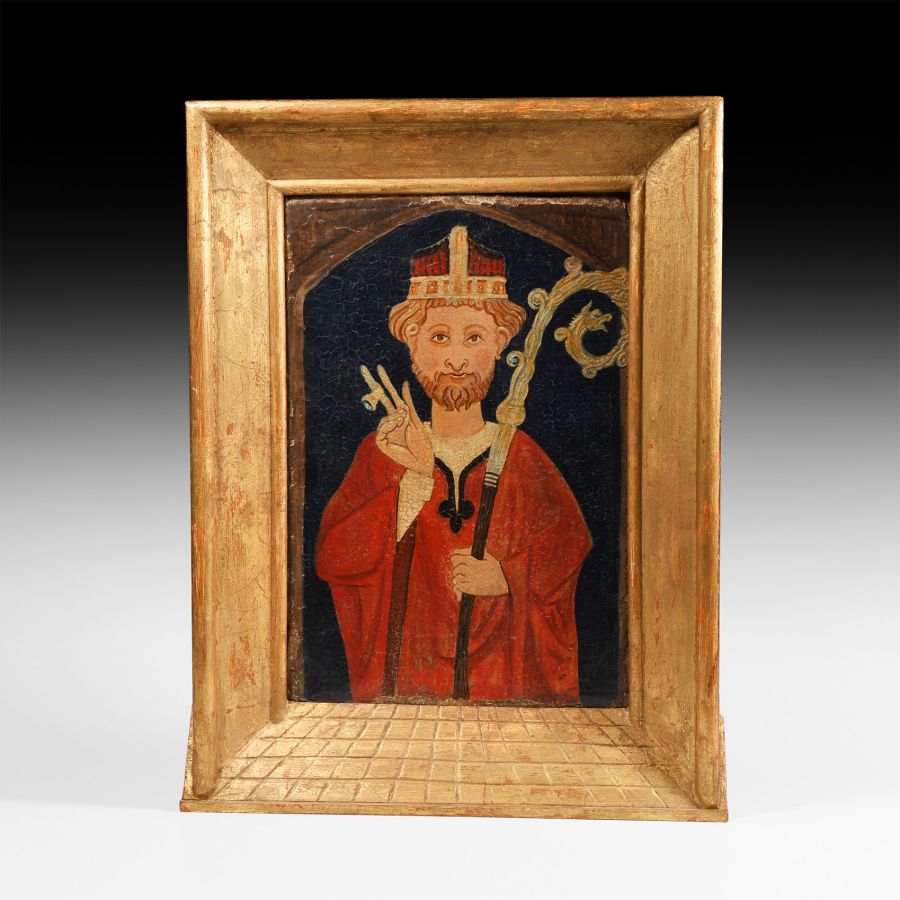
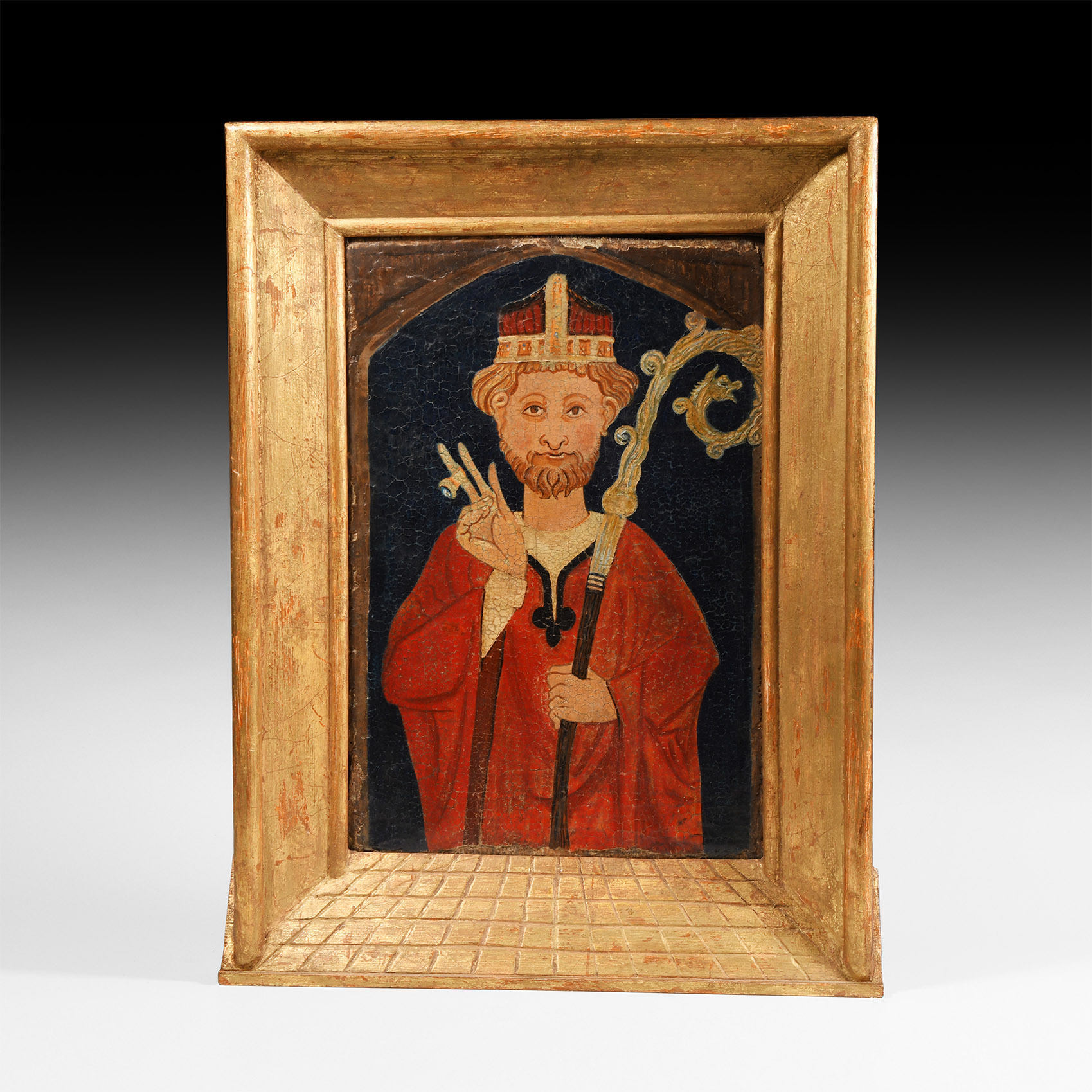
Medieval Icon of Pope Benedict XI
14TH CENTURY A.D. OR LATER
19 7/8 x 14 3/4 in. (1.6 kg, 50.5 x 37.5 cm).
A rectangular wooden icon of Pope Benedict XI (papacy: 22 October 1303-7 July 1304) standing facing within an arch; elaborate crozier to the left hand with returned horse-head finial and scrolled spurs to the outer edge; right hand extended in the gesture of benediction with large gem-set finger ring carefully displayed; mitre with jewelled headband, simple red vestment with white undergarment and black trim; heavily overpainted; mounted in a gilt wooden frame with hatched lower panel.
ProvenanceEx Richard Philp, London, UK.
with W.E. Tristram (1882-1952).
Acquired from Patrick Reijgerberg, Holland March, 2003.
UK private collection.
TimeLine Auctions follows a vetting process to ensure the authenticity and legality of all items, reinforcing our commitment to integrity and responsible trading. Each antiquity, antique, and coin lot undergoes thorough examination by a vetting committee of at least ten external specialists, professional trade association members, scientists, and archaeologists: Our Vetting Process
AUCTIONS:
TimeLine is a leading auction house specialising in antiquities, ancient art, collectables, natural history, coins, medals, and books. Our auctions offer museums, collectors, historians, and enthusiasts the opportunity to acquire unique and historically significant pieces.
-
.jpg)
Medieval and Other Ring Collection
Mainly 12th-15th century A.D.Sold for (Inc. bp): £72
A mixed group of ten finger rings of various types and sizes, comprising: a ring with tear-shaped bezel; two Roman rings dated c.2nd century A.D.; a Victorian ring with floral bezel; six medieval rings with geometric bezel designs. 28 grams total, 18-22 mm
Fine condition.
European private collection, 1970-1980s. London, UK, late 1990s. -
Medieval Bulbous Thimble
11th-14th century A.D.Sold for (Inc. bp): £7
An unusual copper-alloy thimble of bulbous form, with dimples to the upper body. 20.5 grams, 27 mm
Acquired early 2000s. Property of a Birmingham, UK, collector. Property of an Essex, UK, gentleman. -
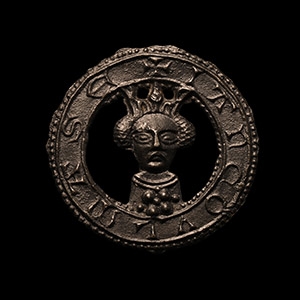
Medieval 'Thames' Crowned Bust Pilgrim's Badge
Circa 14th-15th century A.D.Sold for (Inc. bp): £715
An openwork lead badge composed of a crowned facing male bust within a roundel bearing the inscription '+ IANCOVLMASE'; complete with pin. 1.78 grams, 22 mm
Found on the Thames foreshore, London, UK. Acquired on the UK antiques market between 1974-1985. Albert Ward collection, Essex, UK.
This enigmatic inscription has been found on other similar badges, but is yet to be satisfactorily understood. It is possibly associated with the cult of Edward the Confessor or representing the head of John the Baptist.
