
Loading, please wait...
LOT 1315
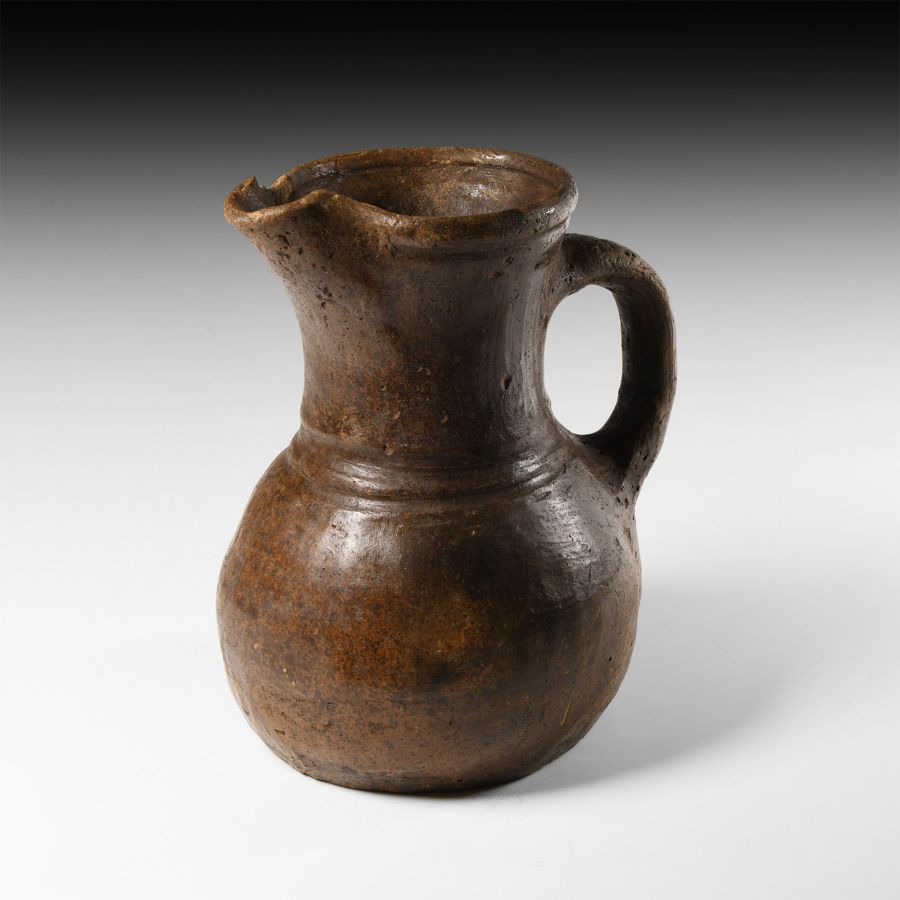
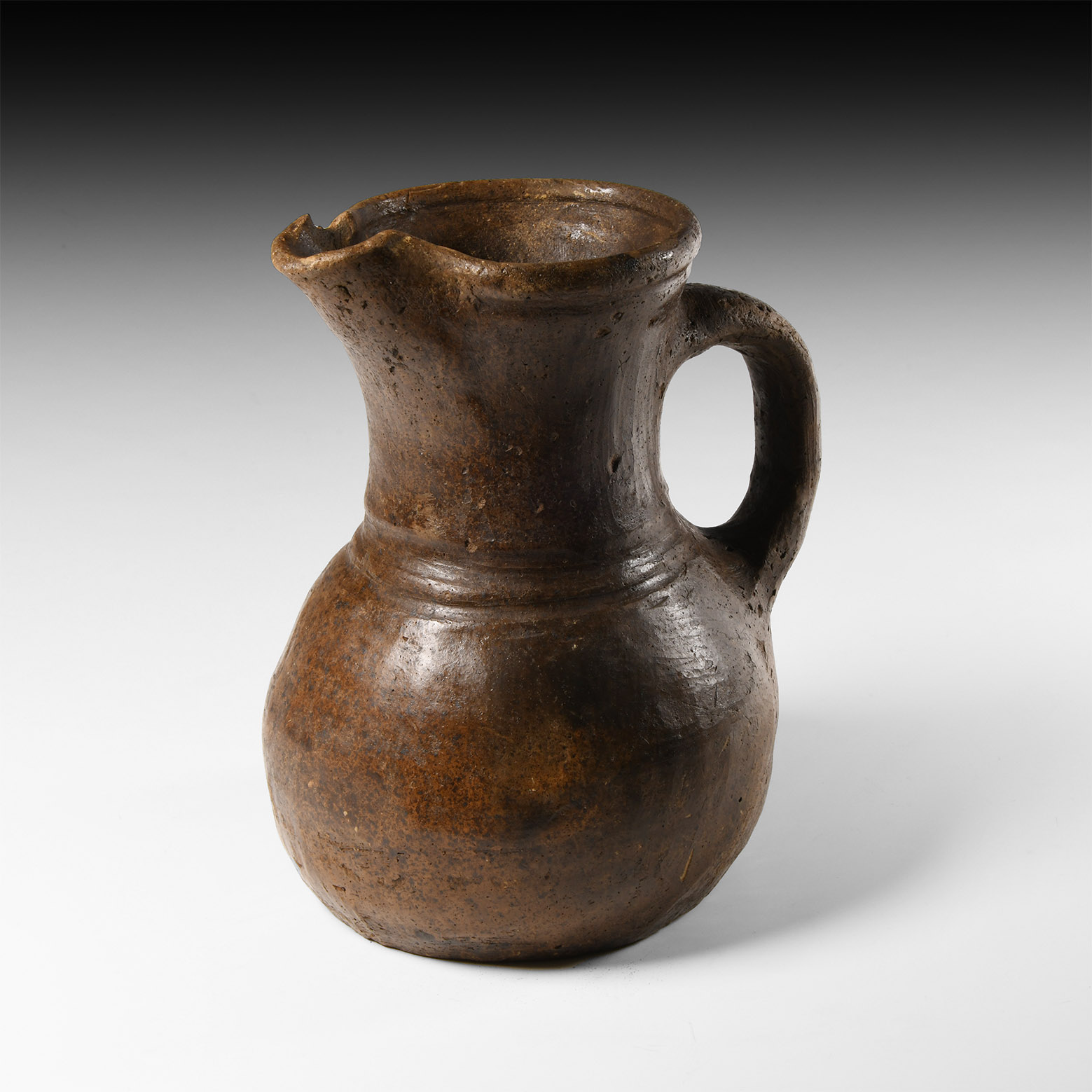
Medieval Handled Jug
14TH-16TH CENTURY A.D.
6 3/4 in. (918 grams, 17 cm high).
A ceramic jug with burnished surface, squat body, moulded gusset to the shoulder, rolled rim to the mouth with broad spout, thick strap handle to the rear. [No Reserve]
ProvenanceAcquired 1971-1972.
From the collection of the vendor's father.
Property of a London, UK, collector.
Cf. Saunders, P. (ed.), Salisbury & South Wiltshire Museum Medieval Catalogue: part 3, Salisbury, 2001, items 114, 116, for type
CONDITIONTimeLine Auctions follows a vetting process to ensure the authenticity and legality of all items, reinforcing our commitment to integrity and responsible trading. Each antiquity, antique, and coin lot undergoes thorough examination by a vetting committee of at least ten external specialists, professional trade association members, scientists, and archaeologists: Our Vetting Process
AUCTIONS:
TimeLine is a leading auction house specialising in antiquities, ancient art, collectables, natural history, coins, medals, and books. Our auctions offer museums, collectors, historians, and enthusiasts the opportunity to acquire unique and historically significant pieces.
-
Medieval Silver Ring with Griffin
14th-16th century A.D.Sold for (Inc. bp): £208
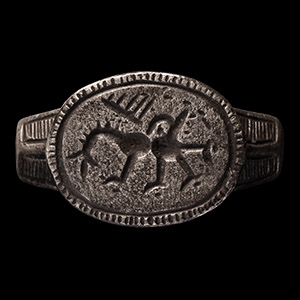
A silver finger ring with carinated shoulders bearing hatched panels, ellipsoid bezel with pelletted border, reserved advancing griffin with arched neck and raised wing. 13.66 grams, 26.45 mm overall, 21.80 mm internal diameter (approximate size British U, USA 10, Europe 22.52, Japan 21)
Acquired in the late 1990s-2000. Property of an East London gentleman. -
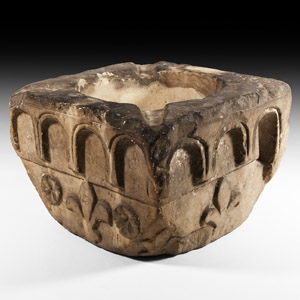
Medieval Sandstone Font with Arches
13th-14th century A.D.Sold for (Inc. bp): £2,340
A square-section sandstone font with carinated sidewall, carved with arcading around the upper body, non-identical fleurs and plant forms to the centre of the side faces and to one of four chamfered corners; channels to three of the four corners of the upper face; circular drainage hole to interior base. 30.4 kg, 30 x 30 cm
English private collection, 1980s. This lot has been checked against the Interpol Database of stolen works of art and is accompanied by search certificate no.11662-199832. -
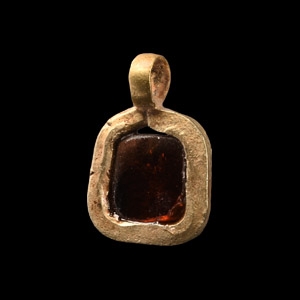
Medieval Gold and Garnet Pendant
12th-15th century A.D.Sold for (Inc. bp): £169
A pendant composed of a rectangular gold frame with rounded corners and suspension loop, with polished garnet insert. 0.35 grams, 9 mm
Acquired 1980-2015. Ex Abelita family collection.
