
Loading, please wait...
LOT 0327
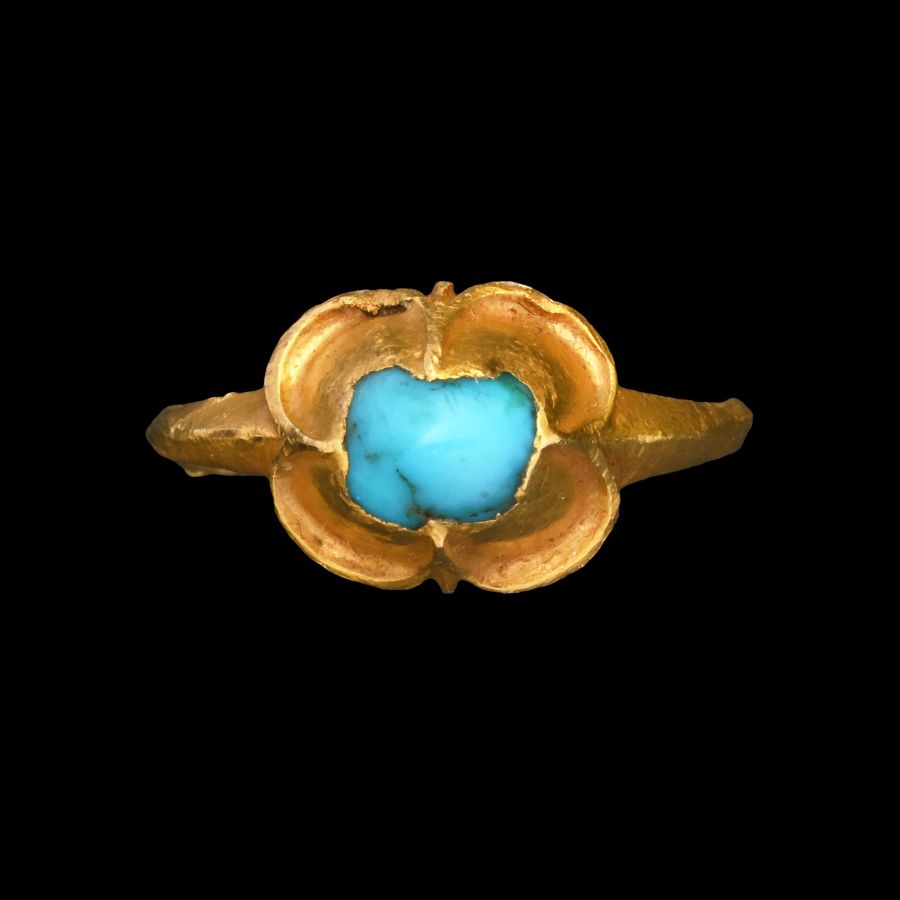
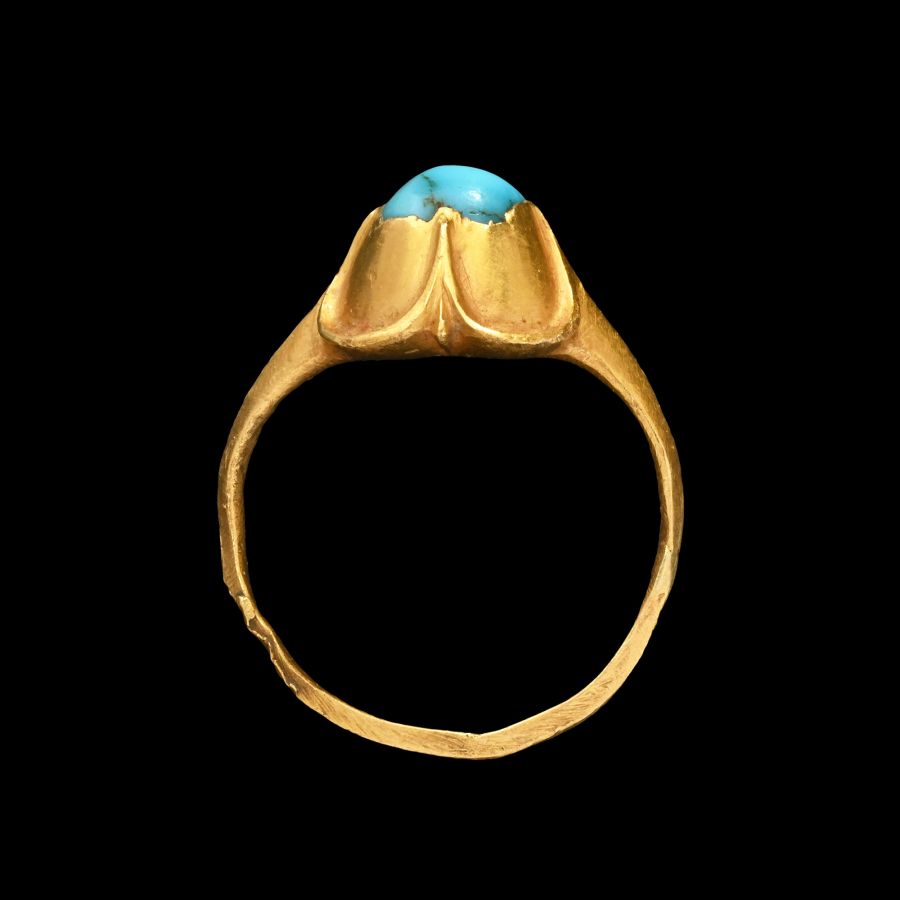
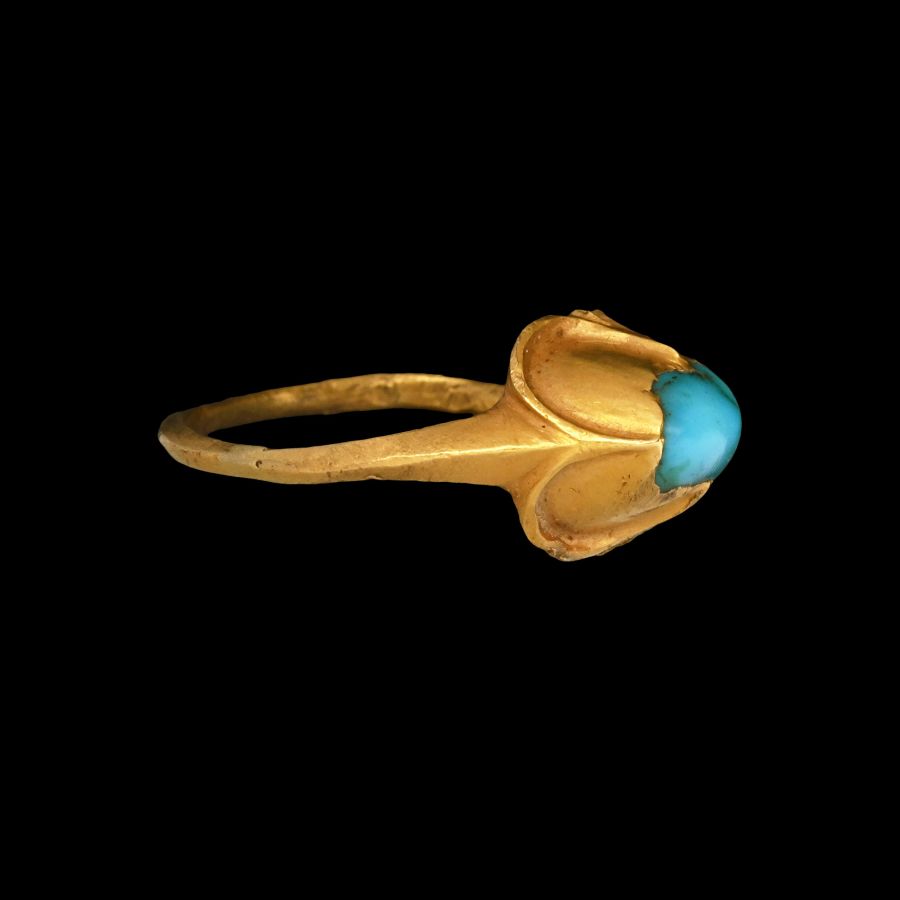
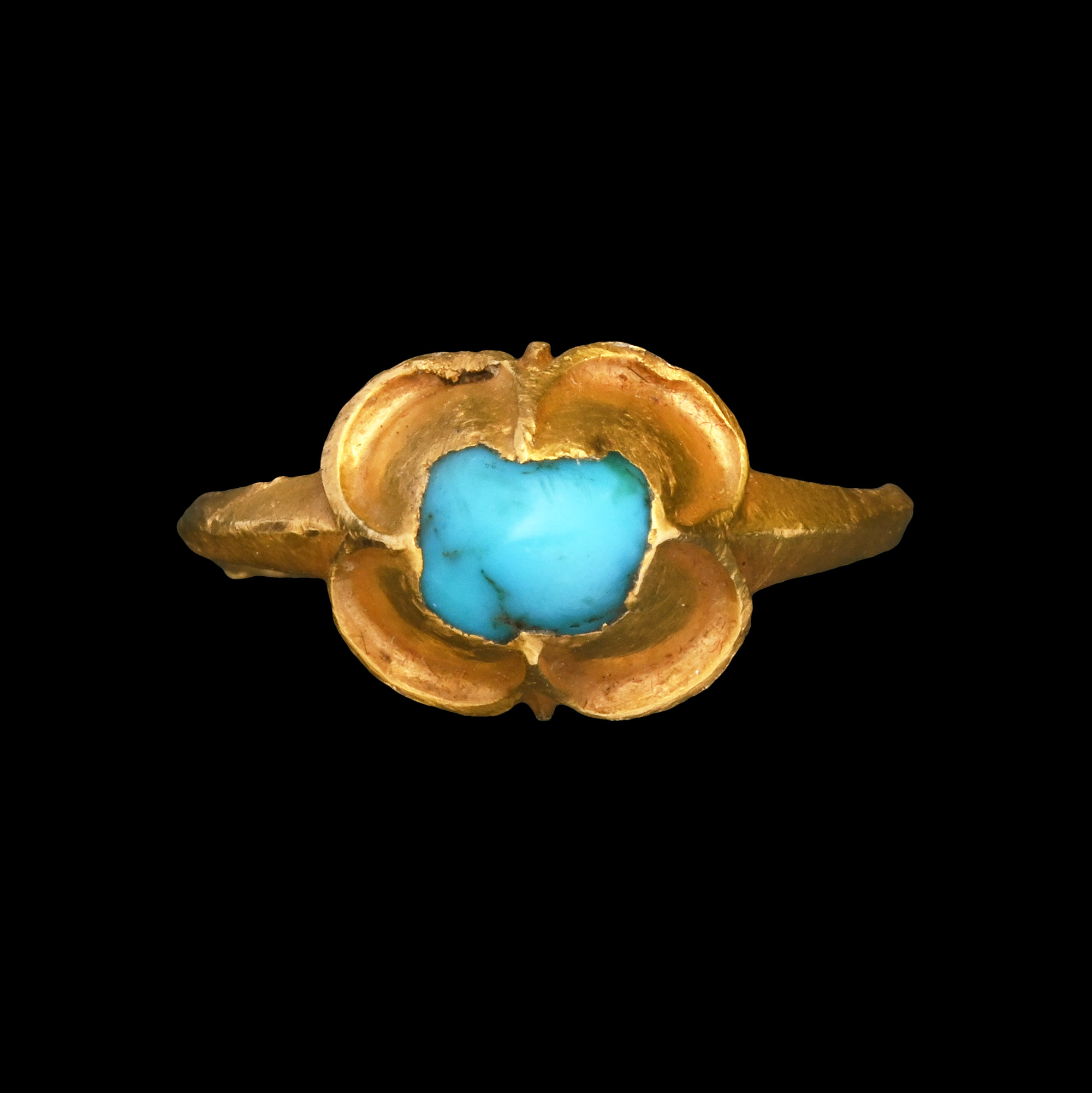
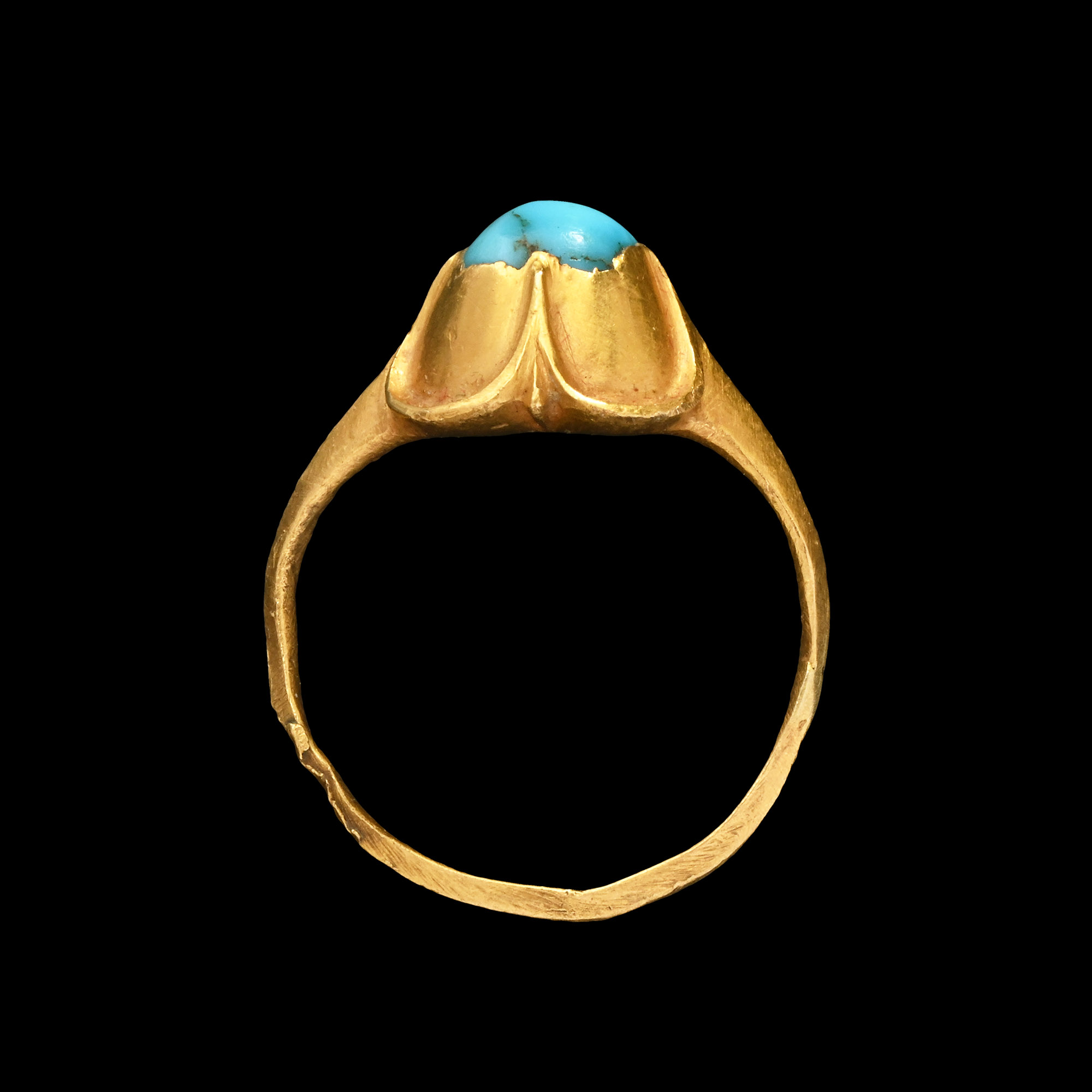
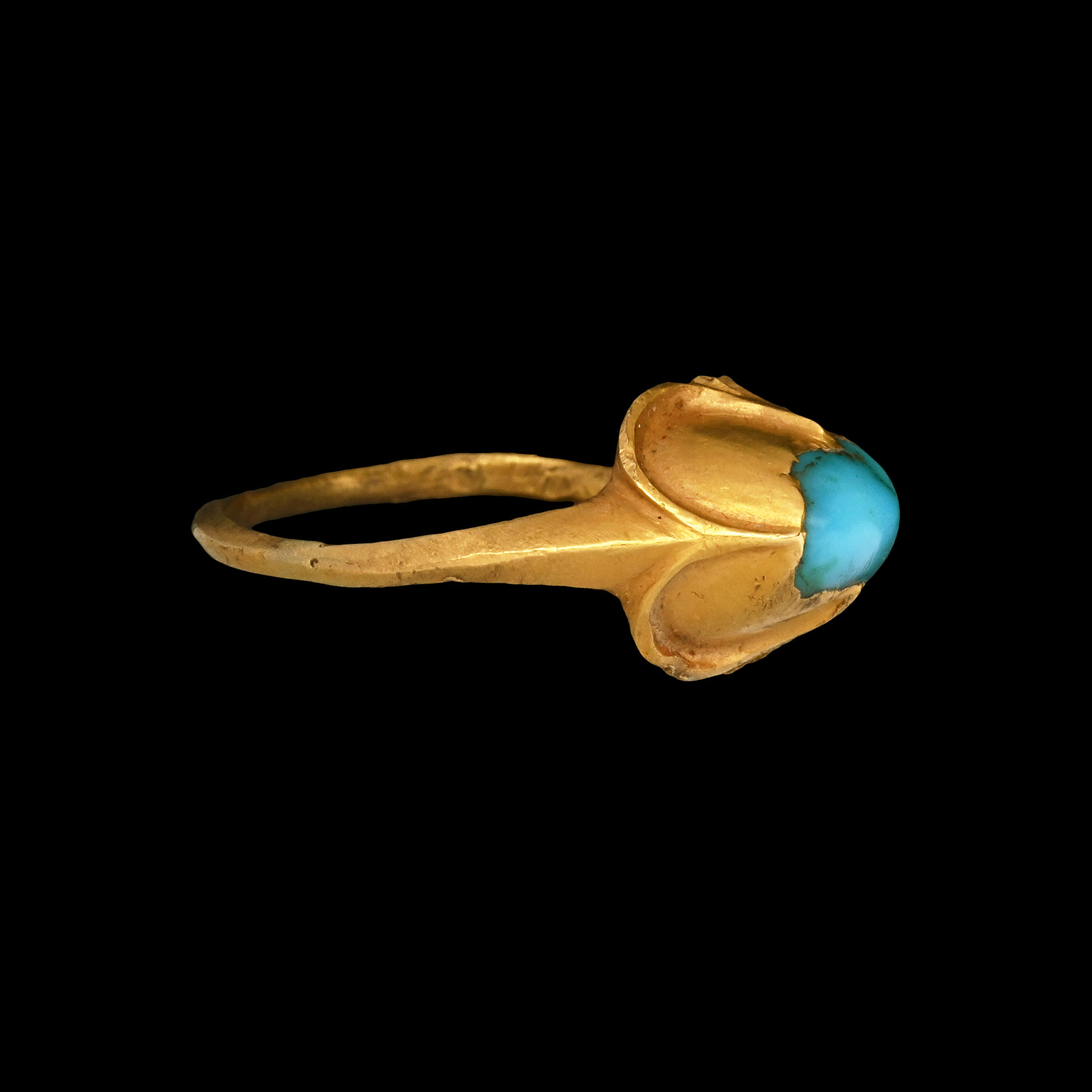
Medieval Gold Ring with Turquoise
1200-1500 A.D.
7/8 in. (3.46 grams, 22.77 mm overall, 16.01 mm internal diameter (approximate size British J, USA 4 3/4, Europe 8.69, Japan 8)).
Comprising a slender hoop with a high pie-crust bezel with a cabochon turquoise within a rub-over setting.
ProvenanceAcquired on the European art market.
This lot has been checked against the Interpol Database of stolen works of art and is accompanied by search certificate number no.13328-257948.
See Portable Antiquities Scheme (PAS) report no.YORYM-1E3B30.
FootnotesThis form of decorative ring with central stone setting is relatively common in the medieval period, when a focus on gemstones over metalwork became increasingly common. Several rings of this type are known and appear to have been popular in the 15th century.
CONDITIONTimeLine Auctions follows a vetting process to ensure the authenticity and legality of all items, reinforcing our commitment to integrity and responsible trading. Each antiquity, antique, and coin lot undergoes thorough examination by a vetting committee of at least ten external specialists, professional trade association members, scientists, and archaeologists: Our Vetting Process
AUCTIONS:
TimeLine is a leading auction house specialising in antiquities, ancient art, collectables, natural history, coins, medals, and books. Our auctions offer museums, collectors, historians, and enthusiasts the opportunity to acquire unique and historically significant pieces.
-
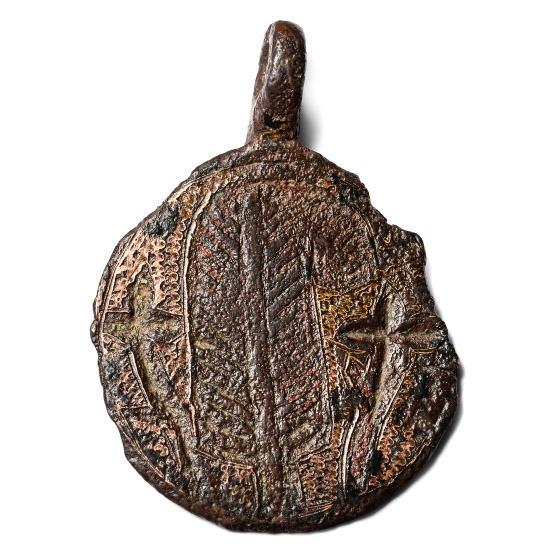
Medieval Knight's Bronze Heraldic Horse Harness Pendant with Feather
13th-15th century A.D.Sold for (Inc. bp): £52
Discoid pendant with a feather flanked by fleur-de-lys. 6.8 grams, 42 mm
From the private collection of Graham Slater (1927-2024), Cambridge, UK; formed 1980s-1990s. -
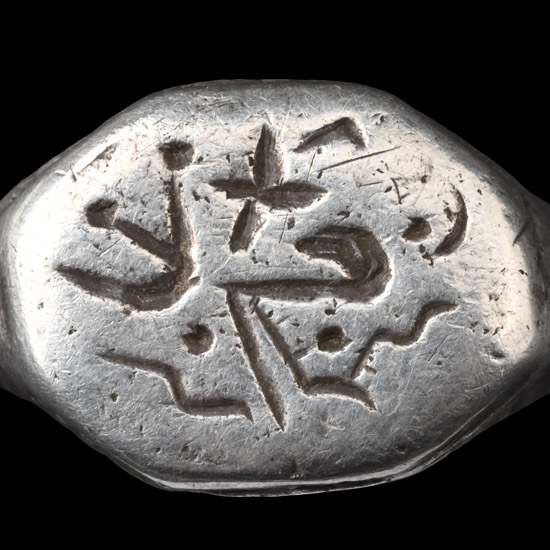
Medieval Silver Engraved Ring
15th-16th century A.D.Sold for (Inc. bp): £52
Comprising a D-section hoop with hatching on the shoulders, a raised oval bezel with a bird, a star, and other motifs. 9.55 grams, 24.29 mm overall, 18.83 mm internal diameter (approximate size British P 1/2, USA 7 3/4, Europe 16.86, Japan 16)
Ex German art market, 2000s. Acquired from an EU collector living in London. From the collection of a Surrey, UK, gentleman. -
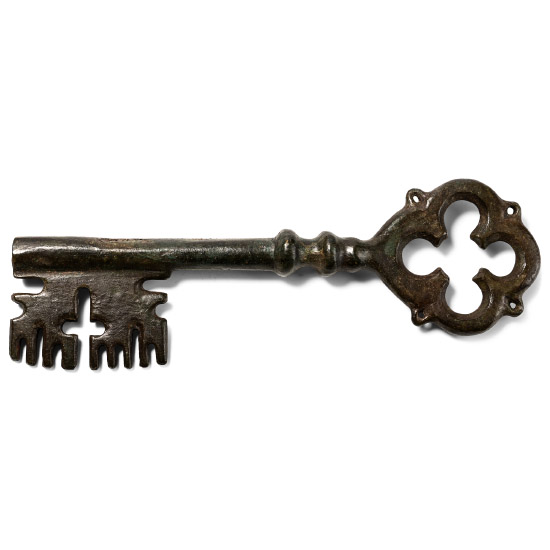
Very Large Medieval Bronze Key
14th-15th century A.D.Sold for (Inc. bp): £910
With voided lozenge bow and pierced lugs to the edges, tubular shaft with rounded forward end, split ward with bits. 142 grams, 15.6 cm
Ex German art market, 2000s. Acquired from an EU collector living in London. From the collection of a Surrey, UK, gentleman.
