Loading, please wait...
Details
LOT 0346
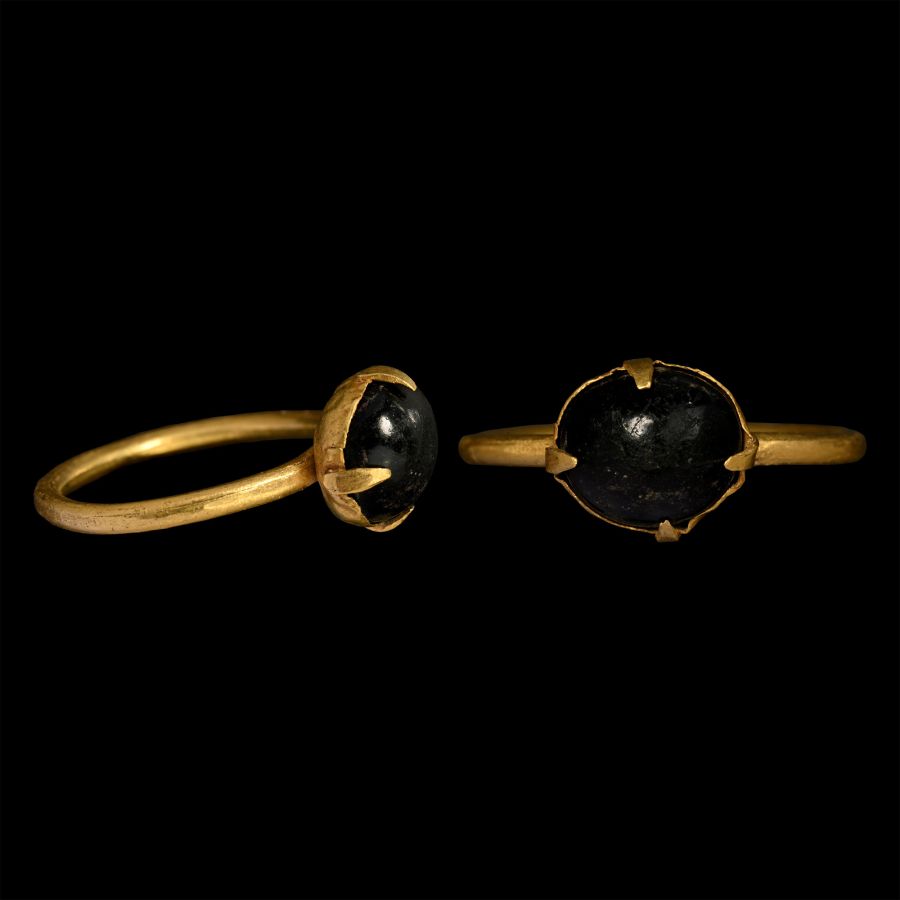
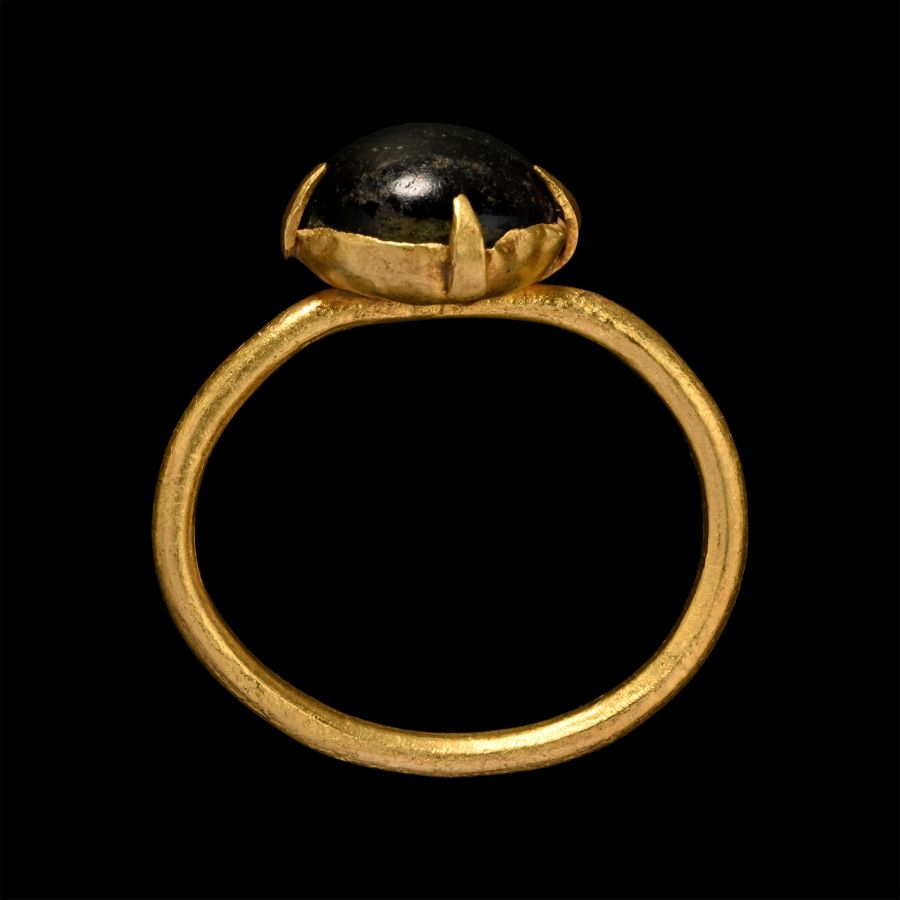
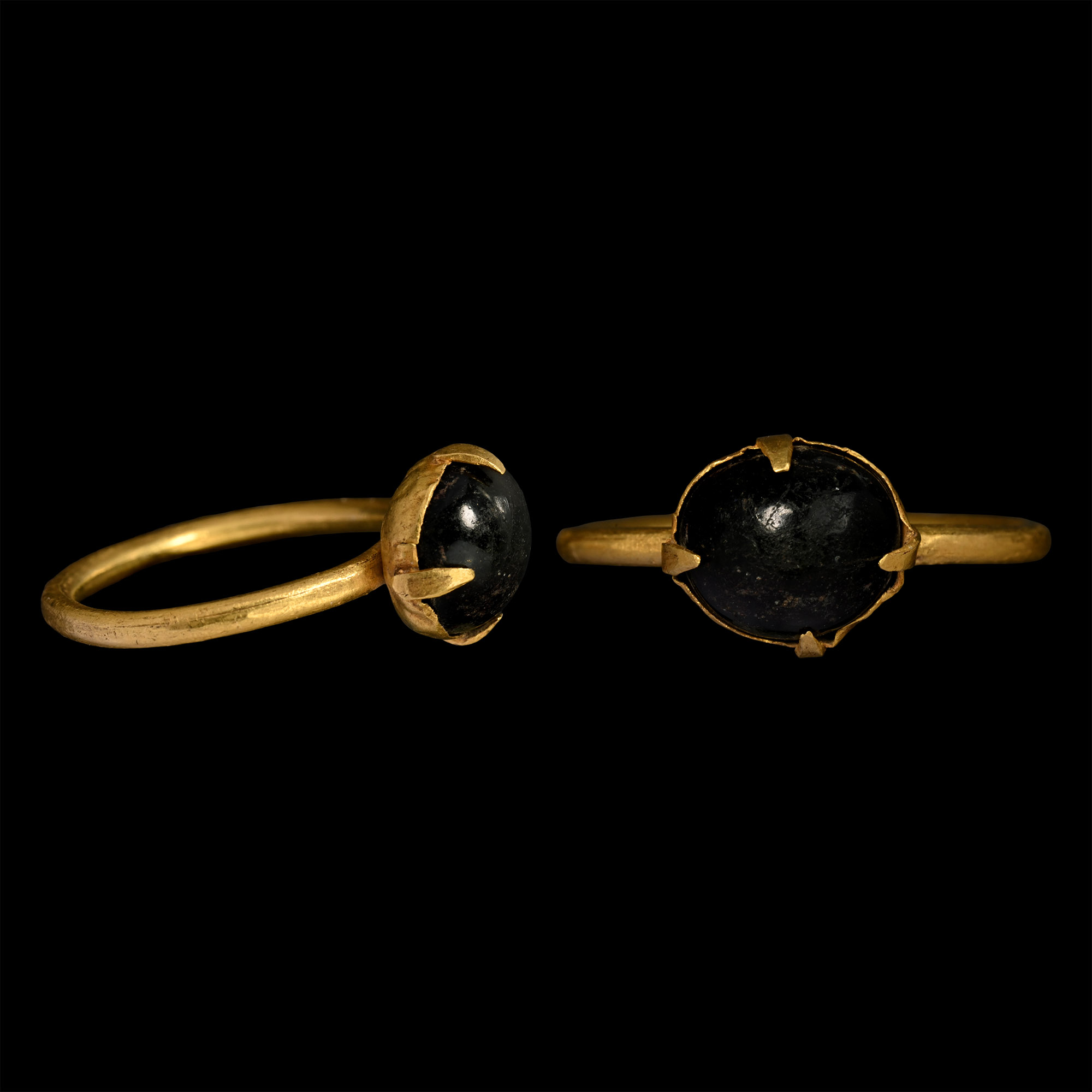
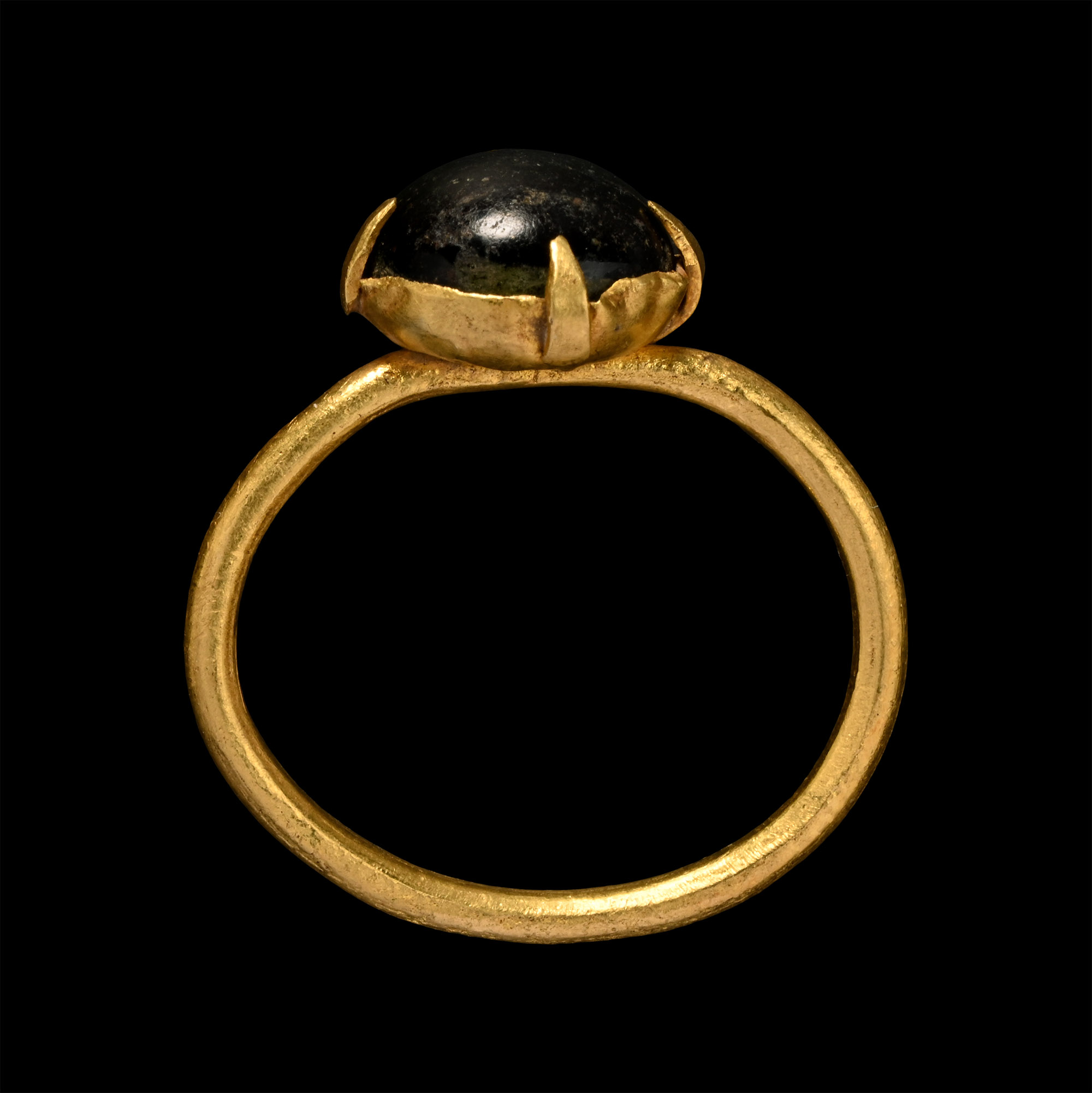
Medieval Gold Ring with Cabochon
CIRCA 12TH-14TH CENTURY A.D.
7/8 in. (3.3 grams, 23.81 mm overall, 15.35x18.64 mm internal diameter (approximate size British L, USA 5 3/4, Europe 1.24, Japan 10)).
Slender round-section hoop with bezel formed as a cup with claw setting for a dark blue gemstone.
Provenance
Ex German art market, 2000s.
Acquired from an EU collector living in London.
From the collection of a Surrey, UK, gentleman.
Literature
Cf. The V&A Museum, accession numbers 649-1871 and 650-1871, for similar examples.
CONDITIONVETTING:
TimeLine Auctions follows a vetting process to ensure the authenticity and legality of all items, reinforcing our commitment to integrity and responsible trading. Each antiquity, antique, and coin lot undergoes thorough examination by a vetting committee of at least ten external specialists, professional trade association members, scientists, and archaeologists: Our Vetting Process
AUCTIONS:
TimeLine is a leading auction house specialising in antiquities, ancient art, collectables, natural history, coins, medals, and books. Our auctions offer museums, collectors, historians, and enthusiasts the opportunity to acquire unique and historically significant pieces.
RELATED LOTS
-
Medieval Iconographic Gold Ring with Mary, Jesus and Saint Catherine
15th century A.D.Sold for (Inc. bp): £5,460
The lower shank with twisted ropework detailing and carinated bands, the shoulders with raised median beaded bands flanked by flowers; the bezel in two panels, each with a reserved standing figure, a female saint in floor-length robe; Virgin Mary on the left panel holding infant Jesus; St Catherine supporting her attribute, a wheel. 6.17 grams, 21.27 mm overall, 16.93 x 17.98 mm internal diameter (approximate size British N, USA 6 1/2, Europe 13.72, Japan 13)
From a South London family collection of religious artefacts formed in the late 1970s to mid 1980s; thence by descent. Accompanied by an academic report by Dr Raffaele D’Amato. This lot has been checked against the Interpol Database of stolen works of art and is accompanied by search certificate number no.13032-247895.
This type of ring has been found in England, Scotland, Ireland and therefore appears to originate from the English regions, or from the territories under English domination. For the identification and use of these so-called iconographic finger rings and further parallels, you can see two detailed comparative examples in the Koch Collection. Many of these iconographic rings also had engraved love inscriptions, although not in our case. These finger rings differ only slightly in ring shape and decoration, but vary in the depictions of saints. -
Medieval Silver Floral Decorated Ring
14th-15th century A.D.Sold for (Inc. bp): £182
With flat angled shoulders and scroll detailing, rectangular bezel with reserved quatrefoil motif, hoop repaired. 2.81 grams, 19.24 mm overall, 16.90 mm internal diameter (approximate size British M 1/2, USA 6 1/4, Europe 13.09, Japan 12)
Ex German art market, 2000s. Acquired from an EU collector living in London. From the collection of Surrey, UK, gentleman. -
Medieval Gilt and Niello Hat Badge with Marriage of the Virgin
Italy, circa 1500 A.D.Sold for (Inc. bp): £1,430
Niello plaque depicting the marriage ceremony between Mary and Joseph, set in a gilt brass mount with a rope twist border, four loops for attachment. 10.8 grams, 46 mm
Private collection, Europe. Acquired on the Belgian art market.
Niello is a black mixture, usually of sulphur, copper, silver and lead. It is used as an inlay on engraved or etched metal, especially silver. It is added as a powder or paste, then fired until it melts or at least softens and flows or is pushed into the engraved lines in the metal. Men began wearing hat ornaments on their caps from the late fifteenth century, which could be either purely decorative or symbolic. Symbolic examples are traditionally known as enseignes, as they conveyed the wearer’s personal intent or a visible message. These jewels trace their origins to the medieval pilgrim badge, usually mass-produced in base metal. It is believed that this fashion shift to a stylish male accessory began when French king Charles VIII entered Naples in February 1495, wearing a gold circular jewel on his cap, while his men had similar, though not gold, jewels on their caps or sleeves. Italians quickly adopted this trend, which then spread to most European courts. However, this fashion declined in the late sixteenth to early seventeenth century, giving way to the popularity of aigrettes.