
Loading, please wait...


LOT 0318
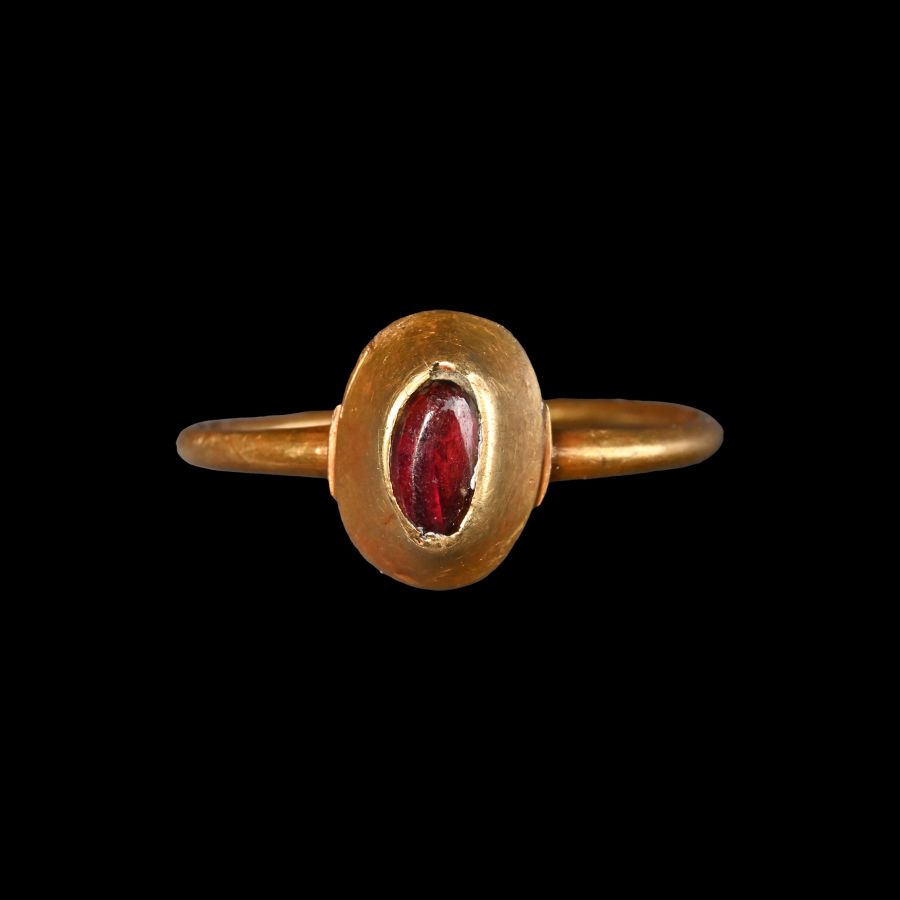
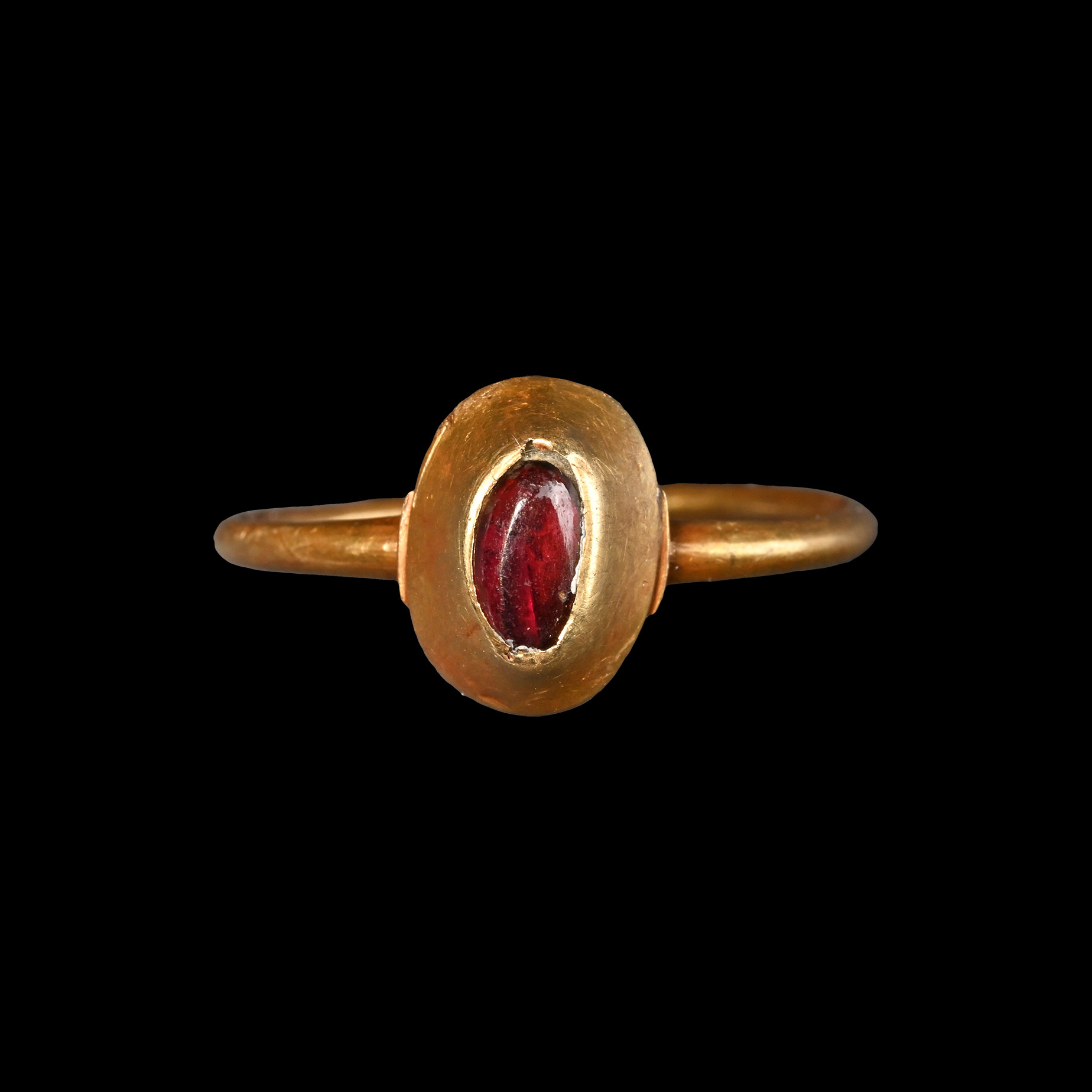
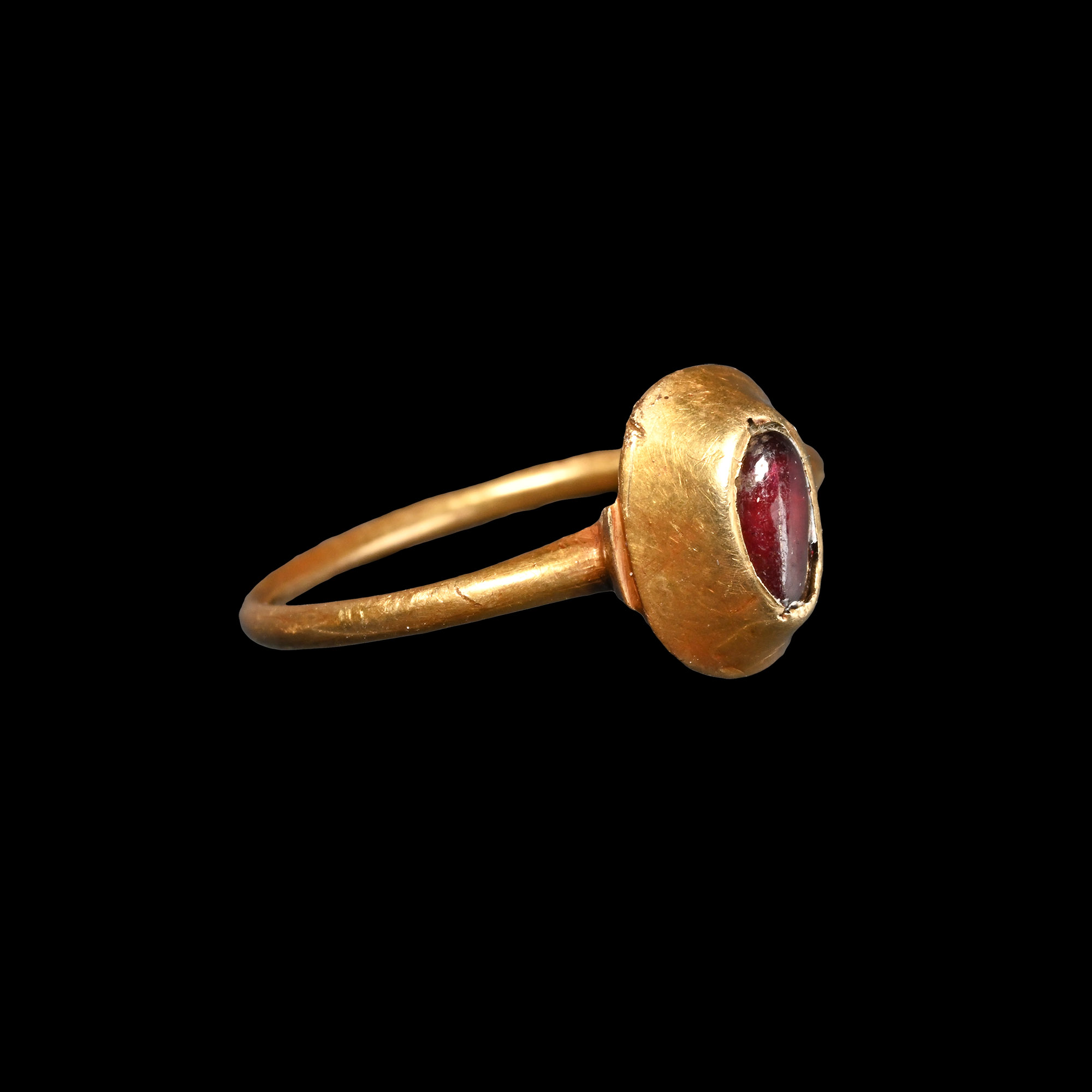
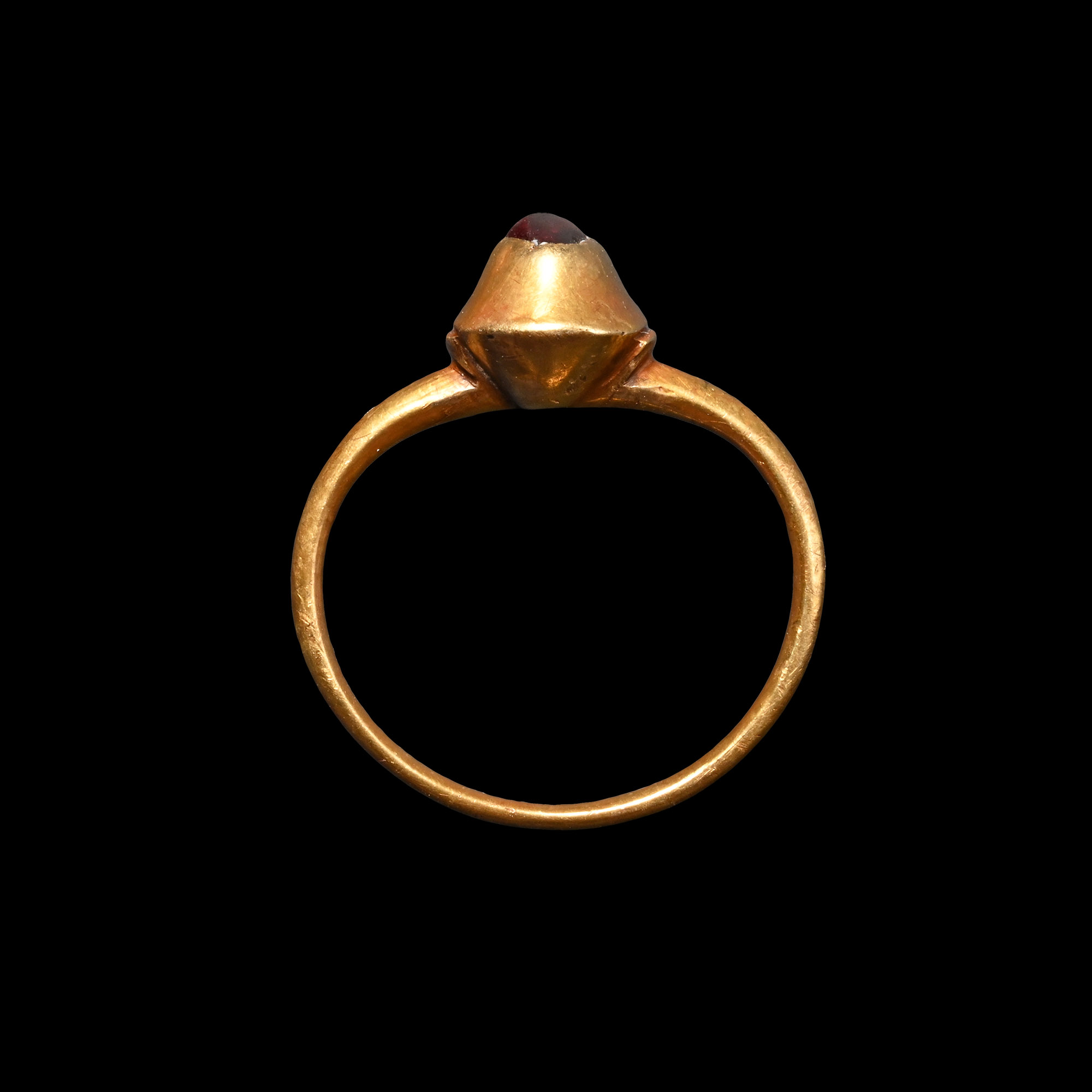
Medieval Gold Ring with Cabochon Garnet
13TH-14TH CENTURY A.D.
1 in. (2.93 grams, 24.96 mm overall, 19.05 mm internal diameter (approximate size British N, USA 6 1/2, Europe 13.72, Japan 13)).
Featuring a round-section hoop and a large collet set with a vibrant red garnet cabochon.
ProvenanceAcquired on the European art market.
This lot has been checked against the Interpol Database of stolen works of art and is accompanied by search certificate number no.13387-258006.
Cf. for a similar example, the Victoria and Albert Museum, London, accession no.639-1871.
FootnotesDuring the Middle Ages, gemstones were often associated with magical and protective properties they were believed to possess. Gemstones could protect against evil or poisons, as well as heightening the individual’s characteristics and strengths.
CONDITIONTimeLine Auctions follows a vetting process to ensure the authenticity and legality of all items, reinforcing our commitment to integrity and responsible trading. Each antiquity, antique, and coin lot undergoes thorough examination by a vetting committee of at least ten external specialists, professional trade association members, scientists, and archaeologists: Our Vetting Process
AUCTIONS:
TimeLine is a leading auction house specialising in antiquities, ancient art, collectables, natural history, coins, medals, and books. Our auctions offer museums, collectors, historians, and enthusiasts the opportunity to acquire unique and historically significant pieces.
-
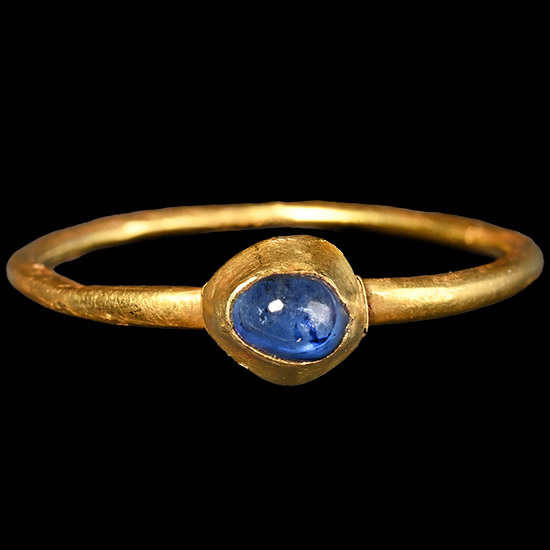
Medieval Gold Ring with Cabochon Sapphire
13th-14th century A.D.Sold for (Inc. bp): £4,160
Featuring a large round-section hoop and raised cell set with a polished sapphire cabochon. 2.03 grams, 26.68 mm overall, 19.10 x 19.45 mm internal diameter (approximate size British R 1/2, USA 8 3/4, Europe 19.38, Japan 18)
Acquired on the European art market. This lot has been checked against the Interpol Database of stolen works of art and is accompanied by search certificate number no.13388-258005.
During the Middle Ages, gemstones were often associated with magical and protective properties they were believed to possess. Gemstones could protect against evil or poisons, as well as heightening the individual’s characteristics and strengths. Sapphires were frequently worn by Bishops and other clergy, due to their ability to promote their bearer’s chastity and piety. Sapphires were believed to be able to change colour if the wearer acted sinfully or lacked faith; it was because of this belief that jewels set with sapphires were worn as symbols of honesty and devout faith. -
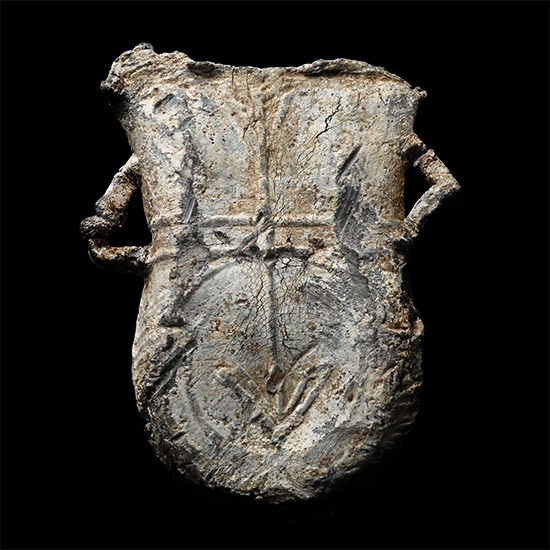
Medieval Lead Walsingham Pilgrim's Holy Water Ampulla
Circa 15th century A.D.Sold for (Inc. bp): £124
With lateral loops and low-profile cross with W to obverse, reverse with a hatched crescent. 31.1 grams, 46 mm
Found Suffolk, UK. Property of a Suffolk, UK, gentleman. -
.jpg)
Medieval de Blanchfort or de Molay Family Personal Silver Heraldic Seal Matrix
Circa 1400-1540 A.D.Sold for (Inc. bp): £1,495
With a hexagonal-section facetted handle tapering to a collar of three ridges and openwork trefoil terminal; the face of the matrix with incised heater shield and heraldic arms: a bend and crescent top right; within a trefoil arched tressure a Latin inscription: ' * AVE MARIA GRACIA PLENA' meaning: 'Hail Mary, full of grace'; possibly the arms of the de Blanchfort or de Molay family. 12.41 grams, 27 mm high
Found whilst searching with a metal detector near Charlton Marshall, North Dorset, on 16 February 2022 by John Earley; recorded as Treasure with Treasure case tracking no.2022T500, and subsequently disclaimed by the Crown. Accompanied by a copy of the British Museum's Portable Antiquities Scheme (PAS) report no.DOR-771829. Accompanied by a copy of the report on a find of potential Treasure for H M Coroner from Charlton Marshall, Dorset. Accompanied by a copy of a letter from the British Museum informing the finder that the Crown's interest in the find has been disclaimed.
The basic heraldic design (the arms) comprises just a bend (diagonal stripe). The crescent is a mark of cadency, denoting the second son i.e. the younger brother of the heir apparent. The basic 'bend' motif appears in many heraldic designs, such as the arms of the de Blanchfort or de Molay families, amongst others. The heraldry of the town of Chaussin (Jura, France) is similar (bend and crescent) but these arms are not known to have been borne by a family.
