
Loading, please wait...
LOT 0314
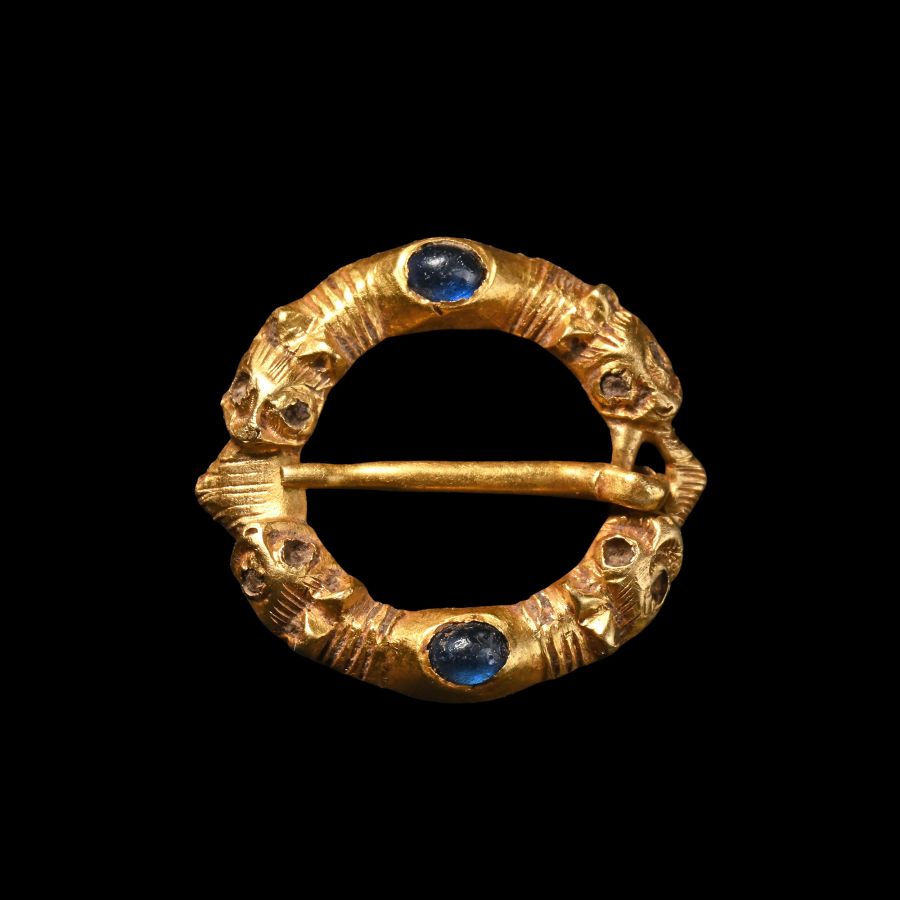
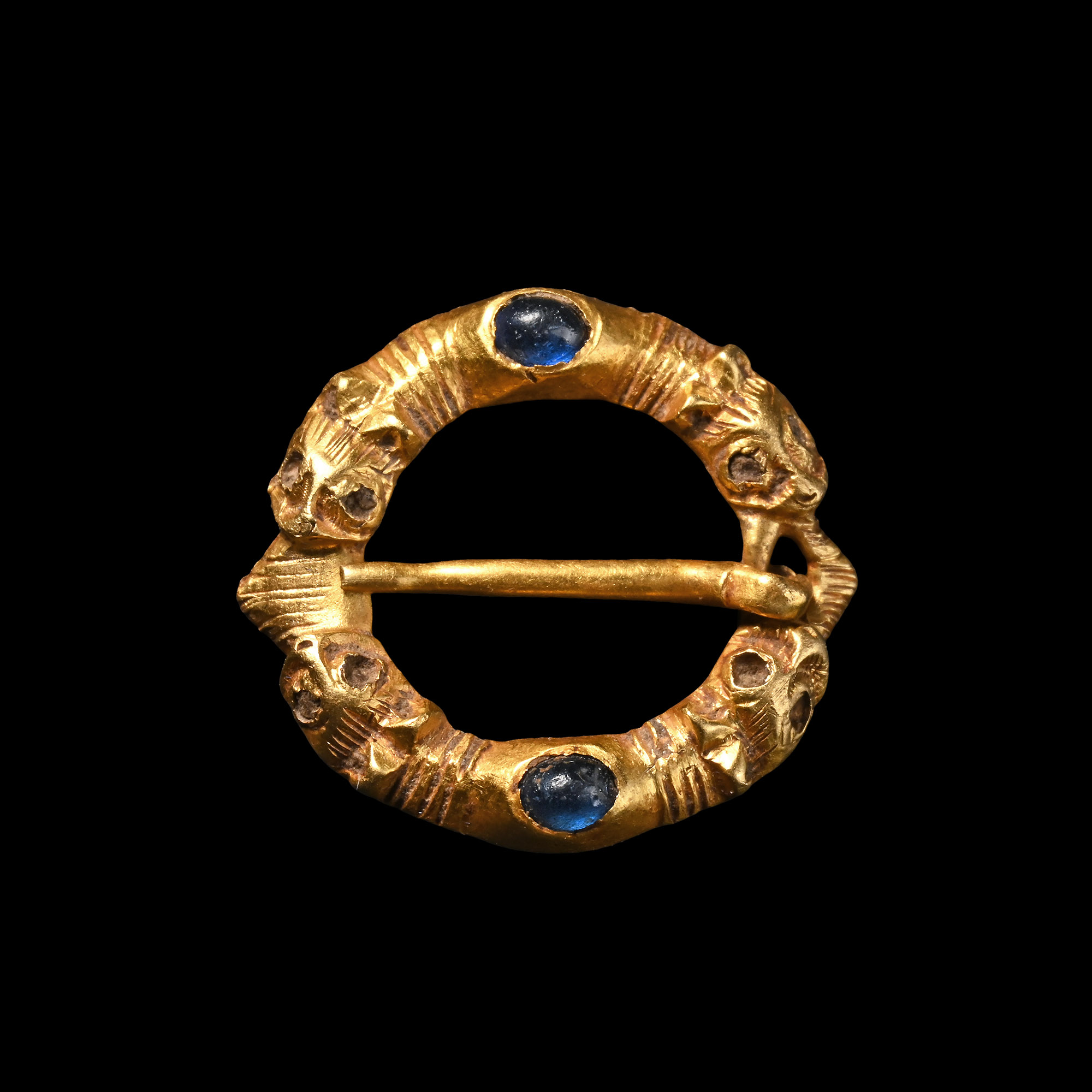
Medieval Gold Ring Brooch with Beast Heads
13TH CENTURY A.D.
1/2 in. (1.18 grams, 14 mm).
Annular brooch decorated with leopard heads, each originally with gem-set eyes, with two blue glass cabochons on each side of the pin.
ProvenanceFrom the collection of Gordon Bailey, Essex, UK; formed since 1968.
PublishedBailey, G., Buttons & Fasteners 500 BC-AD 1840, Witham, 2004, p.107, fig.(1)3.25.
LiteratureComparisons can be made with a silver-gilt example in the British Museum, registration number: 2003,0703.1.
FootnotesAn annular brooch is a type of brooch that is circular in shape, forming a complete ring. They were worn by both men and women of all social classes. The word 'annular' comes from the Latin word 'annulus', meaning ring. These brooches were popular in medieval Europe, particularly from the 13th to 15th centuries, and were used to fasten clothing such as tunics and cloaks.
CONDITIONTimeLine Auctions follows a vetting process to ensure the authenticity and legality of all items, reinforcing our commitment to integrity and responsible trading. Each antiquity, antique, and coin lot undergoes thorough examination by a vetting committee of at least ten external specialists, professional trade association members, scientists, and archaeologists: Our Vetting Process
AUCTIONS:
TimeLine is a leading auction house specialising in antiquities, ancient art, collectables, natural history, coins, medals, and books. Our auctions offer museums, collectors, historians, and enthusiasts the opportunity to acquire unique and historically significant pieces.
-
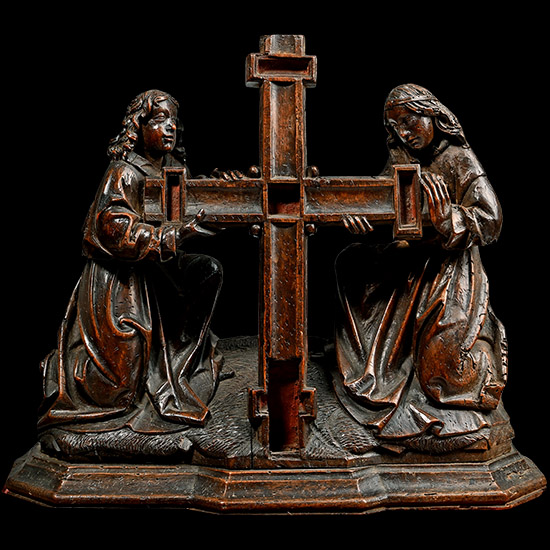
Medieval Carved Wooden Panel with Kneeling Angels Supporting the Cross
South Netherlands, 1500-1520 A.D.Estimate: £3,000 - 4,000 (+bp*)
Opening Bid: £1,500
A finely carved late Gothic group depicting two kneeling angels supporting the Cross, executed in walnut with a deep, time-worn patina, the angels, shown in reverent adoration, kneeling upon a naturalistic ground, their flowing drapery falling in deep, angular folds; each figure gently steadying the cross with expressive, delicately carved hands; on the reverse apertures indicating the former attachment of separately carved wings, now lost; the recessed compartments within the cross retaining traces of red pigment, suggesting that it originally housed relics or fragments of the True Cross; accompanied by a fabric-covered display stand. 6.4 kg total, 40.7 cm high
Acquired on the European art market. This lot has been checked against the Interpol Database of stolen works of art and is accompanied by search certificate number no.13380-258014.
The composition is devotional in nature and was likely conceived as part of a larger altarpiece or reliquary ensemble dedicated to the Adoration or Exaltation of the Holy Cross. The sculptor’s sensitive modelling and rhythmic treatment of drapery reflect the refined workmanship characteristic of the Southern Netherlands during the early sixteenth century. -
.jpg)
Medieval Silver Ring with Heraldic Bezel
Circa 15th-16th century A.D.Sold for (Inc. bp): £85
Comprising a D-section hoop and teardrop bezel with median zigzag band between curved and rectilinear motifs, possibly birds 10.45 grams, 25.05 mm overall, 18.79 mm internal diameter (approximate size British P 1/2, USA 7 3/4, Europe 16.86, Japan 16)
Ex German art market, 2000s. Acquired from an EU collector living in London. From the collection of a Surrey, UK, gentleman. -
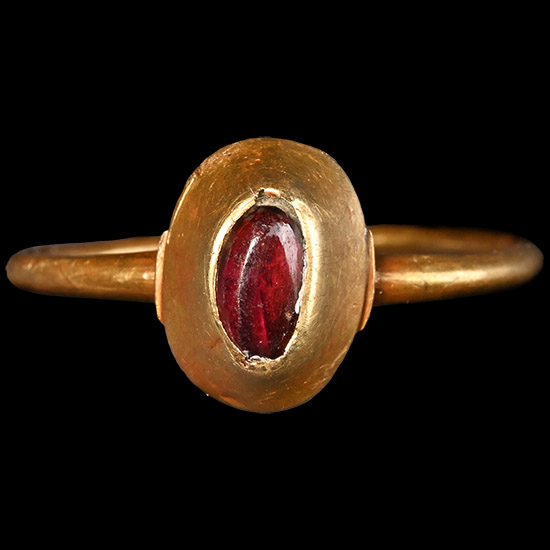
Medieval Gold Ring with Cabochon Garnet
13th-14th century A.D.Sold for (Inc. bp): £2,340
Featuring a round-section hoop and a large collet set with a vibrant red garnet cabochon. 2.93 grams, 24.96 mm overall, 19.05 mm internal diameter (approximate size British N, USA 6 1/2, Europe 13.72, Japan 13)
Acquired on the European art market. This lot has been checked against the Interpol Database of stolen works of art and is accompanied by search certificate number no.13387-258006.
During the Middle Ages, gemstones were often associated with magical and protective properties they were believed to possess. Gemstones could protect against evil or poisons, as well as heightening the individual’s characteristics and strengths.
