
Loading, please wait...
LOT 1642
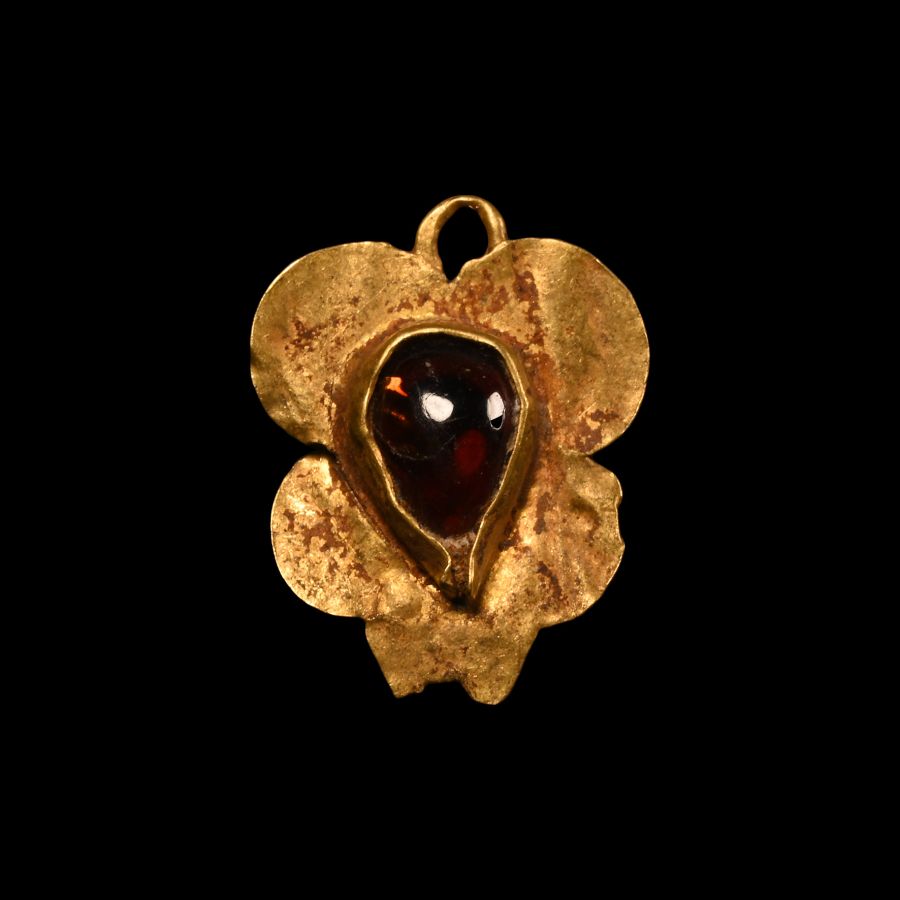
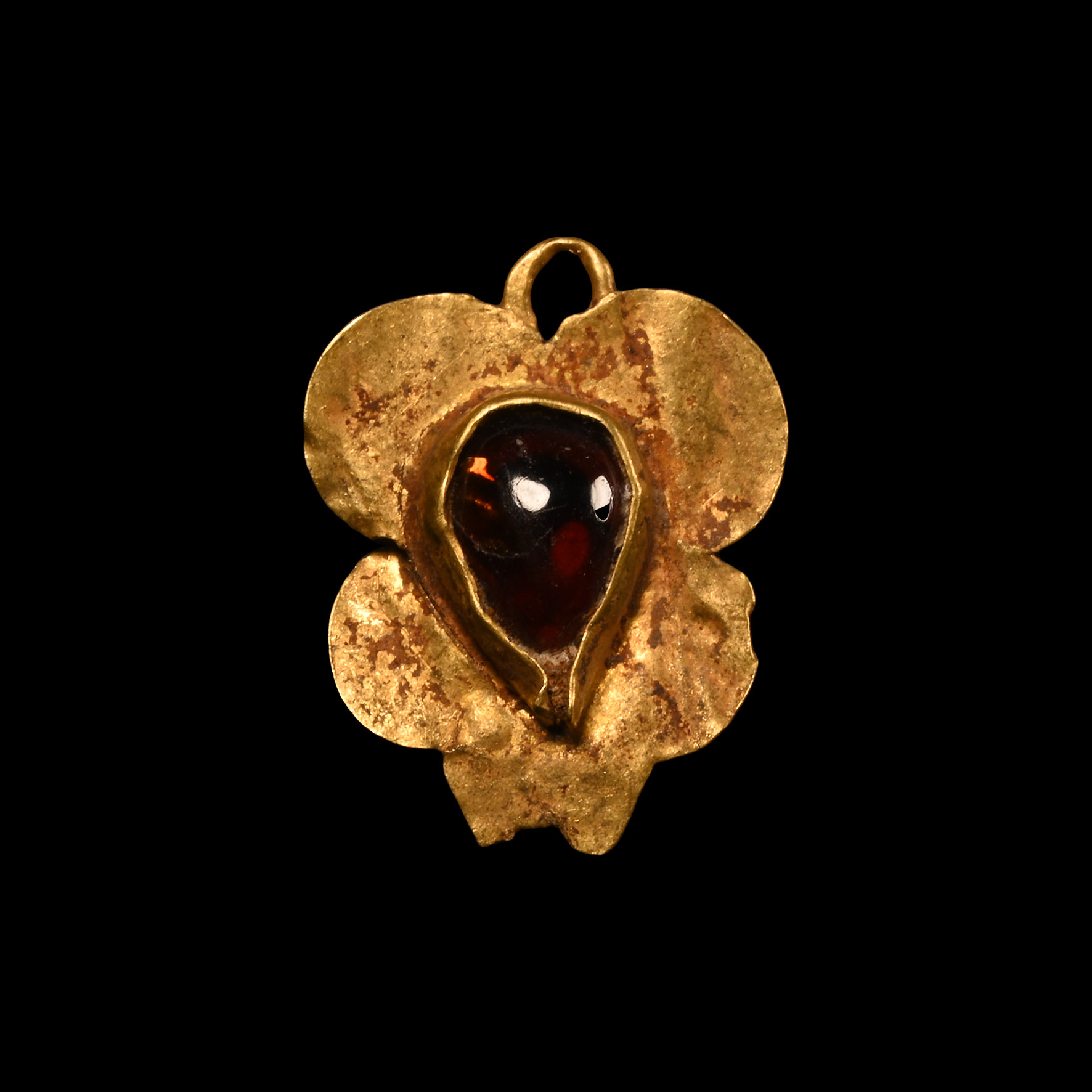
Medieval Gold Leaf-Shaped Pendant with Garnet
14TH-16TH CENTURY A.D.
1/2 in. (0.25 grams, 12 mm).
A sheet-gold leaf with suspension loop and raised central cell inlaid with a polished garnet cabochon.
ProvenanceFrom a late Japanese specialist collector, 1970-2000s.
CONDITIONTimeLine Auctions follows a vetting process to ensure the authenticity and legality of all items, reinforcing our commitment to integrity and responsible trading. Each antiquity, antique, and coin lot undergoes thorough examination by a vetting committee of at least ten external specialists, professional trade association members, scientists, and archaeologists: Our Vetting Process
AUCTIONS:
TimeLine is a leading auction house specialising in antiquities, ancient art, collectables, natural history, coins, medals, and books. Our auctions offer museums, collectors, historians, and enthusiasts the opportunity to acquire unique and historically significant pieces.
-
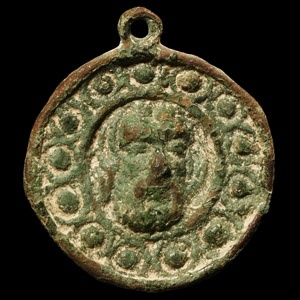
Medieval Bronze Badge with Head of Saint John the Baptist
15th-16th century A.D.Sold for (Inc. bp): £46
Discoid in form with suspension loop to apex, raised head of Saint John the Baptist at centre, framed with pellet-in-ring motifs. 3.32 grams, 24 mm
Found Hampshire, UK. -
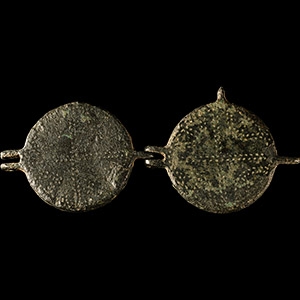
Medieval Bronze Pocket Folding Mirror Case
14th-15th century A.D.Sold for (Inc. bp): £85
With articulate rivet and loop for suspension, both discoid outer faces decorated with a pricked cross motif. 20 grams, 46 mm
Acquired on the UK market, 1990s. Property of a retired academic. -
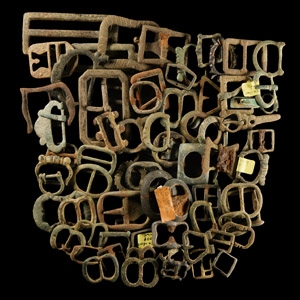
Medieval and Later Bronze Buckle Collection
Circa 12th-20th century A.D.Sold for (Inc. bp): £39
Comprising a variety buckle types and sizes from a broad range of time periods, including examples with trace remains of gilding; decoratively shaped and incised examples; together with a small number retaining their tongues or straps. 306 grams total, 13-61 mm
Found Berkshire, UK.
