
Loading, please wait...
LOT 0325
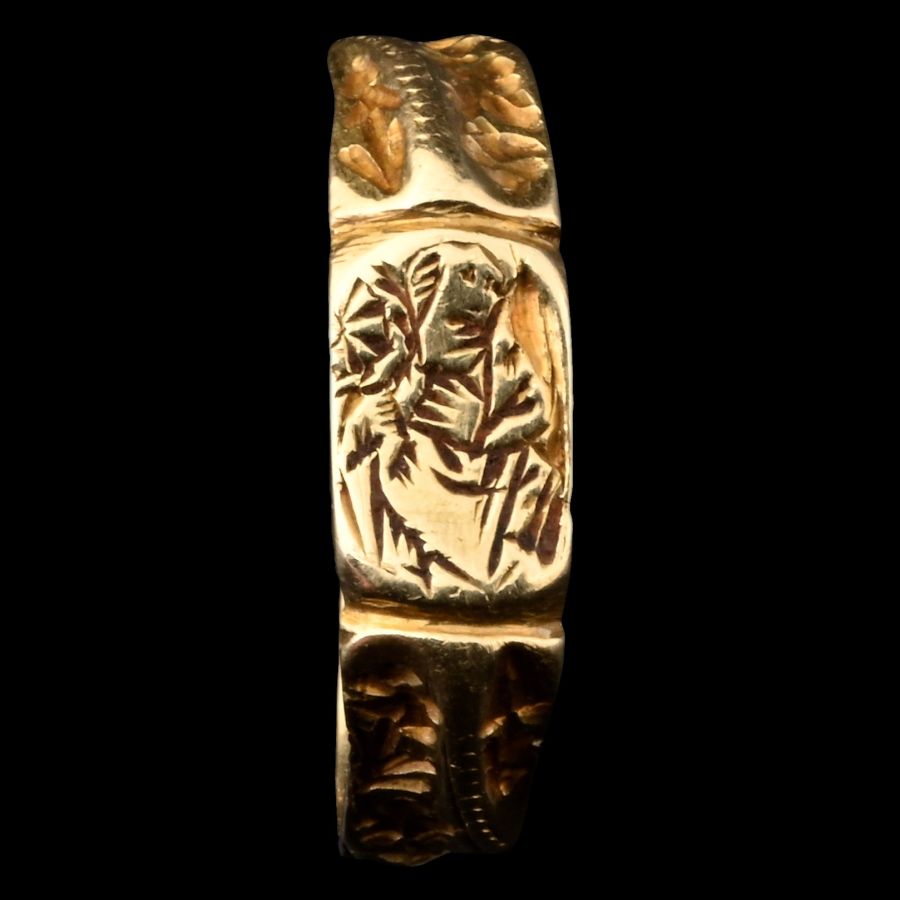
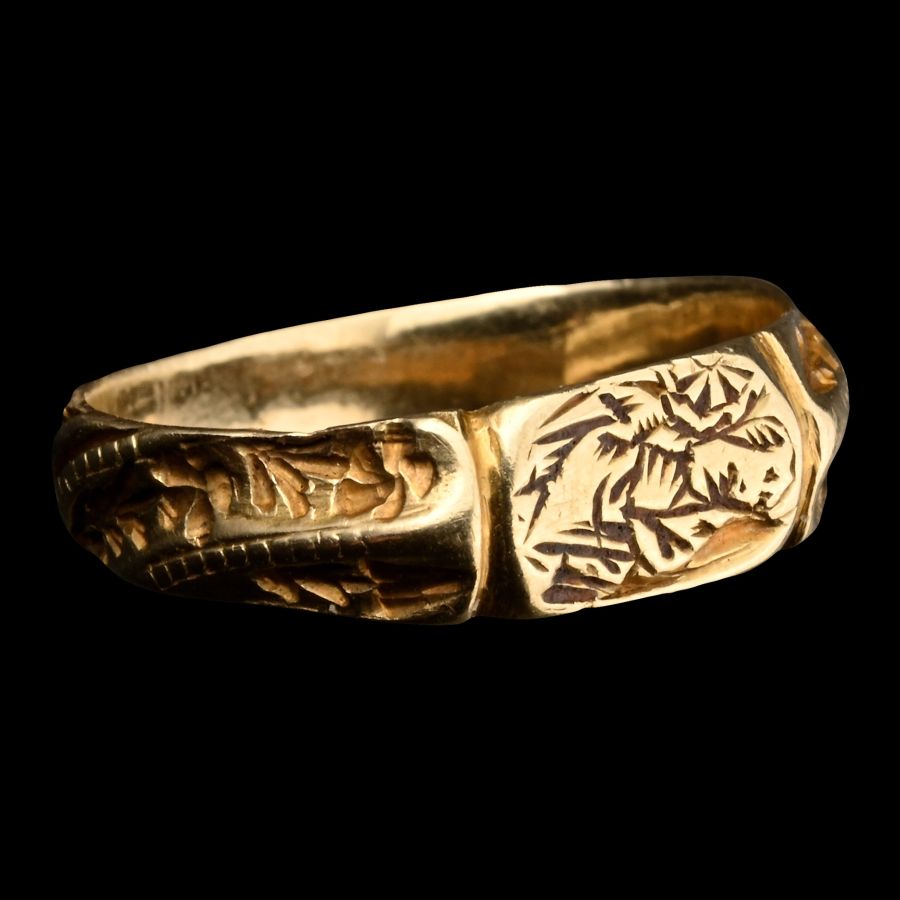
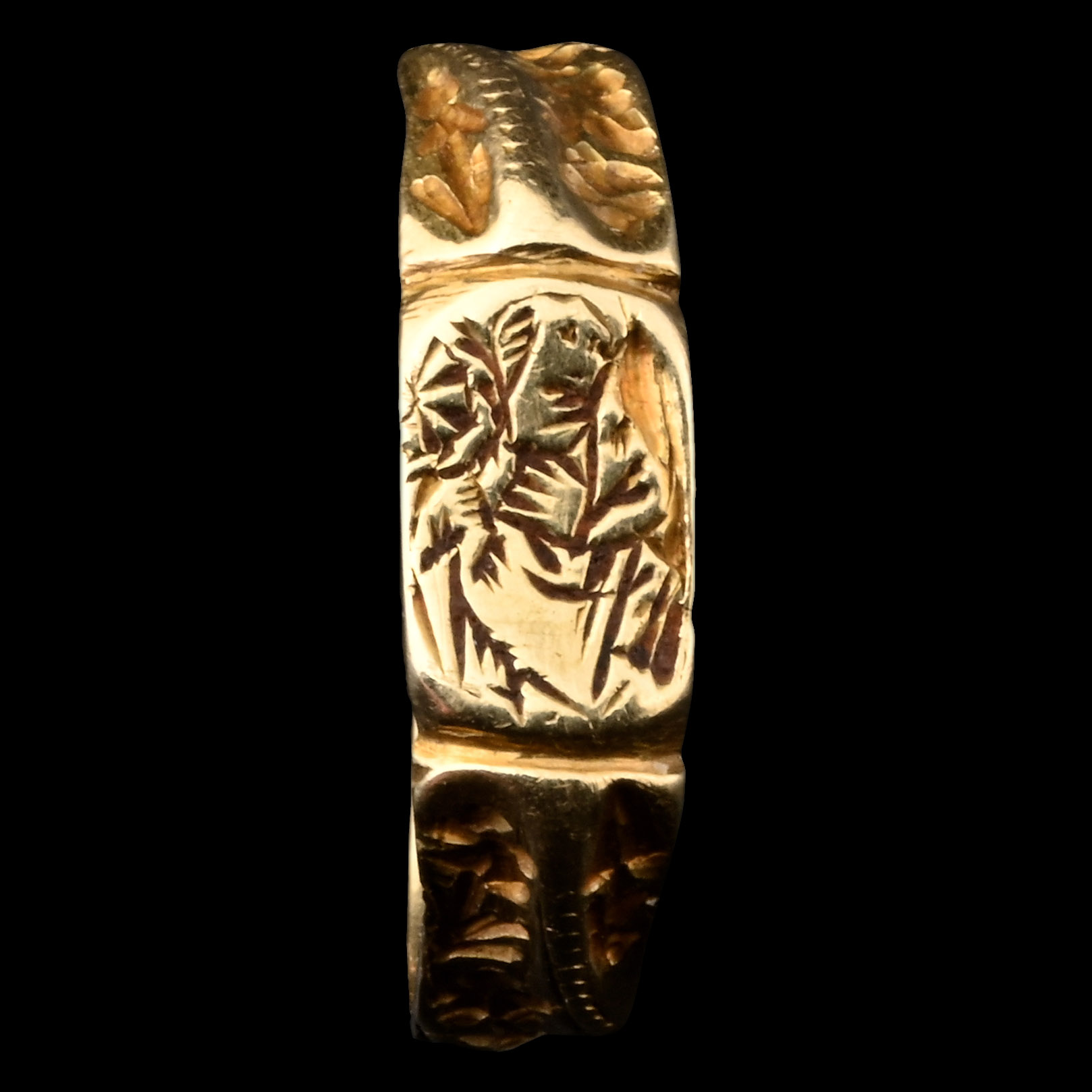
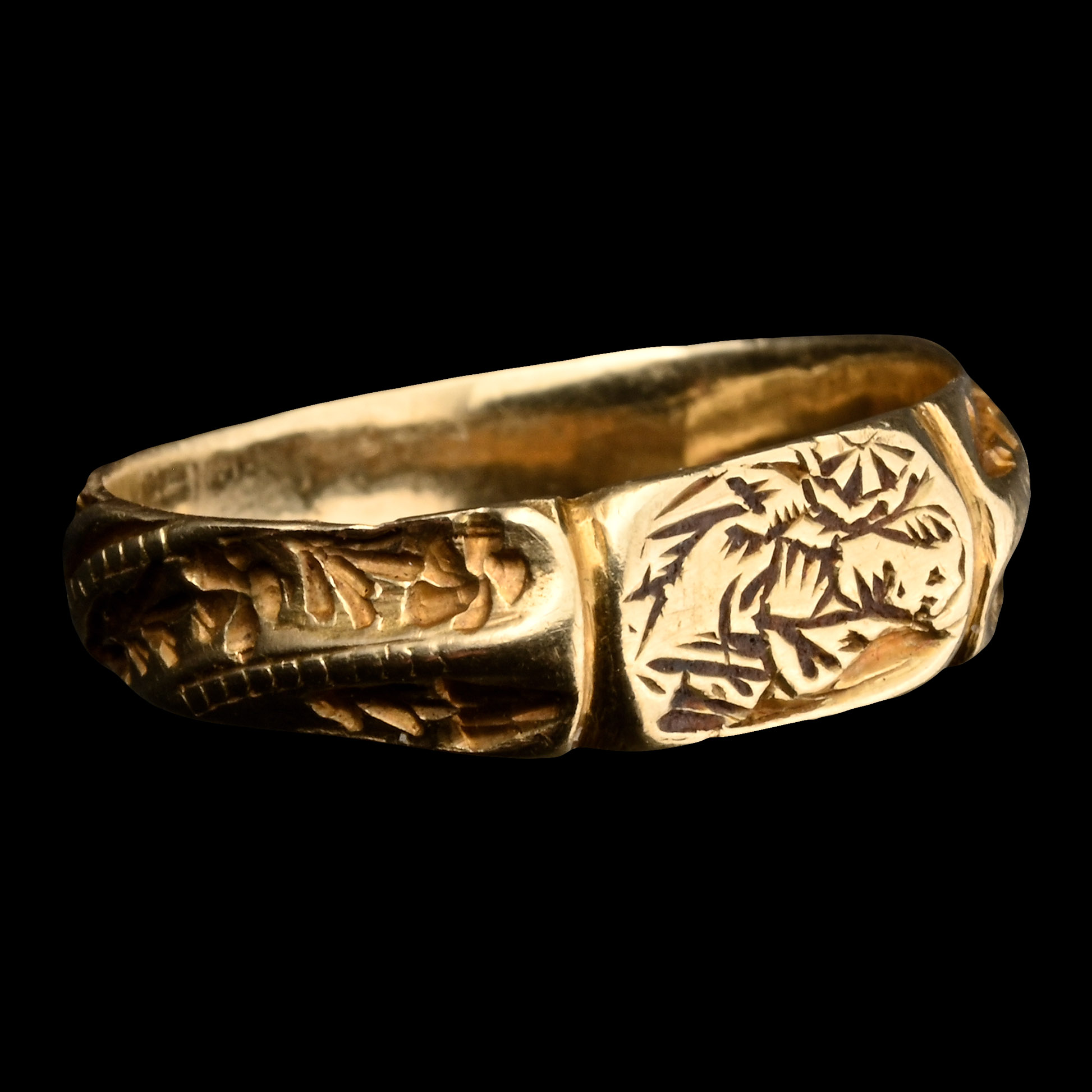
Medieval Gold Iconographic Ring with Saint Catherine
CIRCA 15TH CENTURY A.D.
3/4 in. (2.62 grams, 19.22 mm overall, 17.42 mm internal diameter (approximate size British M, USA 6, Europe 12.46, Japan 12)).
With an oval bezel engraved in fine outline with Saint Catherine of Alexandria, shown standing frontally beside the spiked wheel of her martyrdom; the shoulders engraved with stylised floral ornament, curved fluting and rows of beaded decoration extending around the hoop.
ProvenanceAcquired on the European art market.
UK, private collection.
This lot has been checked against the Interpol Database of stolen works of art and is accompanied by search certificate no.13505-263380.
Cf. a similar ring in Chadour A.B., Rings. The Alice and Luis Koch Collection, Part I, Leeds 1994, item 596, for the type.
FootnotesSaint Catherine was among the saints represented on late medieval English iconographic rings, which served as personal expressions of devotion.
CONDITIONTimeLine Auctions follows a vetting process to ensure the authenticity and legality of all items, reinforcing our commitment to integrity and responsible trading. Each antiquity, antique, and coin lot undergoes thorough examination by a vetting committee of at least ten external specialists, professional trade association members, scientists, and archaeologists: Our Vetting Process
AUCTIONS:
TimeLine is a leading auction house specialising in antiquities, ancient art, collectables, natural history, coins, medals, and books. Our auctions offer museums, collectors, historians, and enthusiasts the opportunity to acquire unique and historically significant pieces.
LOT 0325
Medieval Gold Iconographic Ring with Saint Catherine
Estimate £4,000 - 6,000€4,640 - 6,960 (for guidance only)$5,400 - 8,100 (for guidance only)
Opening Bid
£2,000 (EUR 2,320; USD 2,700) +BP*
-
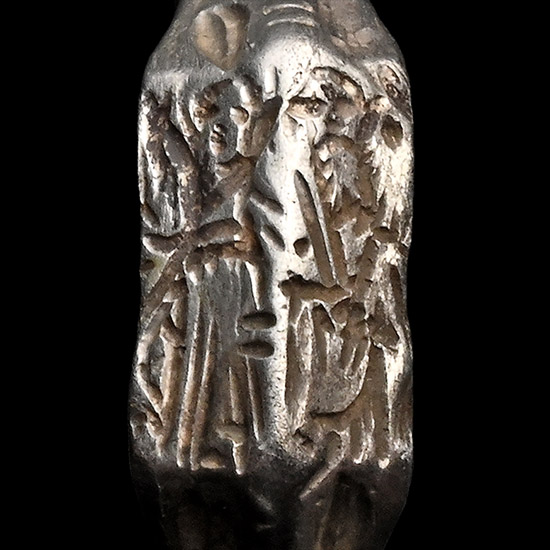
'The Loders' Medieval Silver-Gilt Iconographic Ring with Saint Christopher and Christ
Western England, circa 1400-1550 A.D.Estimate: £500 - 700 (+bp*)
Opening Bid: £250
The bezel divided longitudinally into two sub-rectangular facets, each transversely concave, meeting in a pointed ridge at the middle; both facets engraved: the figure on the right a draped, mature and bearded male with an object on his left shoulder and raised hem to his robe, likely St. Christopher bearing the Christ child; the left-hand side with unidentified figure facing left; shoulders and hoop decorated with a continuation of the central rib develping to a row of beaded pellets; shoulders double faceted, each decorated with an incised branch of four flanking leaves and a pointed flower bud; hoop separated from the shoulders by notches flanking the beaded rib. 4.72 grams, 23.28 mm overall, 18.70 mm internal diameter (approximate size British Q 1/2, USA 8 1/4, Europe 18.12, Japan 17)
Found whilst searching with a metal detector near Loders, Dorset, UK, on 1st November 2025, declared as Treasure under the Treasure Act with reference number 2025 T1471, subsequently disclaimed by the Crown and returned to the finder. Accompanied by a copy of the British Museum's Portable Antiquities Scheme (PAS) report no.DOR-B066F7. Accompanied by a copy of the report on the find of potential Treasure for H M Coroner with reference no.2025 T1471.
Similarly decorated examples can be found in the PAS database, including GLO-A3DF57 (2013 T653), SUSS-72DoD5 (2003 T318) and BM-D83D1C (2003 T84). These examples are dated to c. 1400 to 1550. Similar iconographic rings with dual- or triple-celled bezels are found in the British Museum’s collection (1891,1124.1 and 1871,0303.2), both dated to the 15th century. The latter features a recognisably similar depiction of St Christopher, albeit clearer and more detailed. The second figure on the ring is another saint, possibly Saint Barbara or St Margaret, although more defining details are obscured. -
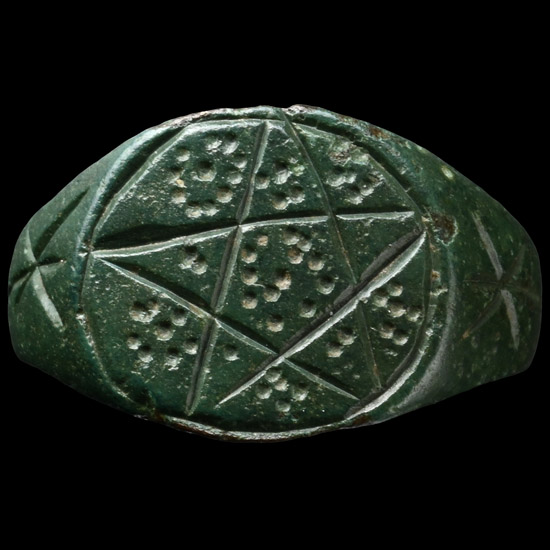
Medieval Bronze Pentagram Ring
Circa 14th-16th century A.D.Estimate: £60 - 80 (+bp*)
Opening Bid: £5
Wide hoop with expanding shoulders and flat discoid bezel, incised pentagram and star motif. 5.56 grams, 23.23 mm overall, 20.66 x 19.37 mm internal diameter (approximate size British T 1/2 , USA 9 3/4, Europe 21.89, Japan 21)
Ex German art market, 2000s. Acquired from an EU collector living in London. From the collection of a Surrey, UK, gentleman. -
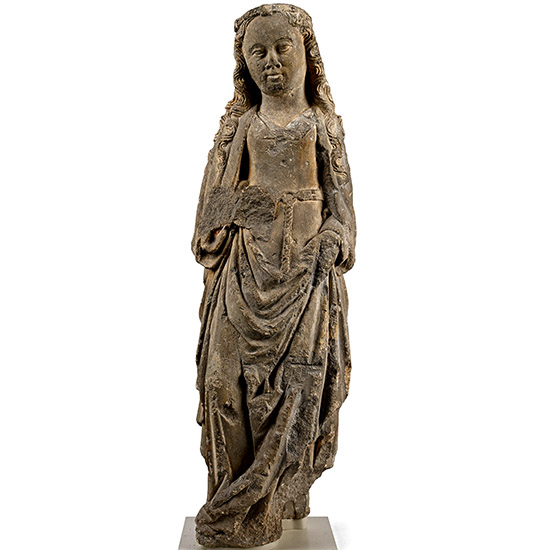
Medieval Stone Sculpture of St Mary Magdalene
France, early 15th century A.D.Estimate: £3,000 - 4,000 (‡+bp*)
Bids: 7 | Current Bid: £270
Modelled in high relief with dorsal pillar; maiden in advancing pose with fillet to the brow and curly tresses falling to the shoulders, girdle with loop and chain to the waist, copious folds of the robe lifted by the left hand, right hand at waist-height; mounted on a custom-made stand. 21.5 kg total, 70 cm high including stand
French-Swiss private collection. The items were acquired in the 2010s to be displayed on the property in Ain, France. Following the move, they disposed of some of the items. This lot has been checked against the Interpol Database of stolen works of art and is accompanied by search certificate no.13514-262848.
By the early 13th century, bodies in Gothic sculpture acquired more three-dimensional mass, more flexibility, more natural poses and drapery, and individual faces. Later 13th-century sculpture gave up this monumental power for more specific anatomy, actions, and emotions. Late 14th -century and 15th-century work continued in the direction of greater mass and more detailed faces.
