
Loading, please wait...
LOT 1682
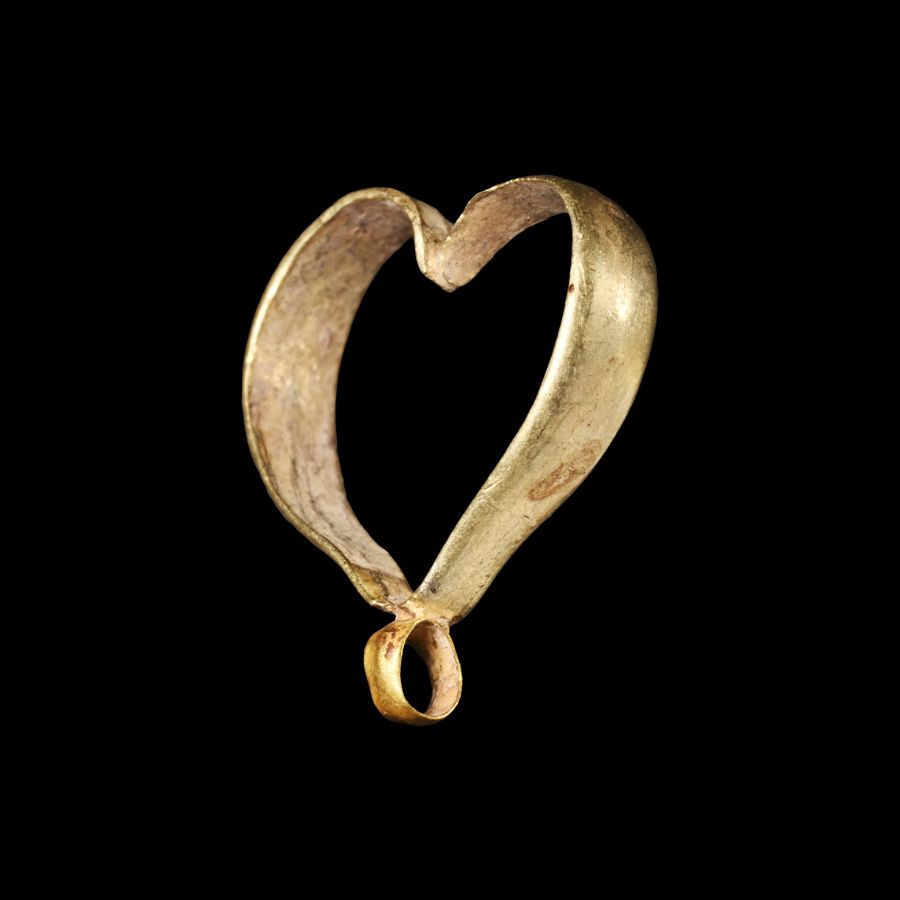
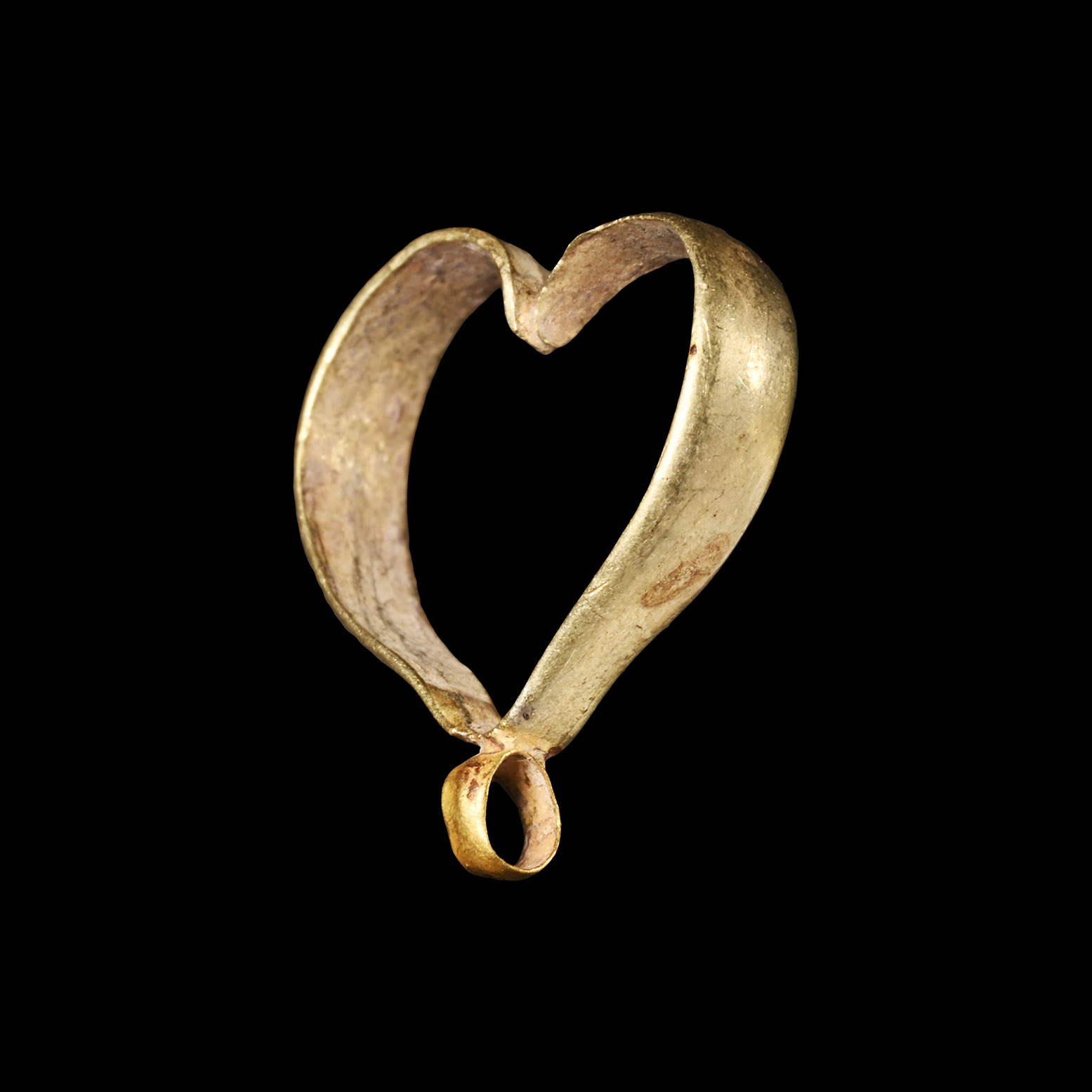
Medieval Gold Heart-Shaped Pendant
CIRCA 14TH-16TH CENTURY A.D.
5/8 in. (0.83 grams, 15 mm).
Sheet gold strip with applied lop to the apex.
ProvenanceAcquired 1980-2015.
Ex Abelita family collection.
TimeLine Auctions follows a vetting process to ensure the authenticity and legality of all items, reinforcing our commitment to integrity and responsible trading. Each antiquity, antique, and coin lot undergoes thorough examination by a vetting committee of at least ten external specialists, professional trade association members, scientists, and archaeologists: Our Vetting Process
AUCTIONS:
TimeLine is a leading auction house specialising in antiquities, ancient art, collectables, natural history, coins, medals, and books. Our auctions offer museums, collectors, historians, and enthusiasts the opportunity to acquire unique and historically significant pieces.
-
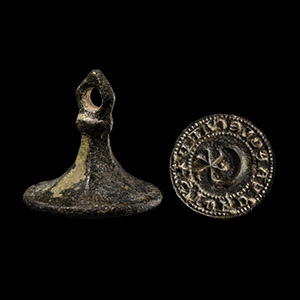
Medieval Bronze Personal Seal Matrix of John de la Pole, Second Duke of Suffolk, Constable of Wallingford Castle and High Steward of Oxford University
14th-15th century A.D.Sold for (Inc. bp): £546
The circular high-quality die bearing a central star/sun over crescent moon with concentric pelleted borders enclosing Latin legend in Lombardic script: 'S' IOh' D' LA POLE CANP'; probably the counterseal of John de la Pole, Second Duke of Suffolk, of facetted hexagonal-section stem with pellet trefoil to show orientation when in use, collar and pentagonal suspension loop; accompanied by an impression. 8.7 grams, 19 mm
Found whilst searching with a metal detector near Wantage, Vale of White Horse, Oxfordshire, UK, between January and May 2011. Accompanied by a copy of the British Museum's Portable Antiquities Scheme (PAS) report no.BERK-749E31.
This seal has been designated of 'County / local importance' in the PAS record, which provides the following interpretation of the inscription: 'The second Duke of Suffolk was John de la Pole, born 27th September 1442. He was Constable of Wallingford Castle and High Steward of Oxford University. He also held the manors of Deddington and Ascot in Oxfordshire from 1477 A.D. He died c. 24th July 1492 (Richardson 2011:48-49). His mother, Alice Chaucer, was the granddaughter of the poet Geoffrey Chaucer (author of the Canterbury Tales). Alice, who died in 1475/76 A.D., is buried in her home village of Ewelme, where the de la Poles spent much of their time. John de la Pole's official seal is recorded in the British Museum Catalogue of Seals (1894:398), and is described as 'a lion rampant queue fourchée'. The matrix now offered is likely to be a personal seal, such as were often used for private correspondence or as a counterseal, when applying a seal of office. -
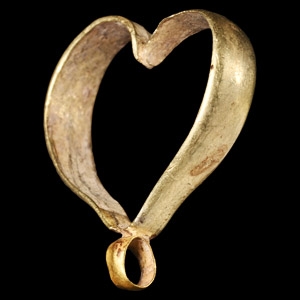
Medieval Gold Heart-Shaped Pendant
Circa 14th-16th century A.D.Sold for (Inc. bp): £182
Sheet gold strip with applied lop to the apex. 0.83 grams, 15 mm
Acquired 1980-2015. Ex Abelita family collection. -
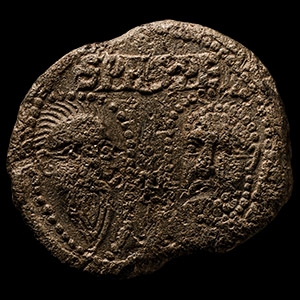
Medieval Clement V Papal Lead Bulla Seal
1305-1314 A.D.Sold for (Inc. bp): £85
Obverse: 'CLE / MENS / PP . V' (Pastor Pastorum or shepherd of shepherds) over three lines; reverse: the facing and nimbate heads of saints Peter and Paul, possible crozier between, beneath 'SPASPE' (St. Peter and St. Paul). 42 grams, 38 mm
Acquired on the UK market, 1990s. Property of a retired academic.
