
Loading, please wait...
LOT 0414
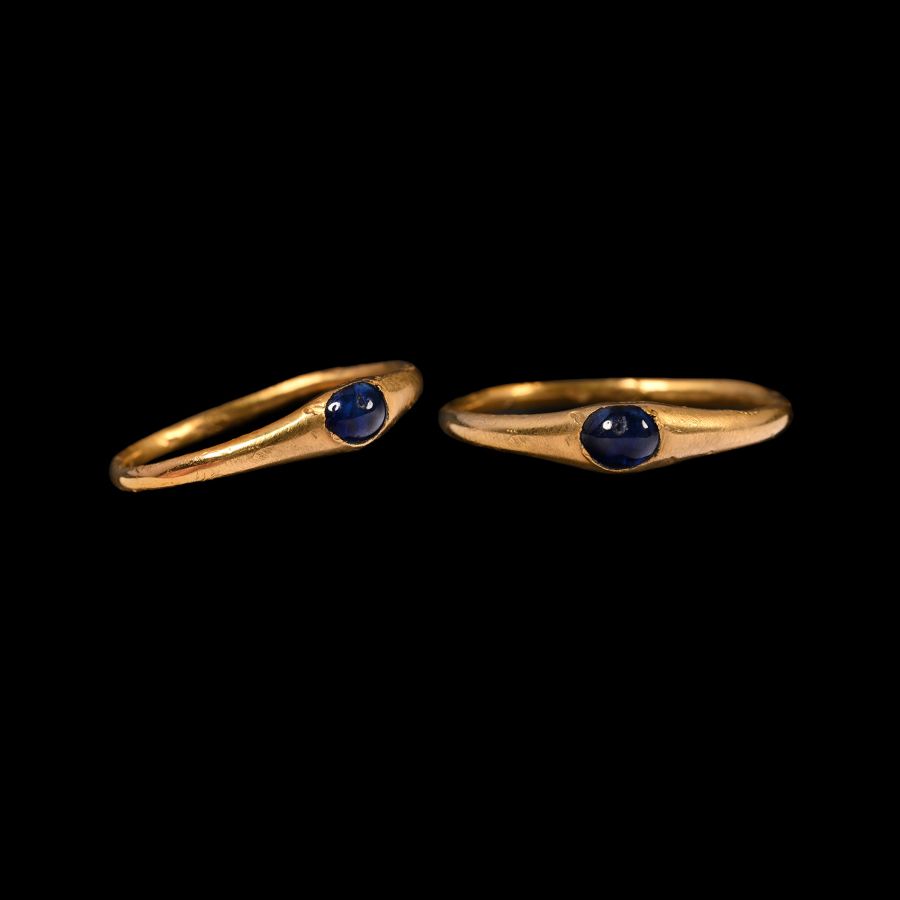
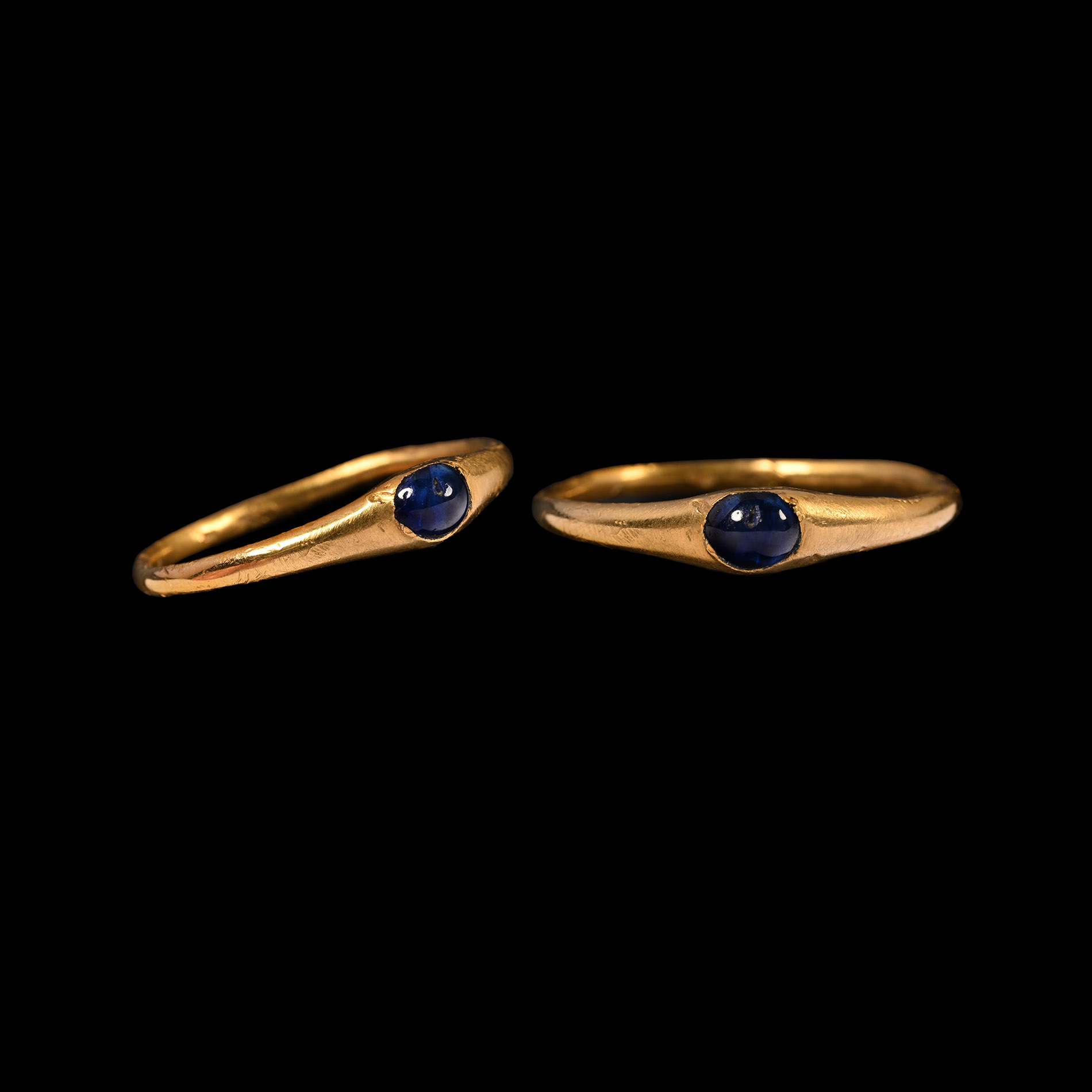
Medieval Gold Bishop's Stirrup Ring with Sapphire
13TH-14TH CENTURY A.D.
1 in. (2.69 grams, 22.87 mm overall, 18.67 mm internal diameter (approximate size British P 1/2, USA 7 3/4, Europe 16.86, Japan 16)).
The bezel a low flat topped cell surmounted by a cabochon sapphire.
ProvenanceFrom the late Alison Barker collection, 1970-1990.
LiteratureCf. PAS-804C91/2002 T248, a similar ring also dated to the 13th century; The V&A Museum, accession number 65-1871, for similar.
CONDITIONTimeLine Auctions follows a vetting process to ensure the authenticity and legality of all items, reinforcing our commitment to integrity and responsible trading. Each antiquity, antique, and coin lot undergoes thorough examination by a vetting committee of at least ten external specialists, professional trade association members, scientists, and archaeologists: Our Vetting Process
AUCTIONS:
TimeLine is a leading auction house specialising in antiquities, ancient art, collectables, natural history, coins, medals, and books. Our auctions offer museums, collectors, historians, and enthusiasts the opportunity to acquire unique and historically significant pieces.
-
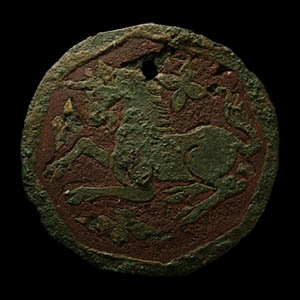
Medieval Knight's Heraldic Red Enamelled Bronze Roundel with Silver Unicorn
15th century A.D.Estimate: £400 - 600 (+bp*)
Opening Bid: £200
A heavily patinated silver plate with red enamel field and reserved unicorn couchant among quatrefoils; pierced for suspension. 12.29 grams, 42 mm
From a Northants, UK, collection, 1990s.
The design appears to be based on the 'Maid and the Unicorn' tapestry now in the Cluny Museum, Paris, dated to circa 1500 A.D. The field of the tapestry is strewn with numerous flowers which gives the name 'millefleurs' ('thousand flowers') to the type. -
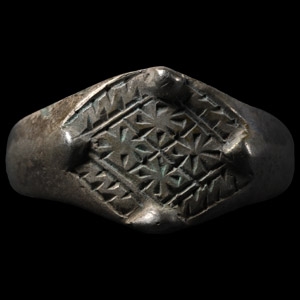
Medieval Silver Ring with Lozenge-shaped Bezel
15th-16th century A.D.Sold for (Inc. bp): £52
With scaphoid bezel, hatched border, tessellated quatrefoils and four granule turrets. 4.38 grams, 21.77 mm overall, 18.07 mm internal diameter (approximate size British P 1/2, USA 7 3/4, Europe 16.86, Japan 16)
Acquired on the European art market since the early 2000s. From the private Northern Ireland collection of R.M. -
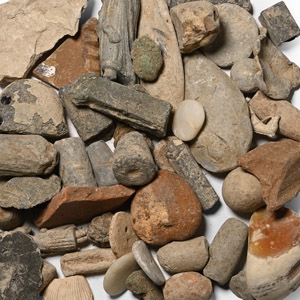
Medieval Lead Artefact and Other Finds Group
15th century A.D. and earlierSold for (Inc. bp): £1
Including a figurine fragment, spindle whorl, fishing and other weights, and other items. 1.35 kg total, 16-77 mm
Ex Stocker collection, Kent, UK, 1955-early 2000s.
