
Loading, please wait...
LOT 1575
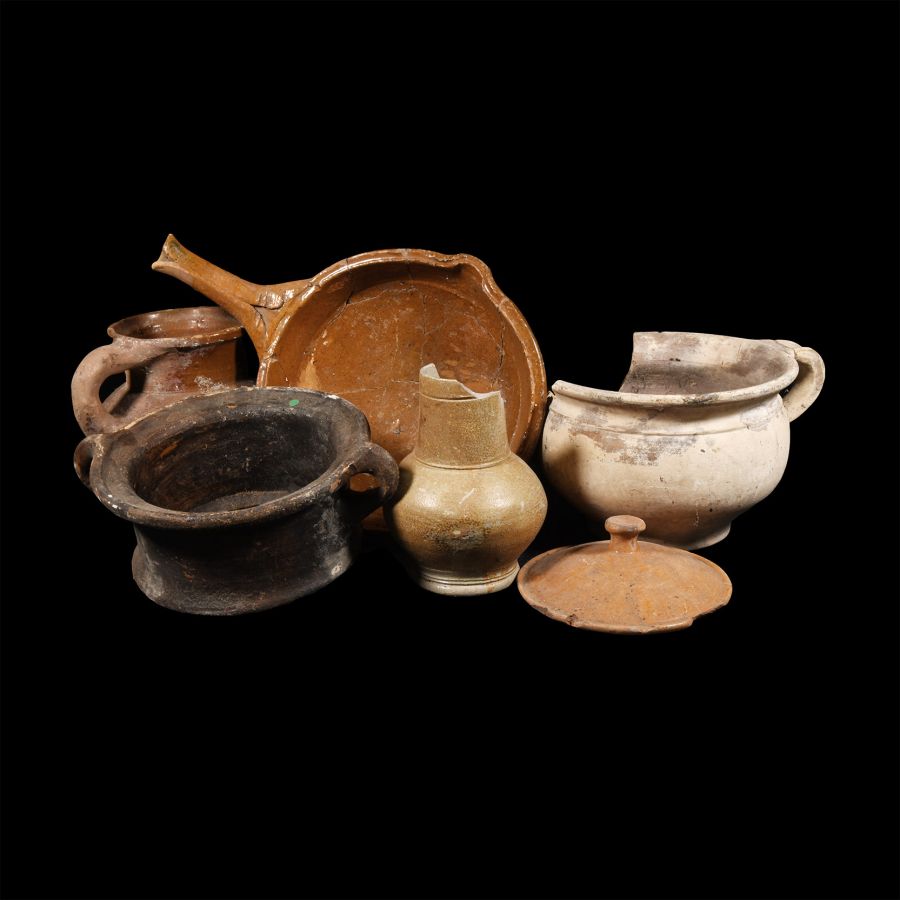
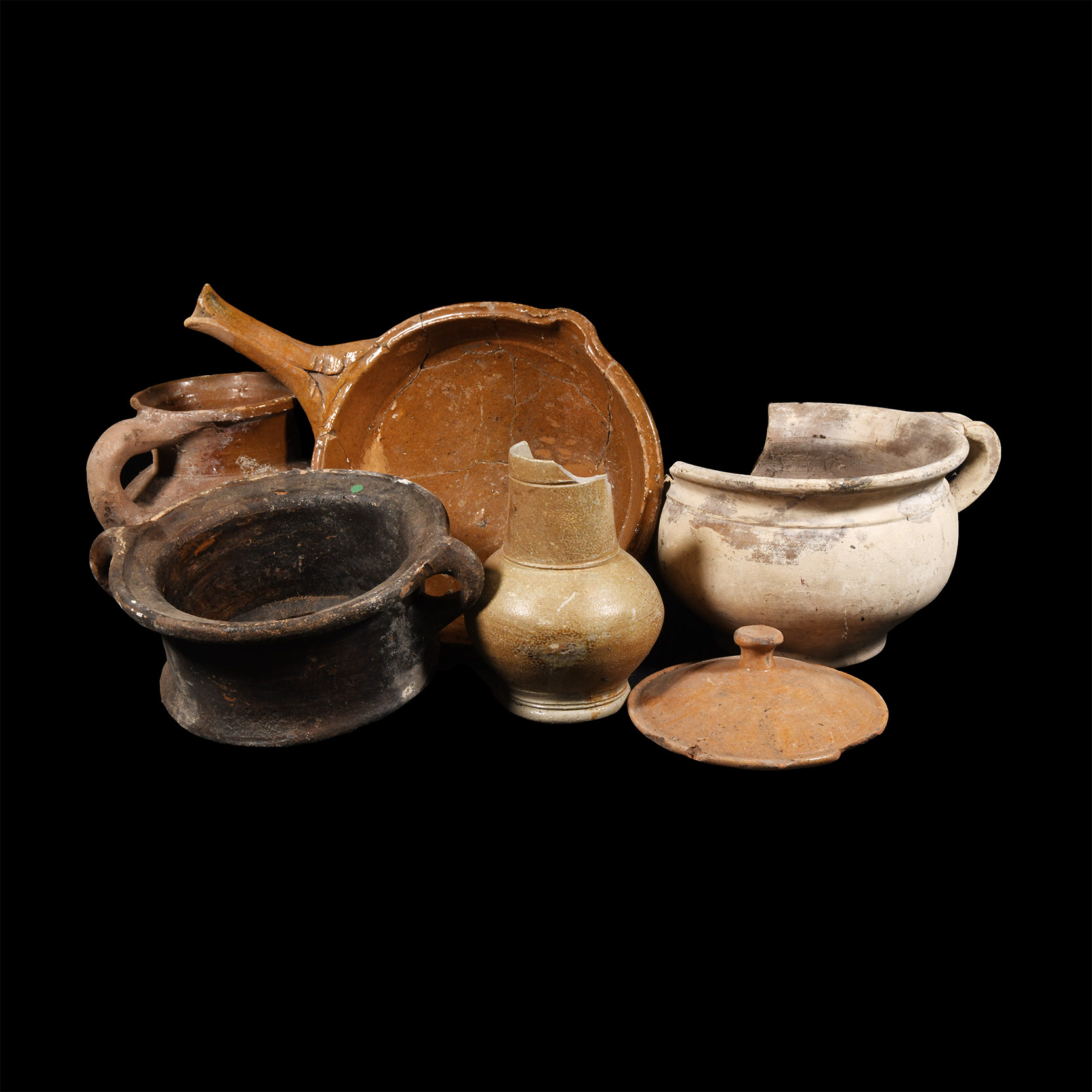
Medieval Glazed Pottery Group
15TH CENTURY A.D. AND LATER
5 3/4 - 13 1/2 in. (4.55 kg total, 14.5-33.5 cm).
Comprising a handled tripod skillet, jugs and pots, some retaining their handles; most with chips and cracks. [6, No Reserve]
ProvenanceAcquired 1990s-early 2000s.
East Anglian private collection.
Cf. D.H., Pottery in Medieval Southampton, c.1066-1510, Southampton, 2002, fig.166, for a similar Tudor jug.
FootnotesIn medieval Southampton, jugs and cups were found in great number and were the most common forms of Tudor green ware. They were small and plain, and possibly used for drinking rather than serving and therefore can be classified as drinking jugs (or mugs).
CONDITIONTimeLine Auctions follows a vetting process to ensure the authenticity and legality of all items, reinforcing our commitment to integrity and responsible trading. Each antiquity, antique, and coin lot undergoes thorough examination by a vetting committee of at least ten external specialists, professional trade association members, scientists, and archaeologists: Our Vetting Process
AUCTIONS:
TimeLine is a leading auction house specialising in antiquities, ancient art, collectables, natural history, coins, medals, and books. Our auctions offer museums, collectors, historians, and enthusiasts the opportunity to acquire unique and historically significant pieces.
-
Medieval Iron Horse Bit Group
Circa 15th-16th century A.D.Sold for (Inc. bp): £130
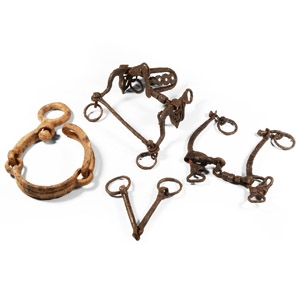
Comprising a complete articulated snaffle-bit with openwork tongue-plate, an articulated curb-bit, and other items. 1.2 kg total, 23-32.5 cm
Acquired 1990s-early 2000s. East Anglian private collection. -
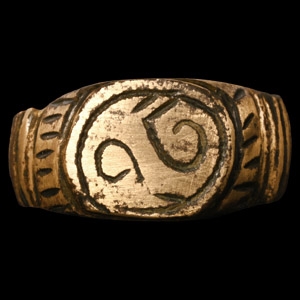
Medieval Bronze Ring with Scrolls
14th-15th century A.D.Sold for (Inc. bp): £78
With bands and hatching to the shoulders, ellipsoid bezel with scroll motifs. 8.52 grams, 25.20 mm overall, 20.79 mm internal diameter (approximate size British U 1/2, USA 10 1/4, Europe 23.15, Japan 22)
Acquired on the UK art market. Ex private Merseyside, UK, collection. -
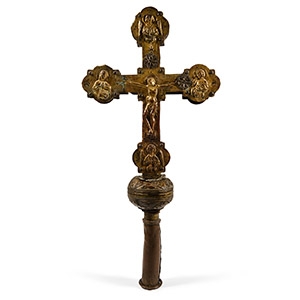
Medieval Gilt Bronze Processional Cross
15th-16th century A.D.Sold for (Inc. bp): £16,900
With wooden core to which the embossed sheets have been attached; the obverse with a central nimbate Corpus Christi, an applied rosette above and to the left arm; an angel to the finial of the upper and lower arm with Mary and St John the Evangelist to the side arms; the reverse with a central figure of Jesus holding the Gospel and making the sign of blessing; each finial of the arm with the symbols of the Evangelists (eagle, angel, lion and ox); the cross resting on a floral sphere with a socket below. 920 grams, 52.5 cm
Some damage and repair.
with Adolphe Goumaz, Pully, Switzerland. Ex private collection. Accompanied by an academic report by Dr Raffaele D’Amato. This lot has been checked against the Interpol Database of stolen works of art and is accompanied by search certificate no.11804-206500.
The metal sheets of the cross seem to be 15th century A.D. North Italian work. The four Evangelists are depicted with a human face at the front of the cross, and in animal forms at the reverse.
