
Loading, please wait...
LOT 1734
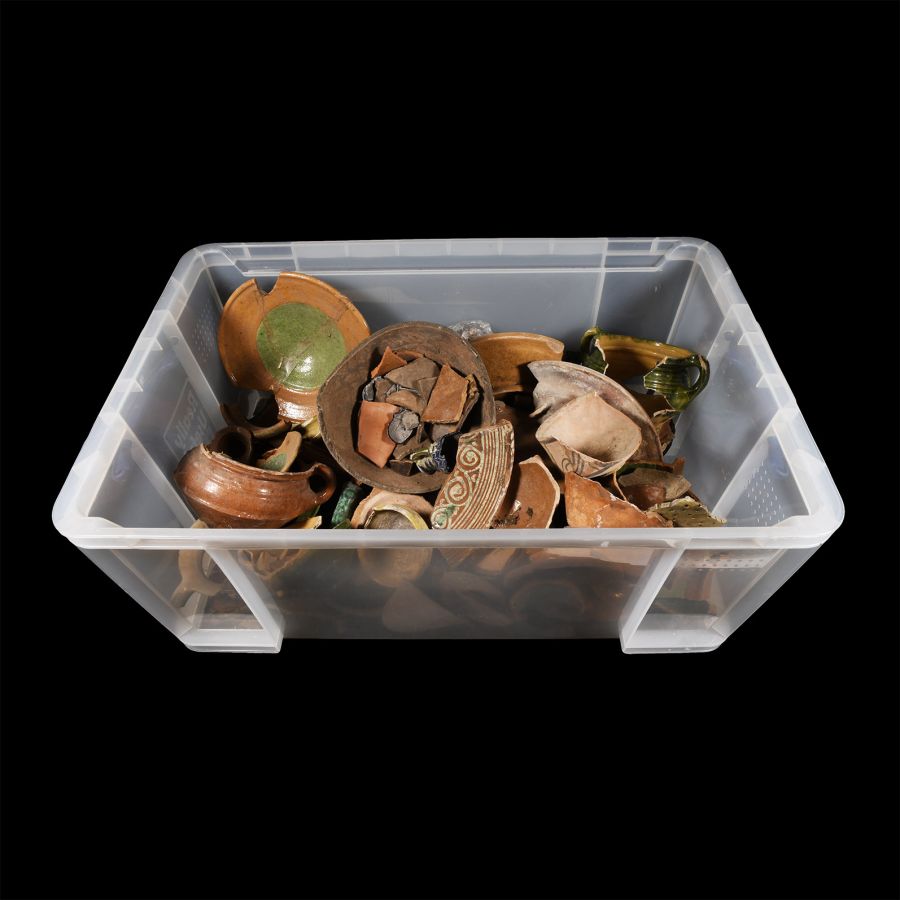
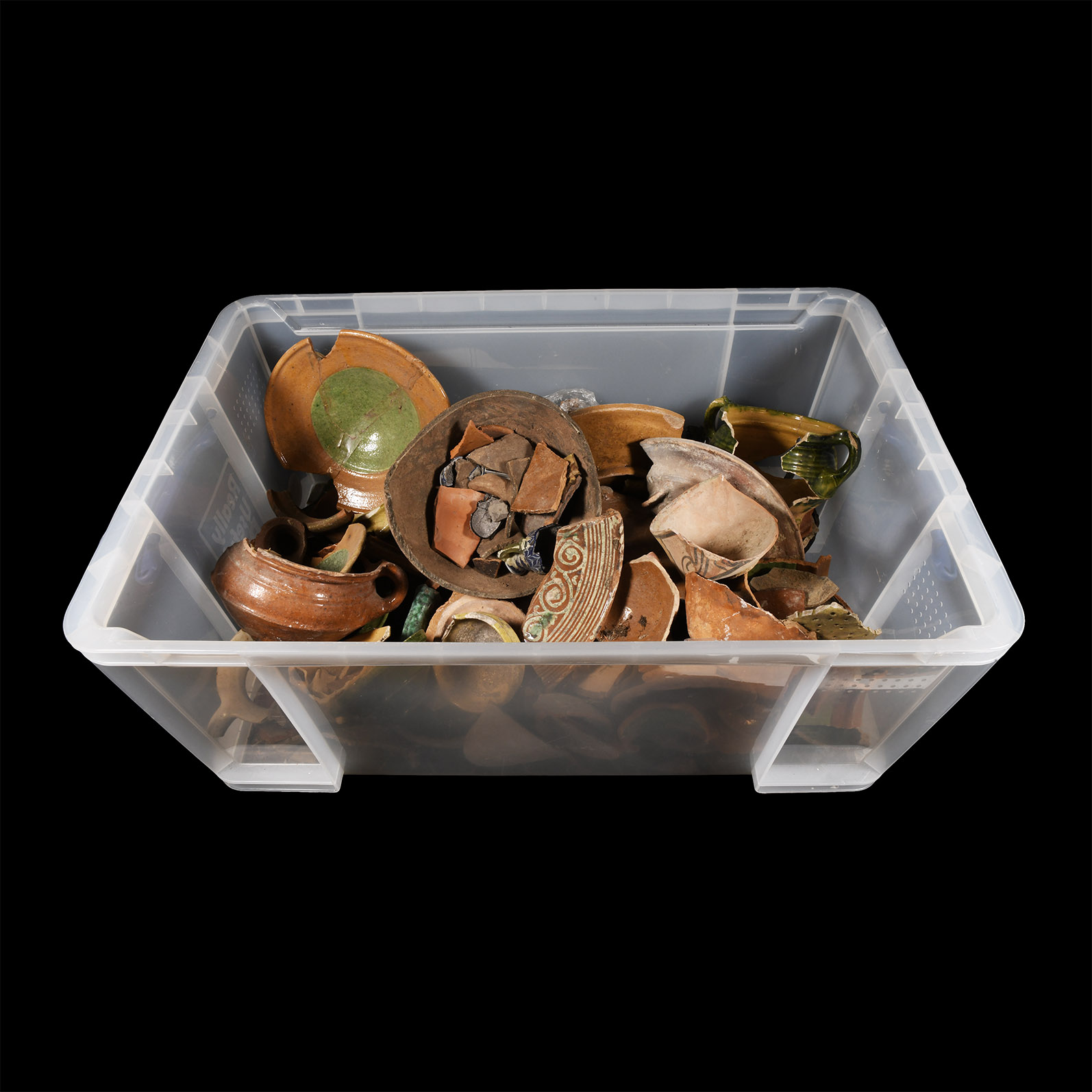
Medieval Glazed Pottery Fragment Group
15TH CENTURY A.D. AND LATER
27 1/3 x 12 in. (19.2 kg total including box, 69.5 x 30.5 cm).
Including various vessel elements such as lids, feet and bodies, some with decorative motifs; together with fragmentary glass vessels. [No Reserve]
ProvenanceAcquired 1990s-early 2000s.
East Anglian private collection.
Cf. for similar examples of two-handled cooking pots from Low Countries Brown, D., H., Pottery in Medieval Southampton, c.1066-1510, Southampton, 2002, fig.268.
FootnotesAmong the interesting objects of this hoard there is a two-handled cooking pot with partial internal and external clear glaze. These late medieval potteries (circa 1490-1510) were often imported to England from the Low Countries. If in the high medieval period French potteries remained the most common Continental import, in the late Medieval Age the products of France, the Low Countries, the Rhineland and the Iberian Peninsula occurred in roughly equal proportions.
CONDITIONTimeLine Auctions follows a vetting process to ensure the authenticity and legality of all items, reinforcing our commitment to integrity and responsible trading. Each antiquity, antique, and coin lot undergoes thorough examination by a vetting committee of at least ten external specialists, professional trade association members, scientists, and archaeologists: Our Vetting Process
AUCTIONS:
TimeLine is a leading auction house specialising in antiquities, ancient art, collectables, natural history, coins, medals, and books. Our auctions offer museums, collectors, historians, and enthusiasts the opportunity to acquire unique and historically significant pieces.
-
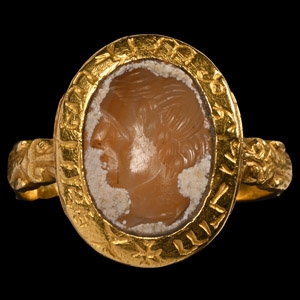
Medieval Gold Ring with Inscription
14th-15th century A.D.Estimate: £3,500 - 4,500 (+bp*)
Opening Bid: £1,944
The keeled hoop with three X-motifs, two stylised animal heads supporting the oval bezel inscribed with Lombardic letters (letters M and X separated by decorative motifs, cross to the top); the possibly earlier intaglio with a draped bust of an empress (Faustina the Younger?) in profile to the left, with an elongated neck and curled hair tied back in a bun at the nape of the neck. 5.98 grams, 22.96 mm overall, 18.46 mm internal diameter (approximate size British P 1/2, USA 7 3/4, Europe 16.86, Japan 16)
Acquired at Christie's, New York (Antiquities Sale), circa 2000. Important North West London collection. Accompanied by an academic report by Dr Raffaele D’Amato. This lot has been checked against the Interpol Database of stolen works of art and is accompanied by a search certificate number no.11818-204560.
It is likely that the inscription is abbreviation for 'Memento Mori', meaning 'remember you must die', accompanied by a cross and X for Christ. This imagery served as a reminder to the Christians to keep their soul in good order for the final judgment. -
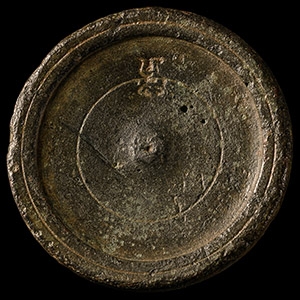
Tudor Palimpsest 2 Ounce Weight
15th century A.D.Sold for (Inc. bp): £26
Marked for Henry VII or VIII with a Lombardic letter 'h' to the upper face; concentric circles to the reverse, later incised with a large star or sunburst. 50 grams, 51 mm
Acquired on the UK market, 1990s. Property of a retired academic. -
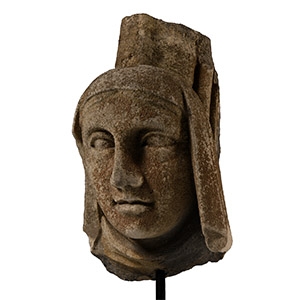
Medieval Limestone Corbel Head
Circa 14th century A.D.Sold for (Inc. bp): £2,210
The figure carved wearing a hooded cowl, face face with furrowed brow, hooded eyes, sunken cheeks and down-turned mouth; remains of moulded springer to the top and rear of the head; chipped; mounted on a custom-made display stand. 3.8 kg, 28 cm including stand
Ex Simmons Gallery, London E11, UK. Ex London collection, 1980s-1990s.
