
Loading, please wait...

LOT 0325
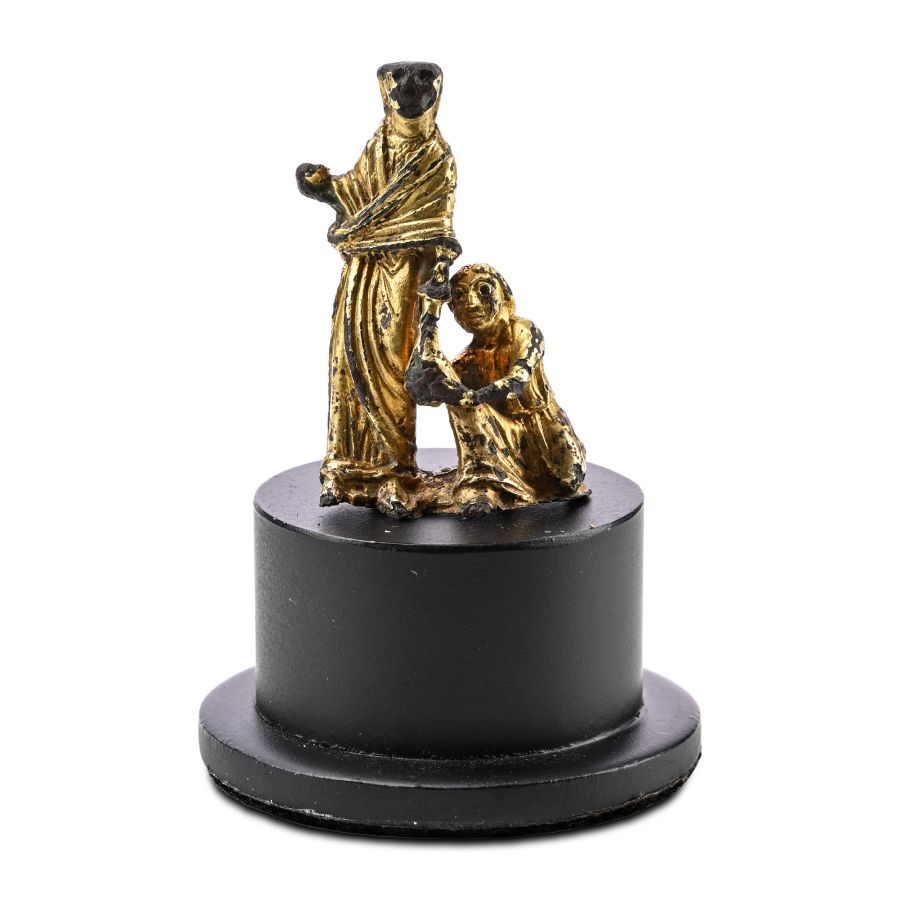
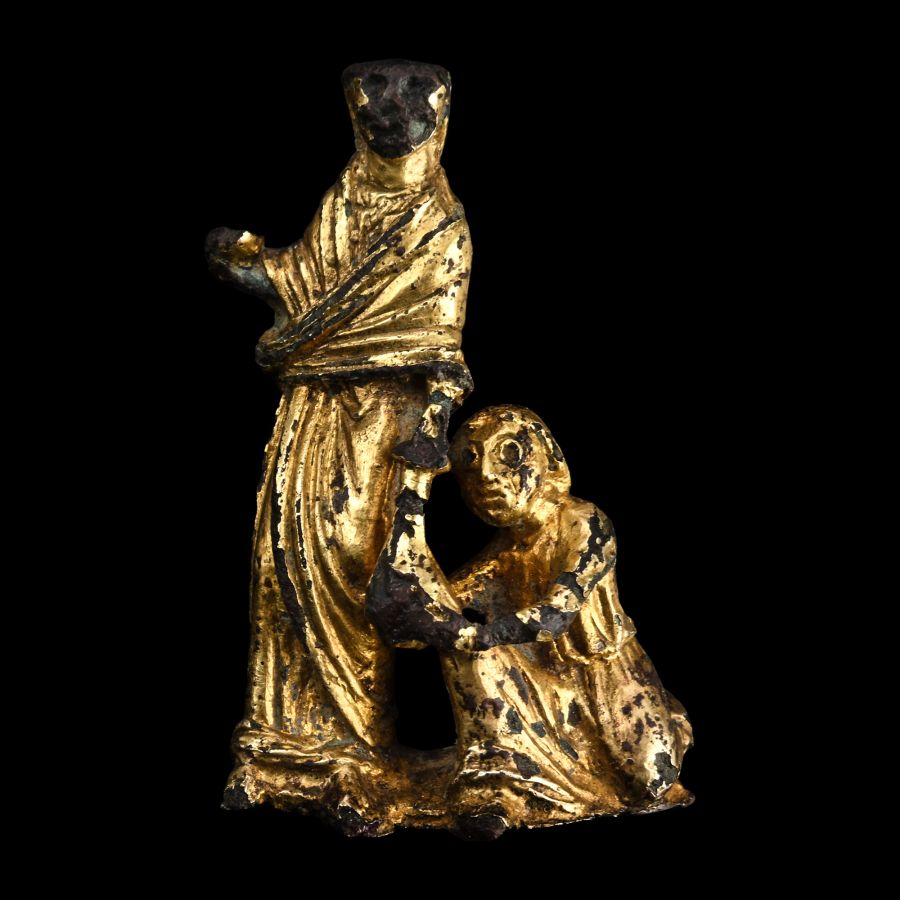
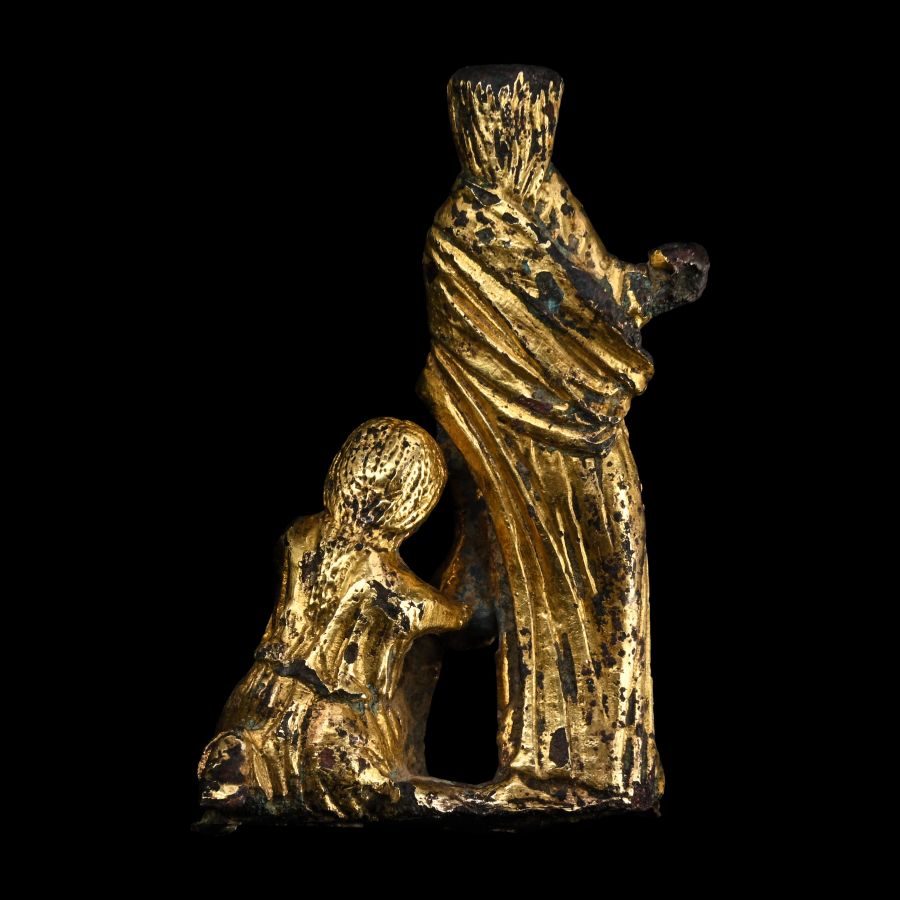
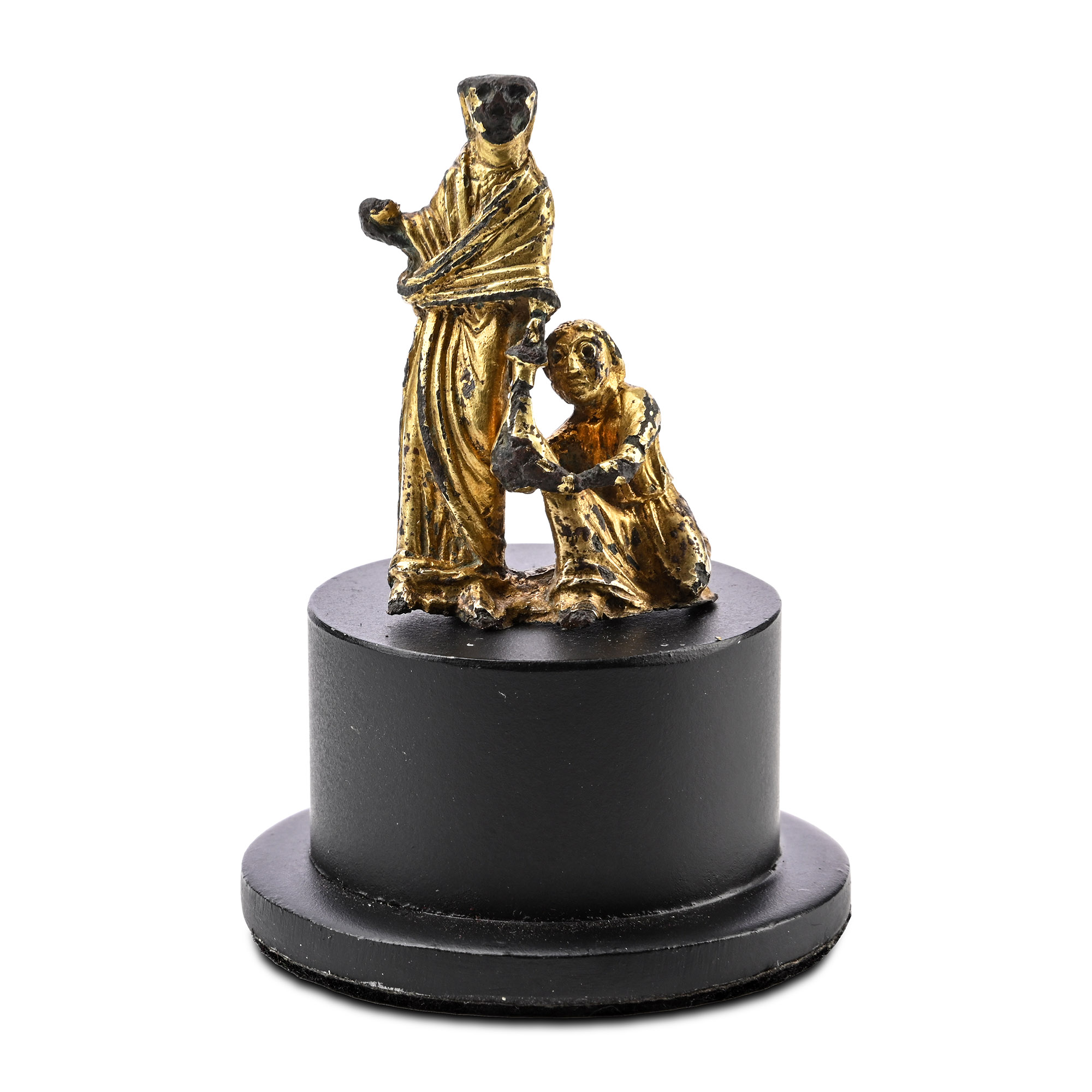
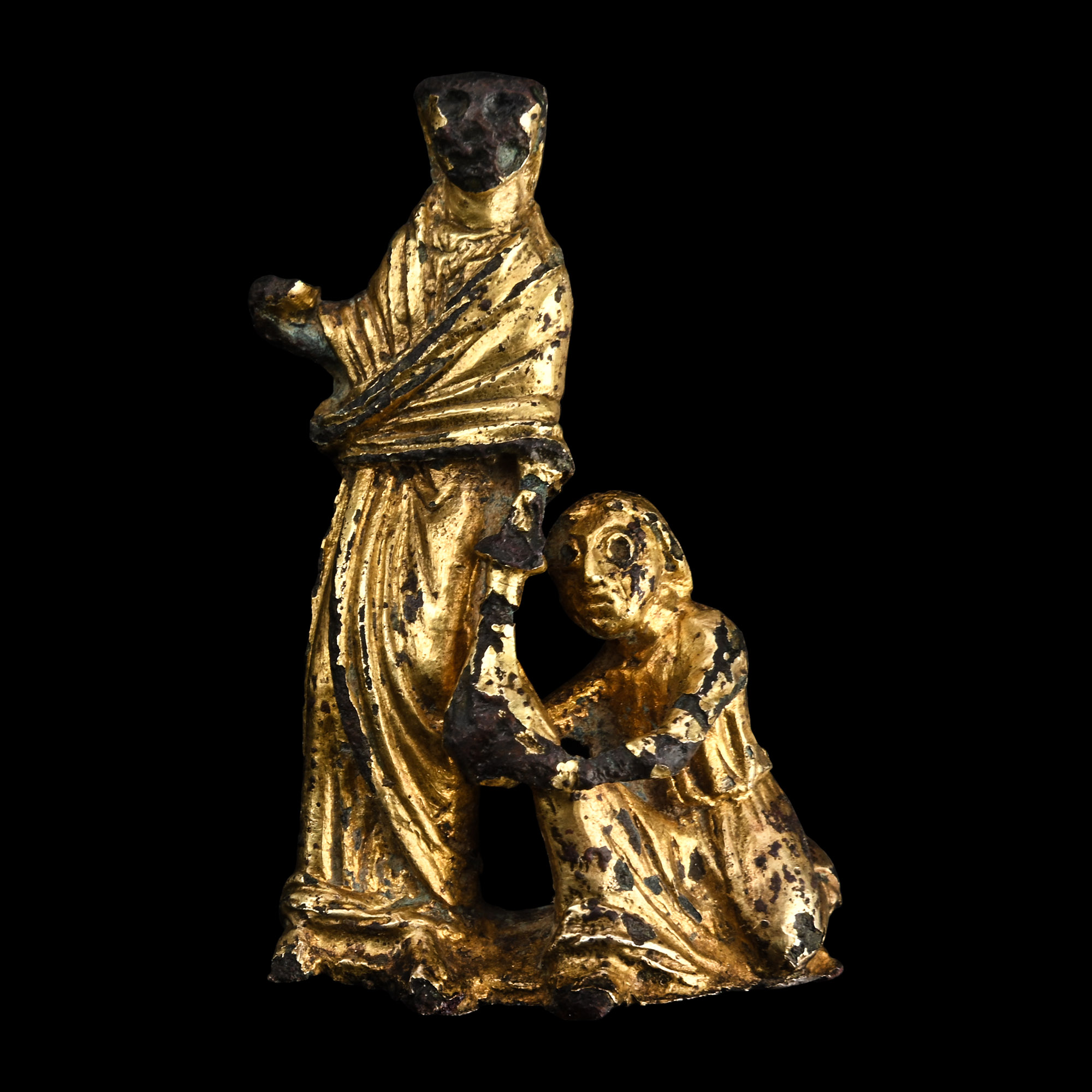
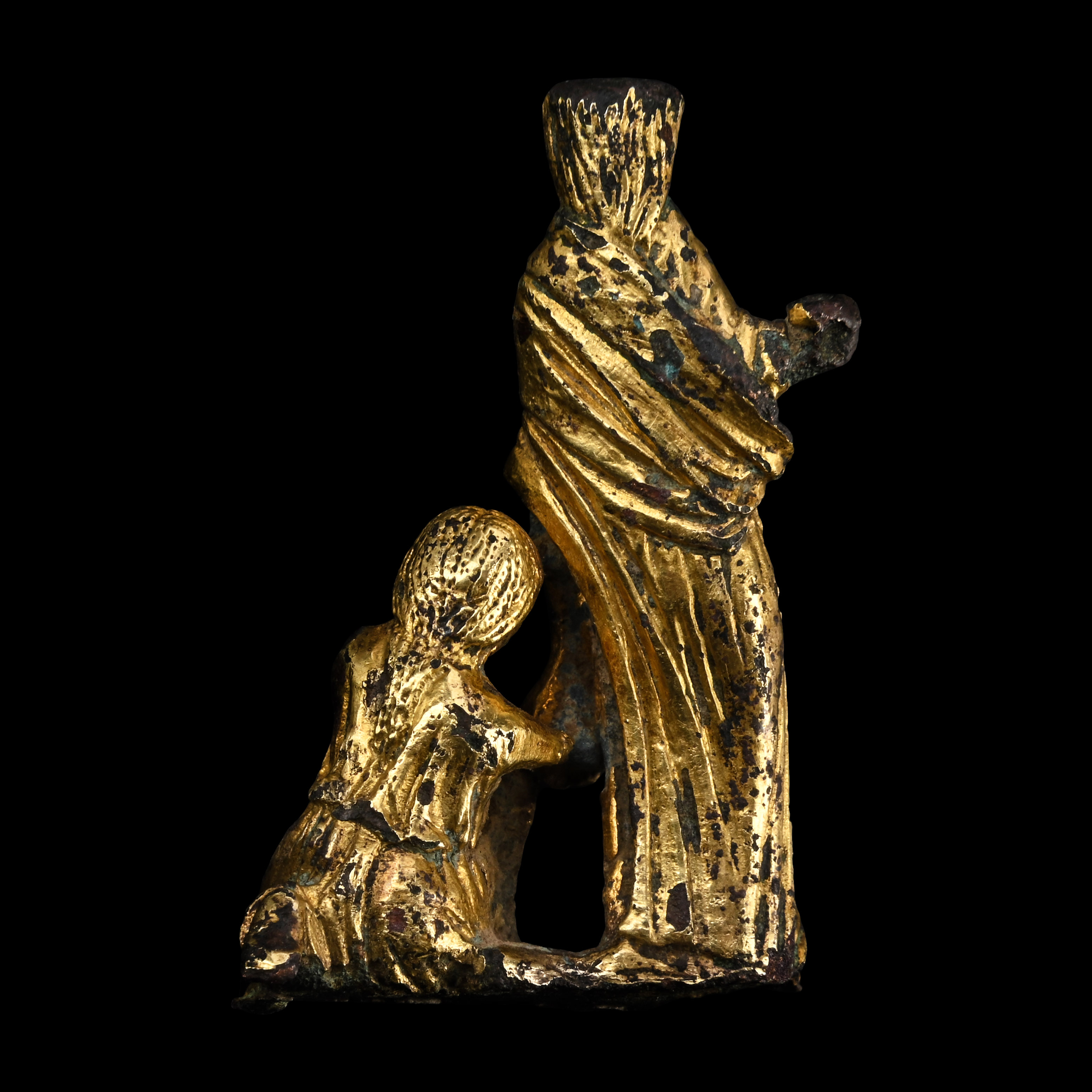
Medieval Gilt Bronze Statue of the Act of Almsgiving
ENGLAND, 12TH CENTURY A.D.
1 3/4 in. (2 5/8 in.) (26 grams, 43 mm (284 grams total, 68 mm including stand)).
Featuring a standing figure extending a purse to a kneeling supplicant, an allegory of almsgiving, preserving substantial traces of its original gilding, this rare Romanesque figural group likely formed part of a larger liturgical object such as a portable altar, reliquary, or candlestick; accompanied by a custom-made display stand.
ProvenanceBy repute to have originated from Romney Marsh, Kent.
From the collection of Paul Moore.
This lot has been checked against the Interpol Database of stolen works of art and is accompanied by search certificate number no.13324-257971.
Cf. Sotheby’s, The Robert von Hirsch Collection, 22 June 1978, London, 1978, Lot 210 (Romanesque candlestick fragment); Lasko, P., Ars Sacra, 800–1200, Harmondsworth, 1972, pls. 106–108; Gaborit’, J.R., (ed.), Art Roman au Louvre,Paris, 1996, pp. 119–125, for gilt-bronze figures and crucifixes of the 12th century, highlighting the integration of narrative and allegorical detail in small-scale Romanesque metalwork; Sotheby’s, New York, Master Sculpture and Works of Art, 7 February 2025, New York, 2025 Lot 613 (Mosan gilt bronze figure, c.1150– 1160).
FootnotesThe work finds close parallels in the Romanesque metalwork of England. Its figural treatment and iconographic resonance invite comparison with the celebrated Gloucester Candlestick (c.1107– 1113, Victoria & Albert Museum, inv. M.268-1921), where densely modelled figures act out moral and allegorical themes within a functional ecclesiastical object; with the Romanesque candlestick fragment from the Robert von Hirsch Collection (Sotheby’s, London, 22 June 1978, Lot 210); and with the broader corpus of English and German candlesticks and crosiers discussed by Peter Lasko in Ars Sacra, 800–1200 (1972), which demonstrate the intimate relationship between liturgical function and densely figurative decoration. Cf. also Victoria and Albert Museum, London: The Gloucester Candlestick, c.1107–1113 (inv. M.268-1921).
CONDITIONTimeLine Auctions follows a vetting process to ensure the authenticity and legality of all items, reinforcing our commitment to integrity and responsible trading. Each antiquity, antique, and coin lot undergoes thorough examination by a vetting committee of at least ten external specialists, professional trade association members, scientists, and archaeologists: Our Vetting Process
AUCTIONS:
TimeLine is a leading auction house specialising in antiquities, ancient art, collectables, natural history, coins, medals, and books. Our auctions offer museums, collectors, historians, and enthusiasts the opportunity to acquire unique and historically significant pieces.
LOT 0325
Medieval Gilt Bronze Statue of the Act of Almsgiving
Estimate £2,000 - 3,000€2,320 - 3,480 (for guidance only)$2,700 - 4,050 (for guidance only)
-
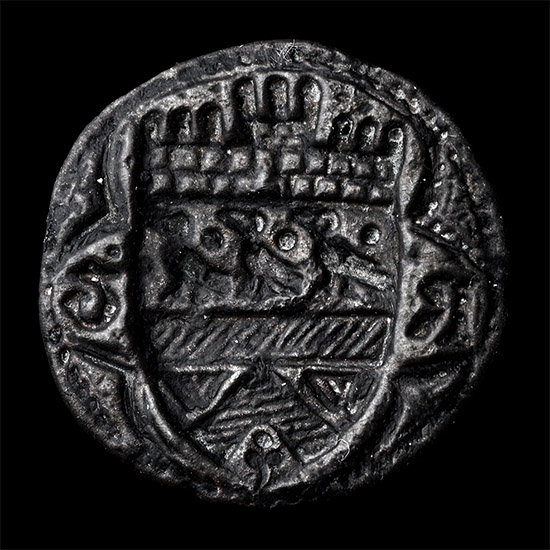
Large Medieval Knight's Heraldic Seal Matrix
Circa 14th-15th century A.D.Sold for (Inc. bp): £143
'Chessman' type with pierced trefoil knop and faceted shank; underside with heater shield and mural crown on a quatrefoil; shield bearing three martlets over a fess with chevron in base. 17.9 grams, 32 mm
From the private collection of a Sussex, UK, gentleman. -
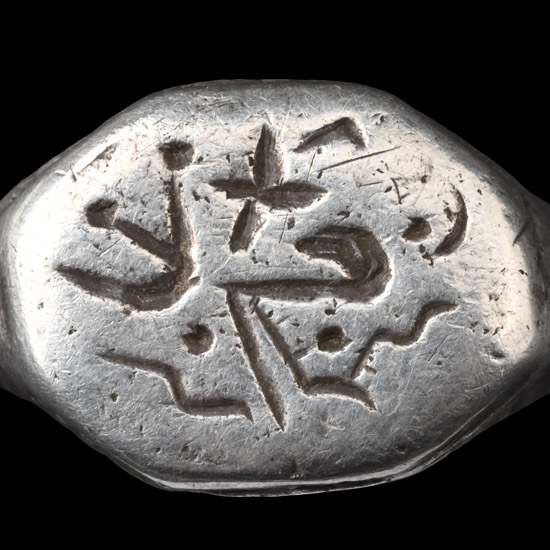
Medieval Silver Engraved Ring
15th-16th century A.D.Sold for (Inc. bp): £52
Comprising a D-section hoop with hatching on the shoulders, a raised oval bezel with a bird, a star, and other motifs. 9.55 grams, 24.29 mm overall, 18.83 mm internal diameter (approximate size British P 1/2, USA 7 3/4, Europe 16.86, Japan 16)
Ex German art market, 2000s. Acquired from an EU collector living in London. From the collection of a Surrey, UK, gentleman. -
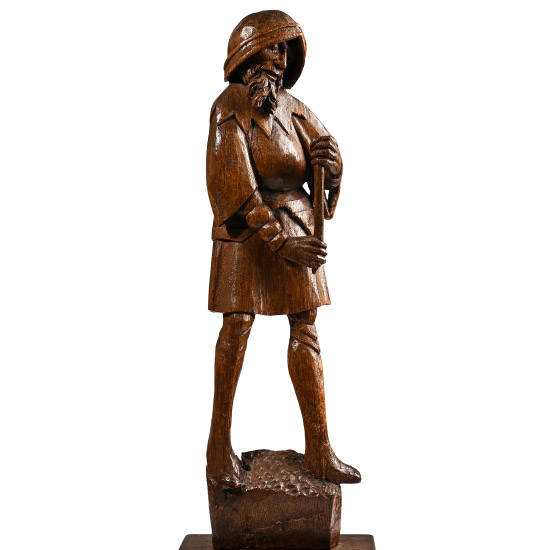
Medieval Oak Statue of Saint Longinus
Antwerp, 16th century A.D.Estimate: £1,000 - 1,400 (+bp*)
Current Winning Bid: £250
Modelled standing with downcast eyes, wearing a short tunic, helmet and holding the shaft of a lance in his hands. 1.26 kg, 53.2 cm
Acquired on the European art market.
Longinus is the Roman soldier who pierced the side of the crucified Christ with a spear to see if he had died. As Christ had already passed, the wound released both water and blood (as described in John 19:34).
