
Loading, please wait...
LOT 1610
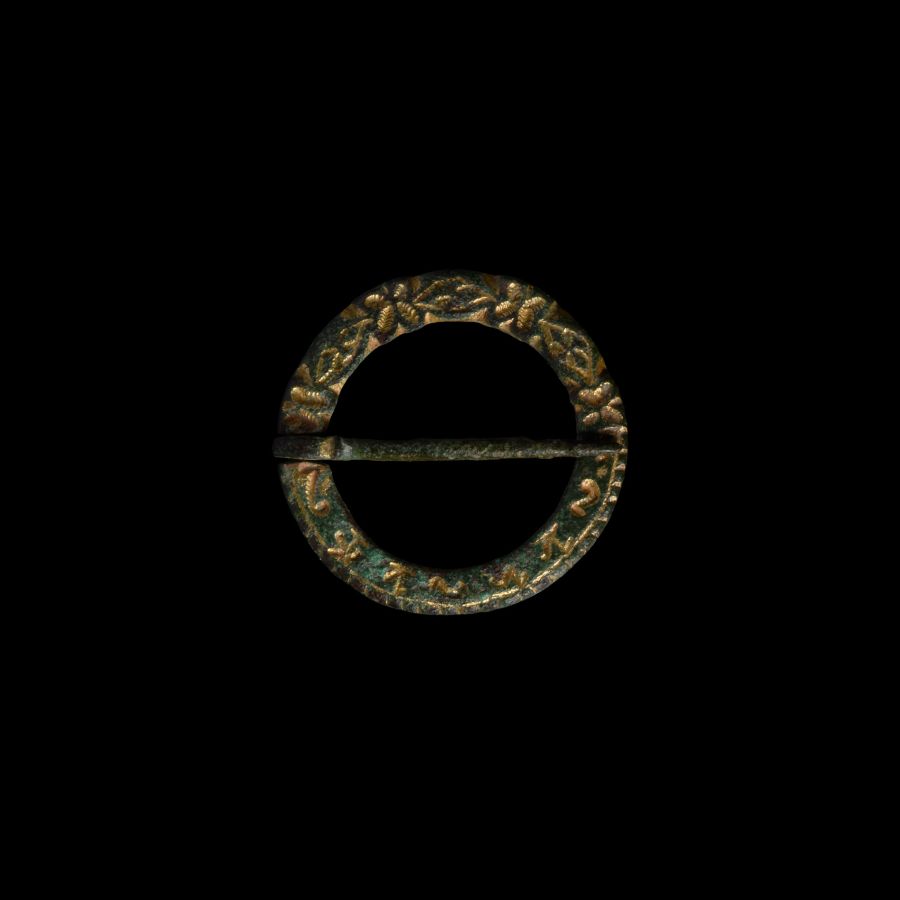
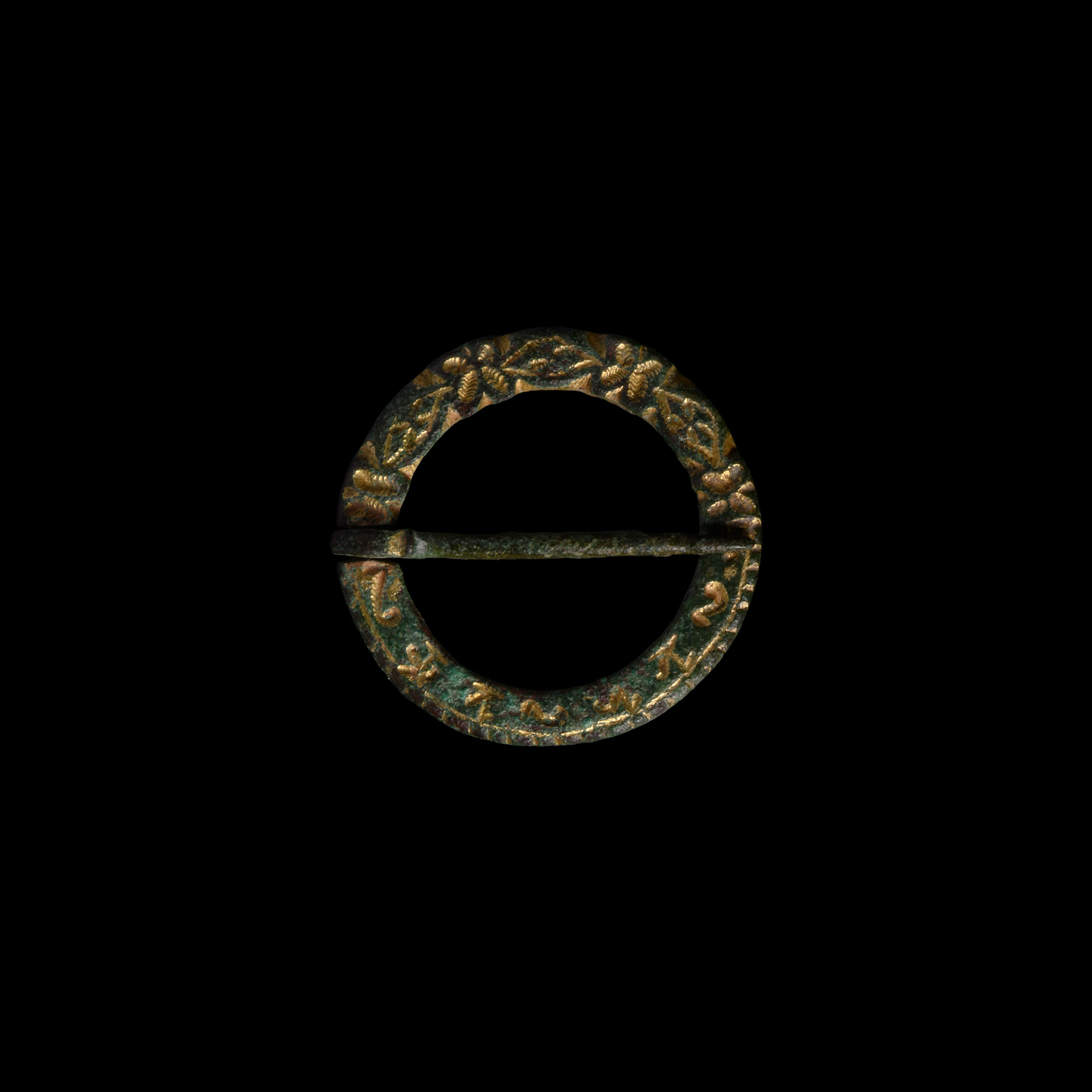
Medieval Gilt Bronze Ring Brooch with Flowers and Magical Symbols
14TH-15TH CENTURY A.D.
1 in. (2.68 grams, 23 mm).
Retaining an articulate pin, the decorative scheme in two distinct halves. [No Reserve]
ProvenanceFrom the collection of a North American gentleman, formed in the 1990s.
CONDITIONTimeLine Auctions follows a vetting process to ensure the authenticity and legality of all items, reinforcing our commitment to integrity and responsible trading. Each antiquity, antique, and coin lot undergoes thorough examination by a vetting committee of at least ten external specialists, professional trade association members, scientists, and archaeologists: Our Vetting Process
AUCTIONS:
TimeLine is a leading auction house specialising in antiquities, ancient art, collectables, natural history, coins, medals, and books. Our auctions offer museums, collectors, historians, and enthusiasts the opportunity to acquire unique and historically significant pieces.
LOT 1610
Medieval Gilt Bronze Ring Brooch with Flowers and Magical Symbols
Sold for (Inc. bp): £104
-
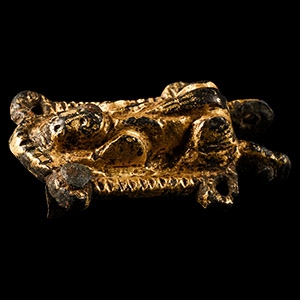
Medieval Gilt Bronze Knight's Horse Harness Hanger with Lion
12th-14th century A.D.Estimate: £200 - 300 (+bp*)
Opening Bid: £80
The lion in high-relief, lying along the pendant with its head resting on its front paws, lug to each corner with rivet hole, two pierced lugs to top edge for suspension bar, decoratively notched edges, extensive remains of gilding. 30 grams, 30 mm
Acquired early 1990s. From an East Anglian private collection. -
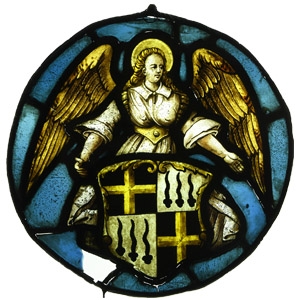
Medieval Stained Glass Panel with an Angel
Switzerland, circa 1500-1550 A.D.Sold for (Inc. bp): £546
With circular lead came frame, painted image of a nimbate angel with wings spread supporting a heraldic shield with quartered arms on a blue celestial field. 416 grams, 23 cm wide
Alder Nordmann, 11 May 2021, lot 97. Ex central London gallery. -
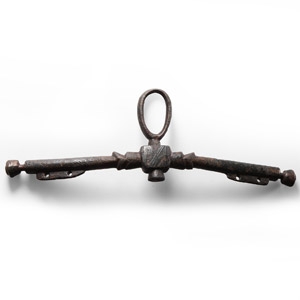
Medieval Niello Inlaid Bronze Purse Bar
15th-16th century A.D.Estimate: £180 - 240 (+bp*)
Opening Bid: £60
Classified as a Williams Class A1 with rectangular central section, two expanding round-section arms with devolved gripping animal heads projecting from the central section; pierced attachment lobes below the arms; articulate central swivel; niello-inlaid double crisscross motif to arms and central section of both faces. 95.9 grams, 17 cm
Ex property of a Kent gentleman; found Romney Marsh area, Kent, UK, 1990-2015. Property of a Buckinghamshire, UK, gentleman.
