
Loading, please wait...
LOT 1801
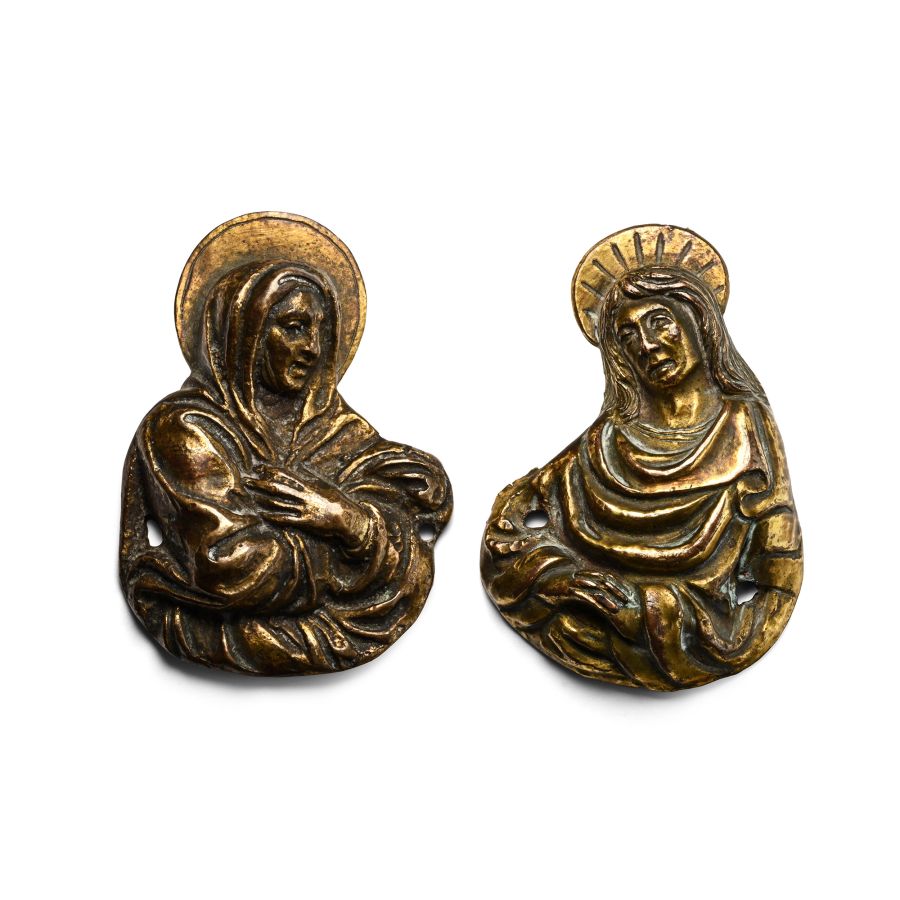
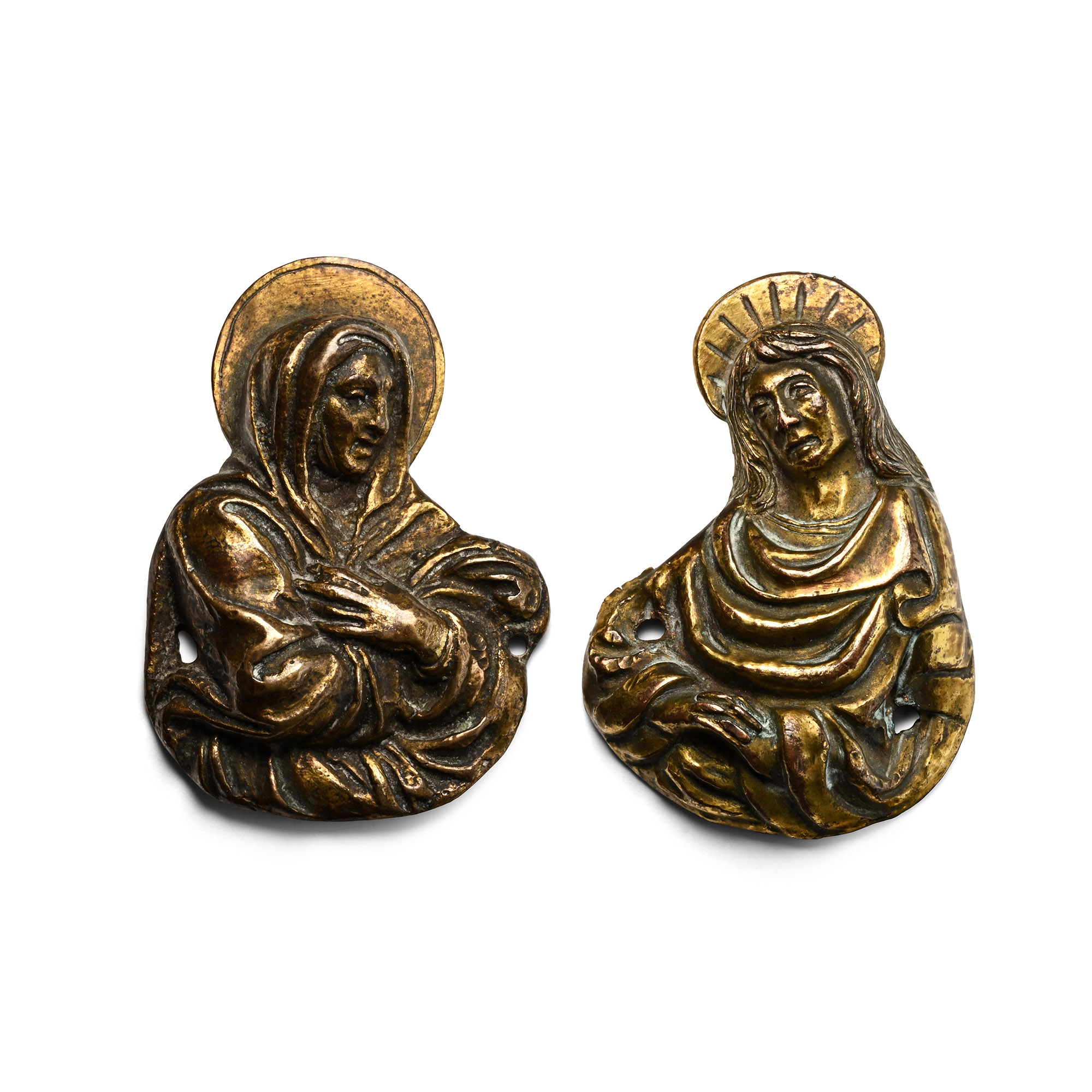
Medieval Gilt Bronze Plaques of Mary Magdalene and Saint John the Evangelist
ITALIAN, 16TH CENTURY A.D.
2 3/8 in. (57.2 grams total, 61 mm each).
Comprising: nimabte figure of Mary, dressed in voluminous robes, arms crossed at the chest and pierced through the edges; nimabte figure of John wearing voluminous robes, gazing down with a solemn expression on his face, hands clasped at the waist, pierced through the edges. [2]
ProvenancePrivate collection, UK.
CONDITIONTimeLine Auctions follows a vetting process to ensure the authenticity and legality of all items, reinforcing our commitment to integrity and responsible trading. Each antiquity, antique, and coin lot undergoes thorough examination by a vetting committee of at least ten external specialists, professional trade association members, scientists, and archaeologists: Our Vetting Process
AUCTIONS:
TimeLine is a leading auction house specialising in antiquities, ancient art, collectables, natural history, coins, medals, and books. Our auctions offer museums, collectors, historians, and enthusiasts the opportunity to acquire unique and historically significant pieces.
LOT 1801
Medieval Gilt Bronze Plaques of Mary Magdalene and Saint John the Evangelist
Estimate £200 - 300€230 - 350 (for guidance only)$270 - 410 (for guidance only)
-
.jpg)
Medieval Silver-Gilt Ring with Male Head Gemstone and Inscriptions
15th century A.D.Sold for (Inc. bp): £4,680
With applied outer layer of gold engraved with flowers and the words, “en bon an” (twice) (‘a good year’); the flat bezel with a recessed centre set with a medieval mother-of-pearl intaglio depicting a male bust in profile; supplied with a museum-quality impression. 4.72 grams, 23.64 mm overall, 20.45 mm internal diameter (approximate size British R 1/2, USA 8 3/4, Europe 19.38, Japan 18)
Found whilst searching with a metal detector in Dorset, UK, on Sunday, 30th December 2018. Acquired on the English art market. Accompanied by a copy of the British Museum's Portable Antiquities Scheme (PAS) report no.DEV-5E4EDA. This lot has been checked against the Interpol Database of stolen works of art and is accompanied by search certificate no.13069-248371.
The inscription is in black letter appears to read “en bon an”, a good year. The inscription is paralleled on a good number of 15th century rings, often also decorated with flowers and branches between the words, such as British Museum catalogue numbers AF.1057 and 1960,1103.1. -
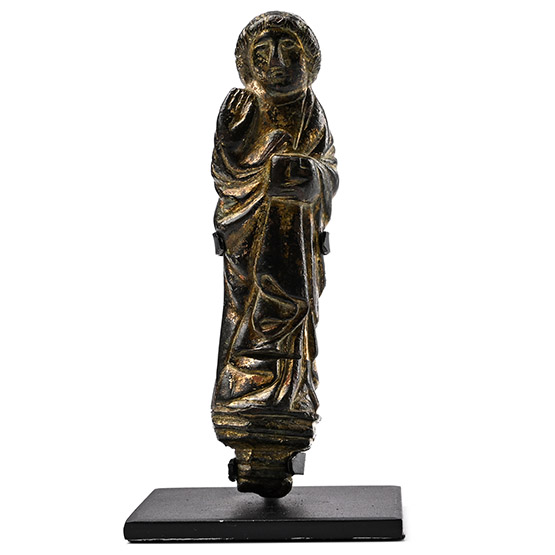
Medieval Gilt Bronze Figure of Saint John the Evangelist
15th century A.D.Sold for (Inc. bp): £585
Modelled in the round columnar figure with right hand raised and left hand holding a book; wearing a floor-length robe, standing on a tiered hexagonal base; mounted on a custom-made stand. 230 grams total, 10.1 cm including stand
Private collection, Europe. Acquired on the English art market. -
.jpg)
Eastern Medieval Bronze Ring with Spread Eagle
15th century A.D.Sold for (Inc. bp): £52
The hoop expanding at the base, lentoid-shaped bezel with stylised eagle with its wings spread open. 7.57 grams, 24.14 mm overall, 19.12 mm internal diameter (approximate size British O 1/2, USA 7 1/4, Europe 15.61, Japan 15)
Acquired on the UK and EU art market before 2000. From the private collection of a Surrey, UK, gentleman.
These kind of rings, possibly used as signet rings, find their parallels with artefacts from Eastern Europe, especially in the area of Smederevo. Comparison elements can support a 15th-century A.D. date.
