
Loading, please wait...
LOT 1728
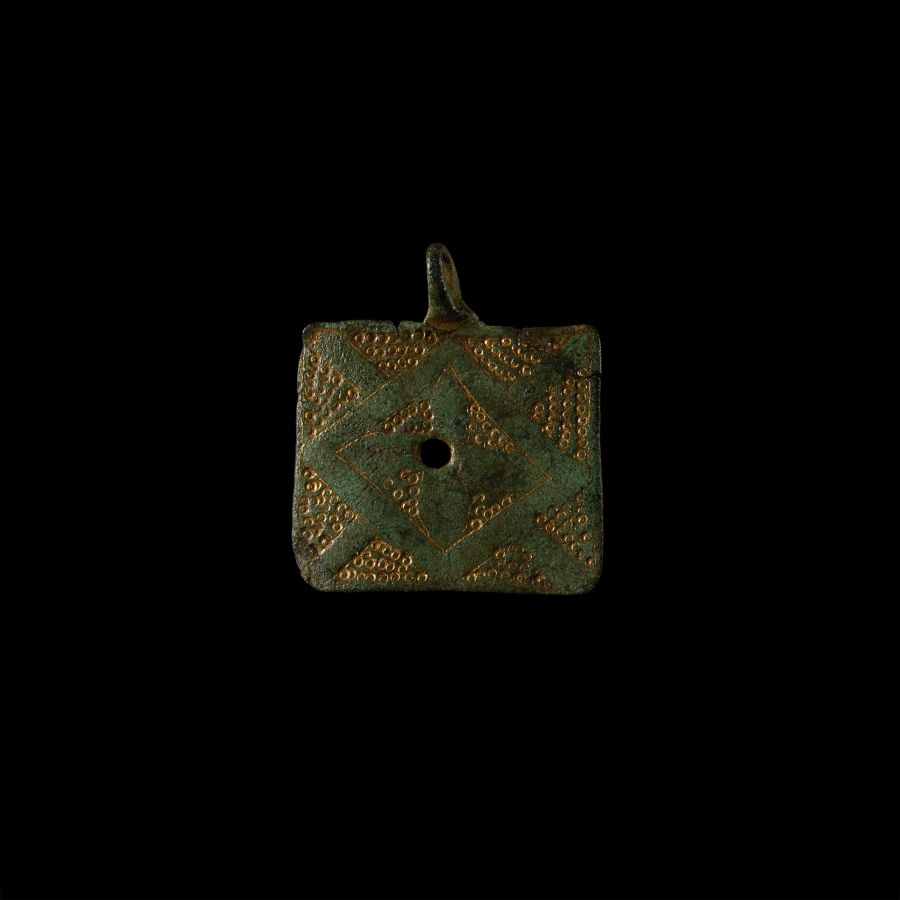
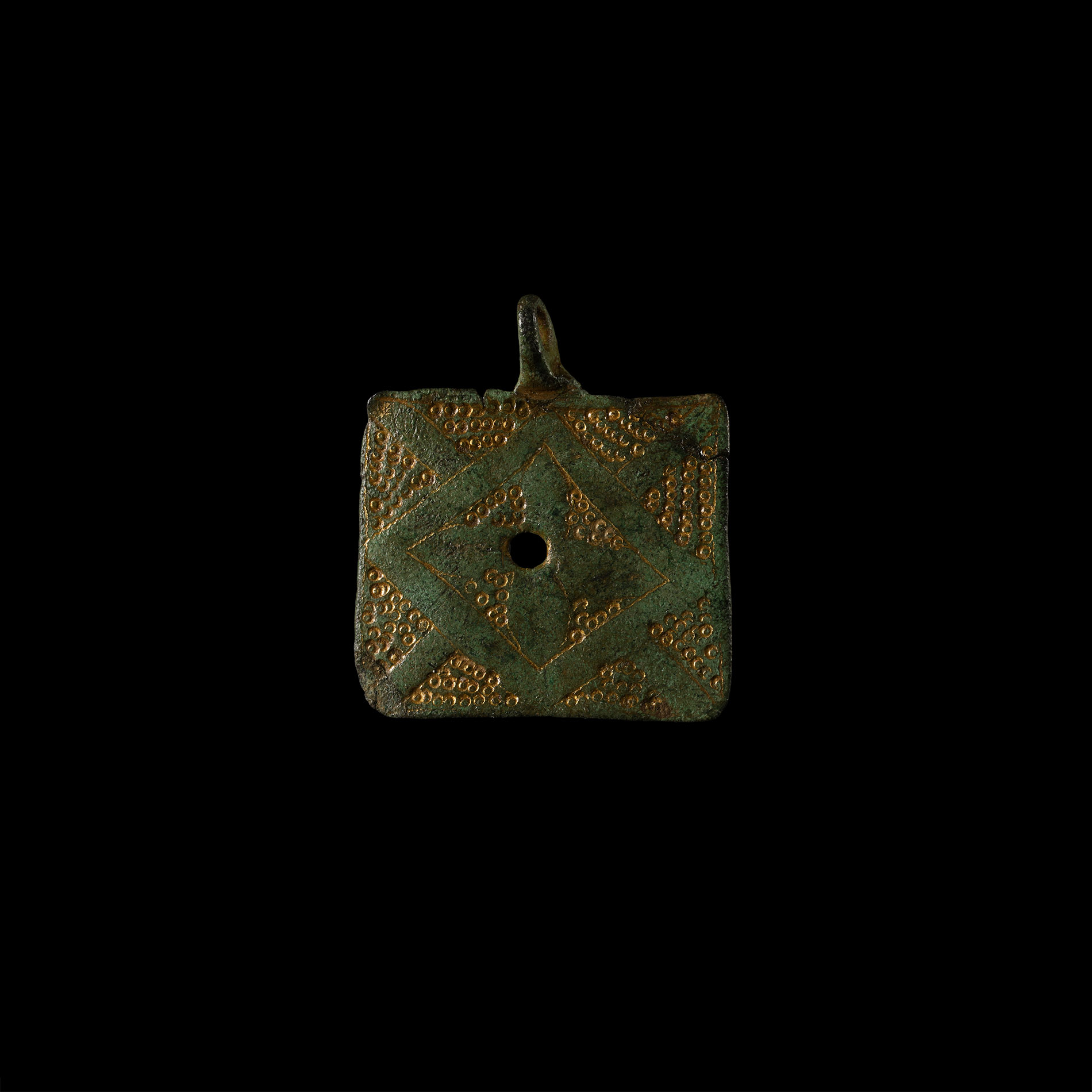
Medieval Gilt Bronze Knight's Horse Harness Pendant
14TH-15TH CENTURY A.D.
1 1/2 in. (5.55 grams, 37 mm).
Rectangular in plan with suspension loop to top edge, raised central quatrefoil within a lozenge, single arm radiating into each corner, punched annulets to the field with remains of gilding; central piercing. [No Reserve]
ProvenanceAcquired UK market, 1990s.
Property of a retired academic.
TimeLine Auctions follows a vetting process to ensure the authenticity and legality of all items, reinforcing our commitment to integrity and responsible trading. Each antiquity, antique, and coin lot undergoes thorough examination by a vetting committee of at least ten external specialists, professional trade association members, scientists, and archaeologists: Our Vetting Process
AUCTIONS:
TimeLine is a leading auction house specialising in antiquities, ancient art, collectables, natural history, coins, medals, and books. Our auctions offer museums, collectors, historians, and enthusiasts the opportunity to acquire unique and historically significant pieces.
-
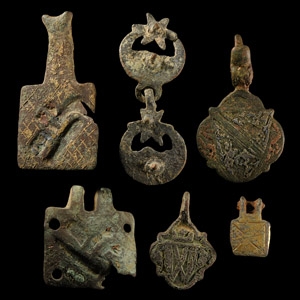
Medieval Bronze Knight's Heraldic Horse Harness Pendant Collection
Circa 14th-16th century A.D.Sold for (Inc. bp): £78
Comprising: a complete heraldic pendant accompanied by a Portable Antiquities Scheme record, quatrefoil in plan with a triangular tab between each foil creating a central shield bearing a worn heraldic device, possibly azure, a bend cotticed or, with worn remains of red and blue enamelling and trace remains of gilding, dated c.1340-1450; a square fitting displaying an X-motif and remains of gilding, stud to reverse; quatrefoil pendant with occluded loop and crowned shield to centre bearing heraldic device; large square-shaped pendant with broad bar, hatching and body, enigmatic recessed design with remains of blue and red enamelling and gilding; rectangular pendant with bars to one edge, circular piercing to three corners, enigmatic recessed design; fitting comprising two joined openwork discs with stars at the apex and studs to reverses. 71 grams total, 21-57 mm
Found Berkshire, UK. Accompanied by a copy of the British Museum's Portable Antiquities Scheme (PAS) report no.BERK-9E41E1. -
.jpg)
Medieval 'Thames' St. Thomas Becket Lead-Alloy Pilgrim's Badge
Late 13th-14th century A.D.Sold for (Inc. bp): £156
Depicted standing on the back of a peacock with his right hand extended in a gesture of benediction, crozier in his left hand. 2.19 grams, 24 mm
Fine condition.
Found on the Thames foreshore at Chiswick, London, UK. Acquired on the UK antiques market between 1974-1985. Albert Ward collection, Essex, UK. -
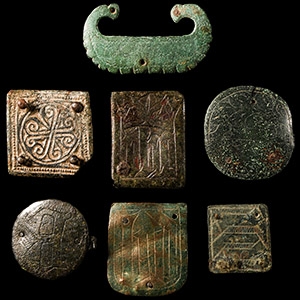
Medieval Belt and Other Mounts Group
13th-15th century A.D.Sold for (Inc. bp): £46
The majority bearing initials, including a crowned IHC monogram; blackletter 'B'; a possible cross cercelee within a double roundel and pellet border; together with other motifs and initials. 59 grams total, 27-52 mm
Acquired on the UK market, 1990s. Property of a retired academic.
