
Loading, please wait...
LOT 1754
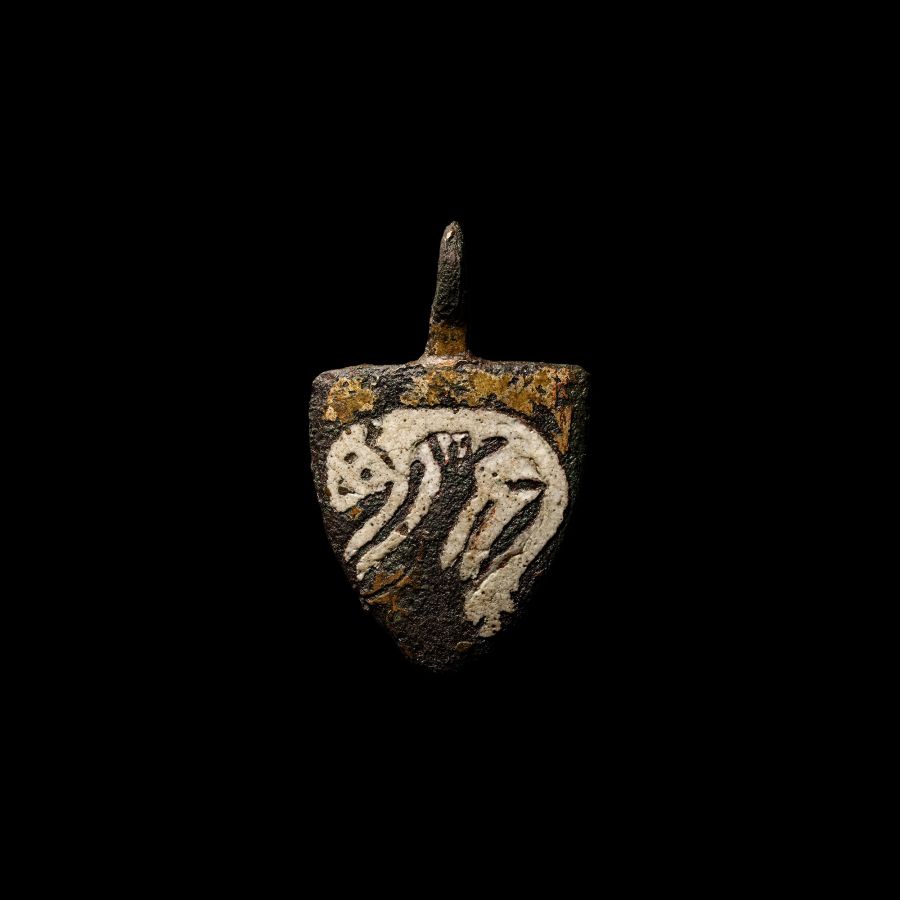
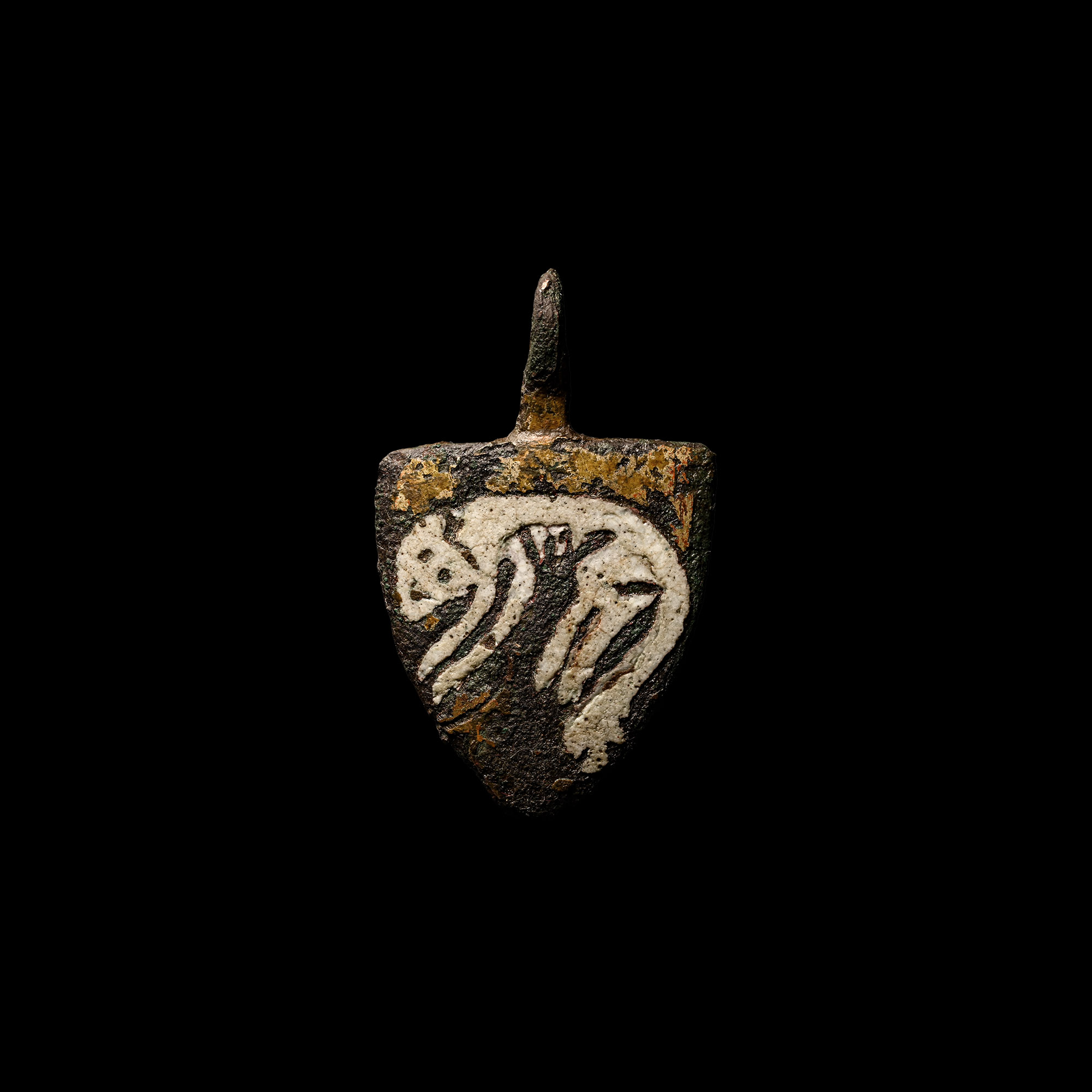
Medieval Gilt Bronze Knight's Heraldic Horse Harness Pendant
13TH-14TH CENTURY A.D.
1 5/8 in. (11.1 grams, 41 mm).
Heater-shield shaped with integral suspension loop, a stylised lion facing left in white enamel against remains of a gilt field.
ProvenanceAcquired early 1990s.
From an East Anglian private collection.
TimeLine Auctions follows a vetting process to ensure the authenticity and legality of all items, reinforcing our commitment to integrity and responsible trading. Each antiquity, antique, and coin lot undergoes thorough examination by a vetting committee of at least ten external specialists, professional trade association members, scientists, and archaeologists: Our Vetting Process
AUCTIONS:
TimeLine is a leading auction house specialising in antiquities, ancient art, collectables, natural history, coins, medals, and books. Our auctions offer museums, collectors, historians, and enthusiasts the opportunity to acquire unique and historically significant pieces.
LOT 1754
Medieval Gilt Bronze Knight's Heraldic Horse Harness Pendant
Sold for (Inc. bp): £312
-
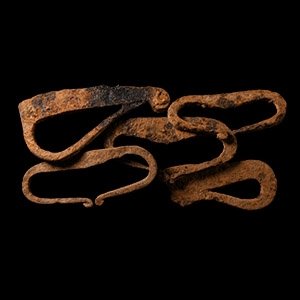
Medieval Iron Fire Starter Group
Circa 15th century A.D.Estimate: £80 - 100 (+bp*)
Opening Bid: £40
Including fire steels of various types with ornamental shaping. 118 grams total, 56-75 mm
Acquired 1990s-early 2000s. East Anglian private collection. -
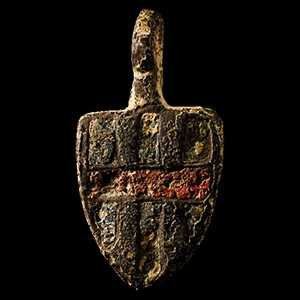
Medieval Bronze Knight's Heraldic Horse Harness Pendant
Circa 14th century A.D.Sold for (Inc. bp): £85
Shield-shaped with integral suspension loop, bearing a device of 'Or two pales azure, overall a fess gules', or possibly azure, two pales sable, overall a fess gules; much surviving red and blue enamel. 3.72 grams, 25 mm
Found Berkshire, UK. Accompanied by a copy of the British Museum's Portable Antiquities Scheme (PAS) report no.BERK-1431E4. -
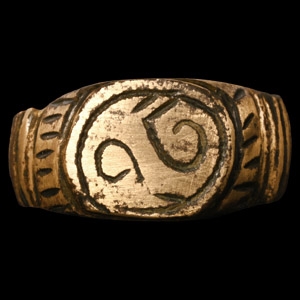
Medieval Bronze Ring with Scrolls
14th-15th century A.D.Sold for (Inc. bp): £78
With bands and hatching to the shoulders, ellipsoid bezel with scroll motifs. 8.52 grams, 25.20 mm overall, 20.79 mm internal diameter (approximate size British U 1/2, USA 10 1/4, Europe 23.15, Japan 22)
Acquired on the UK art market. Ex private Merseyside, UK, collection.
