
Loading, please wait...
LOT 1612
Medieval Equestrian Knight Badge Group
13TH-15TH CENTURY A.D.
1 1/8 - 1 3/8 in. (47 grams total, 30-36 mm).
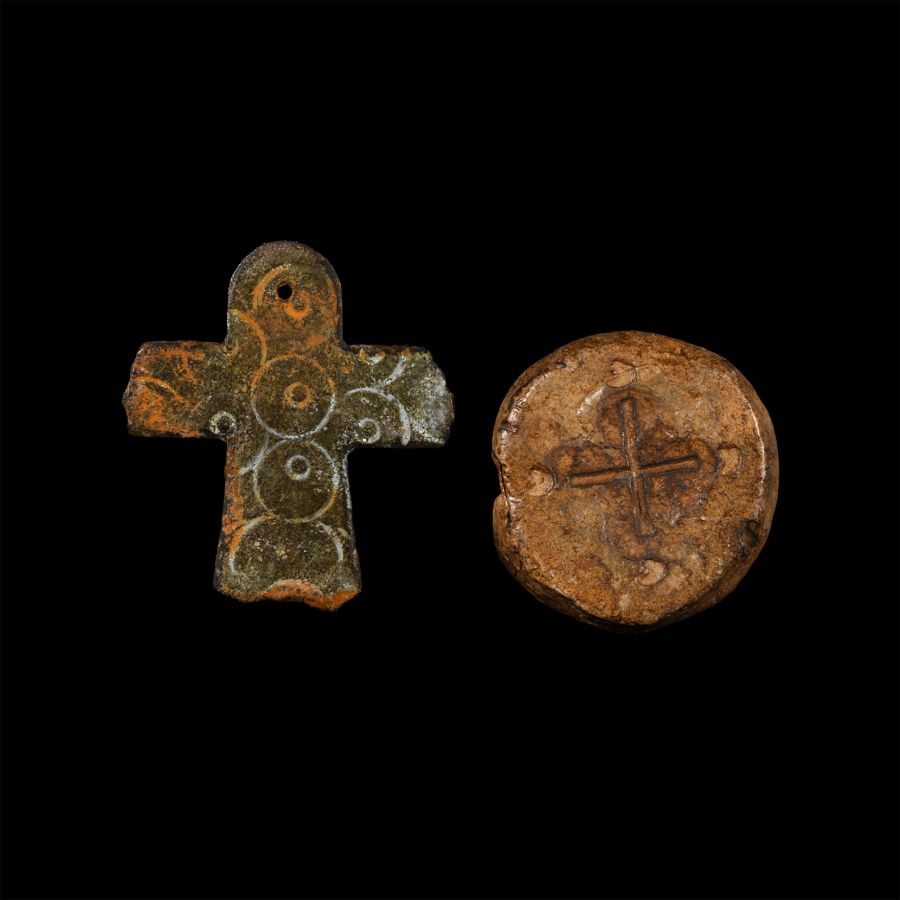
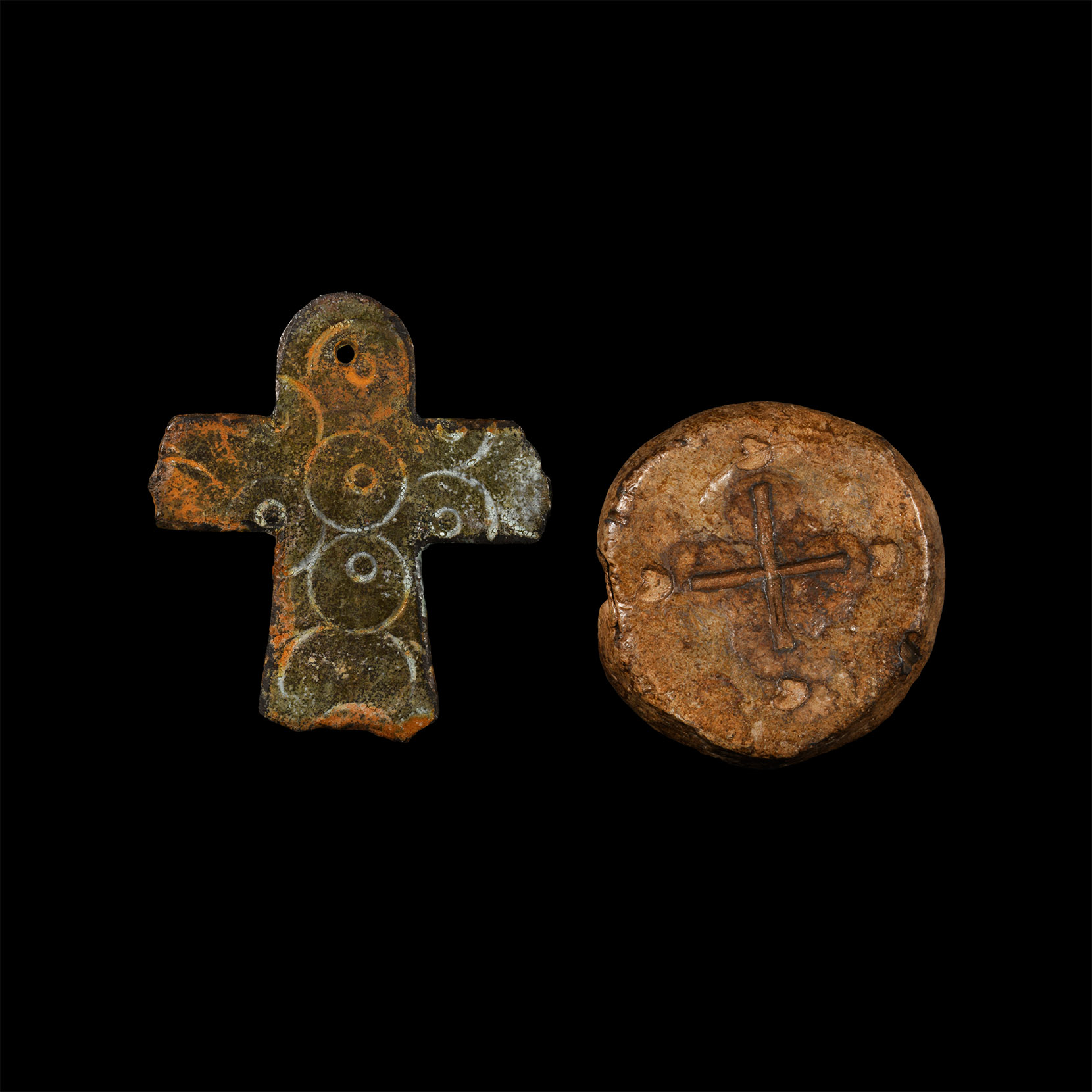
Comprising a circular stone with an incised cross to one side and a series of 13 heraldic hearts to the other; a bronze cross pendant with annulet-in-circle motifs to one side. [2]
ProvenanceFrom an old Worcestershire, UK collection.
The Kusmirek Collection, UK.
Cf. similar badges in PAS nos.NARC-DA5944, and YORYM-0670C5.
FootnotesThe copper-alloy pendant appears to be cross-shaped with the top arm forming the suspension loop. It is therefore possible to consider the pendant to be T-shaped, in the form of the Greek letter Tau. These Tau crosses often acted as miniature reliquaries which are thought to have contained a herbal compound that was used to treat the symptoms of St Anthony's fire.
CONDITIONTimeLine Auctions follows a vetting process to ensure the authenticity and legality of all items, reinforcing our commitment to integrity and responsible trading. Each antiquity, antique, and coin lot undergoes thorough examination by a vetting committee of at least ten external specialists, professional trade association members, scientists, and archaeologists: Our Vetting Process
AUCTIONS:
TimeLine is a leading auction house specialising in antiquities, ancient art, collectables, natural history, coins, medals, and books. Our auctions offer museums, collectors, historians, and enthusiasts the opportunity to acquire unique and historically significant pieces.
-
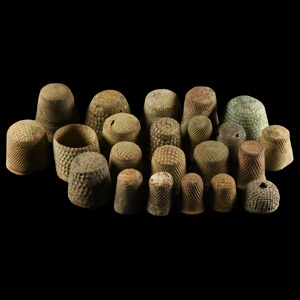
Medieval and Later Bronze Thimble Collection
Circa 15th-20th century A.D.Sold for (Inc. bp): £23
Composed of thimbles of various dates, types and sizes, including beehive and decorated examples. 77 grams total, 12-23 mm
Found Berkshire, UK. -
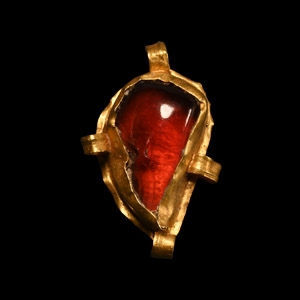
Medieval Gold and Garnet Teardrop Pendant
14th-16th century A.D.Sold for (Inc. bp): £312
The gold setting displaying a polished garnet cabochon; four loops to the circumference. 0.81 grams, 16 mm
From a late Japanese specialist collector, 1970-2000s. -
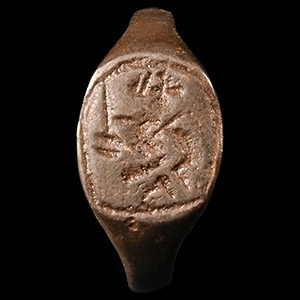
Norman Period Bronze Ring with Dragon Walking Right
Circa 11th-12th century A.D.Sold for (Inc. bp): £85
The slender hoop with slightly expanded shoulders, sub-rectangular bezel engraved with a stylised standing dragon. 2.27 grams, 21.68 mm overall, 19.03 mm internal diameter (approximate size British Q, USA 8, Europe 17.49, Japan 16)
Private collection formed since the 1940s. UK art market. Property of an Essex gentleman.
