
Loading, please wait...

LOT 1869
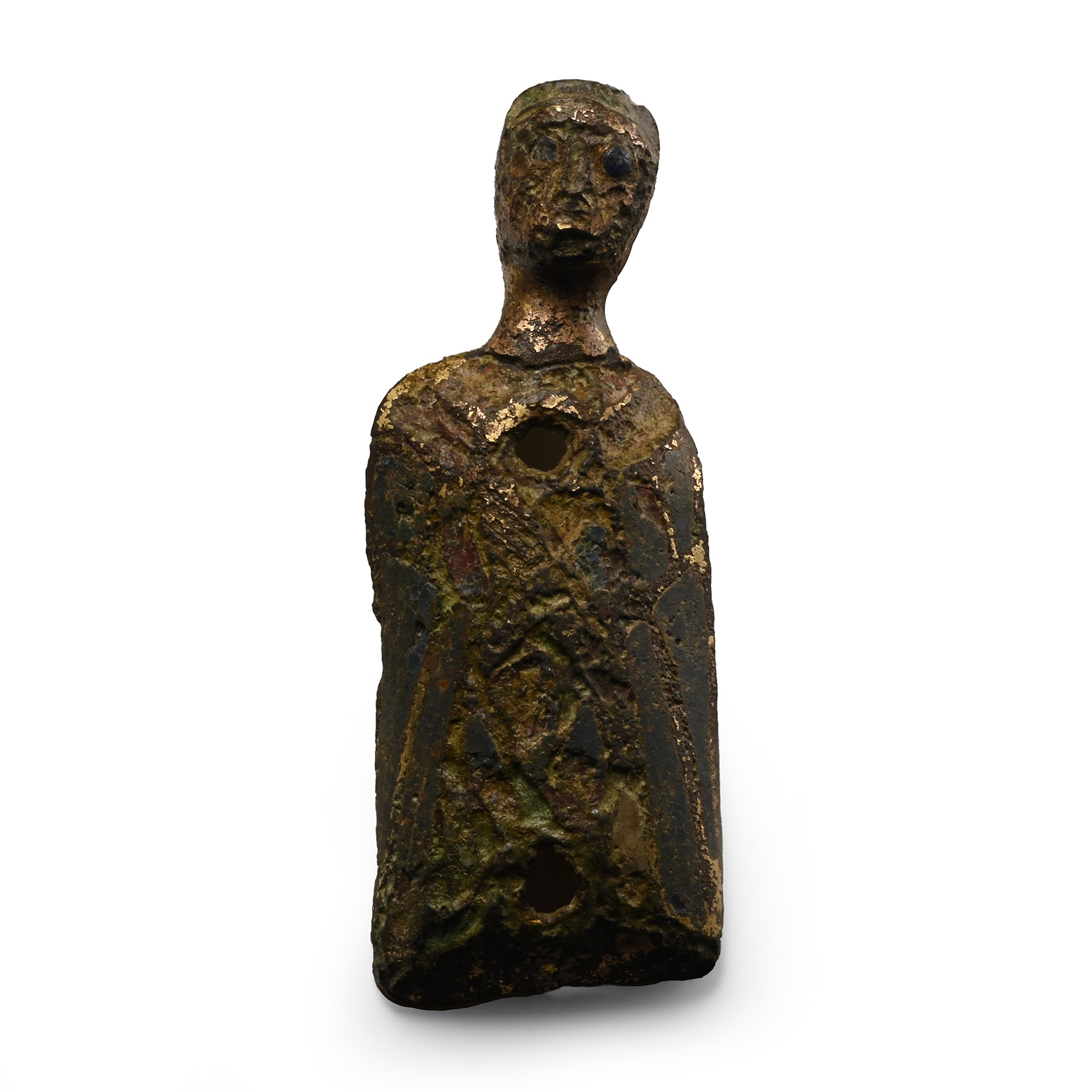
Medieval Enamelled Gilt Bronze Limoges Saint Figure
13TH CENTURY A.D.
2 3/8 in. (22 grams, 61 mm).
Comprising a tongue-shaped curved-section body pierced in two places for attachment, with rounded shoulders and bowed head with short tonsured hair. [No Reserve]
ProvenanceFrom the collection of a London antiquarian, formed since the 1980s.
LiteratureCf. similar items on the shrine of St Hippolyte in Taburet-Delahaye, E. & Boehm, B.D., L'Œuvre de Limoges, Paris, 1995, item 113.
CONDITIONTimeLine Auctions follows a vetting process to ensure the authenticity and legality of all items, reinforcing our commitment to integrity and responsible trading. Each antiquity, antique, and coin lot undergoes thorough examination by a vetting committee of at least ten external specialists, professional trade association members, scientists, and archaeologists: Our Vetting Process
AUCTIONS:
TimeLine is a leading auction house specialising in antiquities, ancient art, collectables, natural history, coins, medals, and books. Our auctions offer museums, collectors, historians, and enthusiasts the opportunity to acquire unique and historically significant pieces.
-
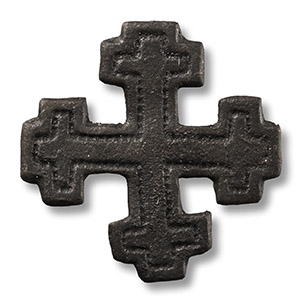
Medieval Bronze Knight's Holy Sepulchre Badge
Circa 13th-14th century A.D.Sold for (Inc. bp): £143
Formed as a cross-crosslet, the symbol of the Knights of the Holy Sepulchre, with punched-point border. 1.06 grams, 22 mm
Found on various UK sites since 1974. Property of an Essex collector.
The 'Equestrian Order of the Holy Sepulchre of Jerusalem' was an order of knighthood under the protection of the Pope, formed around 1099 AD by Duke Godfrey of Bouillon, the leader of the First Crusade. It was established for the protection of pilgrims travelling to the Holy Land and was recognised by a Papal Bull in about 1113 AD. -

Medieval Iron Fire Starter Group
Circa 11th-18th century A.D.Sold for (Inc. bp): £20
Including fire steels of various types with ornamental shaping. 165 grams total, 55-88 mm
Acquired 1990s-early 2000s. East Anglian private collection.
Fire steels were used to generate a spark from a 'strike-a-light' (a piece of flint or pyrite). The spark was directed into a tinder box containing a dry, flammable material such as charred linen until a flame was kindled. -

Medieval Lead Spindle Whorl Collection
Circa 13th-16th century A.D.Sold for (Inc. bp): £7
Mostly annular with high-relief geometric ornament. 1.3 kg total, 27 x 19 cm including box
Ex Stocker collection, Kent, UK, 1955-early 2000s.
