
Loading, please wait...
LOT 1814
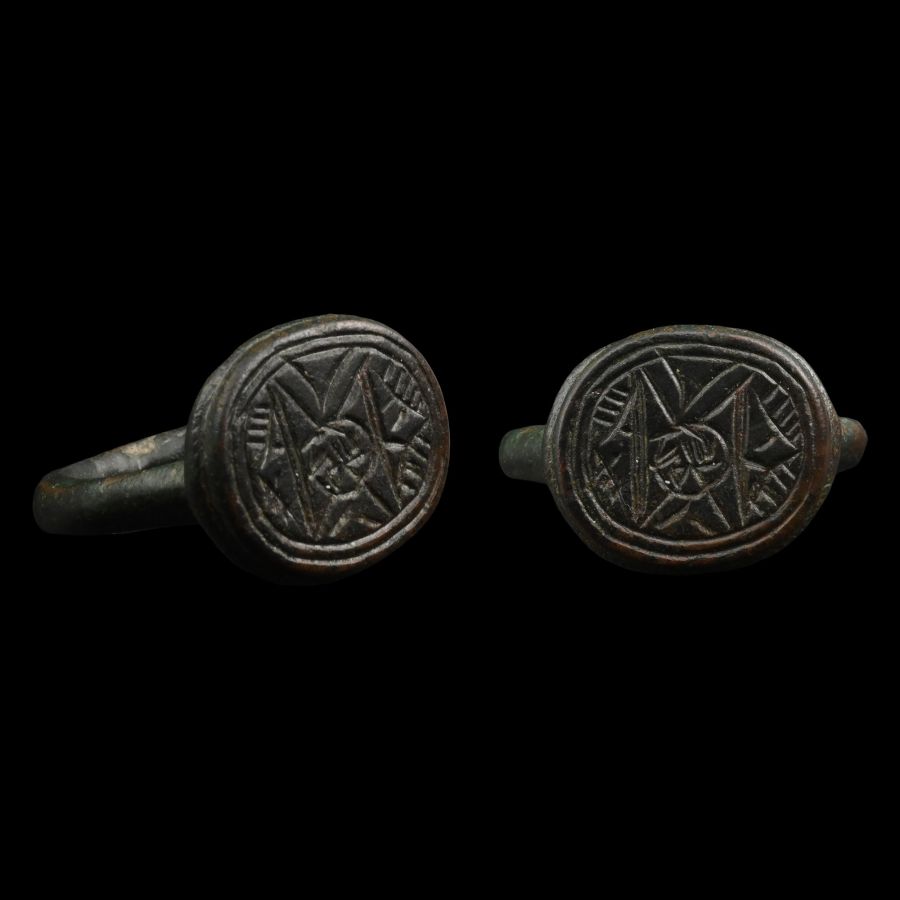
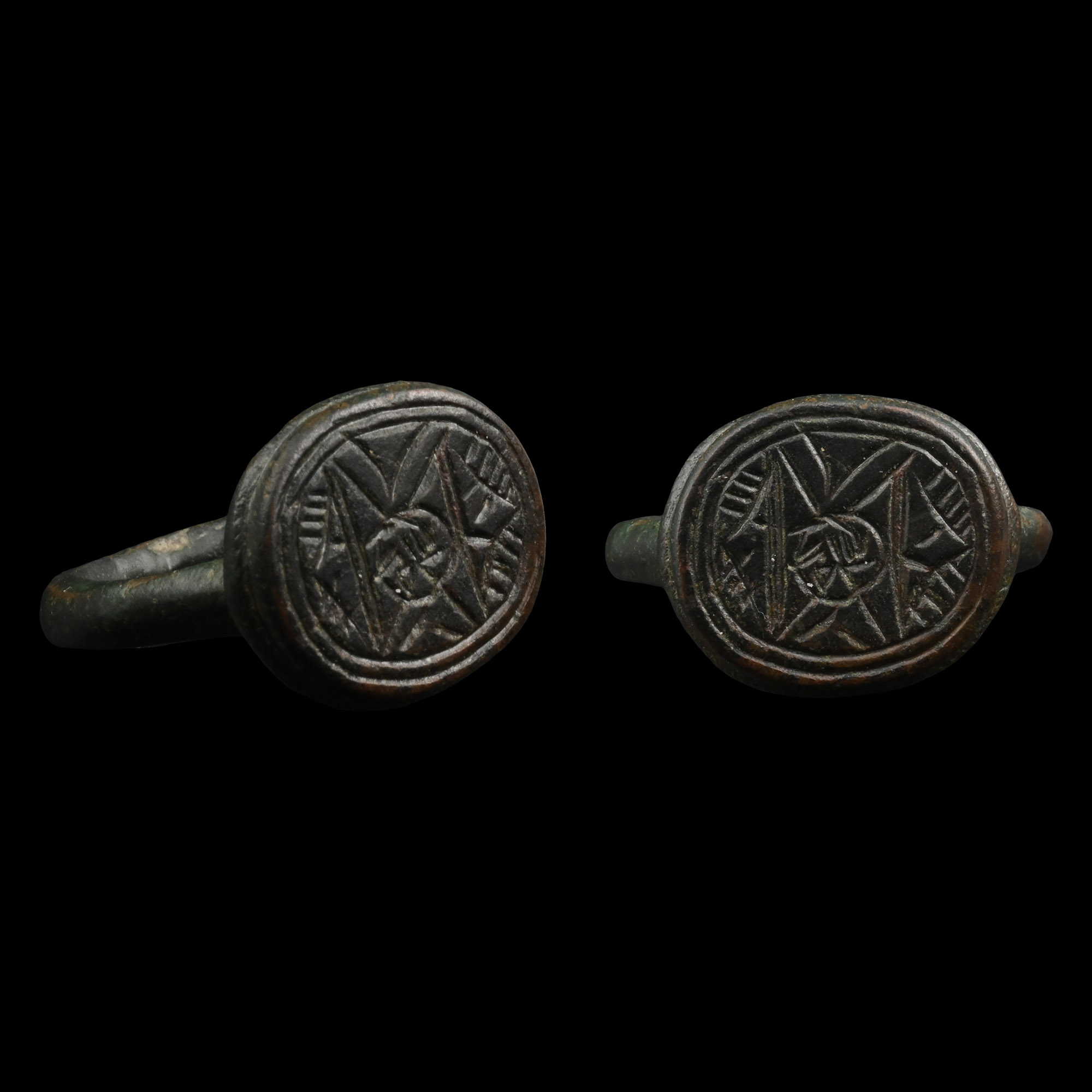
Medieval Decorated Bronze Ring with Magical Symbols
14TH-16TH CENTURY A.D.
1 in. (8.28 grams, 23.87 mm overall, 17.76 mm internal diameter (approximate size British M 1/2, USA 6 1/4, Europe 13.09, Japan 12)).
Carinated hoop and tiered ellipsoid bezel, incuse central rosette with hatching and motifs. [No Reserve]
ProvenanceEx German art market, 2000s.
Acquired from an EU collector living in London.
From the collection of a Surrey, UK, gentleman.
TimeLine Auctions follows a vetting process to ensure the authenticity and legality of all items, reinforcing our commitment to integrity and responsible trading. Each antiquity, antique, and coin lot undergoes thorough examination by a vetting committee of at least ten external specialists, professional trade association members, scientists, and archaeologists: Our Vetting Process
AUCTIONS:
TimeLine is a leading auction house specialising in antiquities, ancient art, collectables, natural history, coins, medals, and books. Our auctions offer museums, collectors, historians, and enthusiasts the opportunity to acquire unique and historically significant pieces.
-
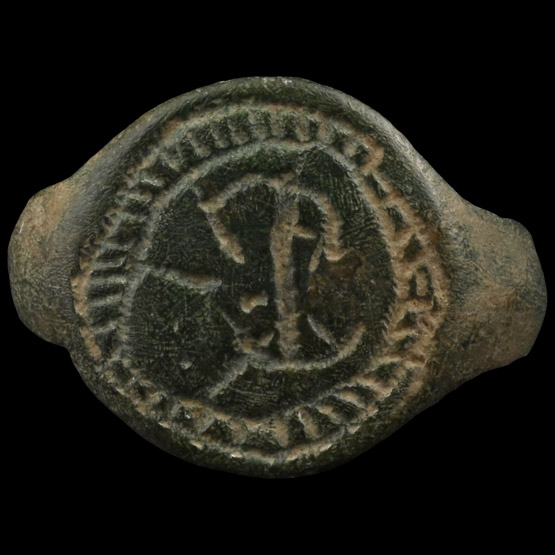
Eastern European Medieval Ring with Chrismon
14th century A.D.Sold for (Inc. bp): £39
Comprising a D-section hoop and a large discoid bezel with hatched border and geometric motifs, tracing a Christian symbol. 3.17 grams, 19.75 mm overall, 16.90 mm internal diameter (approximate size British K, USA 5 1/4, Europe 9.95, Japan 9)
Acquired on the UK and EU art market before 2000. From the private collection of a Surrey, UK, gentleman.
The ring, which gradually widens towards the shoulders, transitions into a slightly raised and circularly flattened bezel that seems to have been decorated with a roughly engraved Chrismon. This category of rings finds parallels in the Balkans and is dated 13th-14th century A.D. -
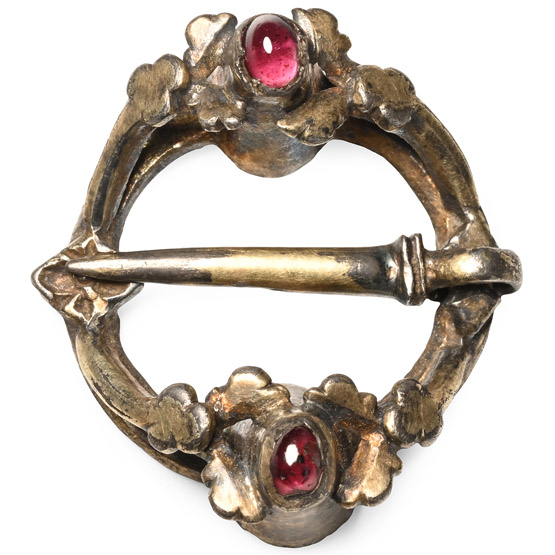
Medieval Silver-Gilt Ring Brooch with Garnet Cabochons
European, 13th-14th century A.D.Estimate: £350 - 450 (+bp*)
Opening Bid: £175
Annular in form with tapering cells to each end, with inset garnet cabochons, and leaf detailing, quatrefoil opposite the sword-shaped pin. 5.42 grams, 26 mm
Private collection, London, UK. -
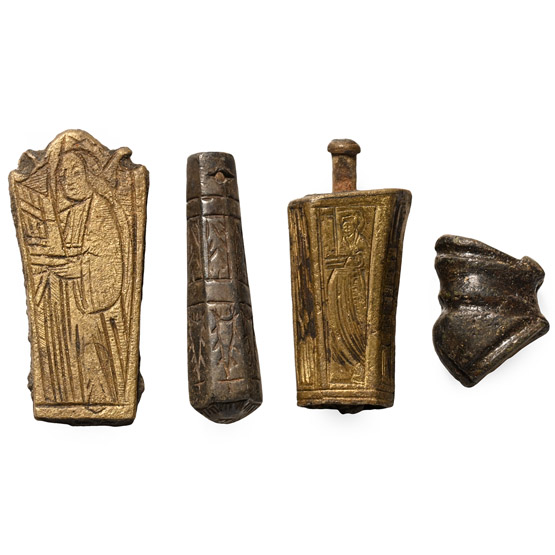
Medieval Bronze Knife Pommel Collection
15th-16th century A.D.Sold for (Inc. bp): £124
Comprising of two gilded with incised figures of saints; hexagonal with incised geometric decoration; bulbous with incised lines. 20.96 grams total, 15-32 mm
From the private collection of the late Graham Slater (1927-2024), Cambridge, UK, acquired 1980s-1990s.
