
Loading, please wait...
_900x900.jpg "Medieval de Blanchfort or de Molay Family Personal Silver Heraldic Seal Matrix")
_200x200.jpg "Medieval de Blanchfort or de Molay Family Personal Silver Heraldic Seal Matrix")
_900x900.jpg "Medieval de Blanchfort or de Molay Family Personal Silver Heraldic Seal Matrix")
_200x200.jpg "Medieval de Blanchfort or de Molay Family Personal Silver Heraldic Seal Matrix")
.jpg "Medieval de Blanchfort or de Molay Family Personal Silver Heraldic Seal Matrix")
.jpg "Medieval de Blanchfort or de Molay Family Personal Silver Heraldic Seal Matrix")
LOT 0312
Medieval de Blanchfort or de Molay Family Personal Silver Heraldic Seal Matrix
CIRCA 1400-1540 A.D.
1 1/8 in. (12.41 grams, 27 mm high).
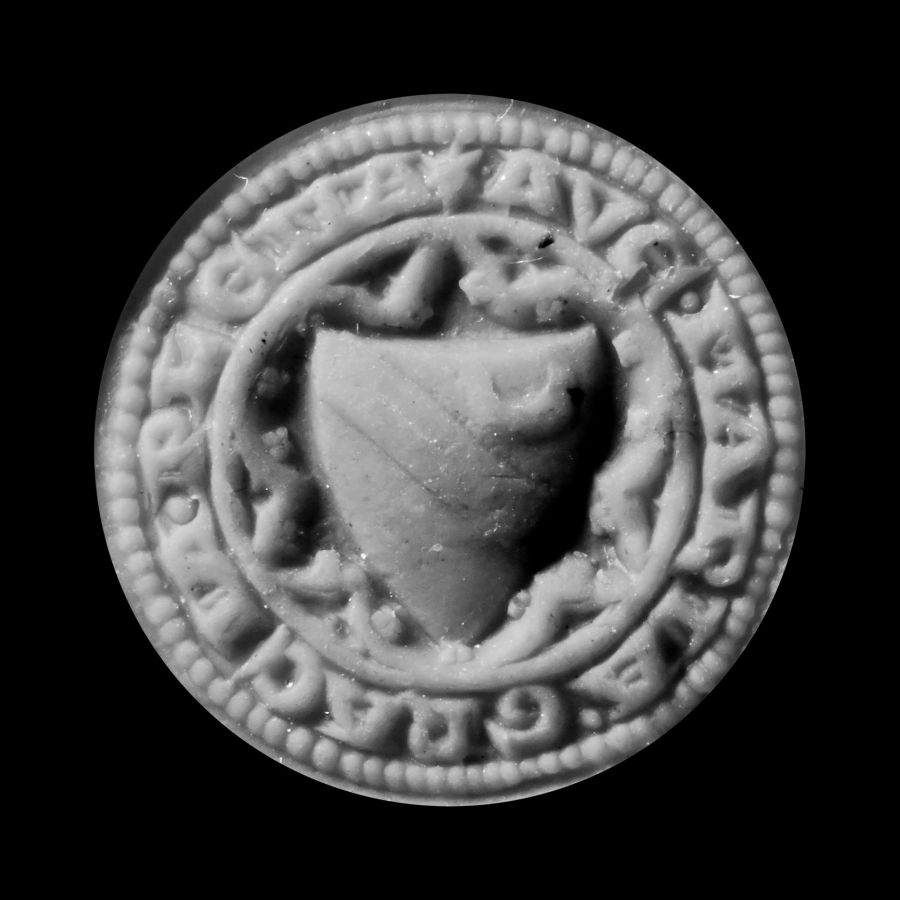
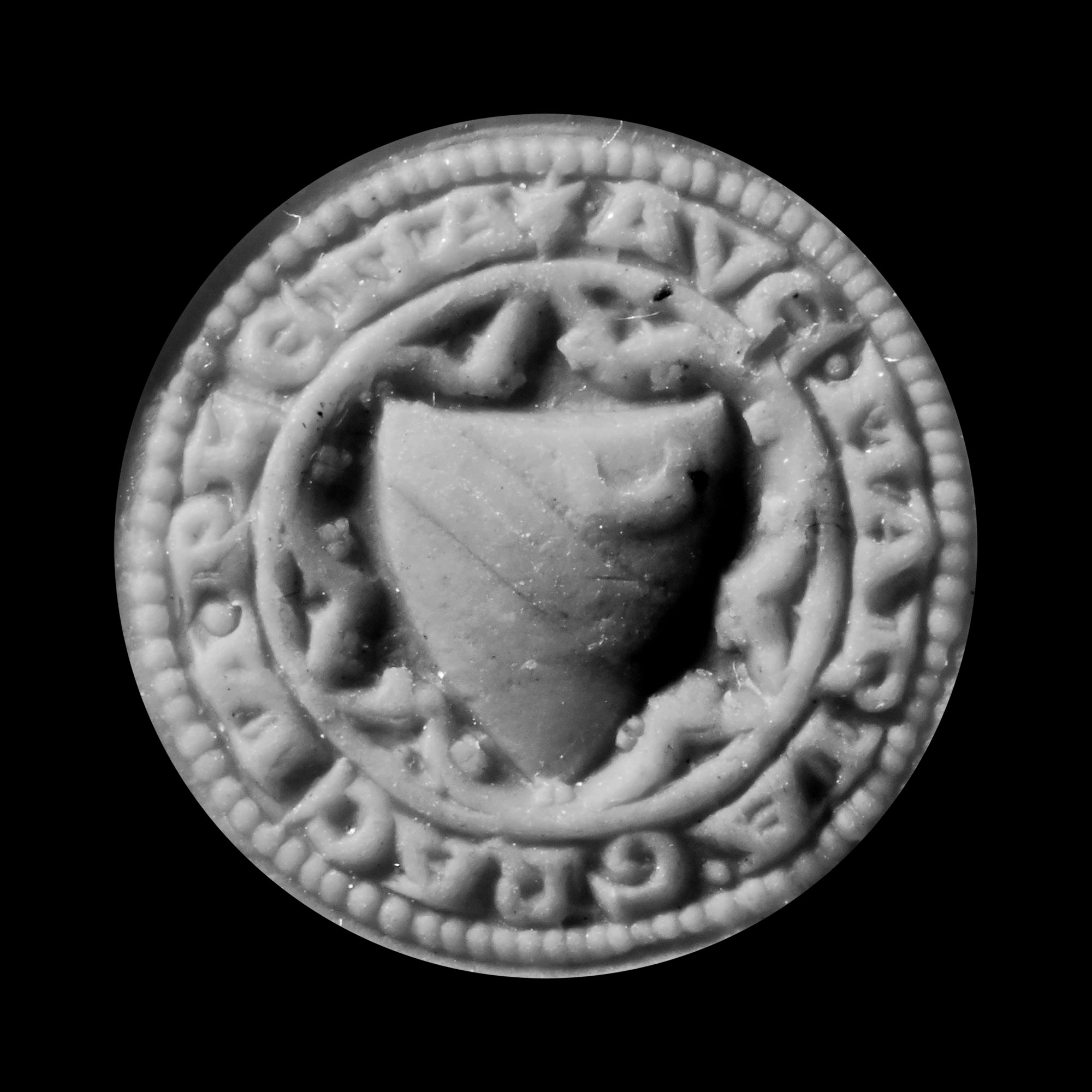
With a hexagonal-section facetted handle tapering to a collar of three ridges and openwork trefoil terminal; the face of the matrix with incised heater shield and heraldic arms: a bend and crescent top right; within a trefoil arched tressure a Latin inscription: ' * AVE MARIA GRACIA PLENA' meaning: 'Hail Mary, full of grace'; possibly the arms of the de Blanchfort or de Molay family.
ProvenanceFound whilst searching with a metal detector near Charlton Marshall, North Dorset, on 16 February 2022 by John Earley; recorded as Treasure with Treasure case tracking no.2022T500, and subsequently disclaimed by the Crown.
Accompanied by a copy of the British Museum's Portable Antiquities Scheme (PAS) report no.DOR-771829.
Accompanied by a copy of the report on a find of potential Treasure for H M Coroner from Charlton Marshall, Dorset.
Accompanied by a copy of a letter from the British Museum informing the finder that the Crown's interest in the find has been disclaimed.
The basic heraldic design (the arms) comprises just a bend (diagonal stripe). The crescent is a mark of cadency, denoting the second son i.e. the younger brother of the heir apparent. The basic 'bend' motif appears in many heraldic designs, such as the arms of the de Blanchfort or de Molay families, amongst others. The heraldry of the town of Chaussin (Jura, France) is similar (bend and crescent) but these arms are not known to have been borne by a family.
CONDITIONTimeLine Auctions follows a vetting process to ensure the authenticity and legality of all items, reinforcing our commitment to integrity and responsible trading. Each antiquity, antique, and coin lot undergoes thorough examination by a vetting committee of at least ten external specialists, professional trade association members, scientists, and archaeologists: Our Vetting Process
AUCTIONS:
TimeLine is a leading auction house specialising in antiquities, ancient art, collectables, natural history, coins, medals, and books. Our auctions offer museums, collectors, historians, and enthusiasts the opportunity to acquire unique and historically significant pieces.
LOT 0312
Medieval de Blanchfort or de Molay Family Personal Silver Heraldic Seal Matrix
Sold for (Inc. bp): £1,495
-
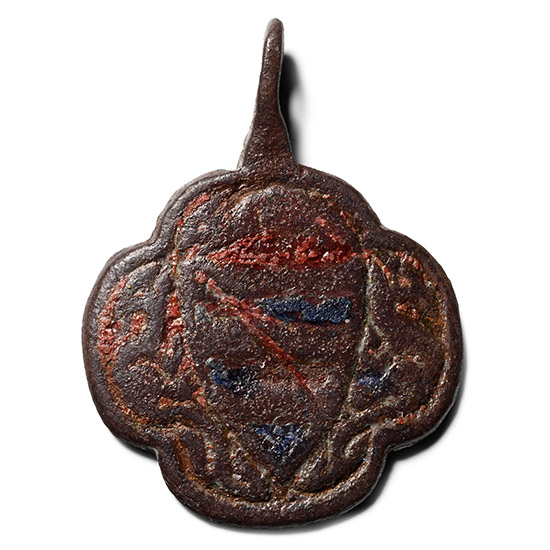
Medieval Knight's Enamelled Bronze Heraldic Horse Harness Pendant
Circa 13th-15th century A.D.Sold for (Inc. bp): £52
Blue and red enamelled quatrefoil pendant with a central shield flanked by long-tailed beasts facing back. 15.6 grams, 44 mm
Found Suffolk, UK. Property of a Suffolk, UK, gentleman. -
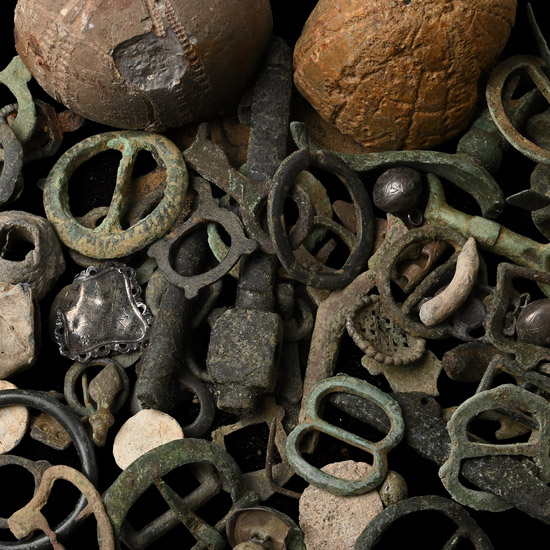
Medieval and Later Bronze and Lead Artefact Collection
Circa 12th-19th century A.D.Sold for (Inc. bp): £20
Mixed group of items, including buckles, purse-bar fragments, pins, two 'sand dollar' fossils, and others. 916 grams total, 10-99 mm
From the private collection of a Sussex, UK, gentleman. -
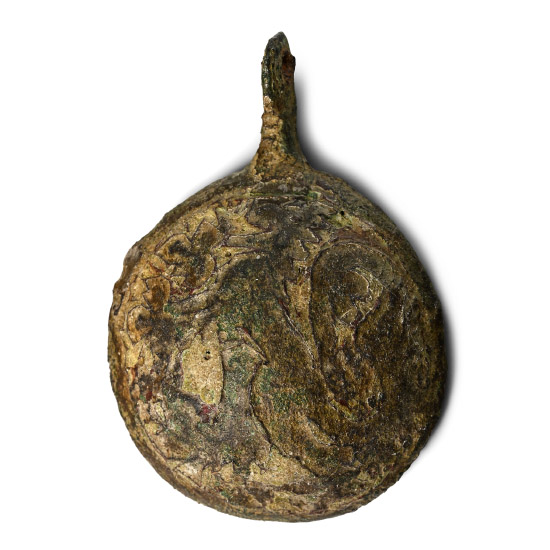
Medieval Knights Bronze 'Earls of Arundel' Heraldic Horse Harness Pendant
England, 15th-16th century A.D.Sold for (Inc. bp): £169
Convex face with lion rampant and vestigial traces of red enamel; perhaps originally gilded, suggesting the blazon 'Or a lion rampant Gules', the arms of the Earls of Arundel (FitzAlan family); transverse suspension loop intact. 11.7 grams, 41 mm
Found Whaplode, Lincolnshire, UK. Recorded with UKDFD no.56925.
