
Loading, please wait...
LOT 1387
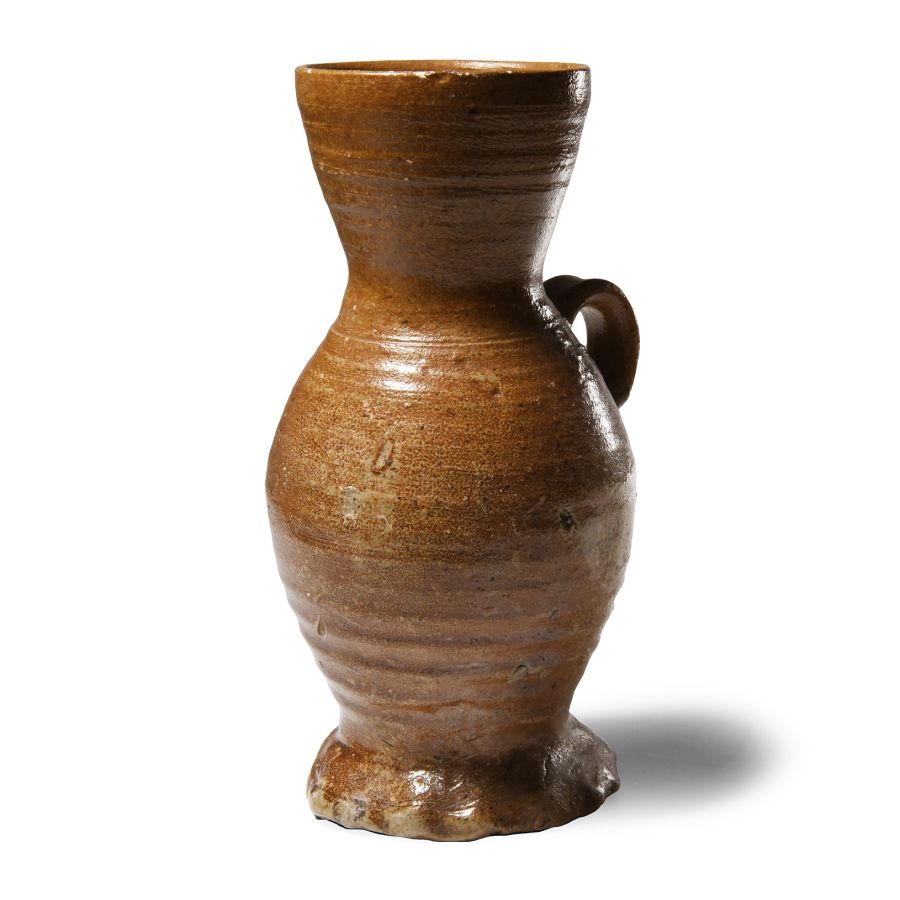
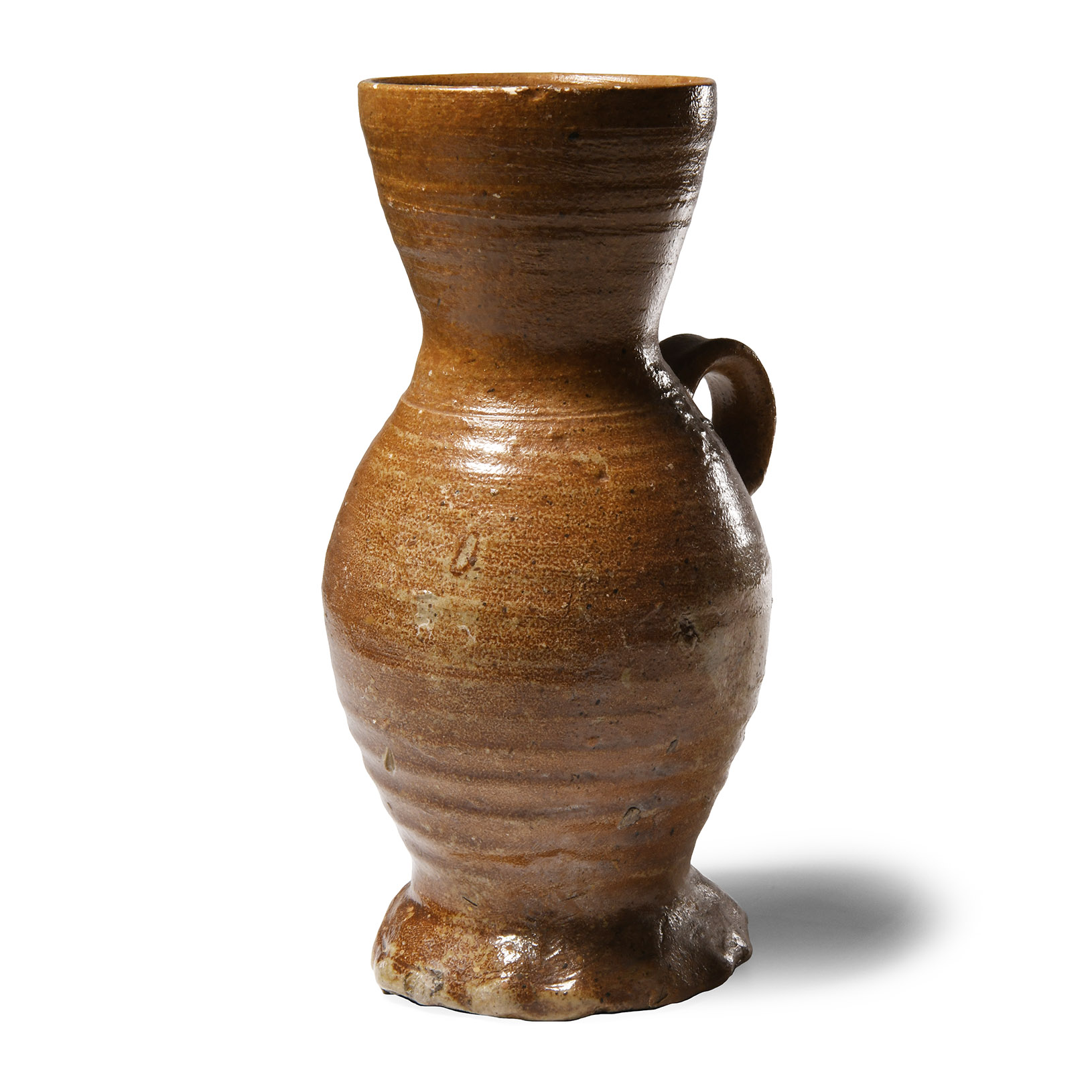
Medieval Ceramic Thumb Based Jug
16TH CENTURY A.D.
7 1/2 in. (539 grams, 19 cm high).
Salt-glazed jug with fusiform body, broad mouth, loop handle to the shoulder, domed base with impressed-thumb patterning. [No Reserve]
ProvenanceEx M.Cummings, UK, 1990s.
CONDITIONTimeLine Auctions follows a vetting process to ensure the authenticity and legality of all items, reinforcing our commitment to integrity and responsible trading. Each antiquity, antique, and coin lot undergoes thorough examination by a vetting committee of at least ten external specialists, professional trade association members, scientists, and archaeologists: Our Vetting Process
AUCTIONS:
TimeLine is a leading auction house specialising in antiquities, ancient art, collectables, natural history, coins, medals, and books. Our auctions offer museums, collectors, historians, and enthusiasts the opportunity to acquire unique and historically significant pieces.
-
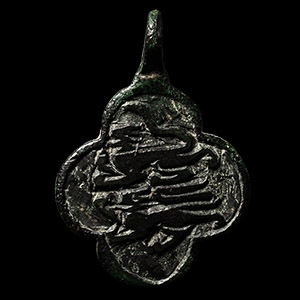
Medieval Royal Knight's Enamelled Bronze Heraldic Horse Harness Pendant
12th century A.D.Sold for (Inc. bp): £143
On a quatrefoil shield with pierced lug above, two lions passant gardant facing left, originally gilded, the field once containing red enamel. 6.93 grams, 33 mm
Found Norfolk, UK, circa 1990s.
The Royal Arms of England feature three lions passant gardant from the late 12th century, but there is a suspicion that an earlier version comprised only two such beasts, and that the third was added when Henry II married Eleanor Duchess of Aquitaine in 1152. -
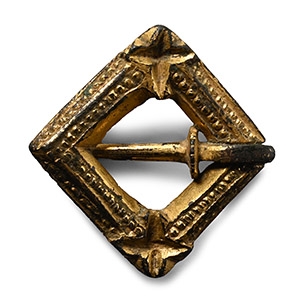
Medieval Gilt Bronze Lozenge-Shaped Ring Brooch with Inscription Verso
Circa 14th-15th century A.D.Sold for (Inc. bp): £72
With quatrefoil at the upper and lower angles, pelletted detailing, sword-shaped pin; uncertain legend to reverse 'mAN + AVE' perhaps an attempt at the common AVE MARIA. 2.76 grams, 21.5 mm
Found Southern England. Acquired on the UK art market in the 1980s. From an East Anglian private collection. -
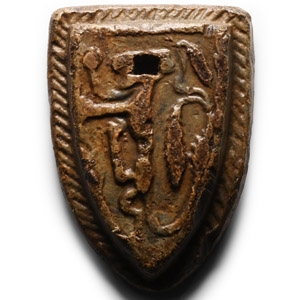
Medieval Lead Shield-Shaped Weight with Rampant Lion of Simon de Montfort
Circa 13th-15th century A.D.Sold for (Inc. bp): £182
Thick weight with ropework border and raised escutcheon, reserved lion rampant with fourché tail, rectangular mounting-slot; believed to be the arms of Simon de Montfort, killed at the Battle of Evesham in 1265. 117 grams, 49.4 mm
Found Southern England. Acquired on the UK art market in the 1980s. From an East Anglian private collection.
