
Loading, please wait...
LOT 1576
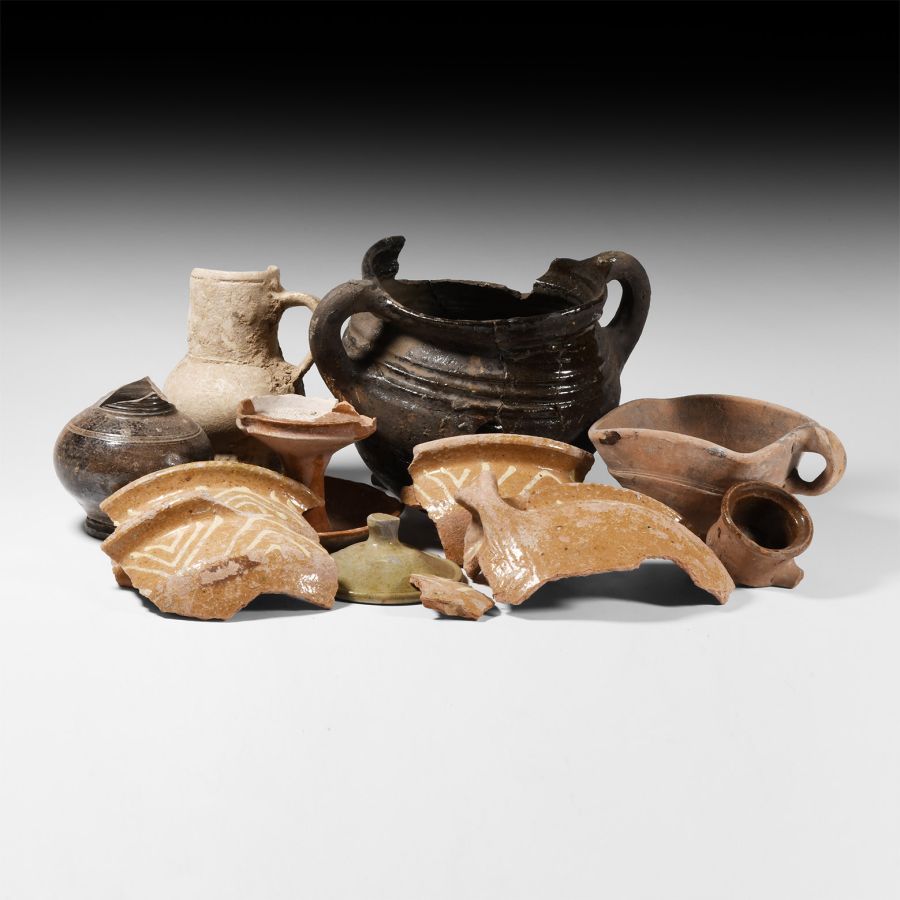
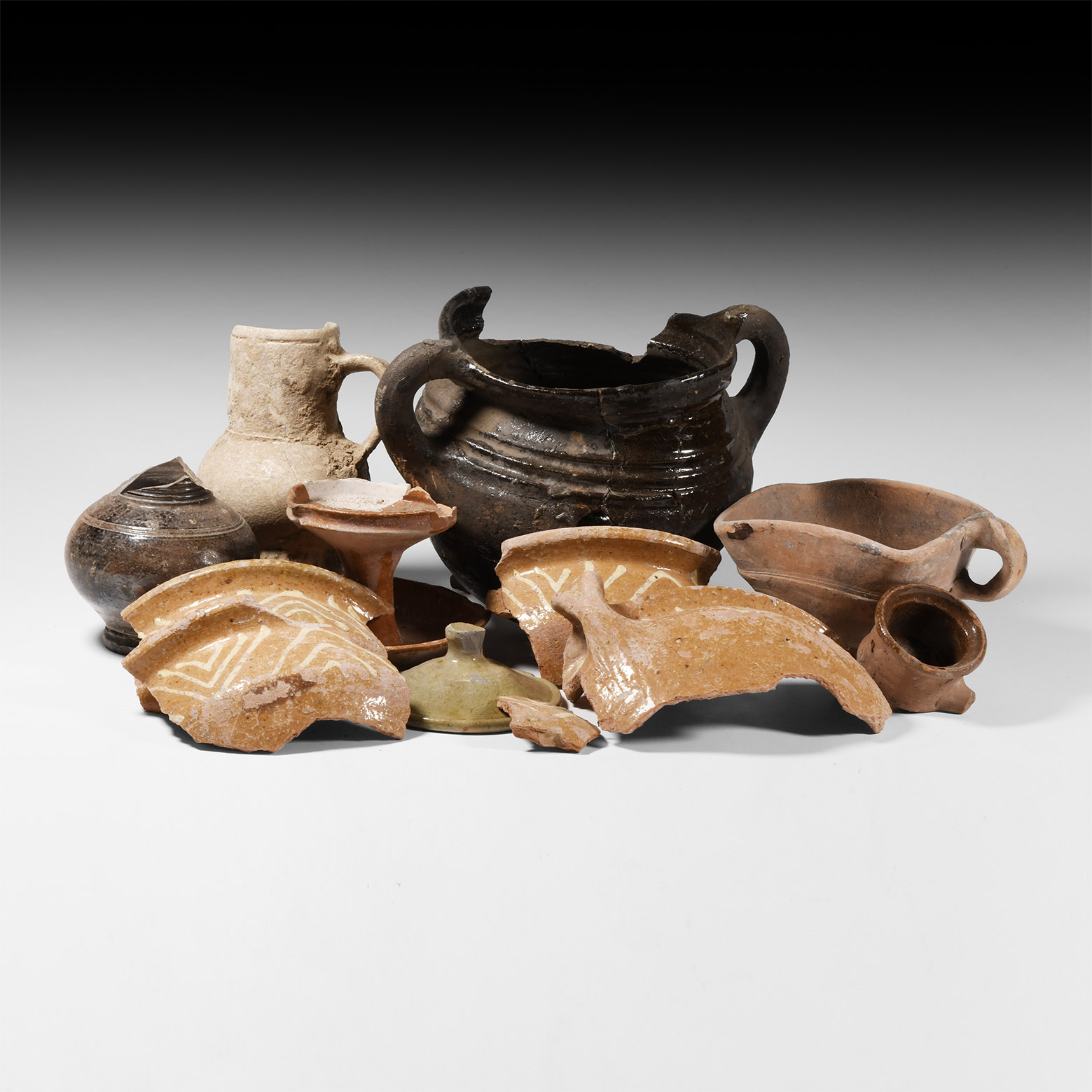
Medieval Ceramic Group
15TH CENTURY A.D. AND LATER
20 7/8 x 9 1/4 in. (11.7 kg total including box, 53 x 23.5 cm).
Composed of glazed and decorated fragmentary vessel fragments. [10, No Reserve]
ProvenanceAcquired 1990s-early 2000s.
East Anglian private collection.
Cf. Taylor, K., Hull, G., 'Excavation of Post-medieval Features and a Dump of Late Eighteen-century Artefacts from 5/6-7 Market Street, Oxford' in Oxoniensia, LXVII, pp.313-357, figs.1-3-10 (dishes-bowls).
FootnotesBowls similar to the specimen in this group, dated to of the first half of the 17th century, were present in very small numbers in the Oxford excavations of late Medieval and Post Medieval levels. Locally manufactured bowls of the second half of the 17th century were found in large numbers from the various layers, made up of Oxford Type B, with their distinctive angular profiles, dated circa 1650-1690.
CONDITIONTimeLine Auctions follows a vetting process to ensure the authenticity and legality of all items, reinforcing our commitment to integrity and responsible trading. Each antiquity, antique, and coin lot undergoes thorough examination by a vetting committee of at least ten external specialists, professional trade association members, scientists, and archaeologists: Our Vetting Process
AUCTIONS:
TimeLine is a leading auction house specialising in antiquities, ancient art, collectables, natural history, coins, medals, and books. Our auctions offer museums, collectors, historians, and enthusiasts the opportunity to acquire unique and historically significant pieces.
-
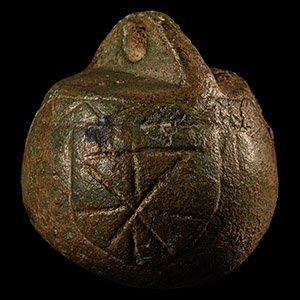
Medieval Bronze Steelyard Weight with Heraldic Shields
Circa 1260-1300 A.D.Sold for (Inc. bp): £442
Heavy with a lead core, spherical in form with pierced flange for suspension above and hatched band to the shoulder; an unusal unofficial copy with three heater shields with raised heraldic arms spaced equally around the body, etched geometric band of chevrons above. 615 grams, 56 mm
Ex Simmons Gallery, London E11, UK, in the 1990s. From a North London collection.
These heraldic steelyard weights were originally made under the official sanction of Richard (brother of King Henry III) or Edmund, Duke of Cornwall on behalf of the King; Edmund died in 1300 A.D. and such weights were banned in 1350. This example would most likely have been made unofficially towards the end of the period 1260-1300 A.D. The Hanseatic League was created in Germany to protect the interests and privileges of merchants in the medieval period, starting in Europe and with influence spreading to England from the 13th century. -
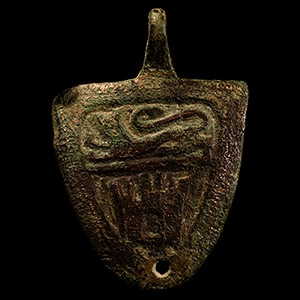
Medieval Large Gilt Bronze Knight's Heraldic Horse Harness Pendant
14th-15th century A.D.Sold for (Inc. bp): £182
Heater-shaped with an integral suspension loop, bearing heraldic device 'gules, a three-towered castle, in chief, a lion passant guardant, or'; the arms attributed by the PAS to the town Newbury, Berkshire; trace remains of gilding; piercing to the lower edge. 14.2 grams, 52 mm
Found Berkshire, UK. Accompanied by a copy of the British Museum's Portable Antiquities Scheme (PAS) report no.BERK-096C9C. -
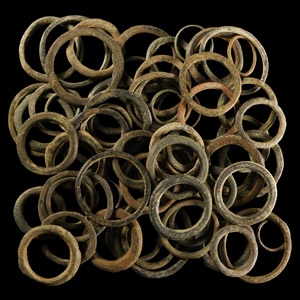
Medieval and Other Bronze Harness Ring Collection
1st-18th century A.D.Sold for (Inc. bp): £46
Mainly slender-bodied and of varying sizes and cross-sections. 188 grams total, 14-34 mm
Found Berkshire, UK.
