
Loading, please wait...
LOT 0346
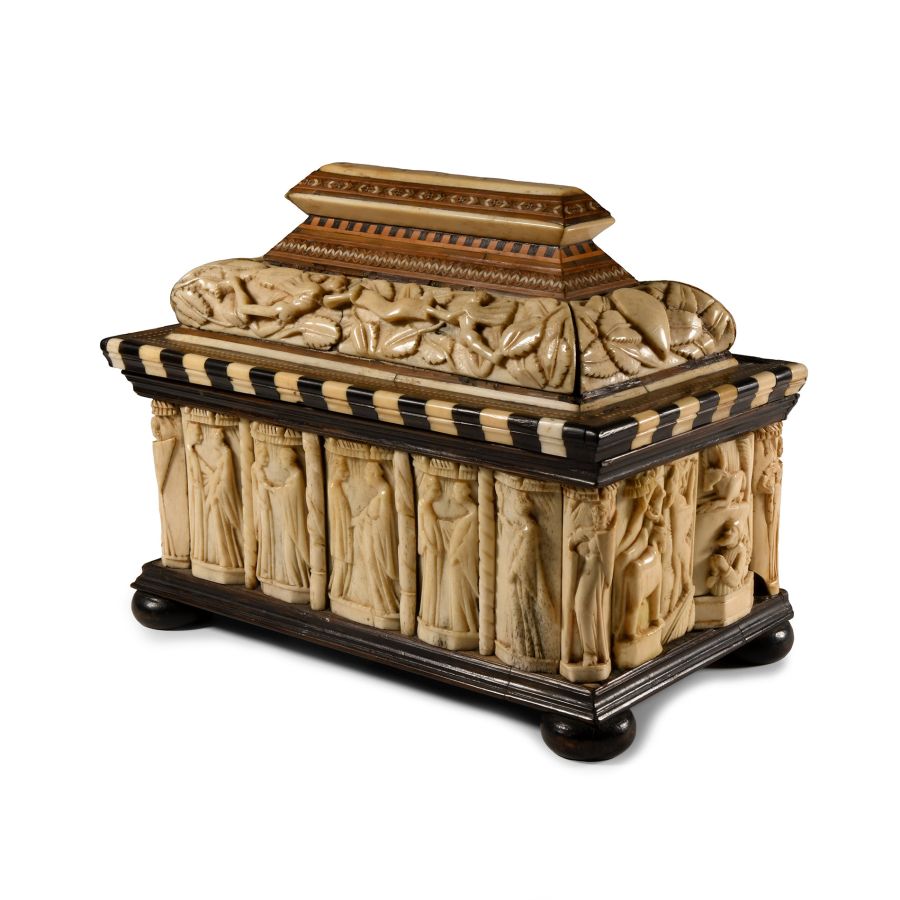
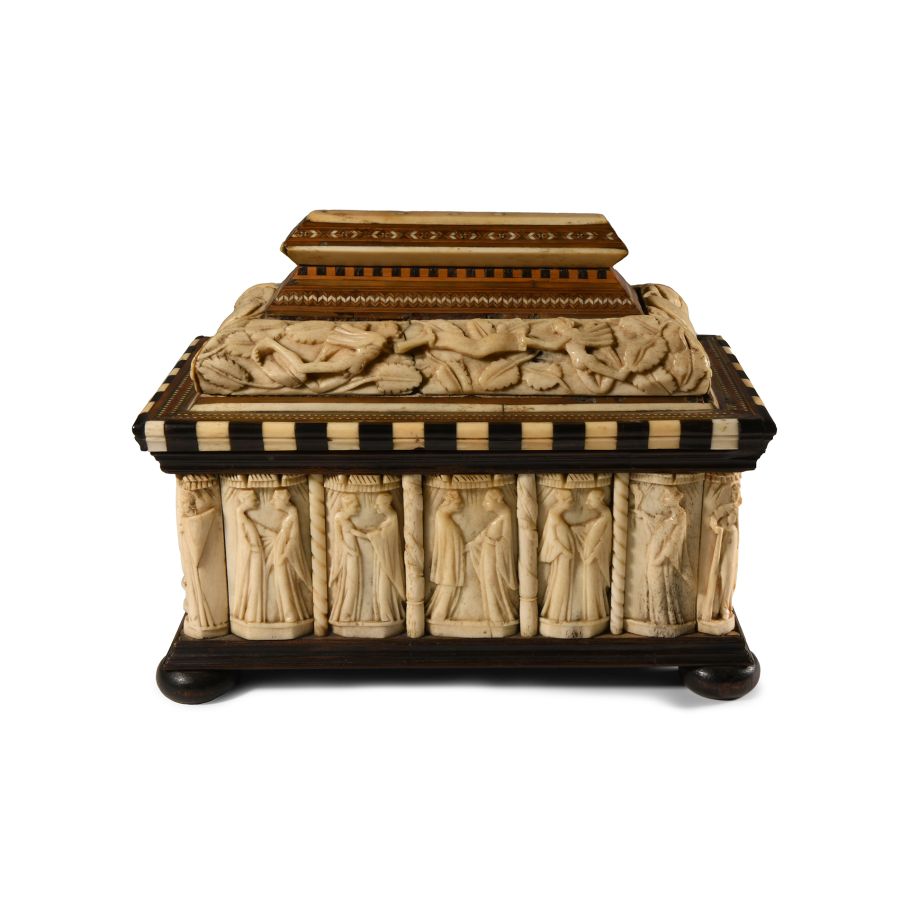
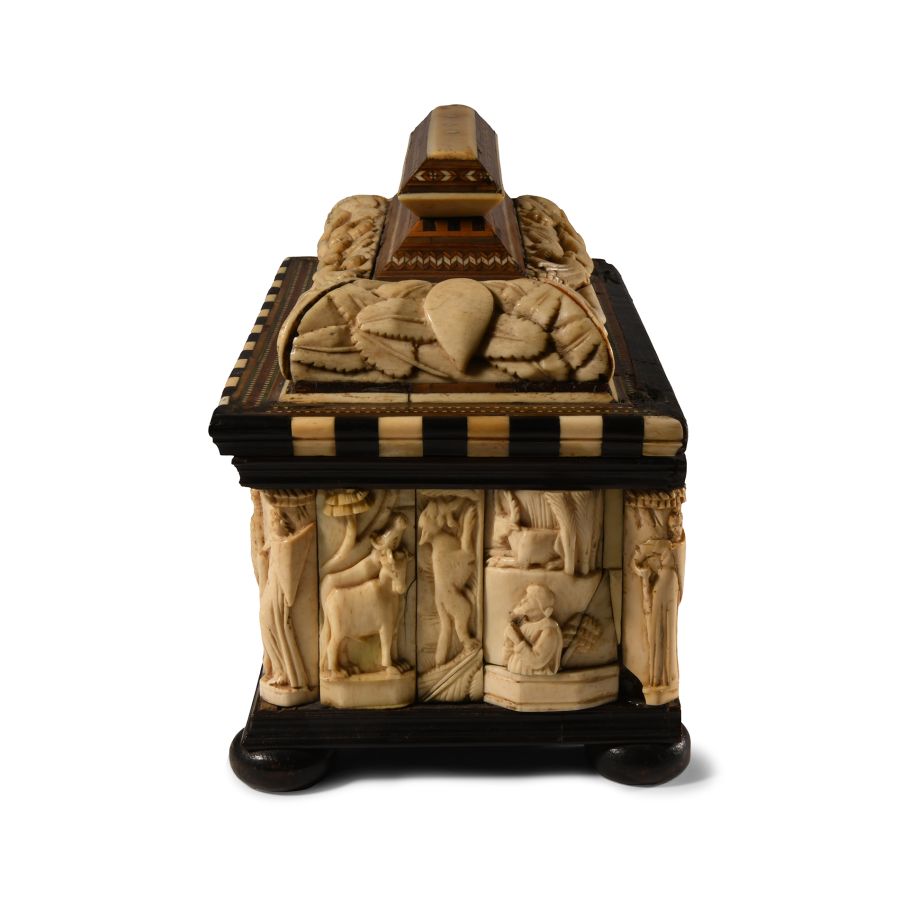
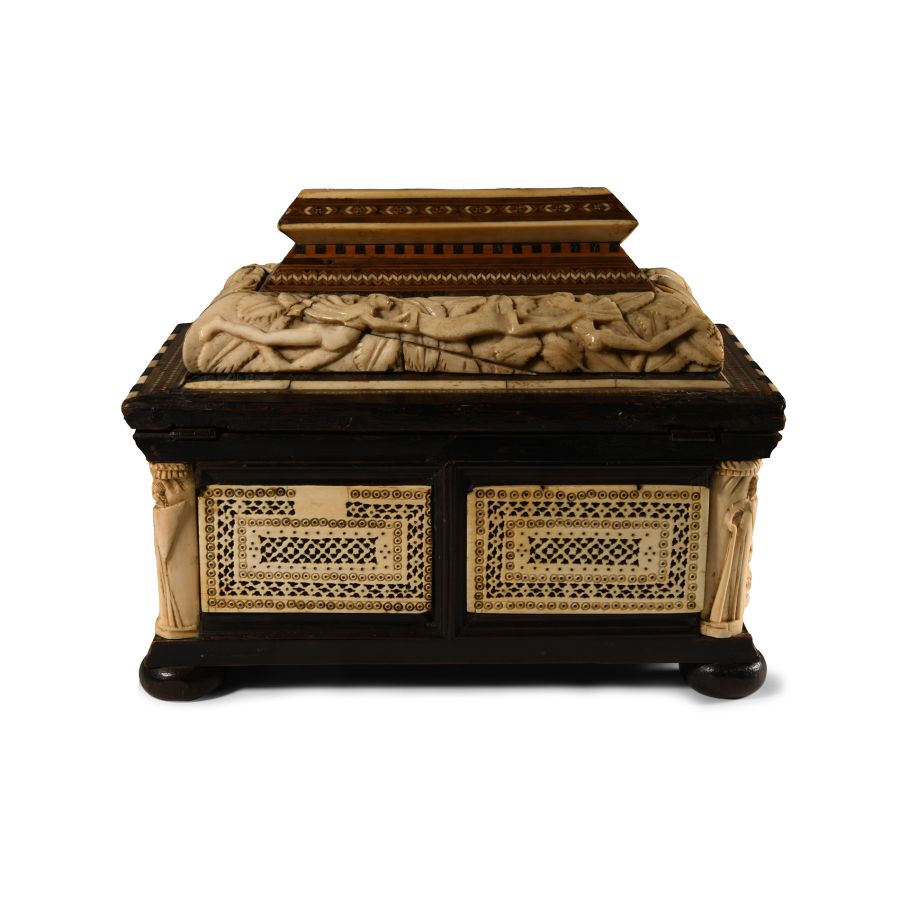
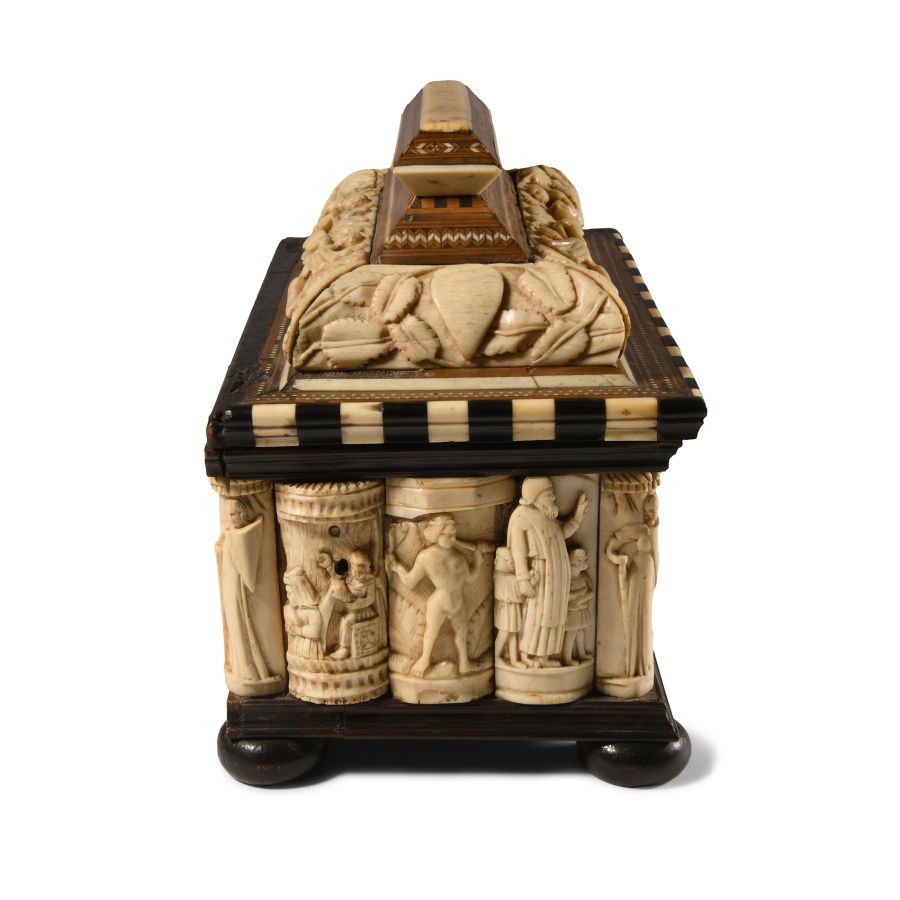
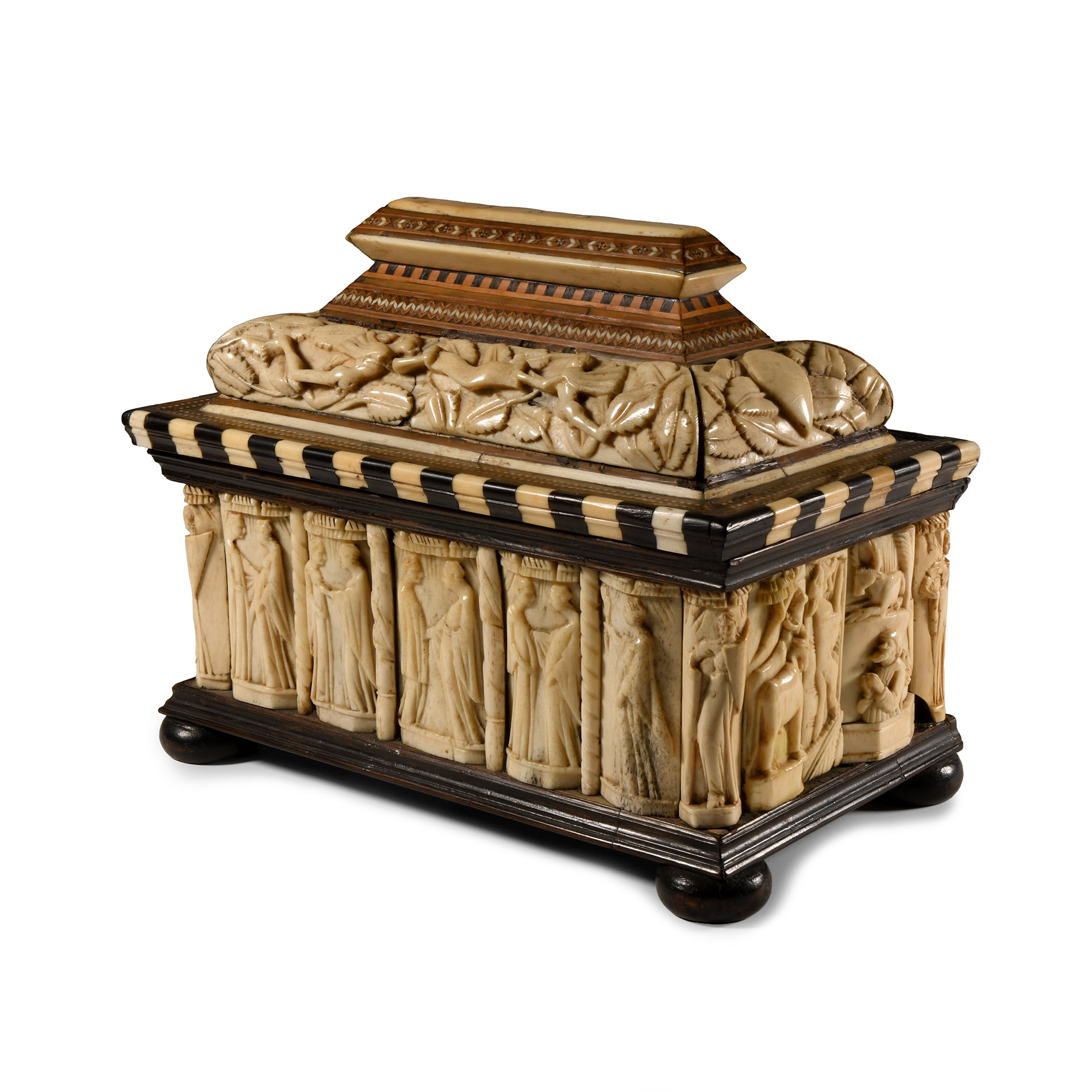
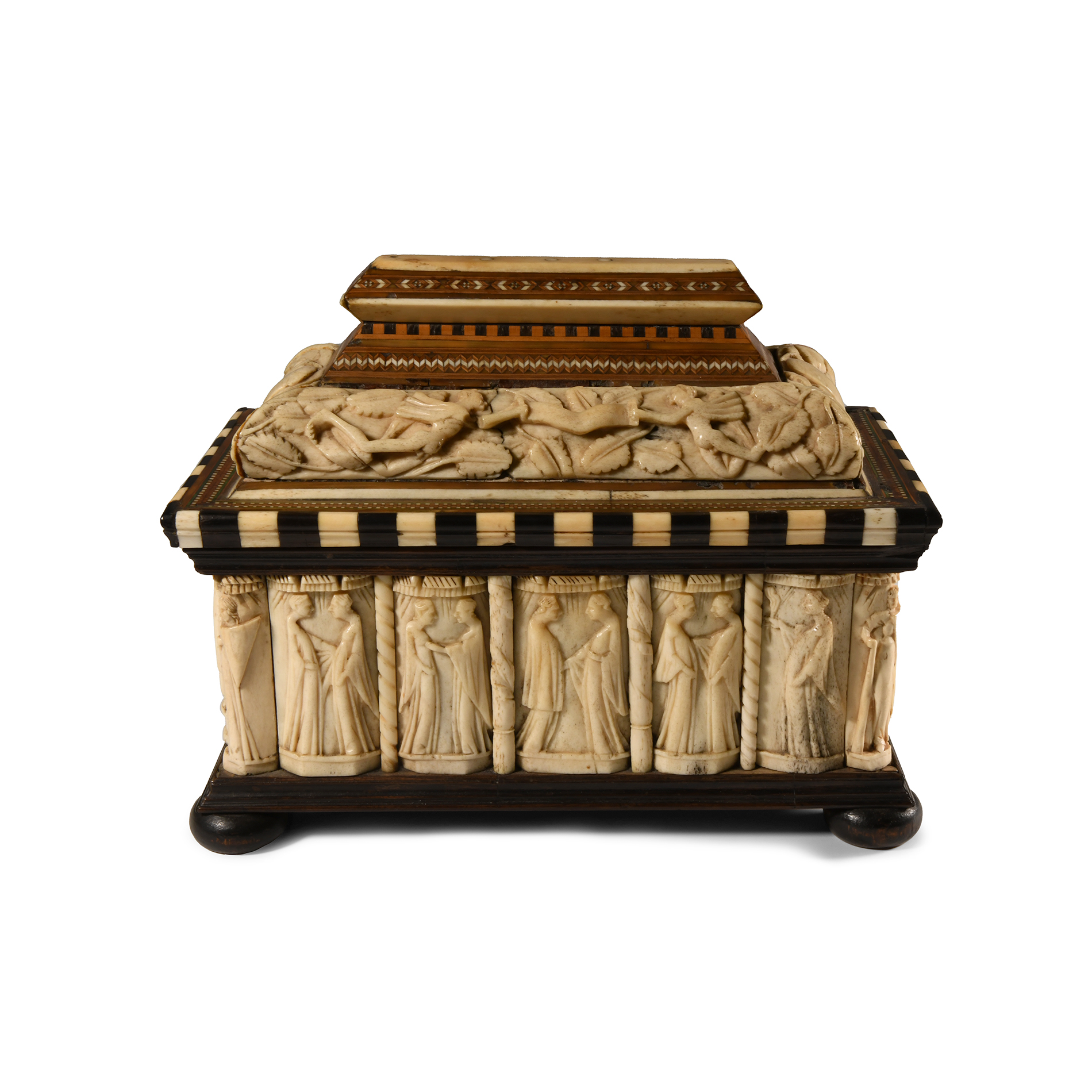
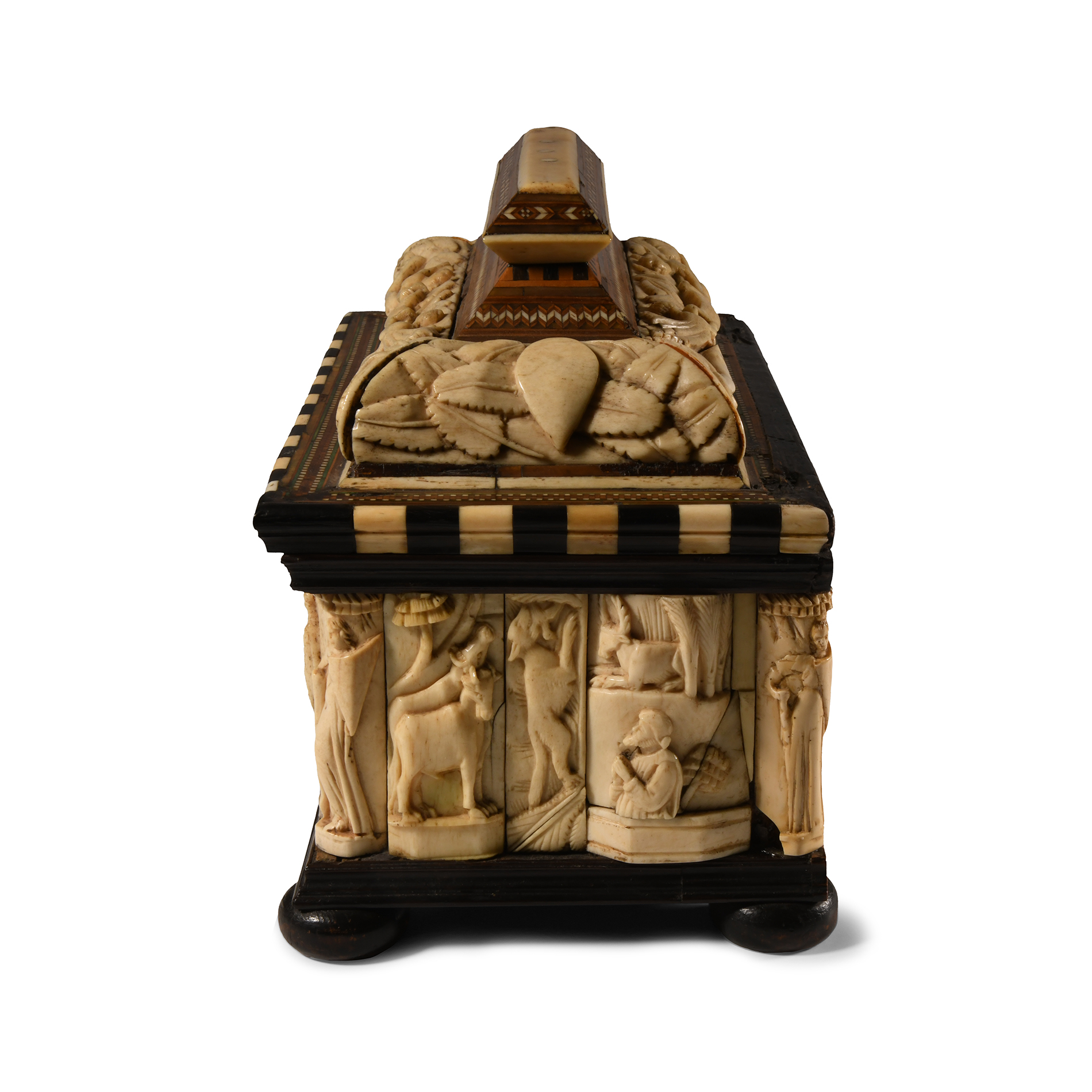
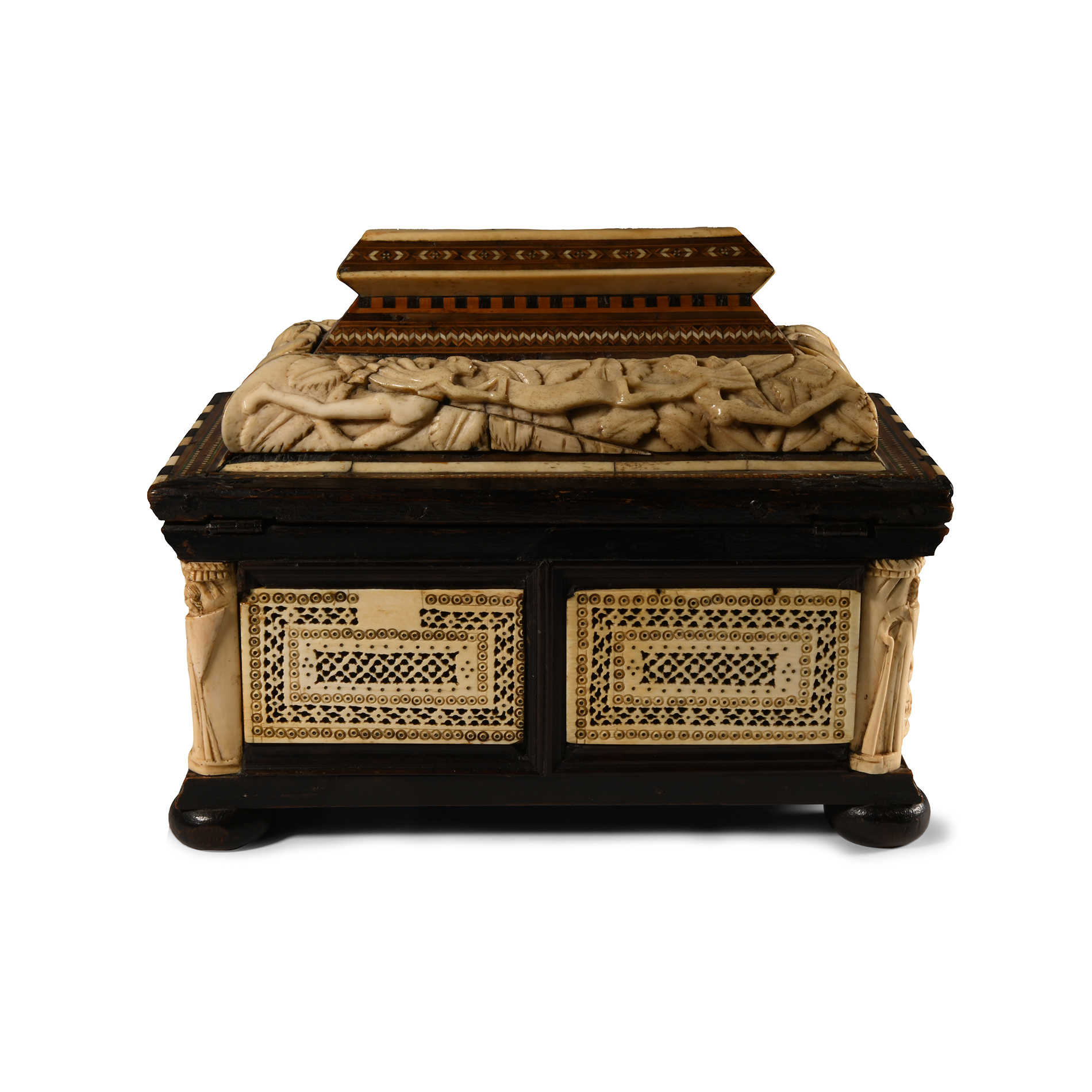
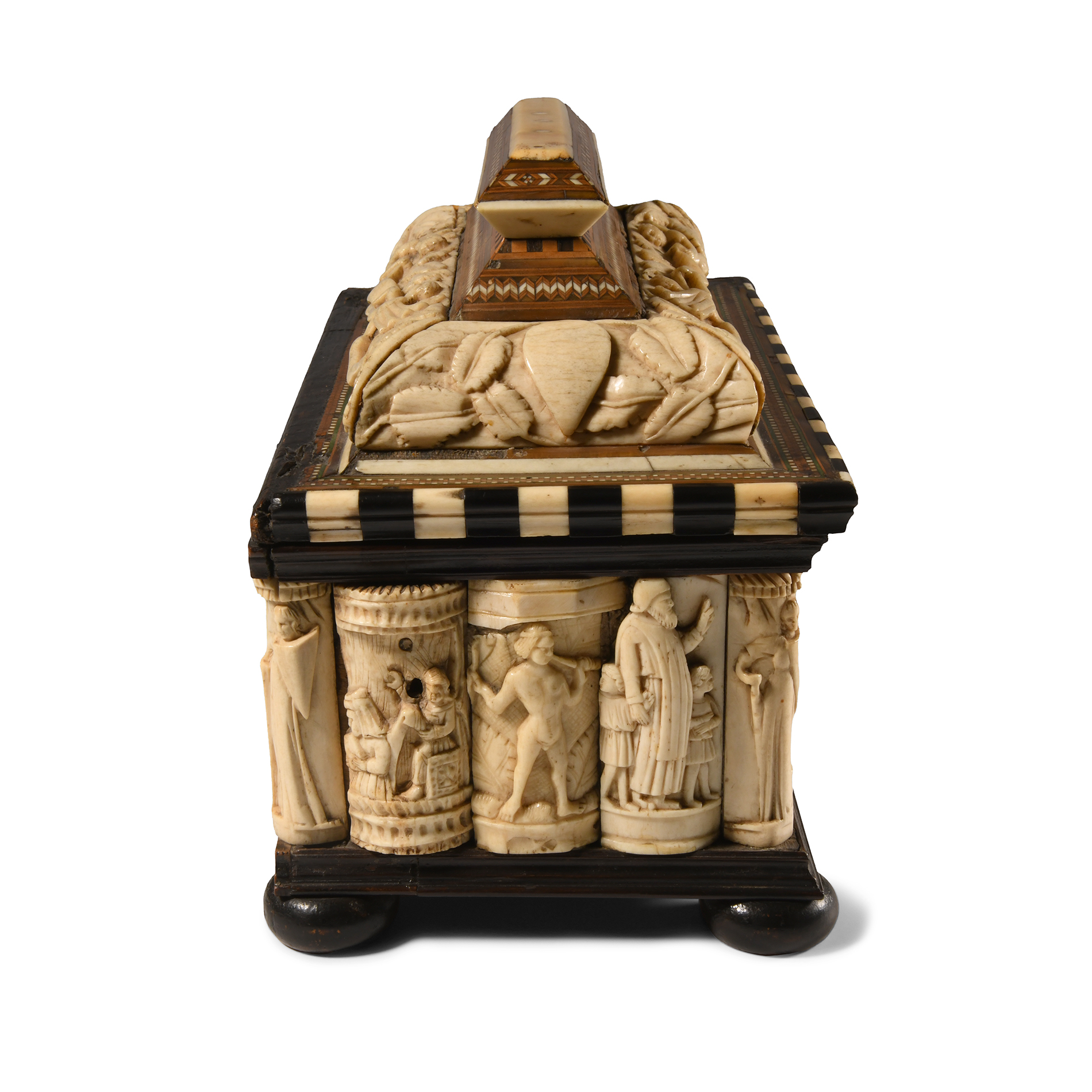
Medieval Carved and Bone-Inlaid Casket
PROBABLY VENICE, CIRCA 1400-1420 A.D.
9 7/8 in. (1.28 kg, 25 cm wide).
The wood carcass set to the front with a frieze of bone panels carved with paired figures, the sides with further bone panels of differing subjects, each corner with a figure holding a rod and a shield (one a replacement), the back with associated geometric pierced panels; on bun feet; the lid with bone and ebony alternating fillet rim surrounding alla certosina inlay below bone panels carved with winged figures holding banners against a trailing leaf ground; the sides with vacant drops; all below a stepped top with further intarsia work; from the studio of Baldassare Embriachi (active 1393-1433 A.D.); the geometric piercing of the rear panels appears to be Carolingian in style and may date from as early as the 9th century (see Adolph Goldschmidt, 'Die Elfenbeinskulpturen aus der Zeit der karolingischen und sächsischen Kaiser, VIII.-XI. Jahrhundert', Berlin 1914-26, Vol.II, No.180); these were probably affixed as part of a later restoration of the casket, possibly during the 19th century. [No Reserve]
ProvenancePrivate collection, London, UK.
Sotheby's, London, 9 December 2005, lot 8.
Ex central London gallery.
This lot has been checked against the Interpol Database of stolen works of art and is accompanied by search certificate no.11905-207284.
For similar caskets see two held by the Victoria and Albert Museum, Nos. 4719-1859 and A.22-1952; see related literature: M. Tomasi, La Bottega degli Embriachi, Florence, 2001; see also P. Williamson and G. Davies, Medieval Ivory Carvings: 1200-1550, Part II, London, Victoria and Albert Museum, 2014, especially pp.845-7 and 848-9.
FootnotesThe Florentine merchant Baldassare Embriachi (or more correctly, Ubriachi), whose workshop in the city was producing carvings in the 1370s, moved to Venice in around 1390, establishing another atelier there. His widespread diplomatic and mercantile contacts allowed him to promote its wares, including large altar pieces, through much of Europe. On a more domestic front, it is thought a wealthy and burgeoning merchant class used caskets such as this for gifts during the often complicated marriage negotiations of the period (Glyn Davies and Kristin Kennedy, 'Medieval and Renaissance Art: People and Possessions', London, 2009, pp.105-6). Traditionally all such caskets were attributed to the Embriachi workshop, but it is now thought there may have been a number of different workshops operating in Venice in the early 15th century, producing such works, encouraged by the success of the Embriachi enterprise.
CONDITIONTimeLine Auctions follows a vetting process to ensure the authenticity and legality of all items, reinforcing our commitment to integrity and responsible trading. Each antiquity, antique, and coin lot undergoes thorough examination by a vetting committee of at least ten external specialists, professional trade association members, scientists, and archaeologists: Our Vetting Process
AUCTIONS:
TimeLine is a leading auction house specialising in antiquities, ancient art, collectables, natural history, coins, medals, and books. Our auctions offer museums, collectors, historians, and enthusiasts the opportunity to acquire unique and historically significant pieces.
-
Medieval Iron Horse Bit Group
14th-16th century A.D.Sold for (Inc. bp): £98
Comprising bits of various types and sizes, including articulate elements. 2.85 kg total, 21-32.5 cm
Acquired 1990s-early 2000s. East Anglian private collection.
This kind of iron snaffle bits were commonly used in late Medieval or Renaissance period. The mouth piece was made in two linked sections, to which big rings were attached at the extremities. Reins and bridles were both fastened to the rings. -
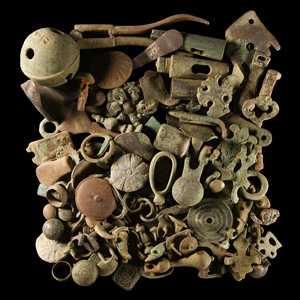
Medieval and Later Bronze Artefact Group
Circa 12th-20th century A.D.Sold for (Inc. bp): £65
Comprising: crotal bells; buttons; buckles; utensils; mounts; strap ends; clothes fasteners and other miscellaneous objects, many displaying decorative elements. 724 grams total, 1.5-10.8 cm
Found Berkshire, UK. -
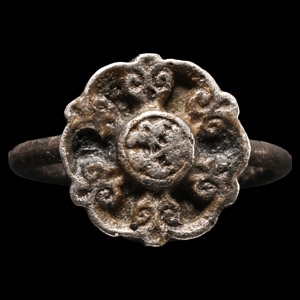
Medieval Silver Ring with Flower
Circa 15th-16th century A.D.Sold for (Inc. bp): £59
Composed of a slender round-section hoop and bezel formed as a stylised flower head with recessed cells and central circular plaque. 6.51 grams, 25.10 mm overall, 20.75 mm internal diameter (approximate size British T 1/2, USA 9 3/4, Europe 21.89, Japan 21)
Ex old English collection. London art market, 1980s.
