
Loading, please wait...
LOT 1627
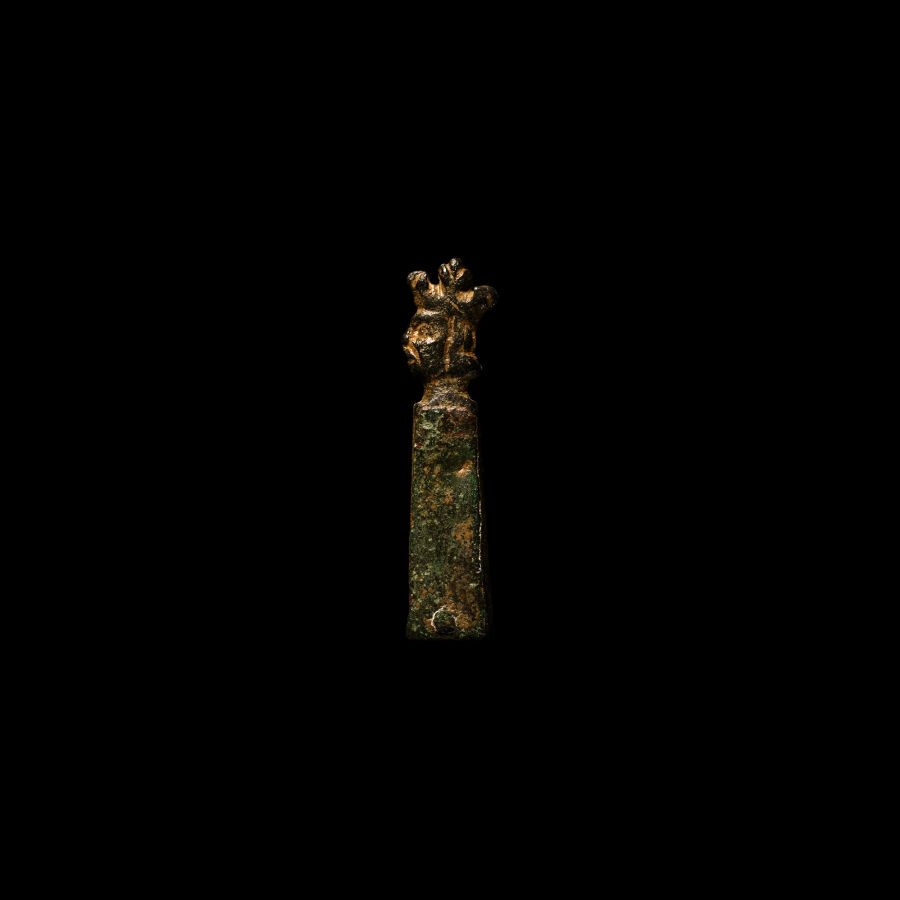
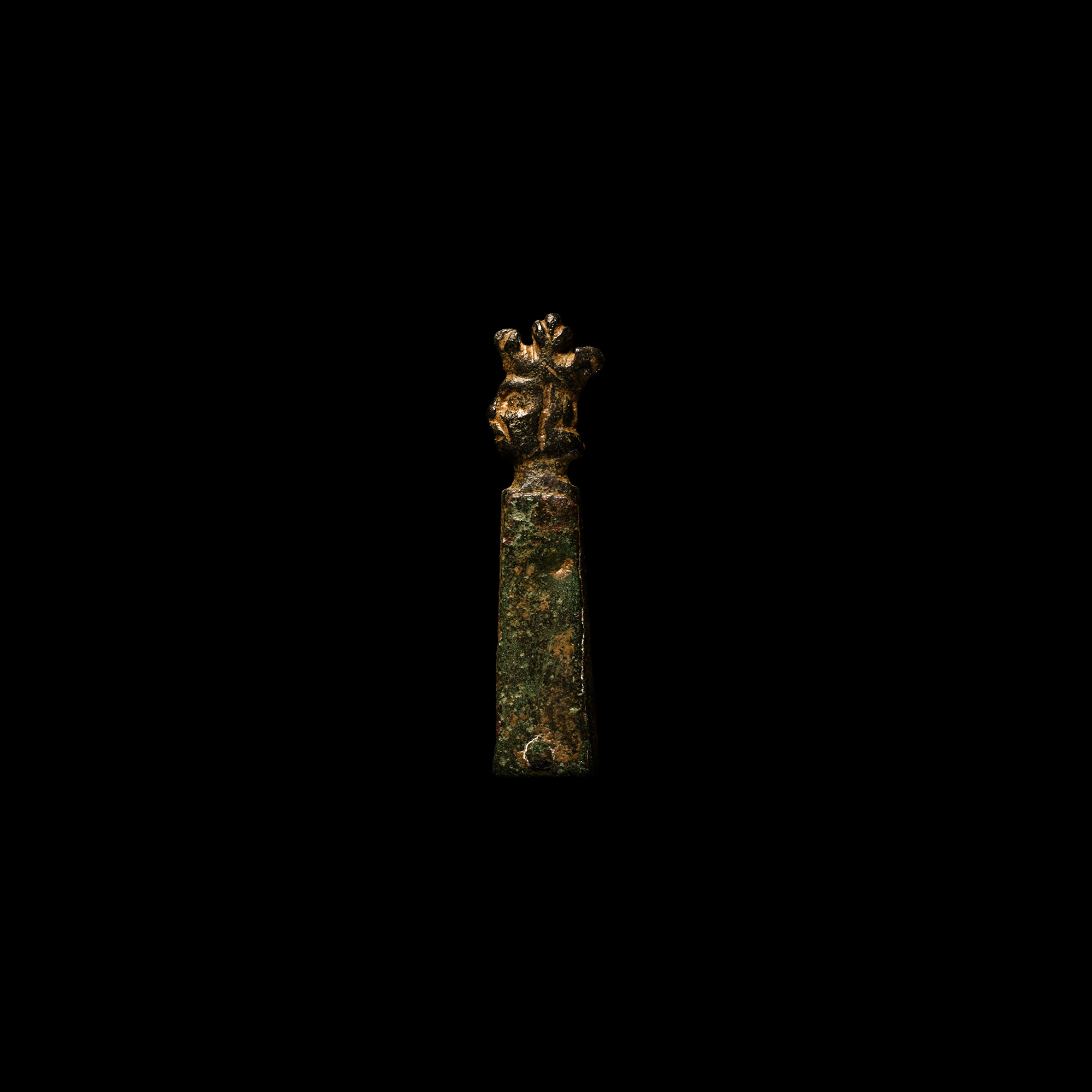
Medieval Bronze Strap End with Crowned Head of a King
14TH-15TH CENTURY A.D.
1 1/2 in. (5.6 grams, 40 mm).
The tapering rectangular body retaining two rivets, terminal formed as a crowned king's head with bifacial detailing. [No Reserve]
ProvenanceFound Cambridgeshire, UK.
Acquired on the UK market, 1990s.
Property of a retired academic.
TimeLine Auctions follows a vetting process to ensure the authenticity and legality of all items, reinforcing our commitment to integrity and responsible trading. Each antiquity, antique, and coin lot undergoes thorough examination by a vetting committee of at least ten external specialists, professional trade association members, scientists, and archaeologists: Our Vetting Process
AUCTIONS:
TimeLine is a leading auction house specialising in antiquities, ancient art, collectables, natural history, coins, medals, and books. Our auctions offer museums, collectors, historians, and enthusiasts the opportunity to acquire unique and historically significant pieces.
-
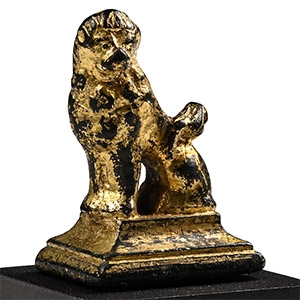
Medieval Gilt Bronze Lion Finial
14th-15th century A.D.Sold for (Inc. bp): £520
Modelled in the half-round standing with head left on a plinth base, rectangular fixing socket to underside. 25.1 grams, 32 mm high
‘The Ancient Menagerie Collection’ formerly the property of a Cambridgeshire lady, collected since the 1990s and acquired from auctions and dealers throughout Europe and the USA, now ex London collection. -
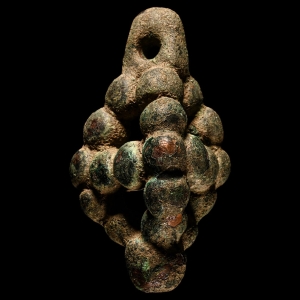
Medieval Bronze Ecclesiastical Cage Pendant
Circa 13th-15th century A.D.Sold for (Inc. bp): £39
Of dipyramid form, a suspension loop to the apex and bulb to the foot, the sides formed from conjoined bulbs. 32.3 grams, 42 mm
Acquired on the UK art market. Property of a Ruislip, UK, gentleman, by inheritance. -
.jpg)
Large Medieval Bronze Knight's Heraldic Seal Matrix of Count Robert in Full Armour
Circa 15th century A.D.Sold for (Inc. bp): £2,600
Featuring a large circular die face and hexagonal stem, with collars and pierced quatrefoil handle, incised orientation star to edge; the die bearing a knightly device of a helmet with chaplet on canted shield of arms bearing three bull's heads cabossed and chevron with surrounding ' LE * S * ROBERTI * LE CONTES' legend. 38.9 grams, 34 mm
Found near Stoke Ferry, Norfolk, circa 2008. This lot has been checked against the Interpol Database of stolen works of art and is accompanied by search certificate no.11901-204414.
'Sigillum Roberti le Contes ' is 'seal of Count Robert'. Three bulls' heads appear on the arms of the Beverley family. The chaplet or 'cap of maintenance' is a stylised fur-lined cap which appears in the heraldry of leading families; the helm of the Black Prince in Canterbury Cathedral is made with a chaplet and a lion standing on the rim.
