
Loading, please wait...
LOT 1741
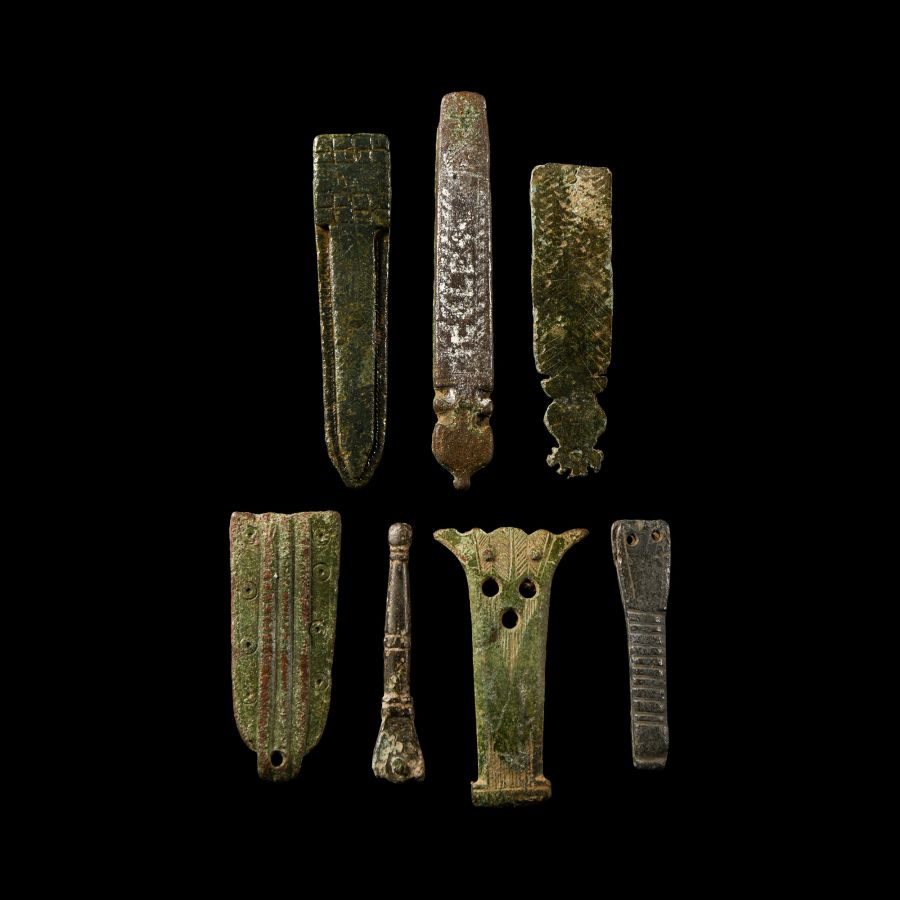
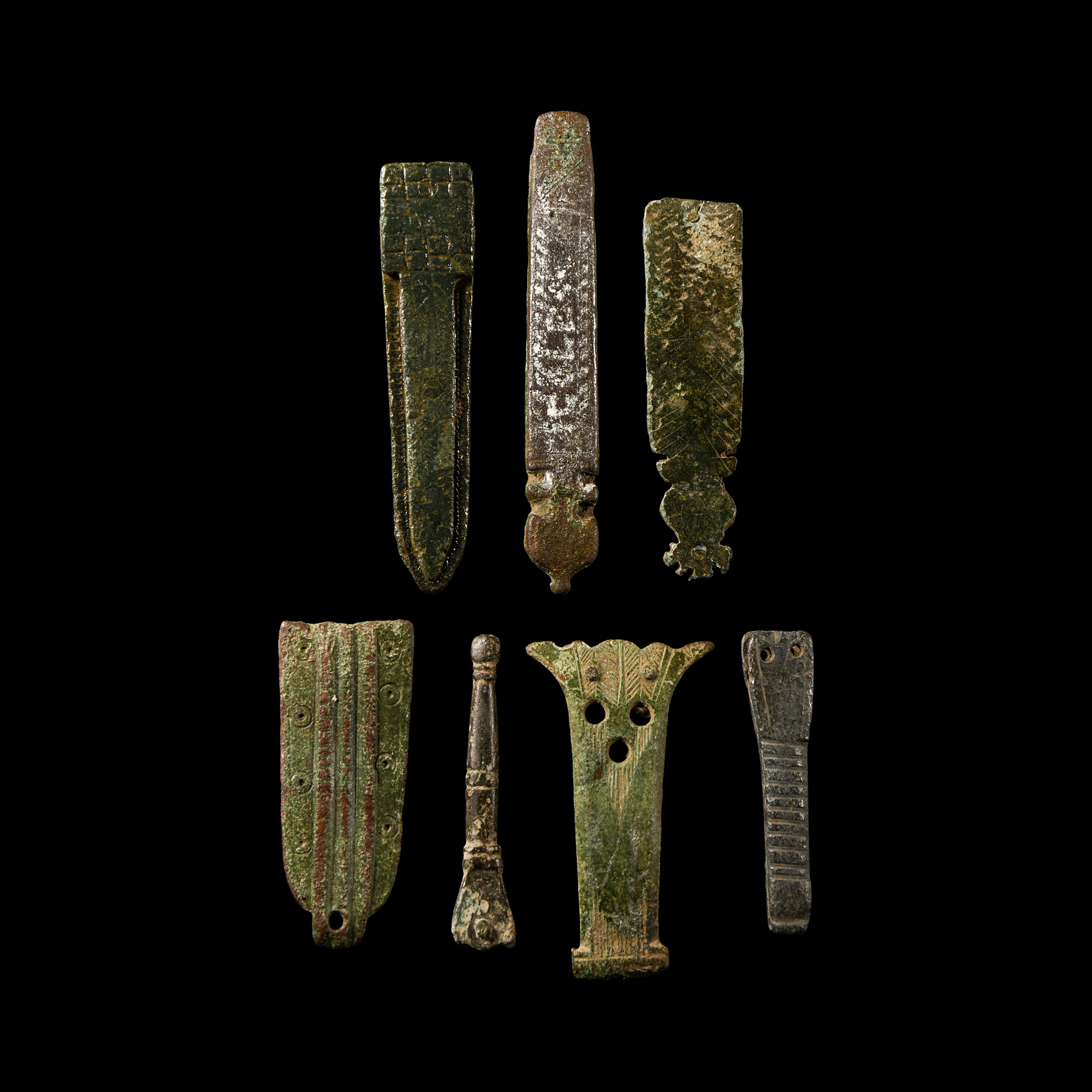
Medieval Bronze Strap End Group
14TH-15TH CENTURY A.D.
1 3/8 - 21/4 in. (41.8 grams total, 35-57 mm).
Each of a different type, including examples decorated with ring-and-dot ornament, foliate designs, geometric motifs, together with bifacial examples, notable one inscribed 'DEVM' 'ICOL[ ]'? [7, No Reserve]
ProvenanceAcquired on the UK market, 1990s.
Property of a retired academic.
TimeLine Auctions follows a vetting process to ensure the authenticity and legality of all items, reinforcing our commitment to integrity and responsible trading. Each antiquity, antique, and coin lot undergoes thorough examination by a vetting committee of at least ten external specialists, professional trade association members, scientists, and archaeologists: Our Vetting Process
AUCTIONS:
TimeLine is a leading auction house specialising in antiquities, ancient art, collectables, natural history, coins, medals, and books. Our auctions offer museums, collectors, historians, and enthusiasts the opportunity to acquire unique and historically significant pieces.
-
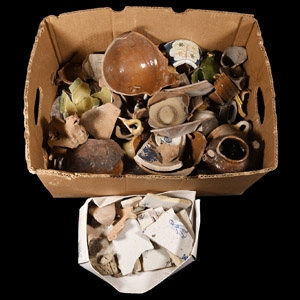
Medieval and Later Pottery Fragment Group
Circa 15th-18th century A.D.Sold for (Inc. bp): £26
Comprising glazed, unglazed, decorated and polychrome fragments mainly from tiles and vessels, together with a vessel fragment featuring a lion modelled in relief. 11 kg total, 4-22 cm
Acquired 1990s-early 2000s. East Anglian private collection. -
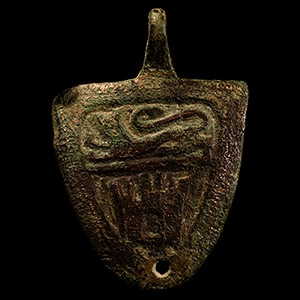
Medieval Large Gilt Bronze Knight's Heraldic Horse Harness Pendant
14th-15th century A.D.Sold for (Inc. bp): £182
Heater-shaped with an integral suspension loop, bearing heraldic device 'gules, a three-towered castle, in chief, a lion passant guardant, or'; the arms attributed by the PAS to the town Newbury, Berkshire; trace remains of gilding; piercing to the lower edge. 14.2 grams, 52 mm
Found Berkshire, UK. Accompanied by a copy of the British Museum's Portable Antiquities Scheme (PAS) report no.BERK-096C9C. -
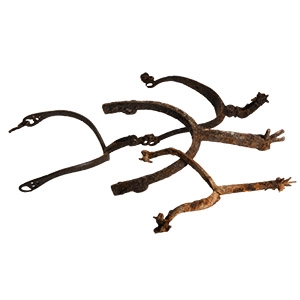
Medieval Iron Rowel Spur Collection
Circa 15th-16th century A.D.Estimate: £80 - 100 (+bp*)
Opening Bid: £40
Comprising examples of various types, including some retaining the rowel and fastening elements. 340 grams total, 11-19 cm
Acquired 1990s-early 2000s. East Anglian private collection.
These spurs belong to a type widespread in Western Europe with a six-pointed spur, often engraved, dating mostly between 1425 and 1450.
