
Loading, please wait...
LOT 1666
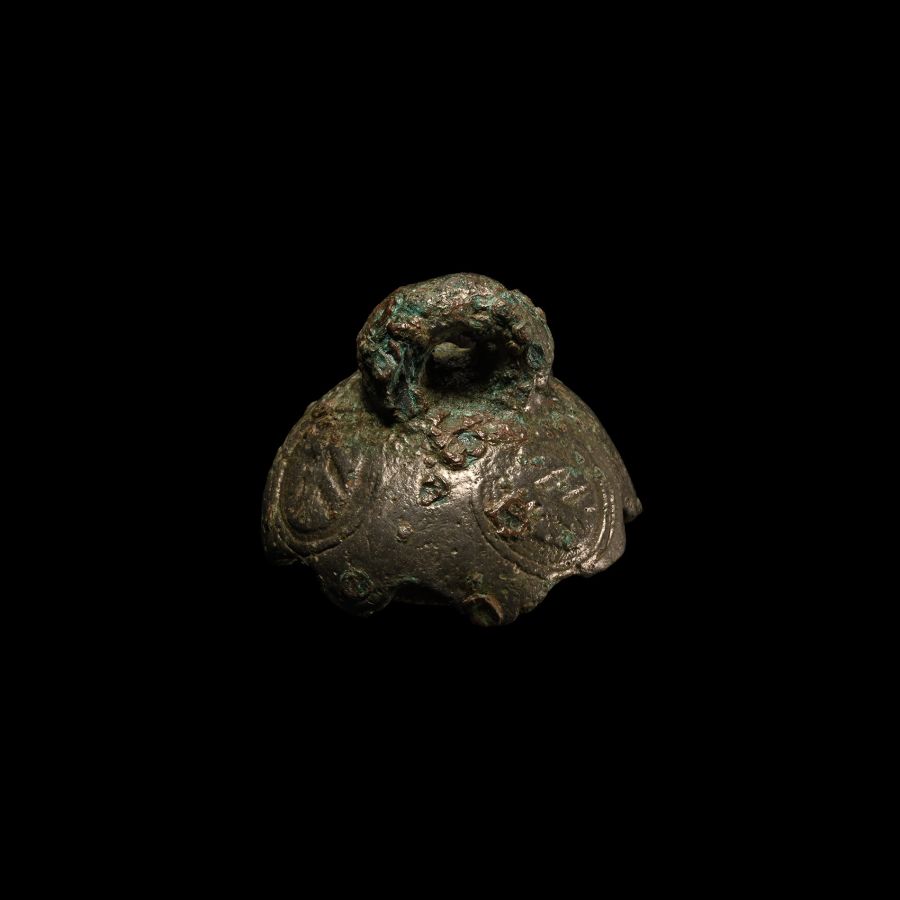
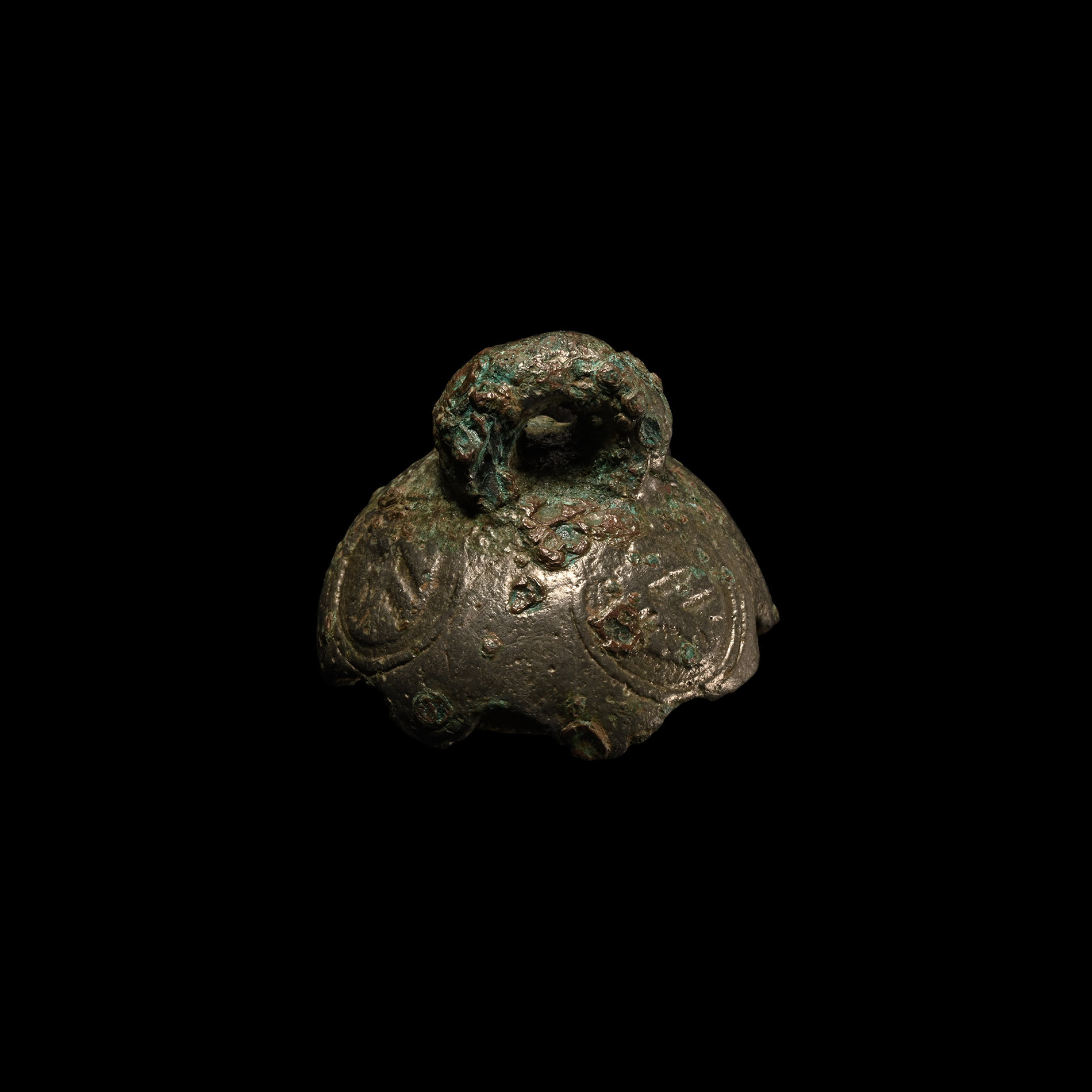
Medieval Bronze Steelyard Weight with Heraldic Shields
CIRCA 1260-1300 A.D.
1 1/4 in. (70 grams, 32 mm).
Hemispherical with suspension loop at apex; three heraldic shields within roundels to the shoulder, scalloped lower edge.
ProvenanceEx Simmons Gallery, London E11, UK, in the 1990s.
From a North London collection.
TimeLine Auctions follows a vetting process to ensure the authenticity and legality of all items, reinforcing our commitment to integrity and responsible trading. Each antiquity, antique, and coin lot undergoes thorough examination by a vetting committee of at least ten external specialists, professional trade association members, scientists, and archaeologists: Our Vetting Process
AUCTIONS:
TimeLine is a leading auction house specialising in antiquities, ancient art, collectables, natural history, coins, medals, and books. Our auctions offer museums, collectors, historians, and enthusiasts the opportunity to acquire unique and historically significant pieces.
LOT 1666
Medieval Bronze Steelyard Weight with Heraldic Shields
Estimate £100 - 140€120 - 160 (for guidance only)$140 - 190 (for guidance only)
-
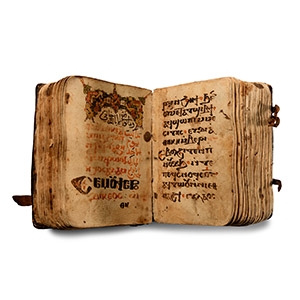
Leather Bound Illuminated Manuscript
Circa 15th-16th century A.D.Sold for (Inc. bp): £4,940
Codex of vellum pages bound within leather covers with securing straps; each page with a block of ten lines of Coptic black-ink text in Greek letters with red highlighting; probably from Egypt. 296 grams, 11 x 8.5 cm
Acquired 1970s-1996. Property of a North American collector. London collection, 2016. -
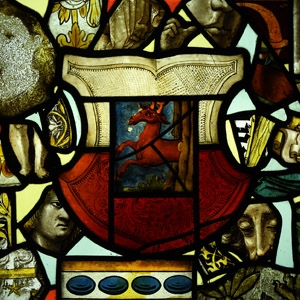
Medieval Stained Glass Panel with Various Elements
Circa 15th-17th century A.D.Sold for (Inc. bp): £1,105
Rectangular with lead came framing; composition from elements of various designs including a female bust with ornate collared gown; two lower legs; a right hand; various facial details; heater shields with heraldic designs; goat emerging from woodland; architectural elements; and other types. 2.09 kg, 48.5 x 42.5 cm
Ex central London gallery. -
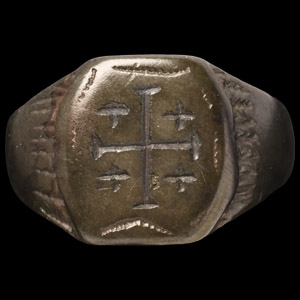
Medieval Bronze Ring with Jerusalem Cross
12th-15th century A.D.Sold for (Inc. bp): £442
The hoop with a convex outer face, splayed shoulders displaying decorative notching and a barrel-shaped bezel engraved with a Jerusalem cross. 4.76 grams, 21.54 mm overall, 19.52 mm internal diameter (approximate size British Q 1/2, USA 8 1/4, Europe 18.12, Japan 12)
Acquired on the German art market around 2000s. From the collection of an EU gentleman living in the UK.
