
Loading, please wait...
LOT 1581
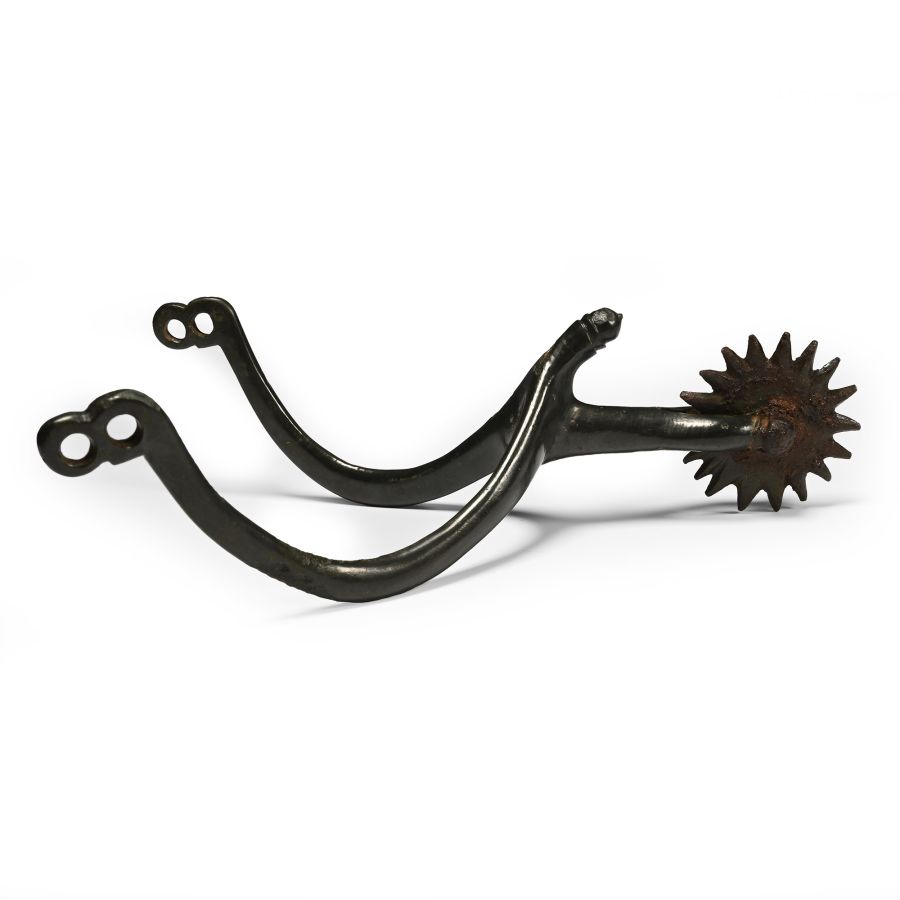
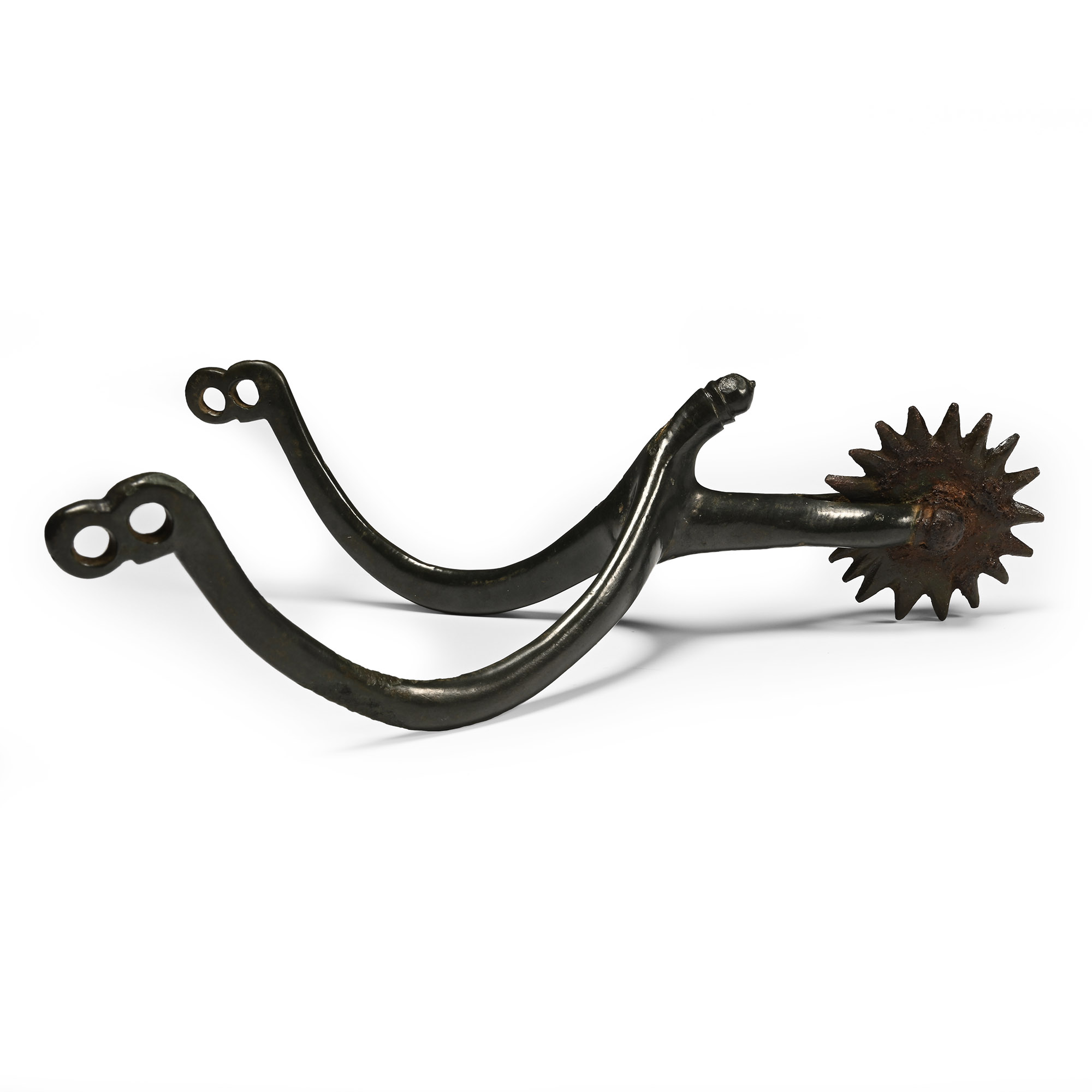
Medieval Bronze Spur with Rowel
12TH-14TH CENTURY A.D.
6 in. (126 grams, 15.4 cm).
With D-section curved arms with figure-of-eight finials, long spur with a rowel and a shorter spur below. [No Reserve]
ProvenanceFrom the private collection of a London gentleman, from his grandfather's collection formed before the early 1970s.
This lot is accompanied by an illustrated lot declaration signed by the Head of the Antiquities Department, Dr Raffaele D’Amato.
Exhibited at the Harwich Museum, Harwich, Essex, UK, 21st January-10th March 2025; accompanied by a copy of a photograph of the artefacts on display.
CONDITIONTimeLine Auctions follows a vetting process to ensure the authenticity and legality of all items, reinforcing our commitment to integrity and responsible trading. Each antiquity, antique, and coin lot undergoes thorough examination by a vetting committee of at least ten external specialists, professional trade association members, scientists, and archaeologists: Our Vetting Process
AUCTIONS:
TimeLine is a leading auction house specialising in antiquities, ancient art, collectables, natural history, coins, medals, and books. Our auctions offer museums, collectors, historians, and enthusiasts the opportunity to acquire unique and historically significant pieces.
-
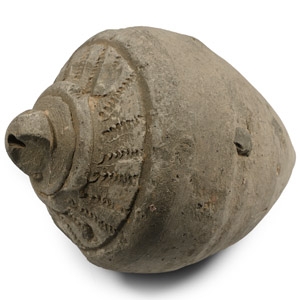
Byzantine 'Greek Fire' Ceramic Fire Bomb or Hand Grenade
9th-11th century A.D.Sold for (Inc. bp): £59
Piriform in profile with stepped shoulder and domed mouth. impressed cord motifs. 826 grams, 13.5 cm
From a specialist London, UK, arms and armour collection, 1990s. Accompanied by an academic paper by military specialist Dr Raffaele D'Amato, dated 15 July 2019 and titled 'Eastern Roman Empire - Greek Fire Bomb or Hand Grenade (μεσαίον kακάβιον) 9th-11th century AD'. This lot is accompanied by an illustrated lot declaration signed by the Head of the Antiquities Department, Dr Raffaele D’Amato.
Apart from the use of siphons or manual flame-throwers called cheirosiphona, special corps of Roman soldiers employed terracotta grenades, in the form of small jars, abundantly evidenced in archaeological excavations. They were called μεσαία kακαβιά or κυτροκακάβια where the former had a bulbous shape and the latter a more cylindrical form. -
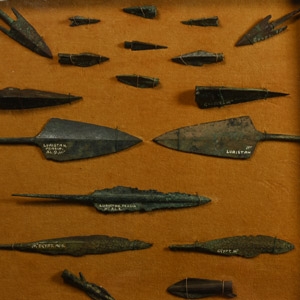
Greek, Egyptian and Luristan Bronze Arrowhead Collection in Display Case
2nd-1st millennium B.C.Sold for (Inc. bp): £845
Including triangular-section, leaf-shaped, barbed-and-tanged and other types, some with inked find spot and accession data, wired onto a velvet board in a glazed wooden frame. 965 grams total, 26.2 x 24 cm
From the collection of Dr Hugh Alderson Fawcett (1891-1982). Acquired Oxford, UK. From the private collection of Kenneth Machin (1936-2020), Buckinghamshire, UK; with collection no.BA21; his collection of antiquities and natural history was formed since 1948; thence by descent. This lot is accompanied by an illustrated lot declaration signed by the Head of the Antiquities Department, Dr Raffaele D’Amato.
Dr Hugh Alderson Fawcett (1891-1982) was a general practitioner and antiquarian who built up an important collection of ancient implements, weapons and ornaments that eventually numbered some eight thousand items. It was he who alerted the British Museum to the discovery of the fabulous Mildenhall treasure after being shown it by Sydney Ford during Easter in 1946. The bulk of his collection is now in the Bristol Museum and Art Gallery, but Fawcett previously sold or traded many pieces in order to improve his collection. -
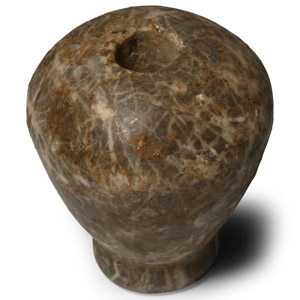
Western Asiatic Stone Macehead
3rd-2nd millennium B.C.Sold for (Inc. bp): £117
Tubular in form with tapering profile and balustered socket. 342 grams, 75 mm
From the collection of a London, UK, gentleman, 1990s. This lot is accompanied by an illustrated lot declaration signed by the Head of the Antiquities Department, Dr Raffaele D’Amato.
