
Loading, please wait...
LOT 1408
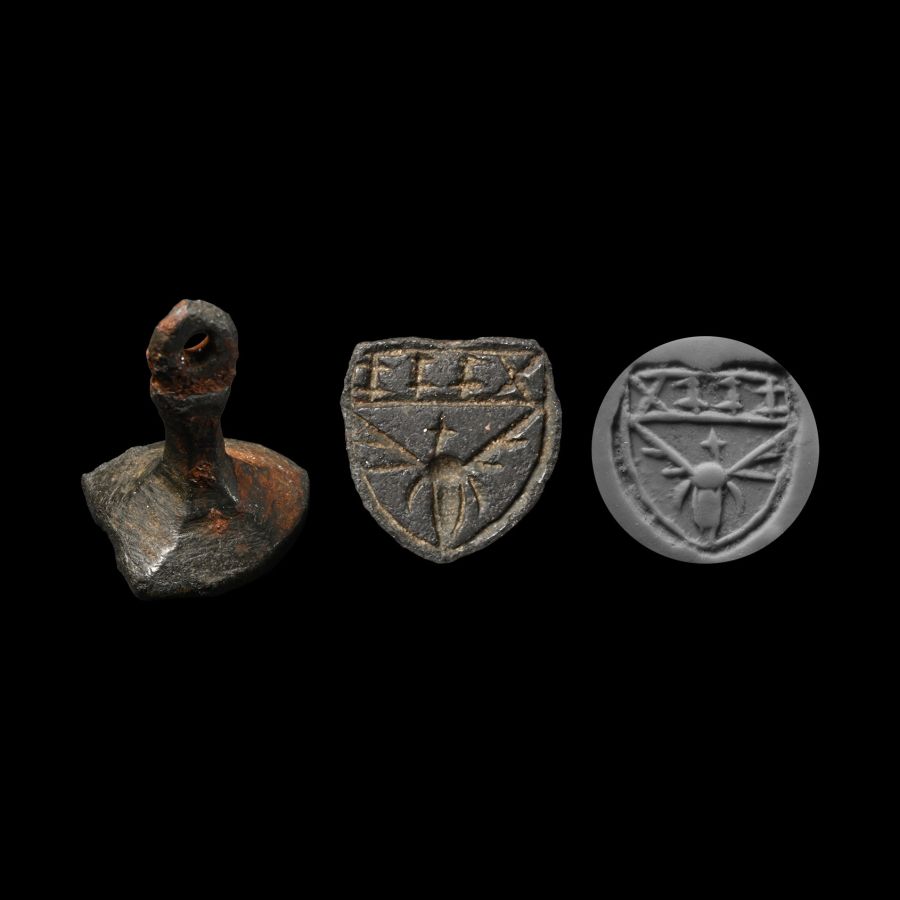
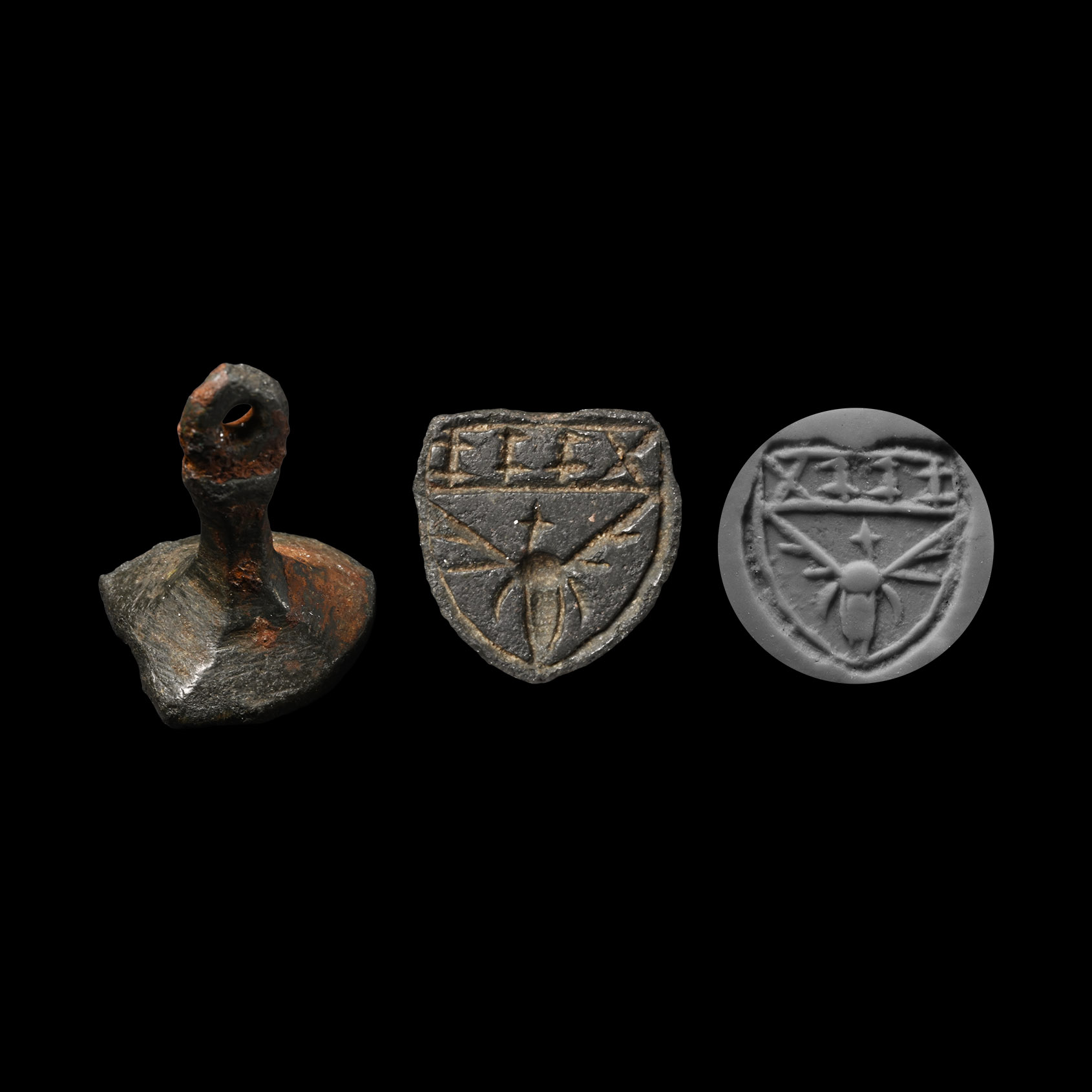
Medieval Bronze Shield-Shaped Seal Matrix
CIRCA 14TH-15TH CENTURY A.D.
3/4 in. (5.47 grams, 20 mm).
Of chess piece type with looped handle; the shield-shaped die with a stag's head, cross above and an inscribed panel above. [No Reserve]
ProvenanceFound Northampton, UK.
FootnotesThe cross alludes to the Vision of St Eustace (also of St. Hubert) who saw the Crucifixion between the antlers of a stag. For a similar seal see PAS database SWYOR-1ES497 where the inscription above reads LELS (for LEL SV, ‘I am loyal’) – the present inscription is probably a debased version of this.
CONDITIONTimeLine Auctions follows a vetting process to ensure the authenticity and legality of all items, reinforcing our commitment to integrity and responsible trading. Each antiquity, antique, and coin lot undergoes thorough examination by a vetting committee of at least ten external specialists, professional trade association members, scientists, and archaeologists: Our Vetting Process
AUCTIONS:
TimeLine is a leading auction house specialising in antiquities, ancient art, collectables, natural history, coins, medals, and books. Our auctions offer museums, collectors, historians, and enthusiasts the opportunity to acquire unique and historically significant pieces.
-
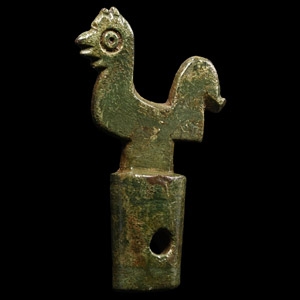
Medieval Bronze Wine Barrel Tap Handle with Cockerel
14th-16th century A.D.Sold for (Inc. bp): £98
Tapering spigot with hole, handle formed as a cockerel in profile. 37.7 grams, 53 mm
Acquired early 2000s. Property of a Stowmarket, UK, gentleman. -
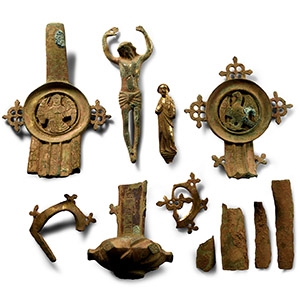
Medieval Processional Cross Fragment Group
14th-16th century A.D.Sold for (Inc. bp): £3,640
Group of conserved gilt-bronze and other fragments including the discoid head with radiating openwork florid cross finials and eagle of St. John, ribbed arm beneath; similar fragment with plain attachment shank; angel as the symbol of St. Matthew the Evangelist, left hand supporting a book; fragments of the tubular socket and other items. 1.6 kg total, 3.6-17 cm
Believed to be found by Mr Bramble, UK. Recorded and conserved by Gloucestershire museum and held in a museum conservation box. This lot has been checked against the Interpol Database of stolen works of art and is accompanied by search certificate no.11977-210855. -
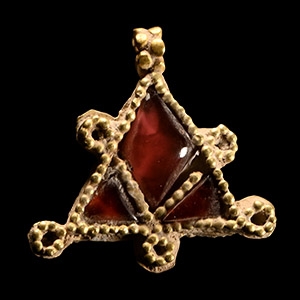
Medieval Gold Triangular Pendant with Cabochons
Circa 14th-16th century A.D.Sold for (Inc. bp): £211
Bifacial with granulated borders and integral loop, set with a lozenge-shaped garnet to the top with a pair of triangular garnets below. 1.42 grams, 14 mm
From a late Japanese specialist collector, 1970-2000s.
