Loading, please wait...

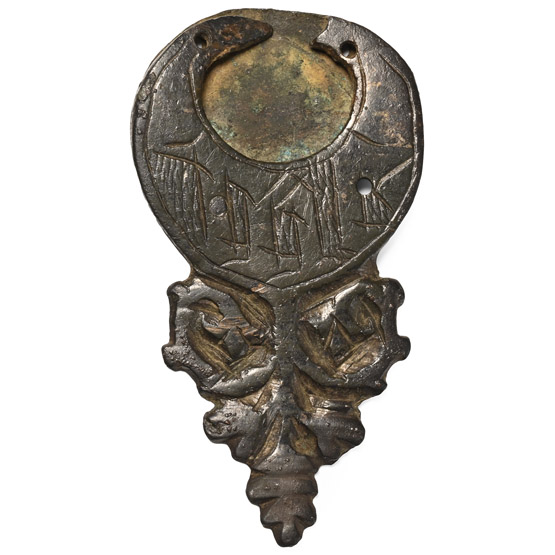
Medieval Bronze Seal Matrix with Fleur-de-Lys Medieval Bronze Seal Matrix with Fleur-de-Lys Medieval Bronze Seal Matrix with Fleur-de-Lys
Use mousewheel to zoom in and out, click to enlarge
Details

LOT 1855

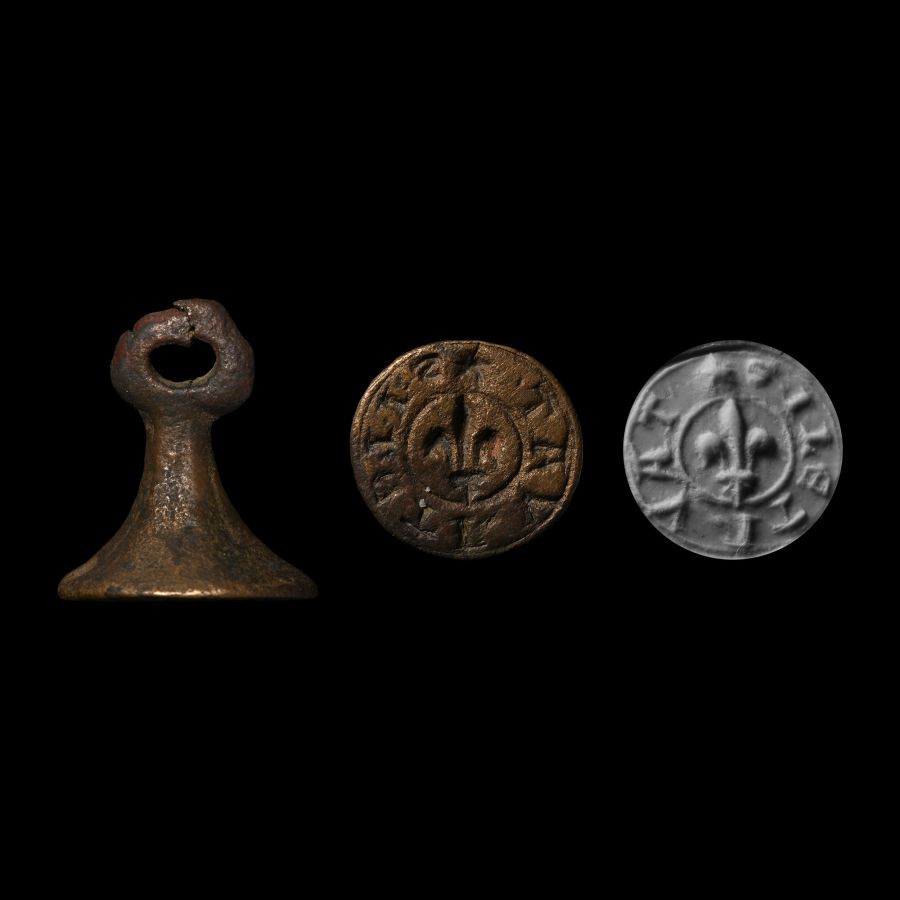
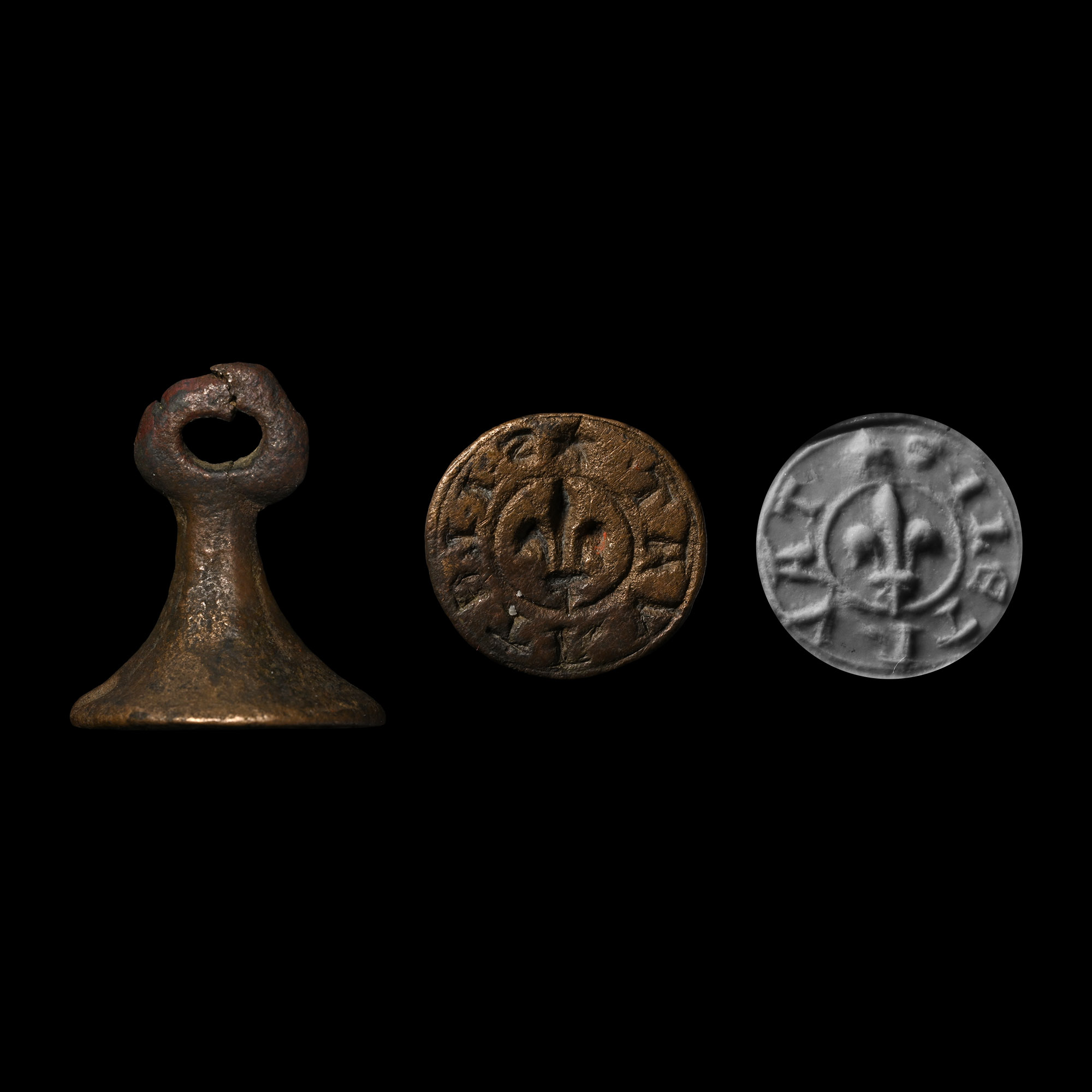
Medieval Bronze Seal Matrix with Fleur-de-Lys

14TH-15TH CENTURY A.D.

7/8 in. (9.5 grams, 21 mm).

Chessman type with flared base and short shank, collar and loop; incuse image of central fleur-de-lys, inscription reading *S: ILETRVAT. [No Reserve]

Provenance

From the private collection of the late Graham Slater (1927-2024), Cambridge, UK, acquired 1980s-1990s.

CONDITION
VETTING:

TimeLine Auctions follows a vetting process to ensure the authenticity and legality of all items, reinforcing our commitment to integrity and responsible trading. Each antiquity, antique, and coin lot undergoes thorough examination by a vetting committee of at least ten external specialists, professional trade association members, scientists, and archaeologists: Our Vetting Process


AUCTIONS:

TimeLine is a leading auction house specialising in antiquities, ancient art, collectables, natural history, coins, medals, and books. Our auctions offer museums, collectors, historians, and enthusiasts the opportunity to acquire unique and historically significant pieces.

LOT 1855

Medieval Bronze Seal Matrix with Fleur-de-Lys

Sold for (Inc. bp): £78

Print page

RELATED LOTS
  • Medieval Pewter Pilgrims Badge of King Henry VI
    Medieval Pewter Pilgrim's Badge of King Henry VI
    Circa 14th century A.D.

    Sold for (Inc. bp): £780

    Pilgrim's badge for Windsor, depicting a standing arch-crowned, robed and cloaked facing figure of Henry VI, holding sceptre and orb with purse at waist and standing on recumbent lion at feet; with integral pin to reverse. 5.05 grams, 50 mm


    From the private collection of the late Graham Slater (1927-2024), Cambridge, UK, acquired 1980s-1990s. Accompanied by a previous information slip.

    The remains of Henry VI were moved from Chertsey to St George's Chapel, Windsor Castle, by Richard III in 1484 and pilgrimages to Windsor were further encouraged by Henry VII, and the arched crown first appears on coins of this reign; Henry VII made his own pilgrimage to Henry's tomb at Windsor in 1529.

    Lot Details

  • Medieval Ring with Spread Eagle
    Medieval Ring with Spread Eagle
    11th century A.D.

    Sold for (Inc. bp): £39

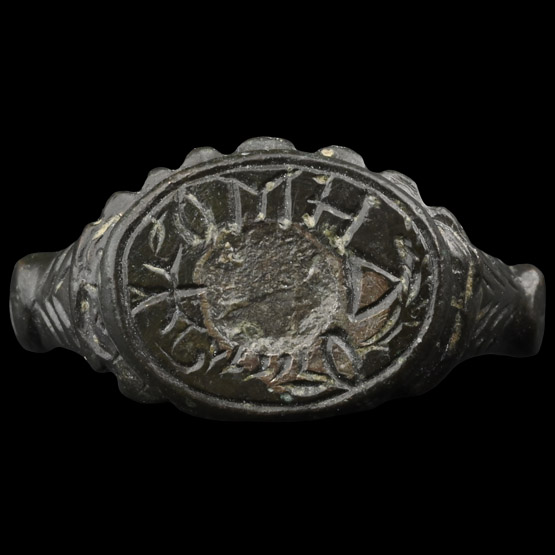
    D-section hoop and a discoid bezel with an incuse image of an eagle with its wings spread. 3.35 grams, 22.64 mm overall, 19.25 mm internal diameter (approximate size British S 1/2, USA 9 1/4, Europe 20.63, Japan 19)


    Acquired on the UK and EU art market before 2000. From the private collection of a Surrey, UK, gentleman.

    In this category of rings, the oval hoop gradually widens into a full shoulder and a massive, flattened bezel. The bezel is an ellipsoidal field, decorated with the image of an imperial eagle. The eagle was a common motif in Romanesque art, both in the West and the East.

    Lot Details

  • Medieval Silver-Gilt Ring with Male Head Gemstone and Inscriptions
    Medieval Silver-Gilt Ring with Male Head Gemstone and Inscriptions
    15th century A.D.

    Sold for (Inc. bp): £4,680

    With applied outer layer of gold engraved with flowers and the words, “en bon an” (twice) (‘a good year’); the flat bezel with a recessed centre set with a medieval mother-of-pearl intaglio depicting a male bust in profile; supplied with a museum-quality impression. 4.72 grams, 23.64 mm overall, 20.45 mm internal diameter (approximate size British R 1/2, USA 8 3/4, Europe 19.38, Japan 18)


    Found whilst searching with a metal detector in Dorset, UK, on Sunday, 30th December 2018. Acquired on the English art market. Accompanied by a copy of the British Museum's Portable Antiquities Scheme (PAS) report no.DEV-5E4EDA. This lot has been checked against the Interpol Database of stolen works of art and is accompanied by search certificate no.13069-248371.

    The inscription is in black letter appears to read “en bon an”, a good year. The inscription is paralleled on a good number of 15th century rings, often also decorated with flowers and branches between the words, such as British Museum catalogue numbers AF.1057 and 1960,1103.1.

    Lot Details

Stay up-to-date with the latest from TimeLine Auctions by joining our mailing list