
Loading, please wait...
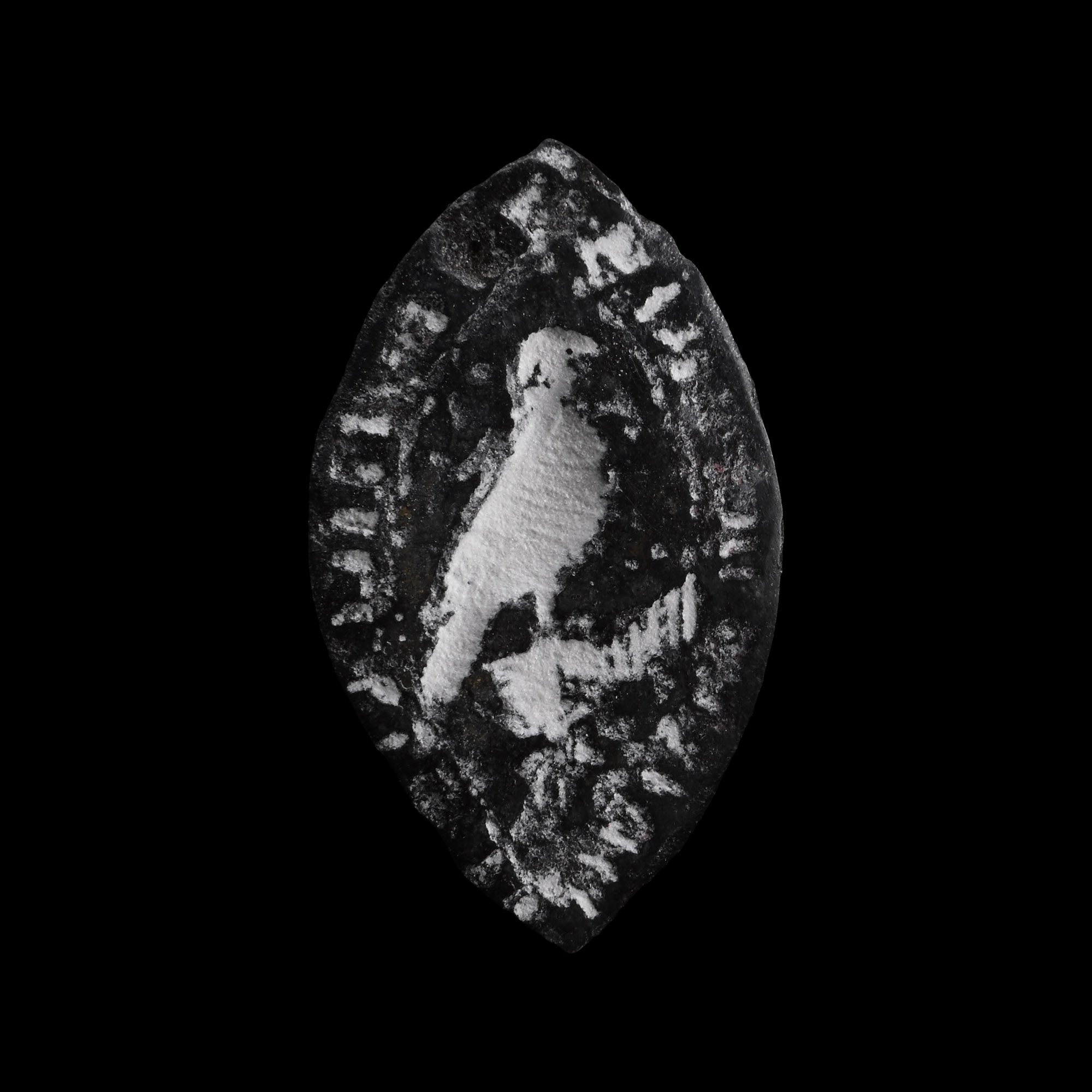
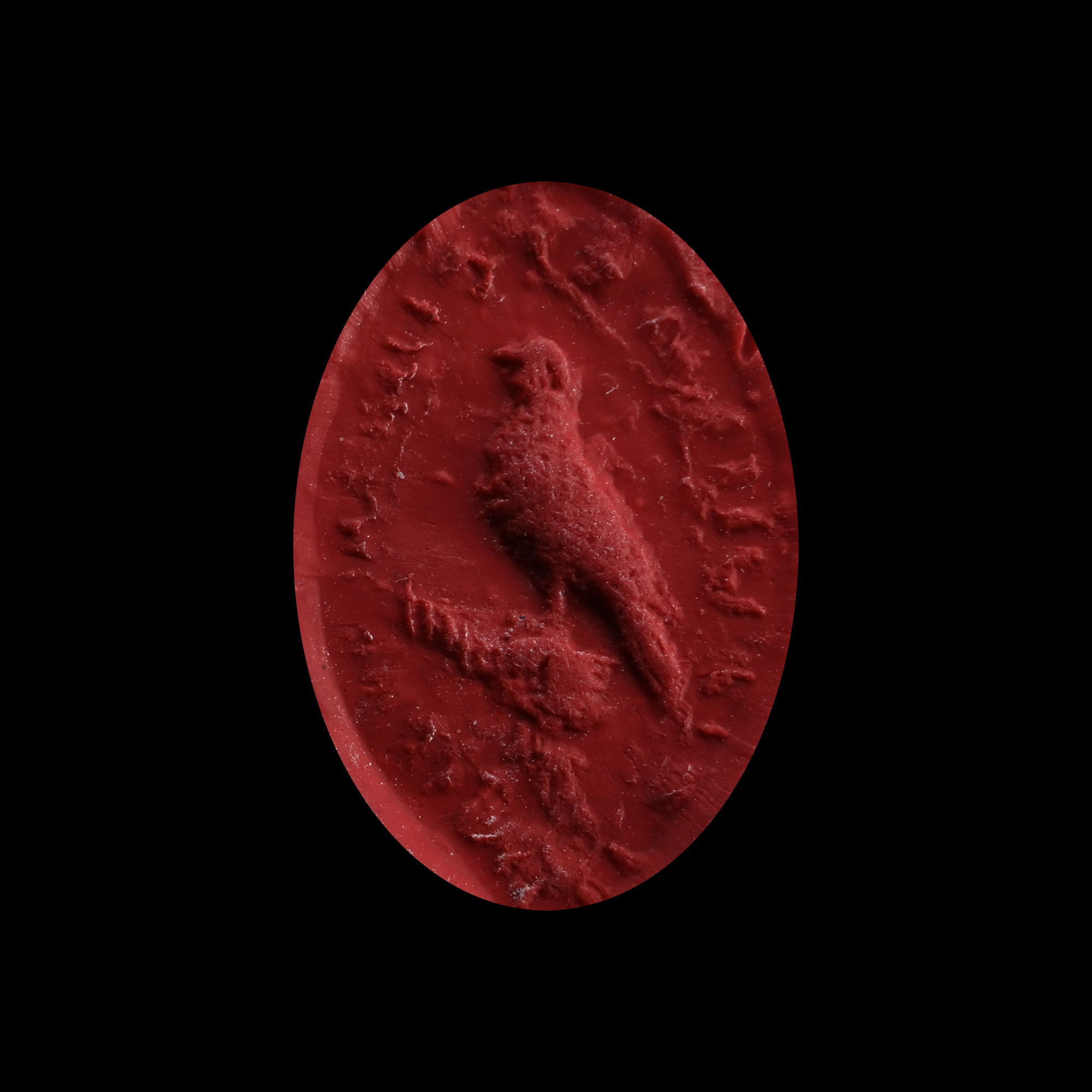
LOT 2261
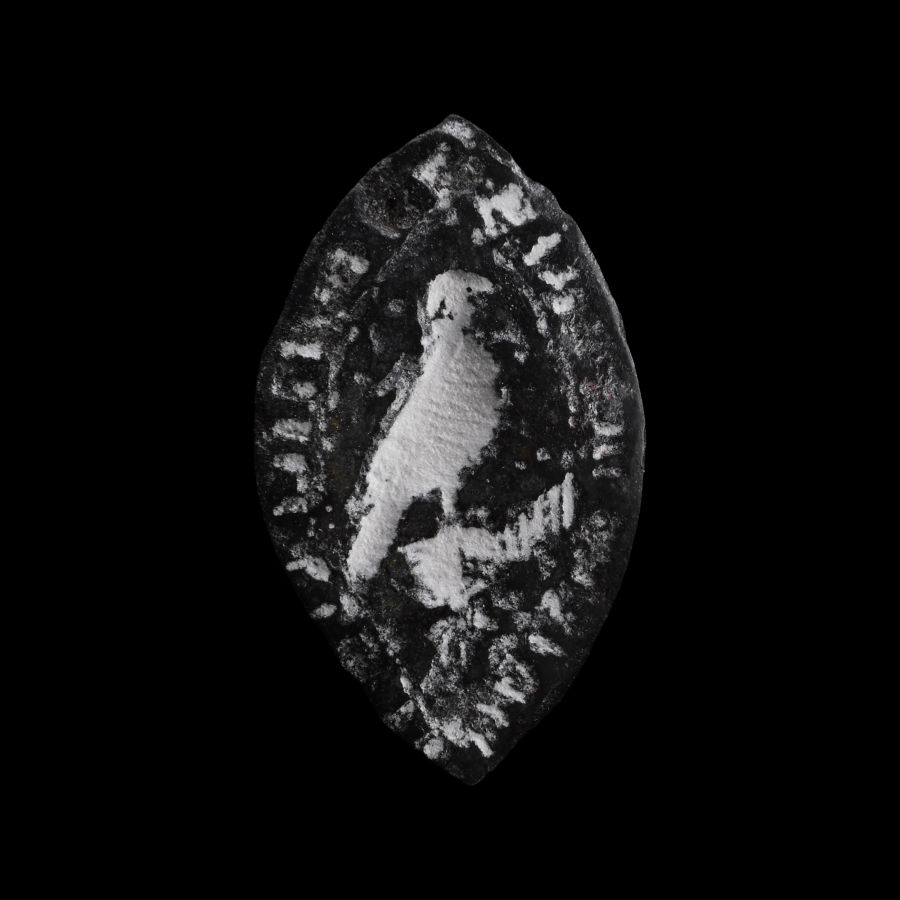
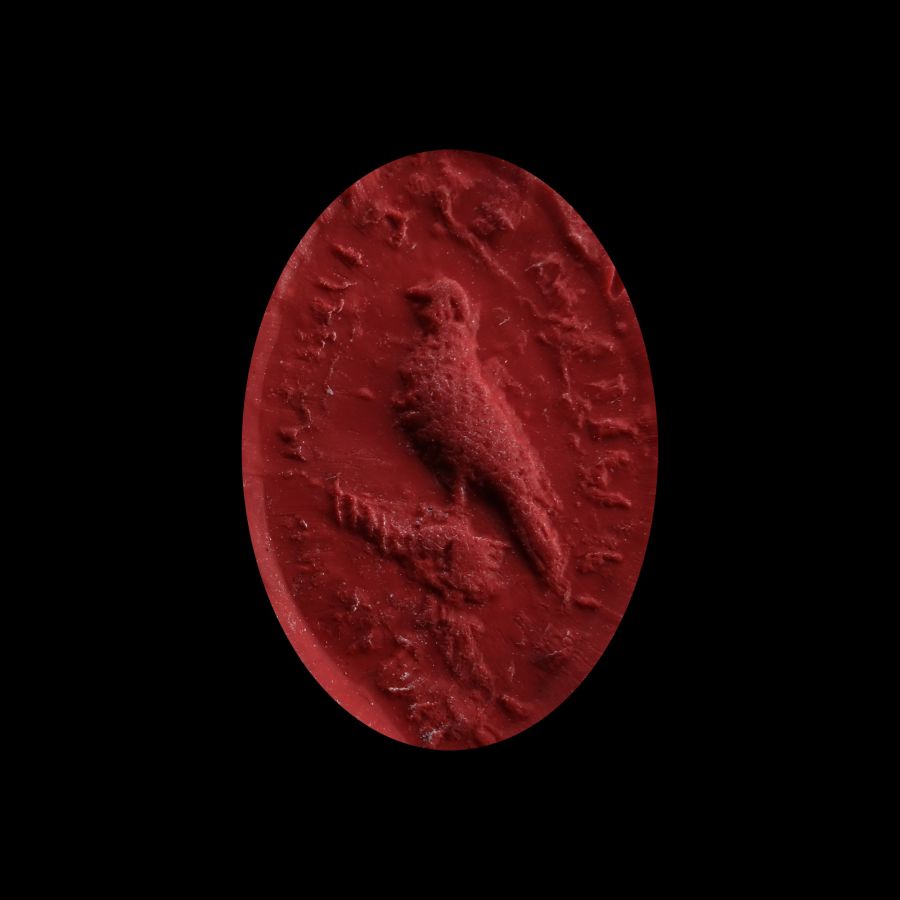
Medieval Bronze Seal Matrix with Bird
CIRCA 13TH-14TH CENTURY A.D.
1 3/4 in. (8.3 grams, 34 mm).
Vesica type with perching bird motif and legend 'S'[....]LIVM[...]', supplied with an impression. [No Reserve]
ProvenanceFound Romney Marsh area, Kent, 1990-2015.
Property of a Kent gentleman, a specialist medieval collector.
TimeLine Auctions follows a vetting process to ensure the authenticity and legality of all items, reinforcing our commitment to integrity and responsible trading. Each antiquity, antique, and coin lot undergoes thorough examination by a vetting committee of at least ten external specialists, professional trade association members, scientists, and archaeologists: Our Vetting Process
AUCTIONS:
TimeLine is a leading auction house specialising in antiquities, ancient art, collectables, natural history, coins, medals, and books. Our auctions offer museums, collectors, historians, and enthusiasts the opportunity to acquire unique and historically significant pieces.
LOT 2261
Medieval Bronze Seal Matrix with Bird
Estimate £50 - 70€58 - 81 (for guidance only)$68 - 95 (for guidance only)
Opening Bid
£5 (EUR 6; USD 7) +BP*
-
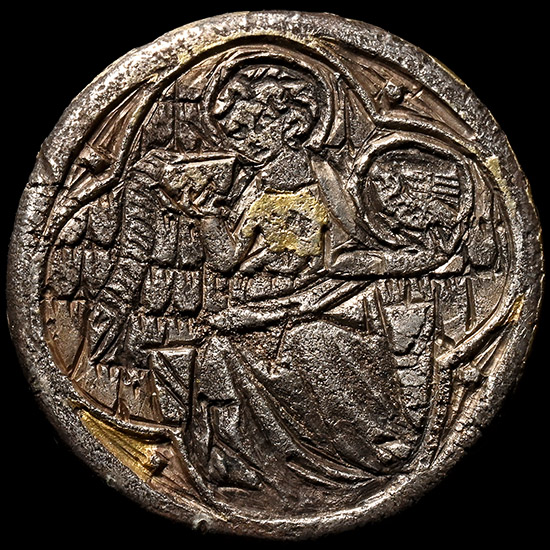
Medieval Silver-Gilt Reliquary Box Mount with Engraved Saint John the Evangelist in Quatrefoil
England, Kent, circa 13th-14th century A.D.Estimate: £500 - 700 (+bp*)
Opening Bid: £250
Circular, slightly domed mount with a narrow inner quatrefoil border, outside the angles of the quatrefoil, the spandrels containing a raised dot, with linear marks resembling keying, and one spandrel (lower left) appears to have traces of gilding over these; the quatrefoil filled with a seated human figure, nimbate and with a full skirt and tight bodice, the bodice appears to be gilded and it may be that the object was 'parcel' (partly) gilded to emphasise the clothing, also wearing a cloak covering the shoulders; the right hand holding a cup, raised to the mouth; the left hand reaching out towards a perching bird surrounded by a circle (perhaps also a nimbus, showing that it is a holy bird); the bird with its wings held out above its body and its head and beak held upwards; the background filled with motifs, across the centre two rows of half-ovals, each with a pair of V-shaped indentations in the top resembling tulip flowers, a triangular pillar to each side of the legs, each decorated with a pair of oblique grooves, an enigmatic strip decorated with oblique ribbing, running upwards from the lower part of the left-hand foil to the open top of the cup, the lower end appearing to have a face in profile with eye and open jaw, possibly representing a snake or serpent. 2.76 grams, 19 mm
Found whilst searching with a metal detector on 25th September 2014 near Mersham, Kent, UK; declared as Treasure under the Treasure Act with reference number 2017T553, disclaimed by the Crown and returned to the finder. Property of a Kent gentleman, a specialist medieval collector. Accompanied by a copy of the British Museum's Portable Antiquities Scheme (PAS) report no.PUBLIC-FF66A3. Accompanied by a copy of the report on the find of potential Treasure for H M Coroner. Accompanied by a copy of the letter from the British Museum stating that the Crown's interest in this find has been disclaimed.
The PAS report states: 'This scene might perhaps be interpreted as showing St John the Evangelist (author of the Gospel of St John) with his symbol of an eagle and a chalice with a serpent. The later refers to a poisoned chalice, either the cup mentioned by Jesus to James and John in Matthew ch. 20 v. 23, or the chalice mentioned in the Golden Legend (written c.1260 and extremely popular for the rest of the medieval period) in Ch.9 of which John is said to have survived drinking a cup of poison in an attempt to convert a pagan. Although the figure looks female, John was often depicted with delicate features and beardless. The high quality of the ornament suggests a late medieval date. It may be related to plaques from late medieval reliquary box pendants.' -
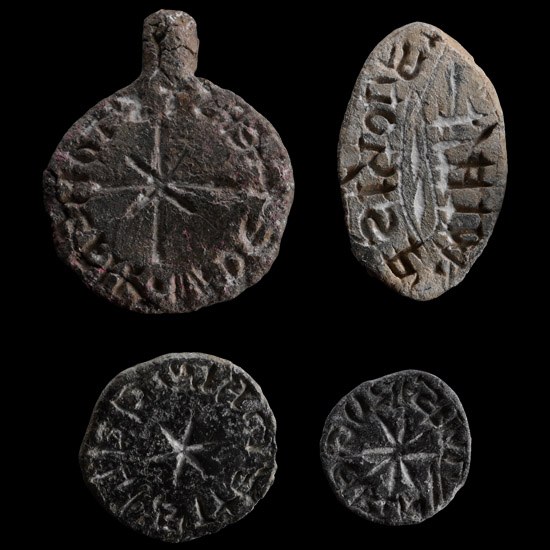
Medieval Lead Seal Matrix Collection
Circa 13th-14th century A.D.Estimate: £120 - 170 (+bp*)
Opening Bid: £60
Including discoid and vesica-shaped types; legends include: 'S'TOME[.]H[...]EHERST', ':s' TYE[..]MICHAEL', '+S'IOHISPWILLI[..]', 'S'ROGERIWILL', each with an impression. 63 grams total, 20-39 mm
Found Romney Marsh area, Kent, 1990-2015. Property of a Kent gentleman, a specialist medieval collector. -
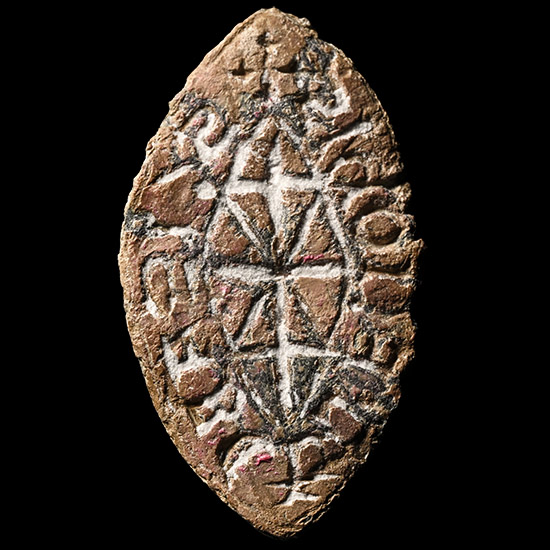
Medieval Lead Seal Matrix of Isabel
Circa 1150-1300 A.D.Estimate: £30 - 40 (+bp*)
Opening Bid: £5
Vesica-shaped seal matrix with a fleur-de-lis in relief on the reverse, the obverse with a central design of multiple triangles created from six lines, inscription surrounding and reading 'S' ISABEL [ ] F' IOHIS'; inked collector's note on the reverse, accompanied by a museum-quality impression. 6.87 grams, 33 mm
Found whilst searching with a metal detector in Folkestone and Hythe, Kent, UK. Property of a Kent gentleman, a specialist medieval collector. Accompanied by a copy of the British Museum's Portable Antiquities Scheme (PAS) report no.KENT-368062.
