
Loading, please wait...
LOT 1686
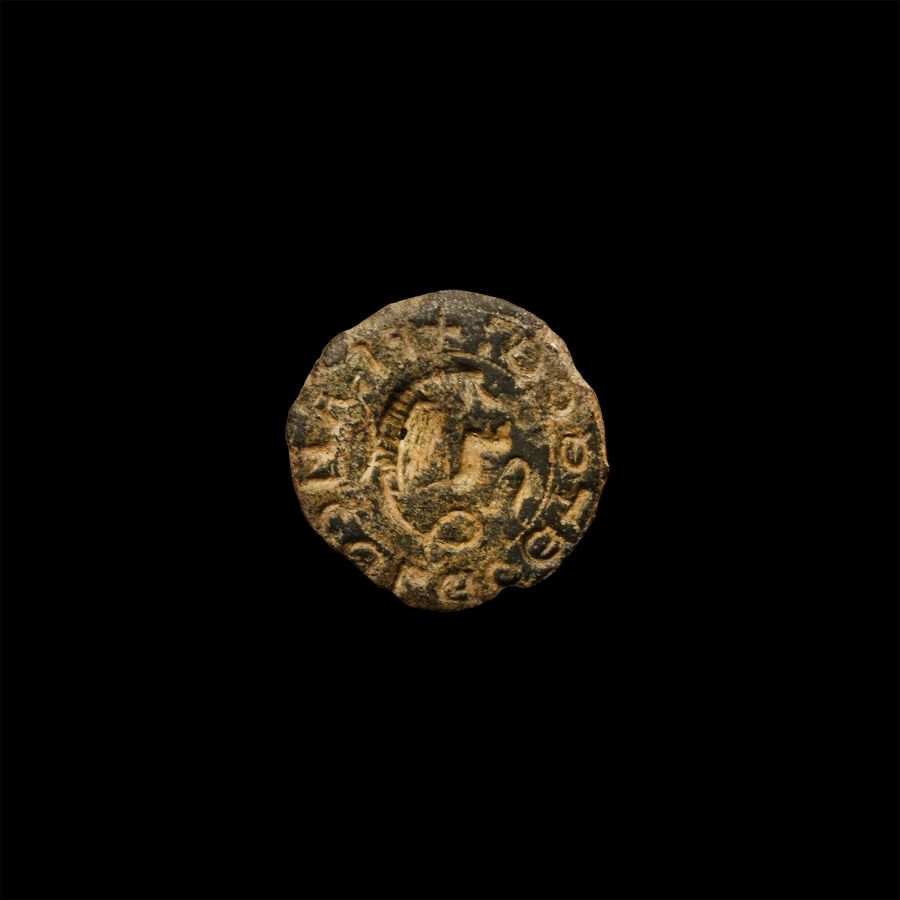
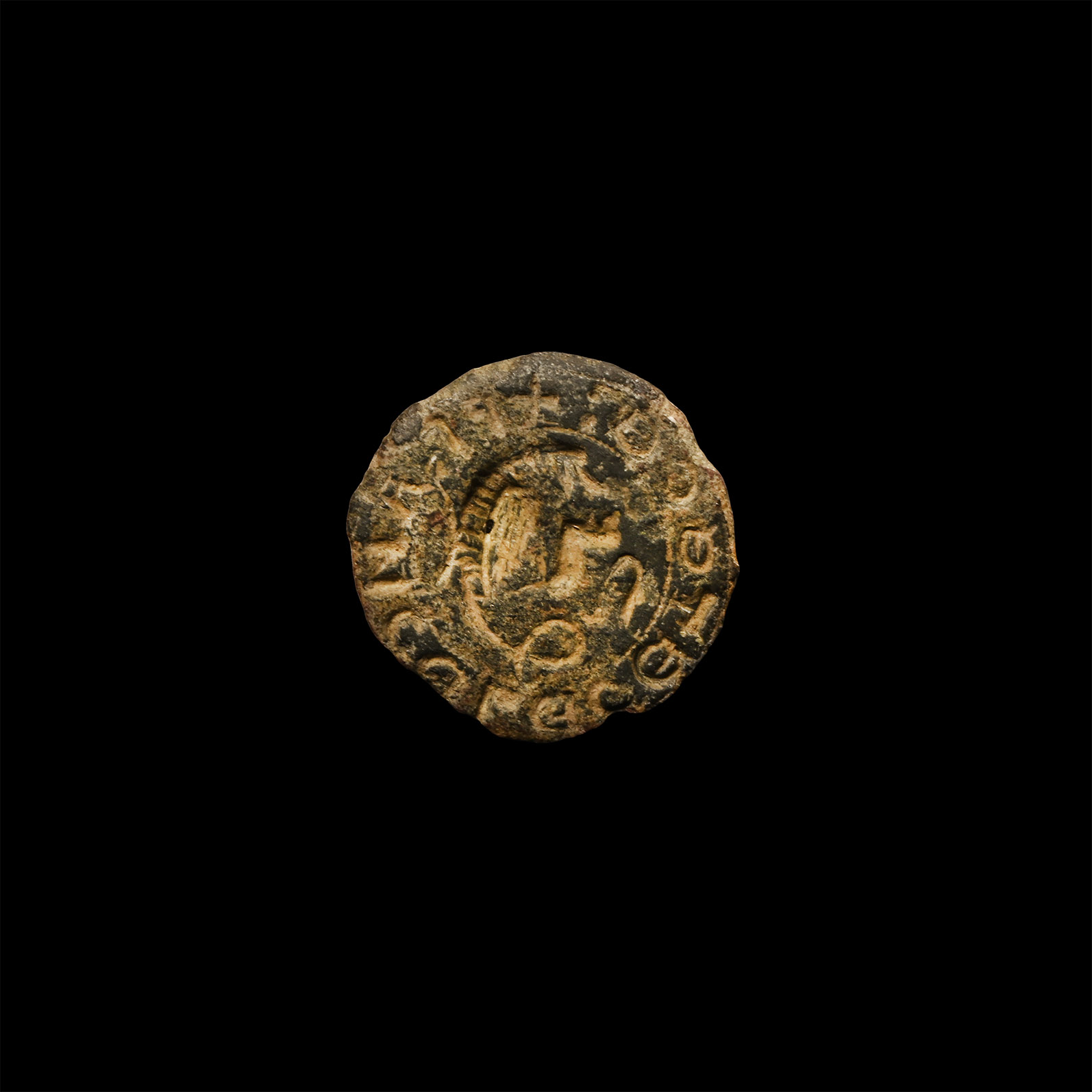
Medieval Bronze Round Seal Matrix with Sleeping Lion
CIRCA 14TH CENTURY A.D.
7/8 in. (4.91 grams, 22 mm).
Discoid with central lion rampant, legend to the rim: 'FRANGE LEGE TEGE' MEANING 'break (the seal), read the contents of the letter/document under the seal, conceal (ditto)'. [No Reserve]
ProvenanceFound St Osyth, Essex, UK.
CONDITIONTimeLine Auctions follows a vetting process to ensure the authenticity and legality of all items, reinforcing our commitment to integrity and responsible trading. Each antiquity, antique, and coin lot undergoes thorough examination by a vetting committee of at least ten external specialists, professional trade association members, scientists, and archaeologists: Our Vetting Process
AUCTIONS:
TimeLine is a leading auction house specialising in antiquities, ancient art, collectables, natural history, coins, medals, and books. Our auctions offer museums, collectors, historians, and enthusiasts the opportunity to acquire unique and historically significant pieces.
-
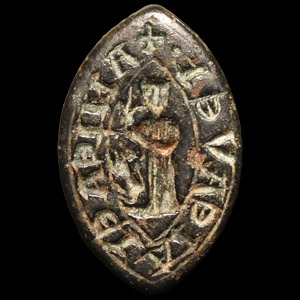
Medieval Bronze Vesica-Shaped Seal Matrix
Circa 13th century A.D.Sold for (Inc. bp): £124
With intaglio robed figure to the centre and surrounding legend: '+ AMIE AEI AVEI.'. 5.99 grams, 28 mm
Found Odiham, Hampshire, UK.
This is an amatory legend, such are not uncommon on personal seals. It seems likely that the intended inscription was that found on a gold finger ring from Essex in the 18 century, i.e. 'AMI AMES AMIE AVES' [Beloved, love! You have a beloved!], also see a brooch on the PAS database under reference no.BUC-B93E93, which reads 'AMIE AMEZ A'. -
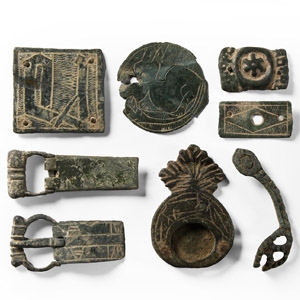
Medieval Bronze Artefact Collection
14th-16th century A.D.Sold for (Inc. bp): £52
Comprising mounts, buckles and other miscellaneous items, including items displaying vegetal and zoomorphic motifs and initials. 50 grams total, 25-45 mm
Found Hampshire, UK. -
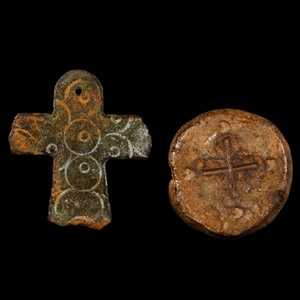
Medieval Equestrian Knight Badge Group
13th-15th century A.D.Sold for (Inc. bp): £65
Comprising a circular stone with an incised cross to one side and a series of 13 heraldic hearts to the other; a bronze cross pendant with annulet-in-circle motifs to one side. 47 grams total, 30-36 mm
From an old Worcestershire, UK collection. The Kusmirek Collection, UK.
The copper-alloy pendant appears to be cross-shaped with the top arm forming the suspension loop. It is therefore possible to consider the pendant to be T-shaped, in the form of the Greek letter Tau. These Tau crosses often acted as miniature reliquaries which are thought to have contained a herbal compound that was used to treat the symptoms of St Anthony's fire.
