
Loading, please wait...
LOT 2306
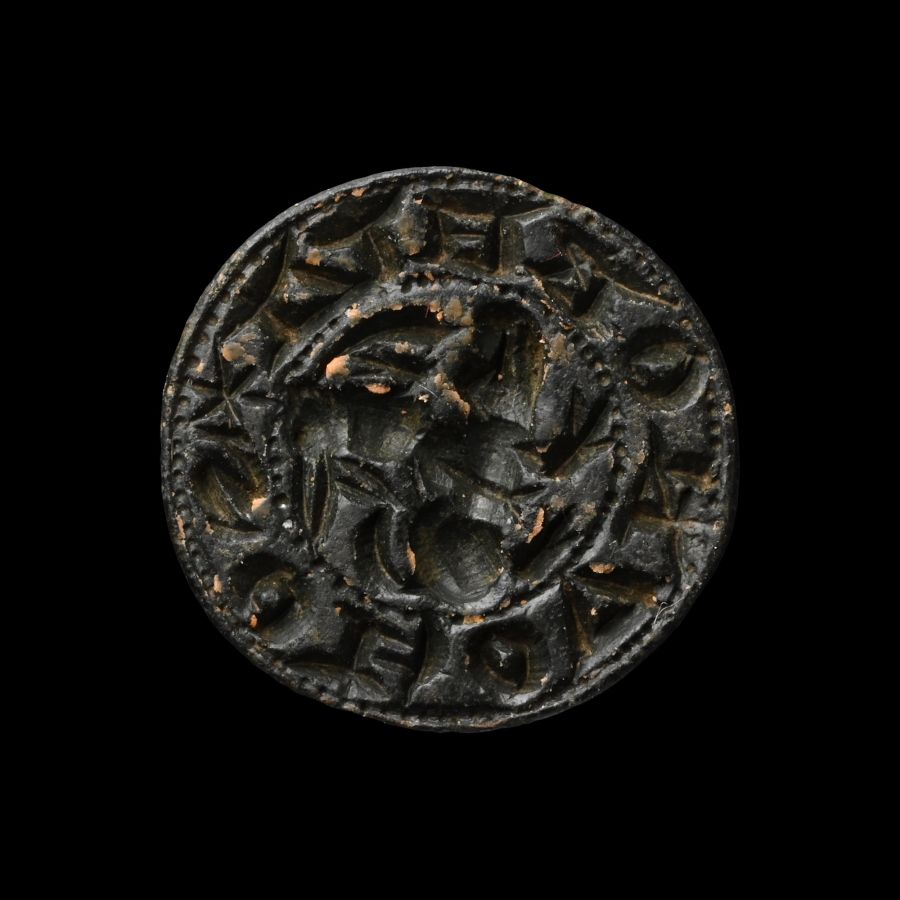
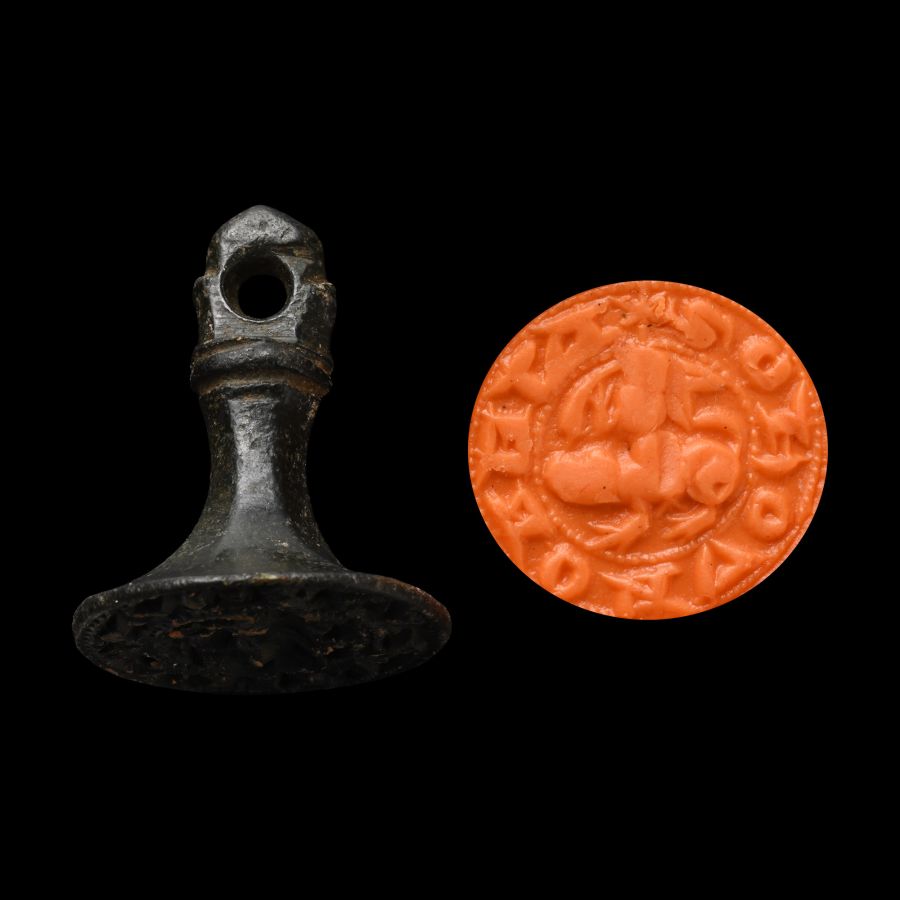
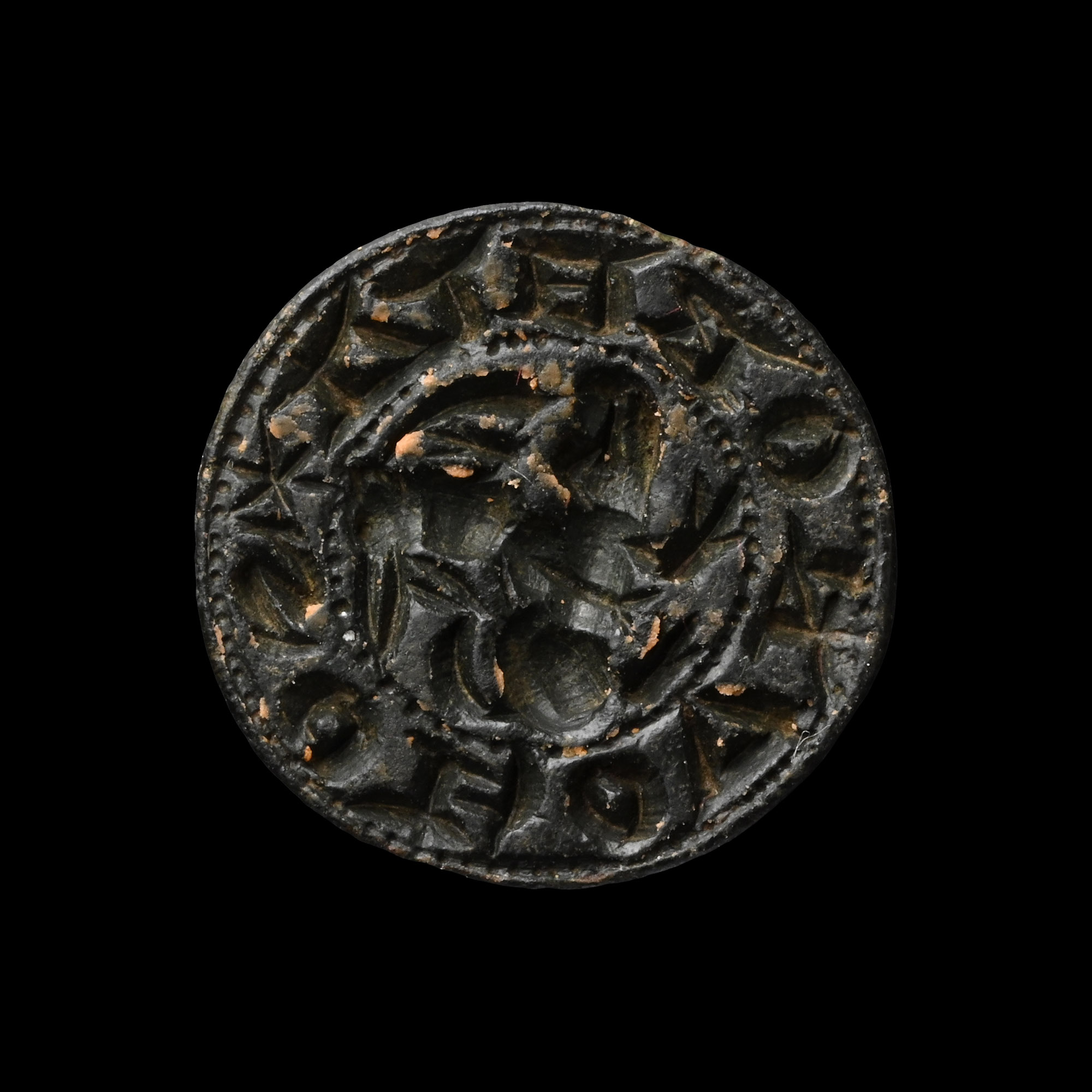
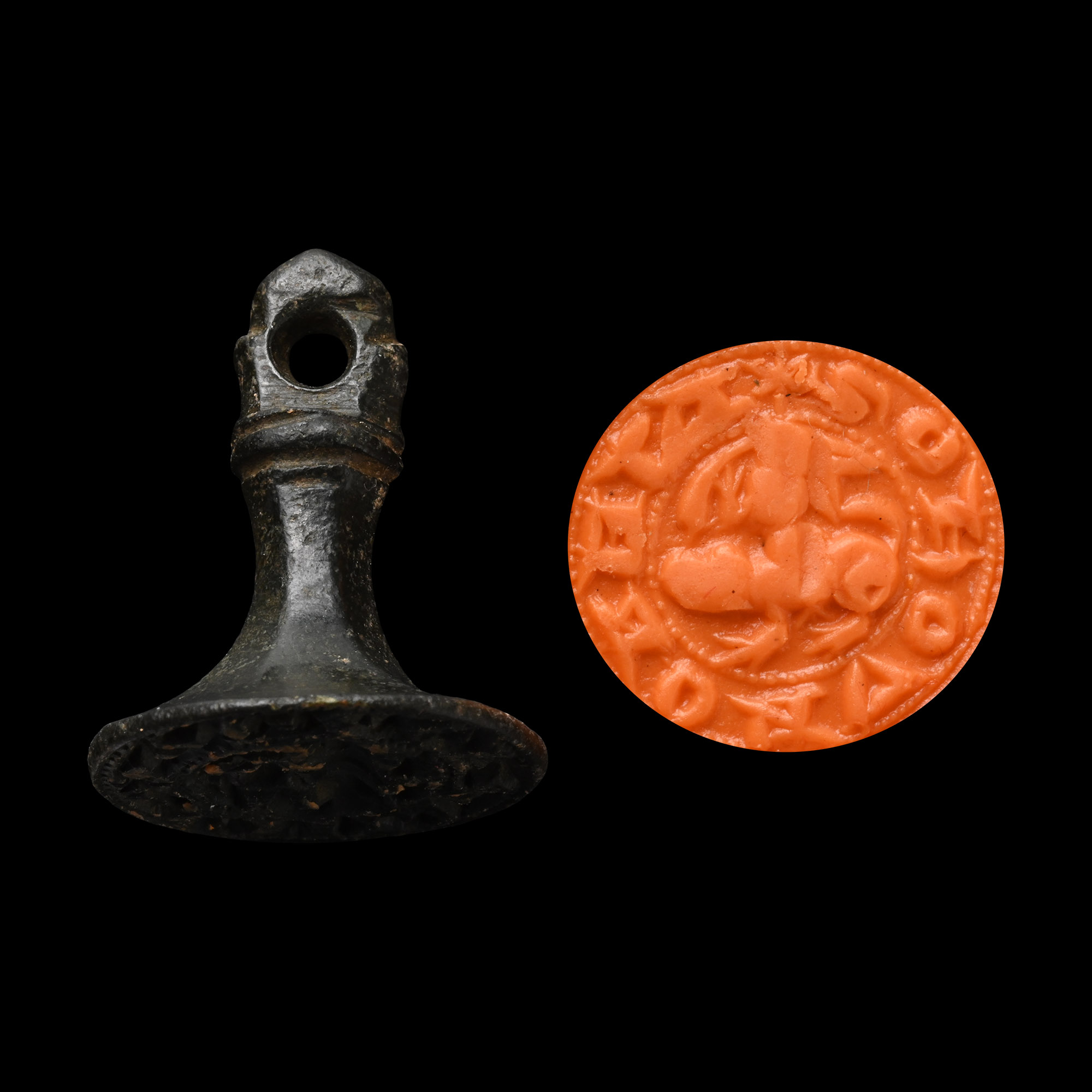
Medieval Bronze Round Seal Matrix with Hare Riding a Hound
CIRCA 14TH-15TH CENTURY A.D.
1 in. (10 grams, 25 mm).
Central roundel with a hare riding a hound and blowing on a hunting horn; border with legend 'SOHOV ROABIN'; supplied with an impression. [No Reserve]
ProvenanceAcquired on the UK art market in the 1980s.
From an East Anglian private collection.
See Jones, M., The Secret Middle Ages, new ed., London, 2025, pp.148-9.
FootnotesThis is an example of what is probably the most popular of all medieval seal matrix designs, the World Turned Upside Down image of the hare riding on the hound and blowing a hunting horn. The device is found in English illuminated manuscripts, stained glass, floor tiles, etc. The legend is composed of the medieval hunting-cry, Soho! and the name of the dog – most commonly, Robin – as here, though slightly garbled.
CONDITIONTimeLine Auctions follows a vetting process to ensure the authenticity and legality of all items, reinforcing our commitment to integrity and responsible trading. Each antiquity, antique, and coin lot undergoes thorough examination by a vetting committee of at least ten external specialists, professional trade association members, scientists, and archaeologists: Our Vetting Process
AUCTIONS:
TimeLine is a leading auction house specialising in antiquities, ancient art, collectables, natural history, coins, medals, and books. Our auctions offer museums, collectors, historians, and enthusiasts the opportunity to acquire unique and historically significant pieces.
LOT 2306
Medieval Bronze Round Seal Matrix with Hare Riding a Hound
Estimate £80 - 100€93 - 116 (for guidance only)$108 - 135 (for guidance only)
Opening Bid
£5 (EUR 6; USD 7) +BP*
-
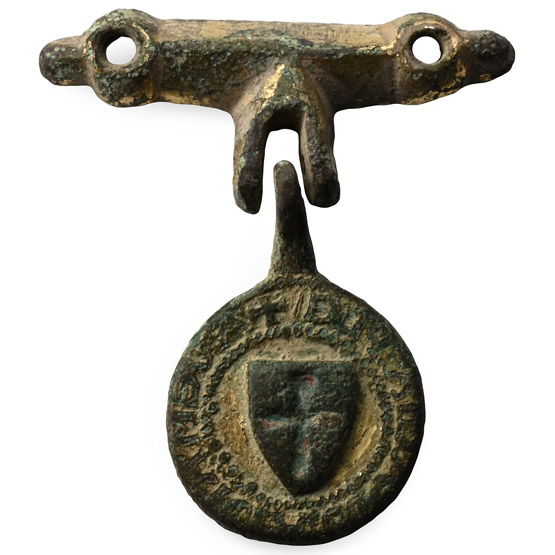
Medieval Knight's Gilt Bronze Heraldic Horse Harness Pendant and Hanger
14th-15th century A.D.Estimate: £80 - 100 (+bp*)
Bids: 7 | Current Bid: £130
Comprising: D-section hanger with hole at each end for attachment, hinge knuckles to middle of lower edge; pendant disc with pierced lug, central heater shield with cross pattee, abraded legend to the border. 8.5 grams total, 27-33 mm
From an old English collection formed since 1960. -
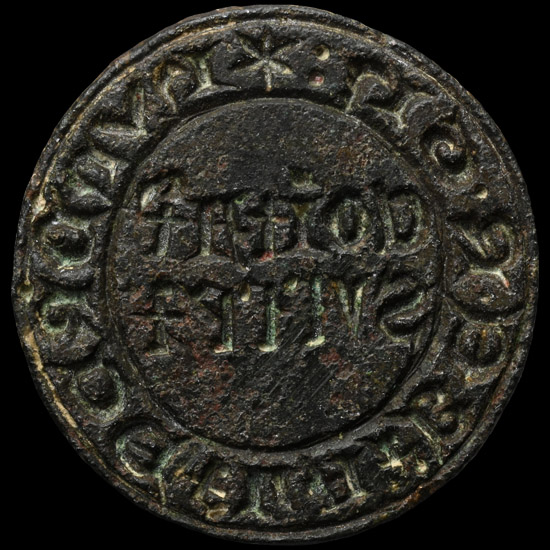
Medieval Bronze Official Flexborough Hundred Constable's Seal Matrix
England, East Sussex, circa 1350-1400 A.D.Estimate: £600 - 800 (+bp*)
Bids: 2 | Current Bid: £320
Comprising a pierced trefoil terminal with a drilled circular pit above; flat-topped hexagonal pedestal with collar, the body of the matrix flaring to the circular die with orientation notch; the retrograde legend '* hVnDR DE FLAXBERGh' around the circumference of the die, and tondo with inscription in two registers 'COitat SVSSEX'; file marks on the trefoiled loop. 35.6 grams, 36 mm high
Found near Lewes, East Sussex, UK, in August 2024. Accompanied by a copy of the British Museum's Portable Antiquities Scheme (PAS) report no.SUSS-99E46F.
This is an official seal matrix used for labourers' passes from the hundred of Flexborough in the Rape of Pevensey, Sussex, which incorporated the ancient parishes of East Batchington, South Heighton and Seaford. Another official seal for the hundred of Foxearle in the Rape of Hastings is recorded on the PAS Database (SUSS-D8F8D5), which notes that the seals were probably used by the Constables, amongst whose duties were keeping the peace and, from the 14th century, providing passes for workmen seeking work beyond their own hundred. In 1285, King Edward I of England passed the Statute of Winchester, which 'constituted two constables in every hundred to prevent defaults in towns and highways'. Constables were unpaid and usually elected locally. Harvey and MacGuiness (1996:41) note: 'The Statute of Cambridge in 1388 ordered that labourers moving from the area where they lived should be given a pass sealed by someone appointed by the local justices of the peace, and describing the seal's design - it should name the county around the edge and the hundred, wapentake or town across the centre. (ibid: fig:35). Three years later sheriffs were ordered to have these seals made at once'. They quote 6 examples of surviving matrices (p.42), and others exist including three from Norfolk and two from Suffolk (Ashley and Richardson 1998). This example and the other Sussex example, SUSS-D8F8D5, name the county and hundred as required but reverse the arrangement laid out in the statute and seen on other seals, which have the county in the middle and the hundred around the edge. Research by Christopher Whittick in the archives of Battle Abbey has also identified a document bearing a seal for Battle Hundred which is similar in design to this example, with the county name in the middle and the hundred name around the edge. Unusually, the seal was used on a private charter dated 1361, which suggests Sussex hundreds were using standardised seals a generation before the statute of 1388. It also raises interesting questions about whether the existence of seals such as this influenced the 1388 statute. -
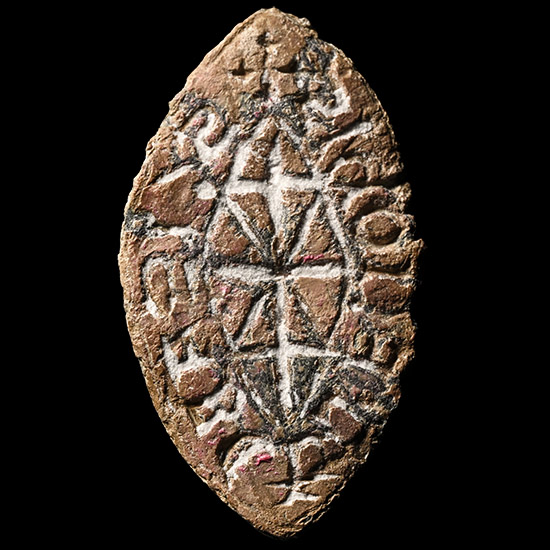
Medieval Lead Seal Matrix of Isabel
Circa 1150-1300 A.D.Estimate: £30 - 40 (+bp*)
Opening Bid: £5
Vesica-shaped seal matrix with a fleur-de-lis in relief on the reverse, the obverse with a central design of multiple triangles created from six lines, inscription surrounding and reading 'S' ISABEL [ ] F' IOHIS'; inked collector's note on the reverse, accompanied by a museum-quality impression. 6.87 grams, 33 mm
Found whilst searching with a metal detector in Folkestone and Hythe, Kent, UK. Property of a Kent gentleman, a specialist medieval collector. Accompanied by a copy of the British Museum's Portable Antiquities Scheme (PAS) report no.KENT-368062.
