
Loading, please wait...
LOT 1912
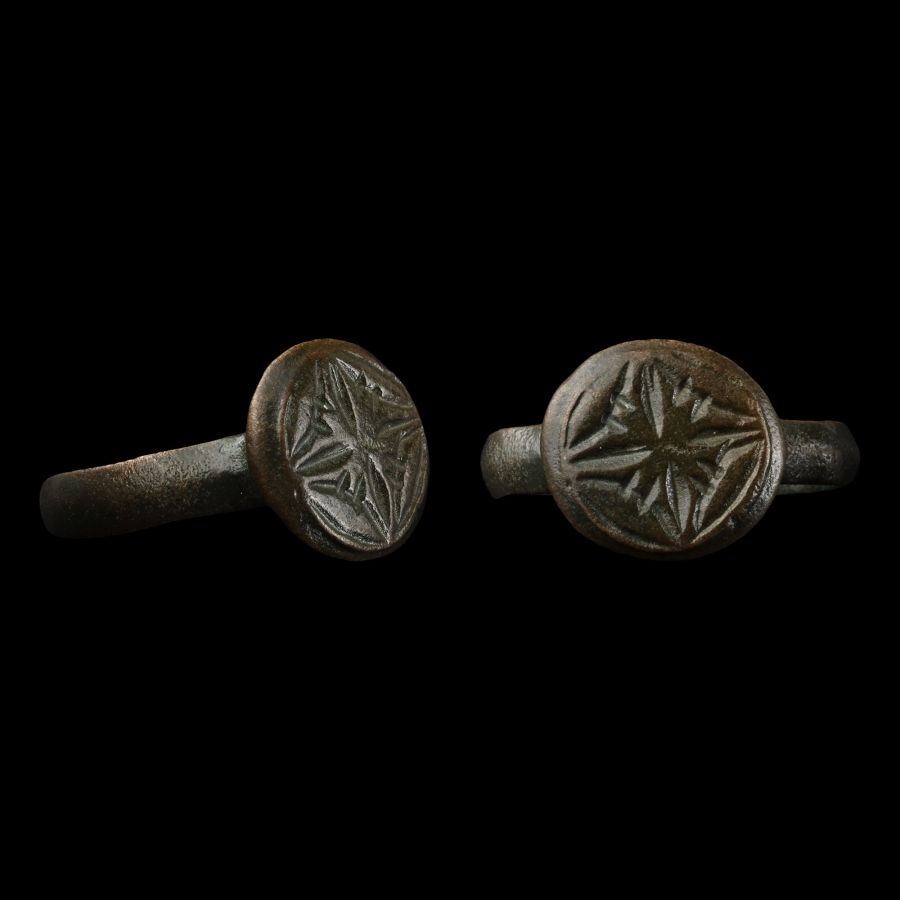
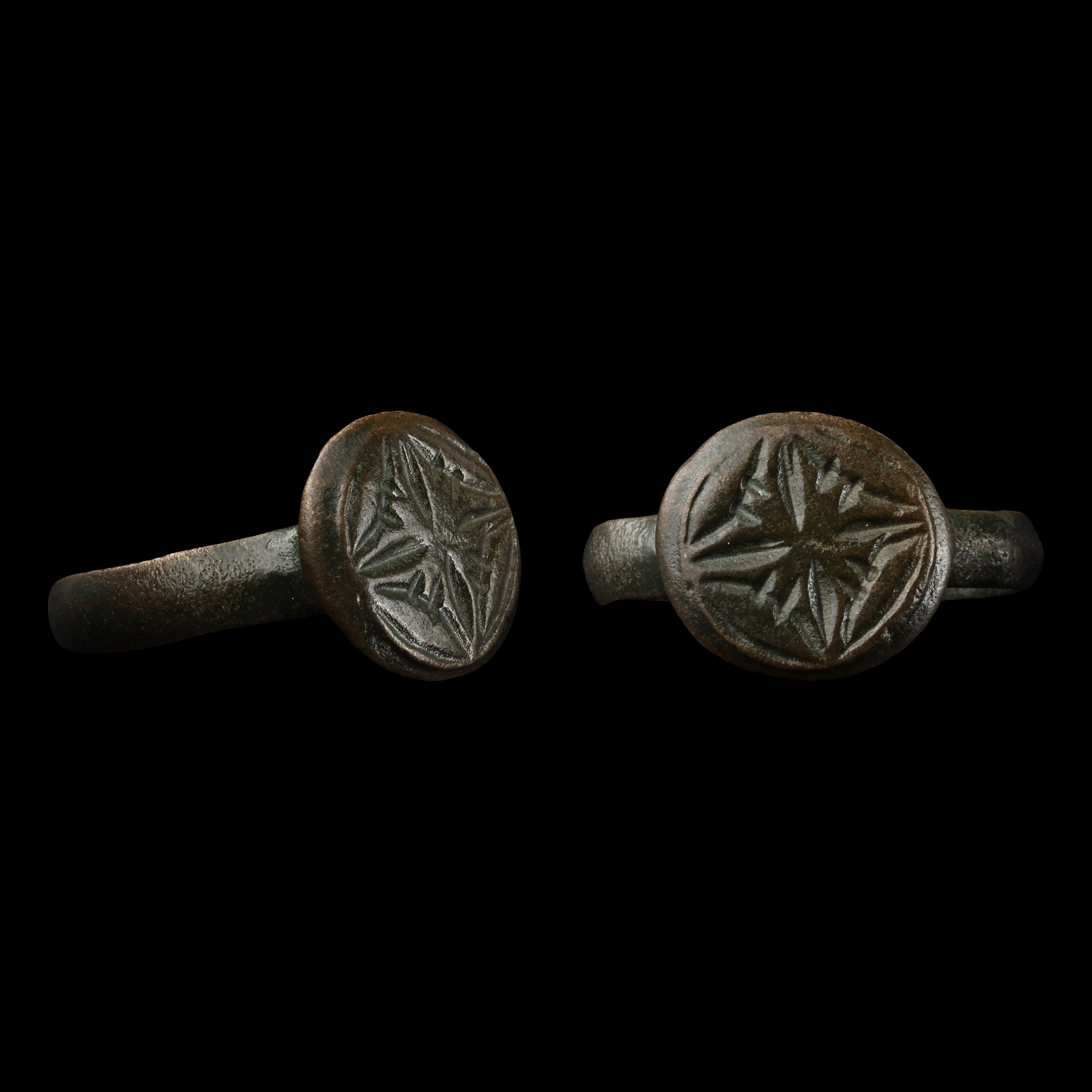
Medieval Bronze Ring with Star Motif
14TH-16TH CENTURY A.D.
7/8 in. (3.88 grams, 22.67 mm overall, 19.22 mm internal diameter (approximate size British Q, USA 8, Europe 17.49, Japan 16)).
With circular hoop, flat discoid bezel with four pointed star motif. [No Reserve]
ProvenanceAcquired on the UK art market before 2000.
Property of an Essex, UK, gentleman.
This lot is accompanied by an illustrated lot declaration signed by the Head of the Antiquities Department, Dr Raffaele D'Amato.
TimeLine Auctions follows a vetting process to ensure the authenticity and legality of all items, reinforcing our commitment to integrity and responsible trading. Each antiquity, antique, and coin lot undergoes thorough examination by a vetting committee of at least ten external specialists, professional trade association members, scientists, and archaeologists: Our Vetting Process
AUCTIONS:
TimeLine is a leading auction house specialising in antiquities, ancient art, collectables, natural history, coins, medals, and books. Our auctions offer museums, collectors, historians, and enthusiasts the opportunity to acquire unique and historically significant pieces.
-

Medieval and Later Bronze and Iron Artefact Collection
14th-19th century AD.Sold for (Inc. bp): £13
Including weights, thimbles, crotal bell, finger ring and other items. 244 grams total, 1.2-10.3 cm
From the private collection of Kenneth Machin (1936-2020), Buckinghamshire, UK; his collection of antiquities and natural history was formed since 1948; thence by descent. This lot is accompanied by an illustrated lot declaration signed by the Head of the Antiquities Department, Dr Raffaele D'Amato. -

Medieval Bronze Ring with Lord, Help Anastasia
12th-14th century A.D.Sold for (Inc. bp): £468
Ellipsoid plaque with central octofoil and legend in Greek '+ ИЄ RIHIH ANACτACIA' (Lord, help Anastasia). 17.79 grams, 25.23 mm overall, 20.10 mm internal diameter (approximate size British S 1/2, USA 9 1/4, Europe 20.63, Japan 19)
Ex German art market, 2000s. Acquired from an EU collector living in London. From the collection of a Surrey, UK, gentleman. This lot is accompanied by an illustrated lot declaration signed by the Head of the Antiquities Department, Dr Raffaele D'Amato. -

Ritually Sacrificed British Medieval Bronze Cauldron with the 'Murder' Weapon
1300-1400 A.D.Sold for (Inc. bp): £624
Comprising: a large bulbous bronze cauldron with three radiating applied iron legs (one detached), squat in profile with flared and chamfered rim; substantial iron axehead with slightly flared blade, thickened butt with socket; the cauldron discovered inverted with the axehead underneath. 6 kg total, 31 cm
The assemblage found whilst searching with a metal detector in Cumbria, South Lakeland, UK on Friday 23 February 2023. Accompanied by a copy of the British Museum's Portable Antiquities Scheme (PAS) report nos.LANCUM-DA7471, LANCUM-F50F1D. This lot is accompanied by an illustrated lot declaration signed by the Head of the Antiquities Department, Dr Raffaele D'Amato.
The find and its likely meaning have been discussed at length with Vincent van Vilsteren, the former Curator of the Drents Museum in the Netherlands, who has studied many instances of cauldrons which have been ceremonially buried after sustaining extensive damage. The ex curator's PhD is currently in process and will concentrate on the ritual aspects of late medieval bronze cauldrons. The suggested interpretation here is that the cauldron was ritually 'killed' or put beyond use, and the weapon used to effect this was interred with it. This would be a rare (if not unparalleled) case in Europe of the deposition of the weapon alongside the item which the ritual was supposed to 'retire'.
