
Loading, please wait...
LOT 1853
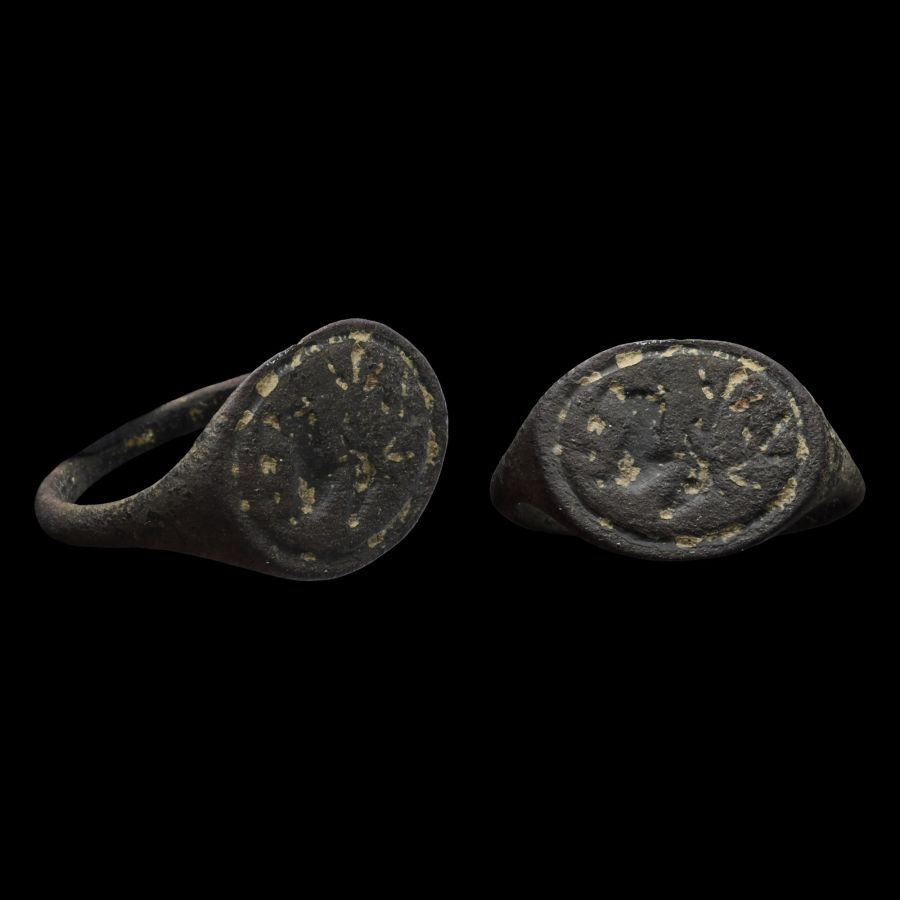
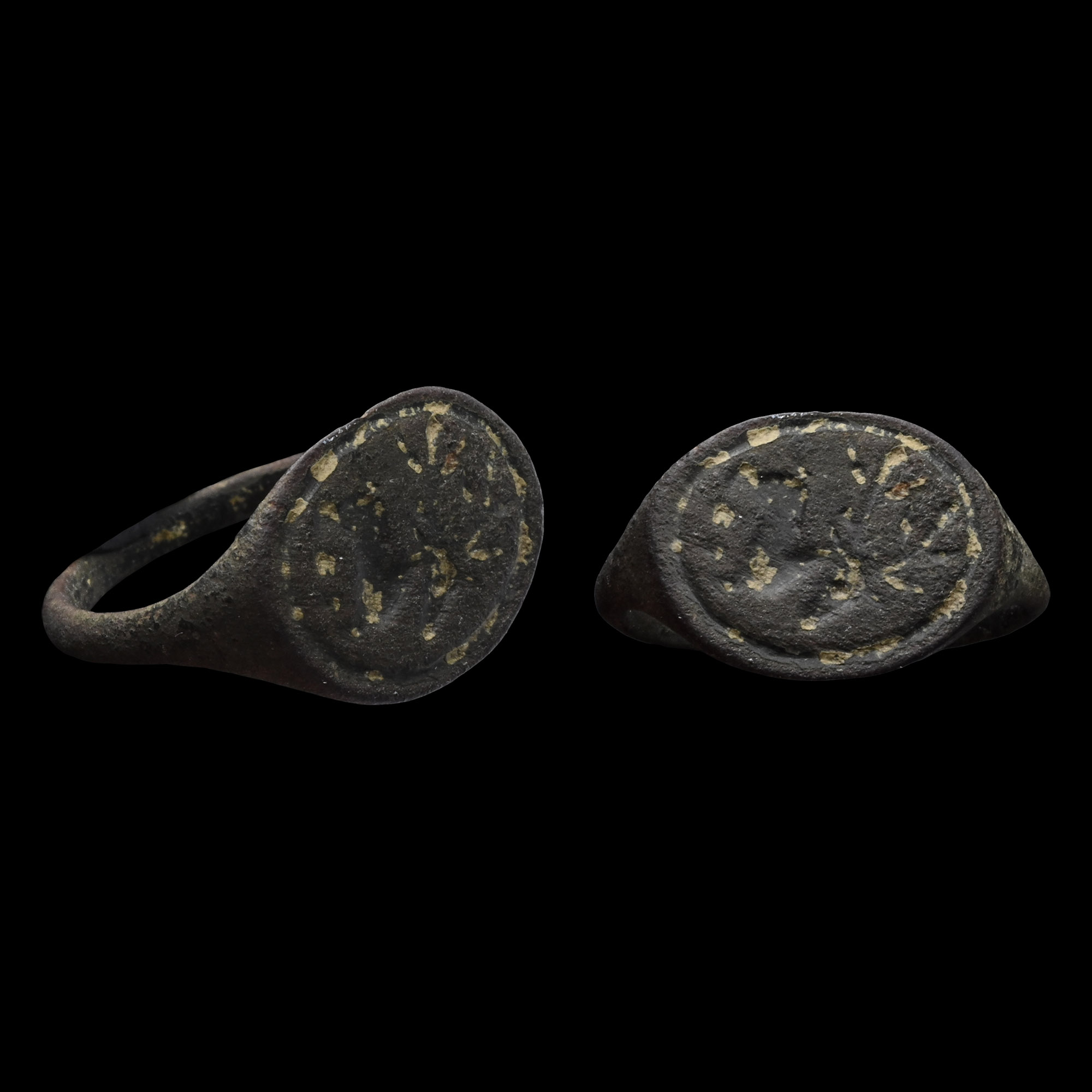
Medieval Bronze Ring with Stag
15TH-16TH CENTURY A.D.
3/4 in. (2.92 grams, 20.42 mm overall, 17.15 x 17.32 mm internal diameter (approximate size British N 1/2, USA 6 3/4, Europe 14.35, Japan 13)).
Comprising a slender D-section hoop and an oval bezel with a reclining stag with large antlers. [No Reserve]
ProvenanceFrom a UK collection formed in the 1980s.
Property of an Essex, UK, gentleman.
TimeLine Auctions follows a vetting process to ensure the authenticity and legality of all items, reinforcing our commitment to integrity and responsible trading. Each antiquity, antique, and coin lot undergoes thorough examination by a vetting committee of at least ten external specialists, professional trade association members, scientists, and archaeologists: Our Vetting Process
AUCTIONS:
TimeLine is a leading auction house specialising in antiquities, ancient art, collectables, natural history, coins, medals, and books. Our auctions offer museums, collectors, historians, and enthusiasts the opportunity to acquire unique and historically significant pieces.
-
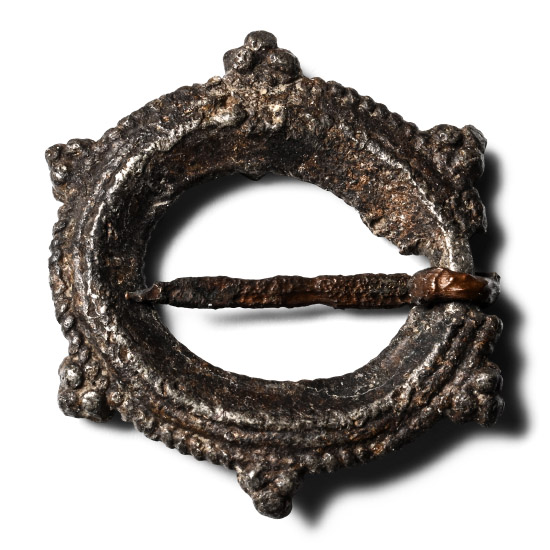
Medieval Pewter Ring Brooch
Circa 14th century A.D.Sold for (Inc. bp): £20
Annular brooch with fine ropework pattern and six projecting granulated pyramids on the outer edge, articulated pin. 2.32 grams, 19 mm
From the private collection of Graham Slater (1927-2024), Cambridge, UK; formed 1980s-1990s. Accompanied by a previous dealer's sales ticket. -
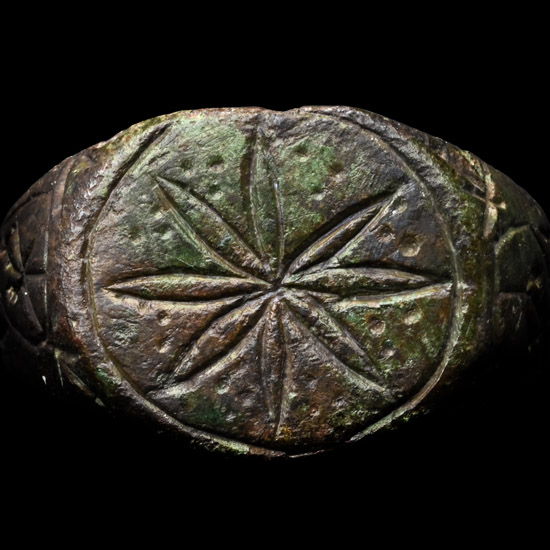
Medieval Bronze Ring with Petalled Flower
12th-14th century A.D.Sold for (Inc. bp): £78
With a wide hoop and an oval bezel with an eight-petalled flower on a pointillé-decorated field. 5.92 grams, 21.49 mm overall, 19.25 mm internal diameter (approximate size British P, USA 7 1/2, Europe 16.23, Japan 15)
Ex German art market, 2000s. Acquired from an EU collector living in London. From the collection of a Surrey, UK, gentleman. -
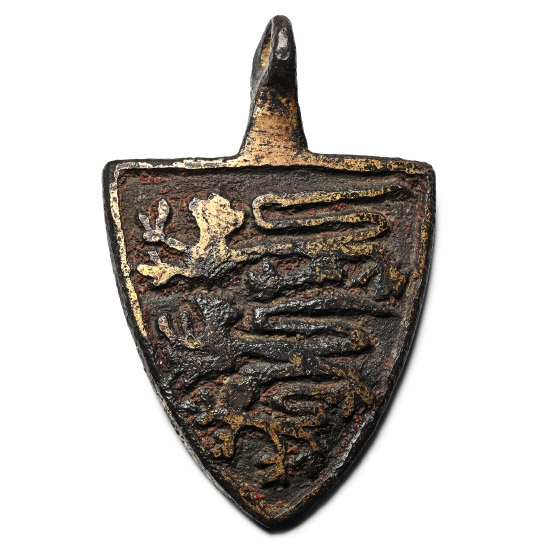
Medieval Knight's Gilt-Bronze Heraldic Horse Harness Pendant with Arms of England
13th-15th century A.D.Sold for (Inc. bp): £442
Shield-shaped pendant with the Royal Arms of England, with three lions passant guardant. 12 grams, 46 mm
From the private collection of Graham Slater (1927-2024), Cambridge, UK; formed 1980s-1990s.
