
Loading, please wait...
LOT 1850
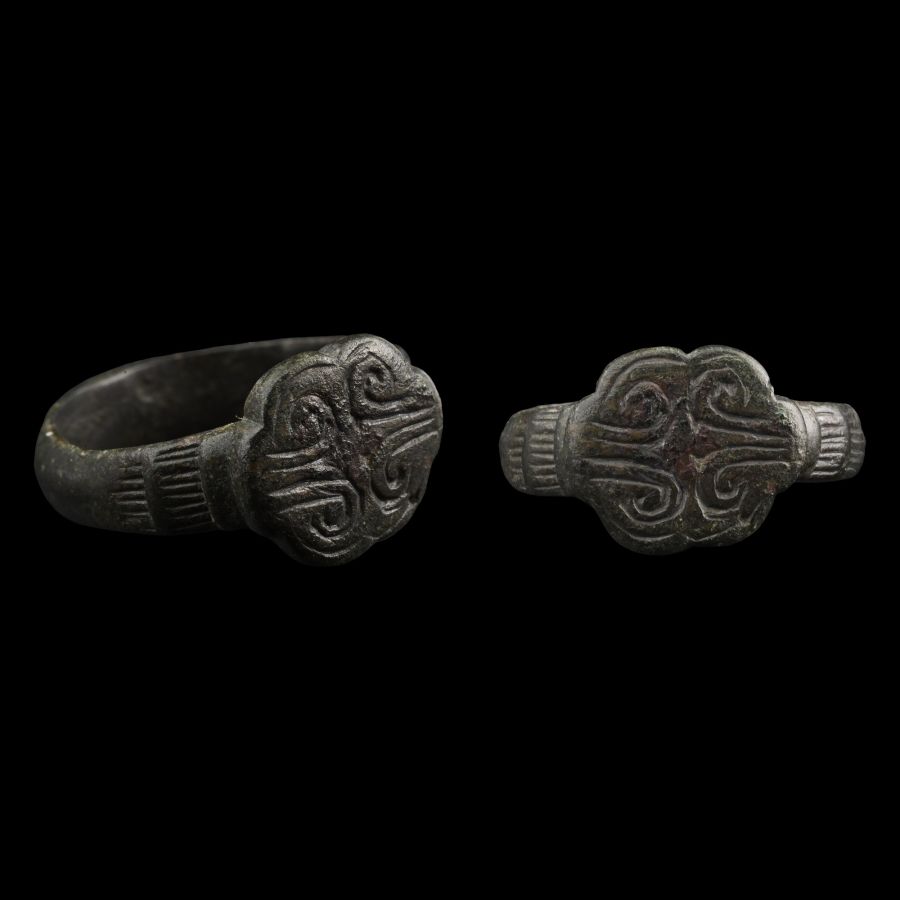
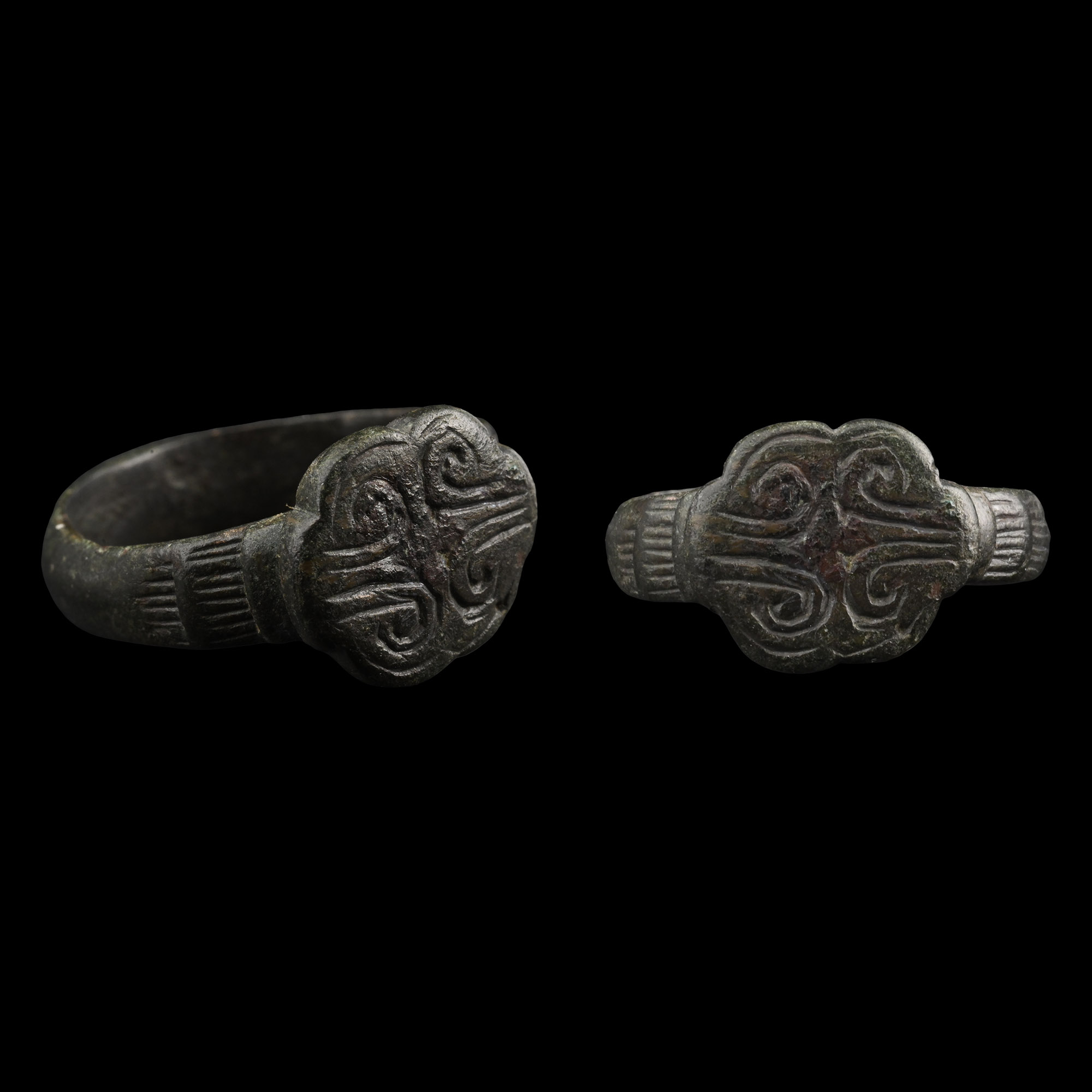
Medieval Bronze Ring with Scroll Cross
14TH-16TH CENTURY A.D.
1 in. (8.18 grams, 25.44 mm overall, 18.54 mm internal diameter (approximate size British Q, USA 8, Europe 17.49, Japan 16)).
Rosette bezel with incised addorsed scrolls. [No Reserve]
ProvenanceEx German art market, 2000s.
Acquired from an EU collector living in London.
From the collection of a Surrey, UK, gentleman.
TimeLine Auctions follows a vetting process to ensure the authenticity and legality of all items, reinforcing our commitment to integrity and responsible trading. Each antiquity, antique, and coin lot undergoes thorough examination by a vetting committee of at least ten external specialists, professional trade association members, scientists, and archaeologists: Our Vetting Process
AUCTIONS:
TimeLine is a leading auction house specialising in antiquities, ancient art, collectables, natural history, coins, medals, and books. Our auctions offer museums, collectors, historians, and enthusiasts the opportunity to acquire unique and historically significant pieces.
-
.jpg)
Eastern Medieval Bronze Ring with Spread Eagle
15th century A.D.Sold for (Inc. bp): £52
The hoop expanding at the base, lentoid-shaped bezel with stylised eagle with its wings spread open. 7.57 grams, 24.14 mm overall, 19.12 mm internal diameter (approximate size British O 1/2, USA 7 1/4, Europe 15.61, Japan 15)
Acquired on the UK and EU art market before 2000. From the private collection of a Surrey, UK, gentleman.
These kind of rings, possibly used as signet rings, find their parallels with artefacts from Eastern Europe, especially in the area of Smederevo. Comparison elements can support a 15th-century A.D. date. -
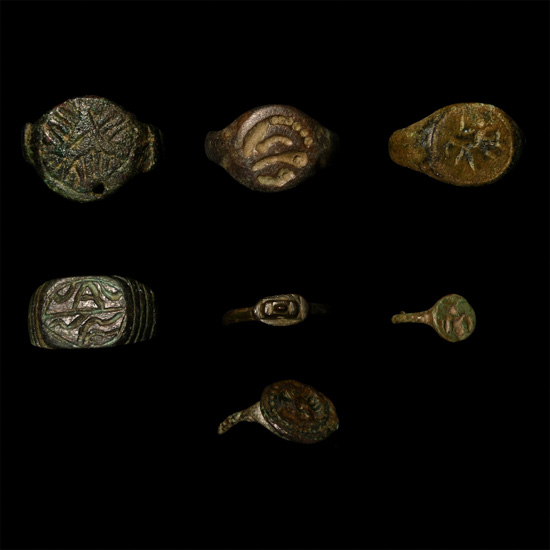
Celtic to Medieval Bronze Ring Collection
1st century B.C.-16th century A.D.Sold for (Inc. bp): £117
Comprising seven rings with decorative bezels, one with a broken hoop. 26.3 grams total, 14-23 mm
Acquired on the UK and EU art market before 2000. From the private collection of a Surrey, UK, gentleman.
Similar cast bronze rings with images of stylised animals and chevrons or other geometric patterns were found in the Necropolis of Zabran, Zemun, and dated 10th-15th century A.D. These rings were often decorated with stylised images of animals and geometric patterns. -
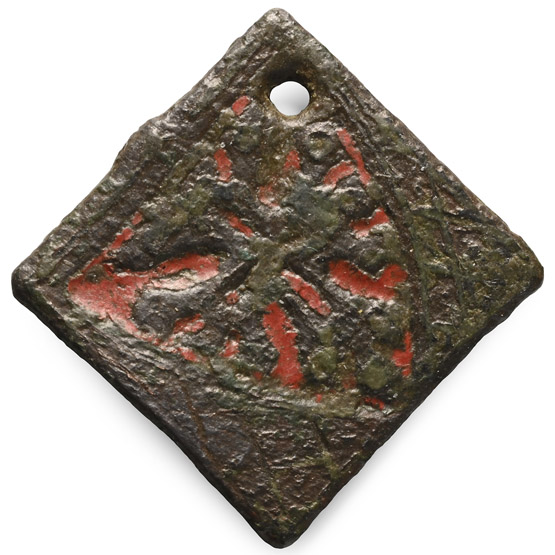
Medieval Knight's Bronze Heraldic Horse Harness Mount
1300-1400 A.D.Sold for (Inc. bp): £65
Rectangular in form with a circular hole in its top right corner, decorated with a heater shield containing a two-strand cross bottony terminals, set within a red enamel field; diagonal hatching in the two outer angles. 5.74 grams, 21 mm
Found Crowmarsh, South Oxfordshire, UK. Accompanied by a copy of the British Museum's Portable Antiquities Scheme (PAS) report no.SUR-CCD479.
