
Loading, please wait...
LOT 1921
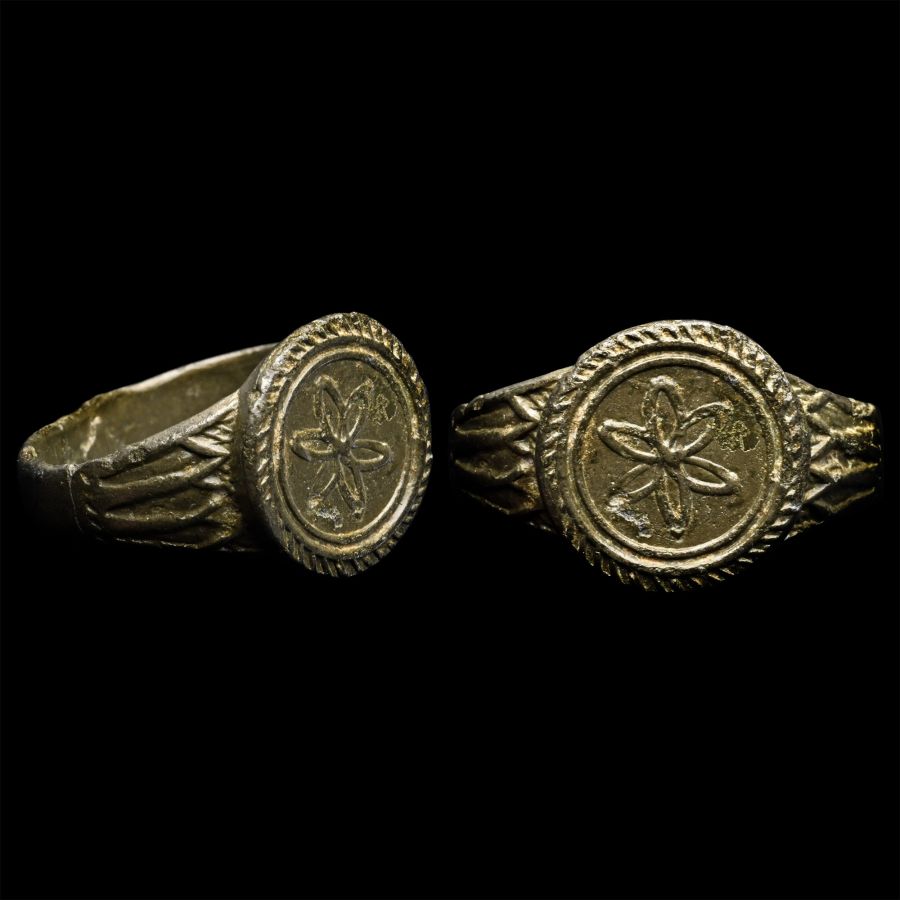
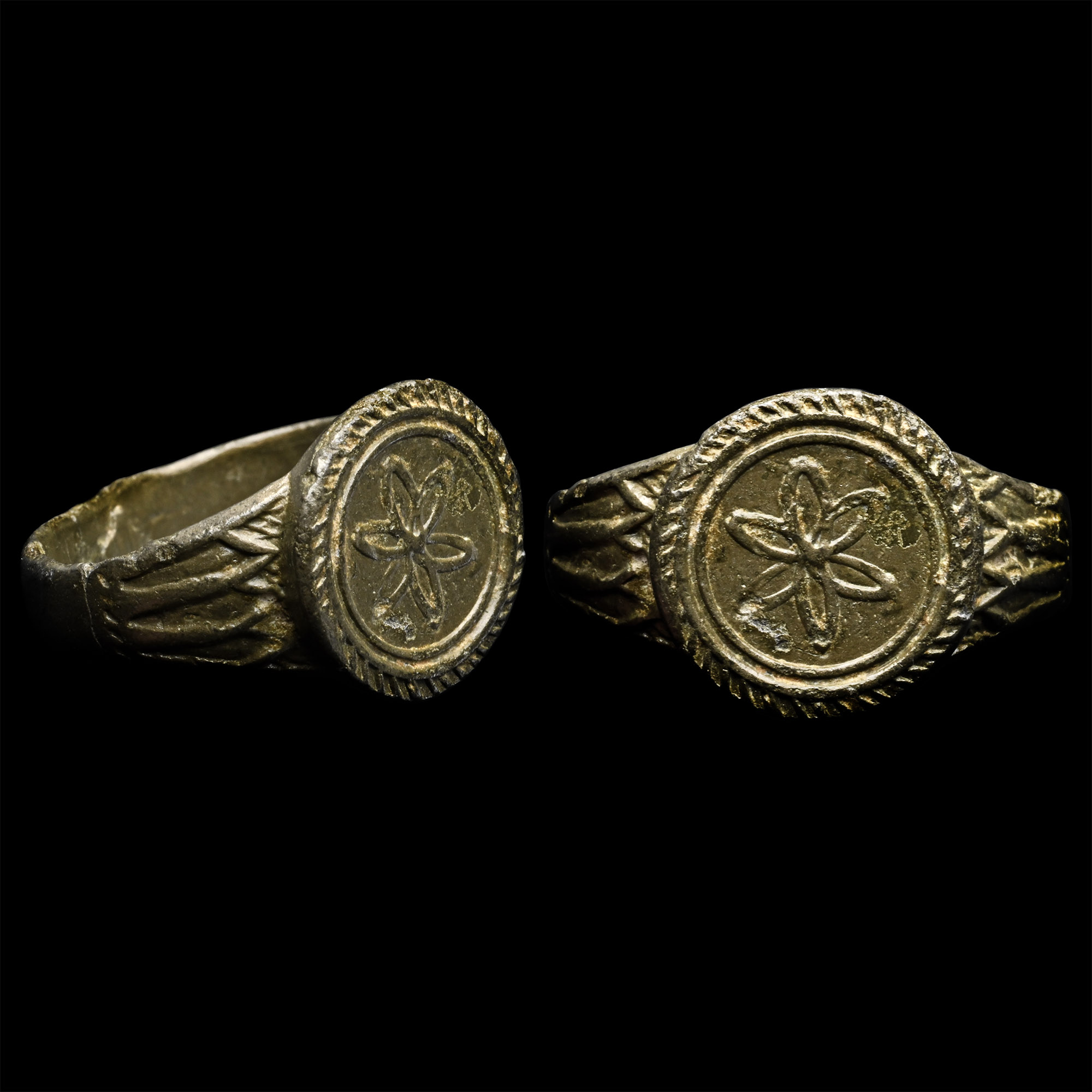
Medieval Bronze Ring with Petalled Flower
15TH-16TH CENTURY A.D.
7/8 in. (4.84 grams, 23.07 mm overall, 20.50 x 17.45 mm internal diameter (approximate size British P, USA 7 1/2, Europe 16.23, Japan 15)).
With a wide hoop expanding towards the decorated shoulders, a round bezel with ropework border and a central six-petalled flower. [No Reserve]
ProvenanceEx German art market, 2000s.
Acquired from an EU collector living in London.
From the collection of a Surrey, UK, gentleman.
TimeLine Auctions follows a vetting process to ensure the authenticity and legality of all items, reinforcing our commitment to integrity and responsible trading. Each antiquity, antique, and coin lot undergoes thorough examination by a vetting committee of at least ten external specialists, professional trade association members, scientists, and archaeologists: Our Vetting Process
AUCTIONS:
TimeLine is a leading auction house specialising in antiquities, ancient art, collectables, natural history, coins, medals, and books. Our auctions offer museums, collectors, historians, and enthusiasts the opportunity to acquire unique and historically significant pieces.
-
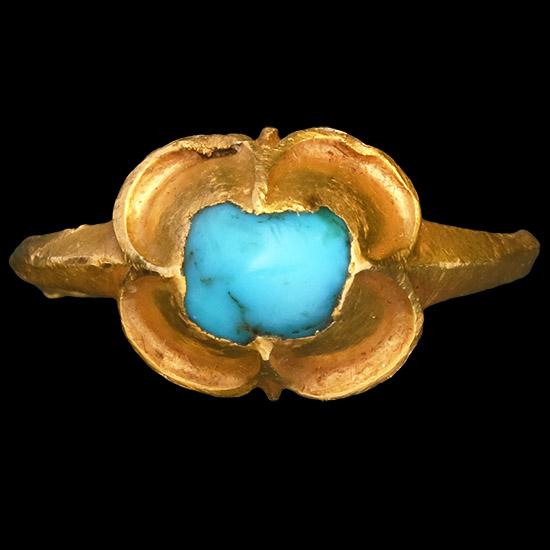
Medieval Gold Ring with Turquoise
1200-1500 A.D.Sold for (Inc. bp): £3,120
Comprising a slender hoop with a high pie-crust bezel with a cabochon turquoise within a rub-over setting. 3.46 grams, 22.77 mm overall, 16.01 mm internal diameter (approximate size British J, USA 4 3/4, Europe 8.69, Japan 8)
Acquired on the European art market. This lot has been checked against the Interpol Database of stolen works of art and is accompanied by search certificate number no.13328-257948.
This form of decorative ring with central stone setting is relatively common in the medieval period, when a focus on gemstones over metalwork became increasingly common. Several rings of this type are known and appear to have been popular in the 15th century. -
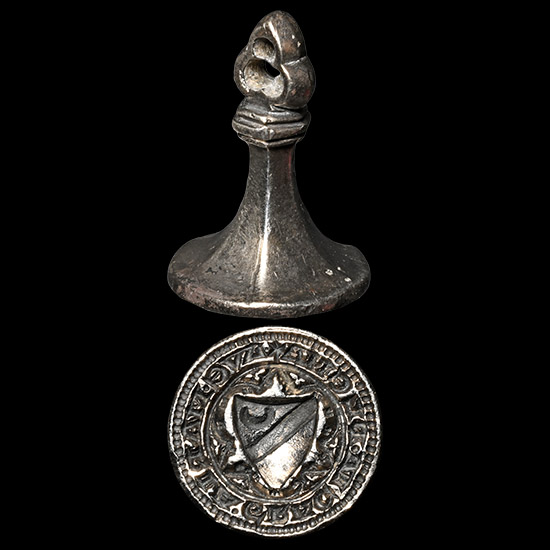
Medieval de Blanchfort or de Molay Family Personal Silver Heraldic Seal Matrix
Circa 1400-1540 A.D.Sold for (Inc. bp): £1,495
With a hexagonal-section facetted handle tapering to a collar of three ridges and openwork trefoil terminal; the face of the matrix with incised heater shield and heraldic arms: a bend and crescent top right; within a trefoil arched tressure a Latin inscription: ' * AVE MARIA GRACIA PLENA' meaning: 'Hail Mary, full of grace'; possibly the arms of the de Blanchfort or de Molay family. 12.41 grams, 27 mm high
Found whilst searching with a metal detector near Charlton Marshall, North Dorset, on 16 February 2022 by John Earley; recorded as Treasure with Treasure case tracking no.2022T500, and subsequently disclaimed by the Crown. Accompanied by a copy of the British Museum's Portable Antiquities Scheme (PAS) report no.DOR-771829. Accompanied by a copy of the report on a find of potential Treasure for H M Coroner from Charlton Marshall, Dorset. Accompanied by a copy of a letter from the British Museum informing the finder that the Crown's interest in the find has been disclaimed.
The basic heraldic design (the arms) comprises just a bend (diagonal stripe). The crescent is a mark of cadency, denoting the second son i.e. the younger brother of the heir apparent. The basic 'bend' motif appears in many heraldic designs, such as the arms of the de Blanchfort or de Molay families, amongst others. The heraldry of the town of Chaussin (Jura, France) is similar (bend and crescent) but these arms are not known to have been borne by a family. -
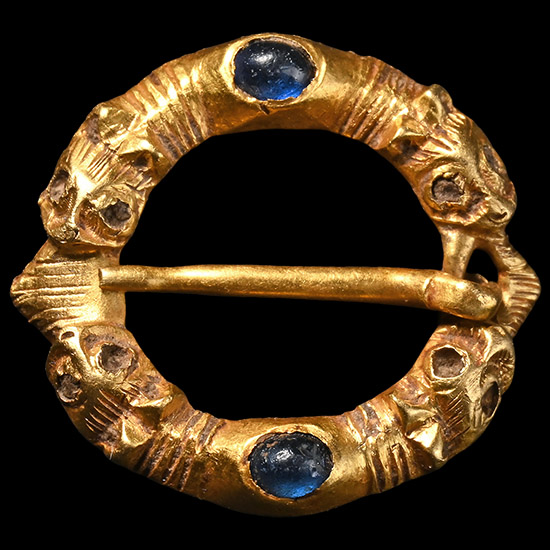
Medieval Gold Ring Brooch with Beast Heads
13th century A.D.Sold for (Inc. bp): £1,560
Annular brooch decorated with leopard heads, each originally with gem-set eyes, with two blue glass cabochons on each side of the pin. 1.18 grams, 14 mm
From the collection of Gordon Bailey, Essex, UK; formed since 1968.
An annular brooch is a type of brooch that is circular in shape, forming a complete ring. They were worn by both men and women of all social classes. The word 'annular' comes from the Latin word 'annulus', meaning ring. These brooches were popular in medieval Europe, particularly from the 13th to 15th centuries, and were used to fasten clothing such as tunics and cloaks.
