
Loading, please wait...
LOT 1843
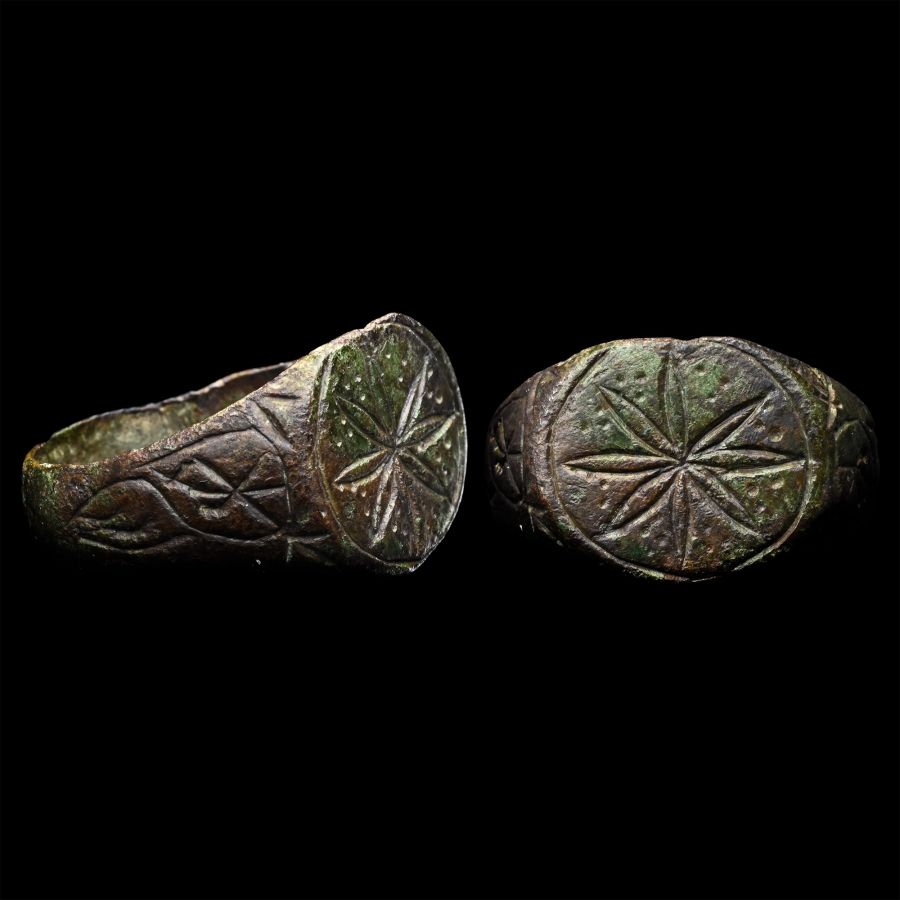
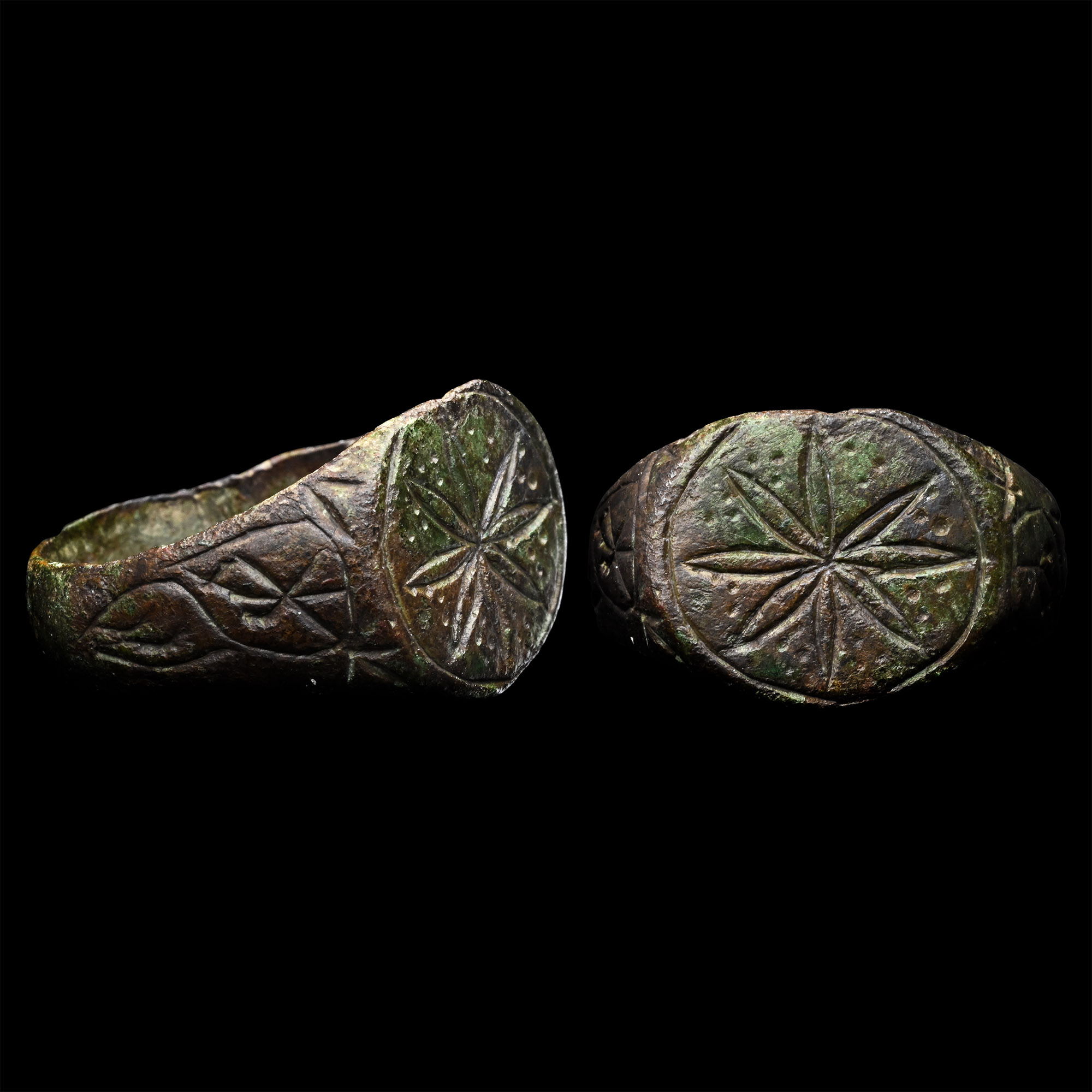
Medieval Bronze Ring with Petalled Flower
12TH-14TH CENTURY A.D.
7/8 in. (5.92 grams, 21.49 mm overall, 19.25 mm internal diameter (approximate size British P, USA 7 1/2, Europe 16.23, Japan 15)).
With a wide hoop and an oval bezel with an eight-petalled flower on a pointillé-decorated field. [No Reserve]
ProvenanceEx German art market, 2000s.
Acquired from an EU collector living in London.
From the collection of a Surrey, UK, gentleman.
TimeLine Auctions follows a vetting process to ensure the authenticity and legality of all items, reinforcing our commitment to integrity and responsible trading. Each antiquity, antique, and coin lot undergoes thorough examination by a vetting committee of at least ten external specialists, professional trade association members, scientists, and archaeologists: Our Vetting Process
AUCTIONS:
TimeLine is a leading auction house specialising in antiquities, ancient art, collectables, natural history, coins, medals, and books. Our auctions offer museums, collectors, historians, and enthusiasts the opportunity to acquire unique and historically significant pieces.
-
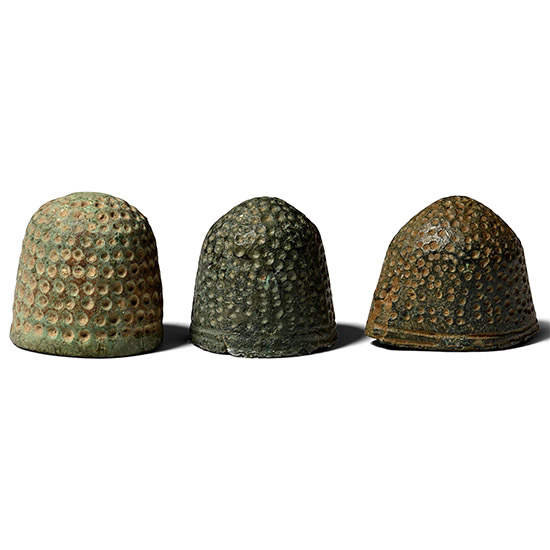
Medieval Bronze Beehive Thimble Collection
England, 14th-15th century A.D.Sold for (Inc. bp): £39
Group of three, each with bands of impressed pointillé texture to the domed upper face and sidewall. 23.6 grams total, 19-23 mm
Found UK. From the collection of a Bedfordshire, UK, lady. -
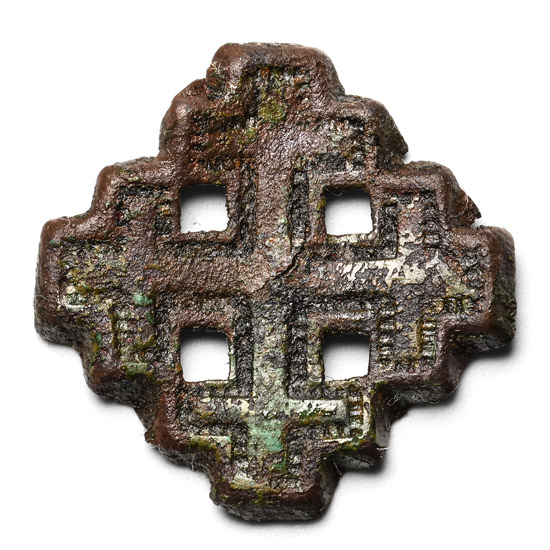
Medieval Bronze Knight's Holy Sepulchre Badge
Circa 13th-14th century A.D.Sold for (Inc. bp): £78
Formed as a cross-crosslet, the symbol of the Knights of the Holy Sepulchre, with a punched-point border. 0.72 grams, 20 mm
Found North Yorkshire, UK.
The 'Equestrian Order of the Holy Sepulchre of Jerusalem' was an order of knighthood under the protection of the Pope, formed around 1099 AD by Duke Godfrey of Bouillon, the leader of the First Crusade. It was established for the protection of pilgrims travelling to the Holy Land and was recognised by a Papal Bull in about 1113 AD. -
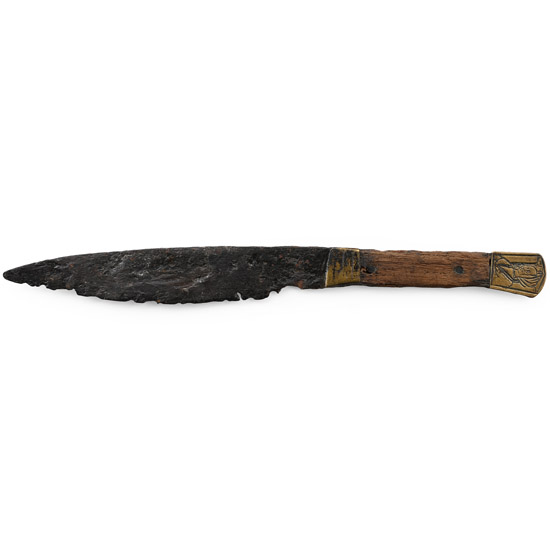
Medieval Iron Knife with Ave Maria
Circa 15th century A.D.Sold for (Inc. bp): £260
Narrow single-edged blade with integral bolster, flared scale-tang hilt with integral finial; brass finial with female bust to one face, 'AVE' to the other. 20 grams, 16.5 cm
Ex Cambridgeshire, UK, collection, 1990s.
These knives were imported from Flanders but were also made in England by immigrant Flemish craftsmen.
