
Loading, please wait...
LOT 1936
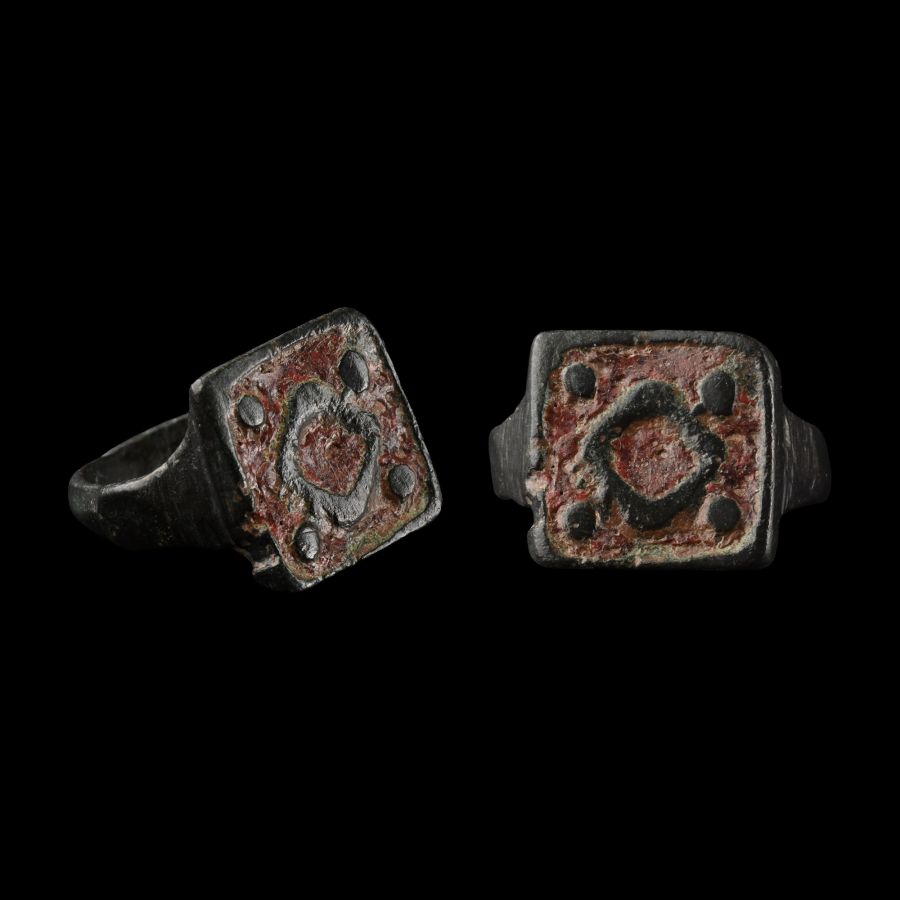
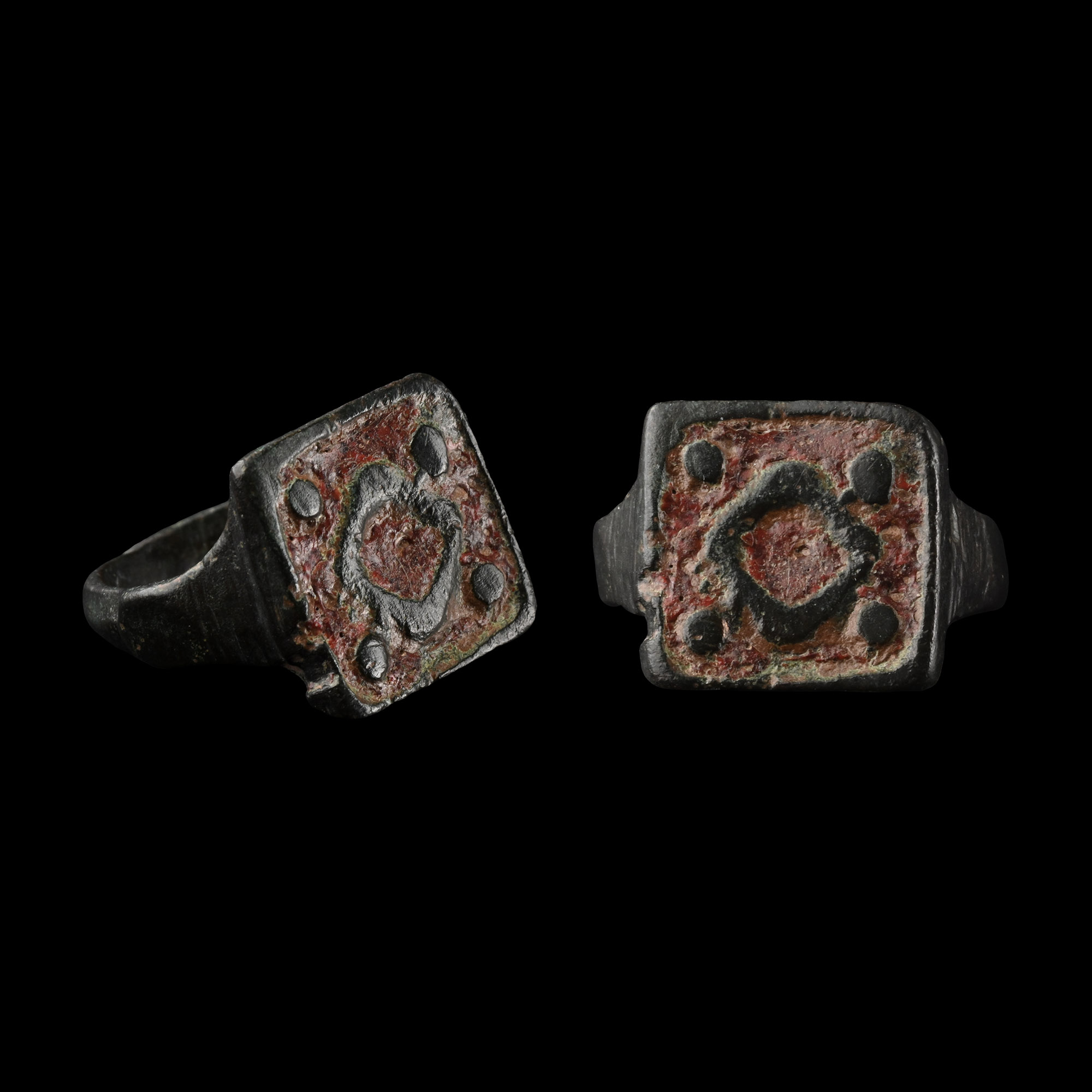
Medieval Bronze Ring with Lozenge and Pellets
14TH-16TH CENTURY A.D.
3/4 in. (5.54 grams, 21.83 mm overall, 17.54 mm internal diameter (approximate size British N, USA 6 1/2, Europe 13.72, Japan 13)).
With bell-shaped panels to the shoulders, square bezel with recess to accept enamel fill, reserved lozenge and pellets. [No Reserve]
ProvenanceEx German art market, 2000s.
Acquired from an EU collector living in London.
From the collection of a Surrey, UK, gentleman.
This lot is accompanied by an illustrated lot declaration signed by the Head of the Antiquities Department, Dr Raffaele D'Amato.
TimeLine Auctions follows a vetting process to ensure the authenticity and legality of all items, reinforcing our commitment to integrity and responsible trading. Each antiquity, antique, and coin lot undergoes thorough examination by a vetting committee of at least ten external specialists, professional trade association members, scientists, and archaeologists: Our Vetting Process
AUCTIONS:
TimeLine is a leading auction house specialising in antiquities, ancient art, collectables, natural history, coins, medals, and books. Our auctions offer museums, collectors, historians, and enthusiasts the opportunity to acquire unique and historically significant pieces.
-
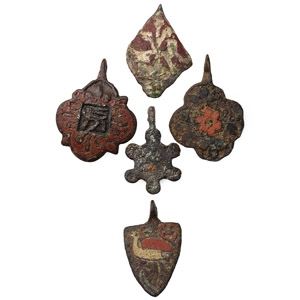
Medieval Knight's Bronze Heraldic Horse Harness Pendant Group
14th-15th century A.D.Sold for (Inc. bp): £182
Including heater-shaped, lozengiform and other types with low-relief reserved enamel heraldic motifs. 39 grams total, 32-39 mm
Found East Anglia, UK. This lot is accompanied by an illustrated lot declaration signed by the Head of the Antiquities Department, Dr Raffaele D'Amato. -
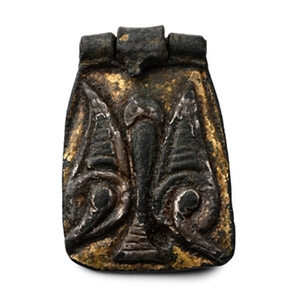
Medieval Gilt Bronze Pendant
Central Europe, 12th-14th century A.D.Sold for (Inc. bp): £46
Trapezoidal in plan with hinge knuckles to the narrow end, high-relief design of two birds' wings in plan flanking a vertical bar; possibly a horse harness mount. 11.42 grams, 34 mm
Ex European collection, 1980s. From the collection of a London antiquarian. This lot is accompanied by an illustrated lot declaration signed by the Head of the Antiquities Department, Dr Raffaele D'Amato.
The piece is gilded to both faces, which is unusual and makes it likely that it was intended to be seen from both sides. -
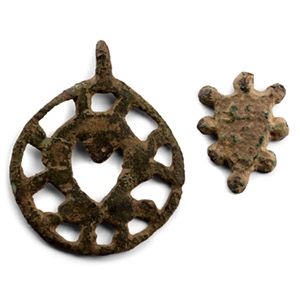
Medieval Knight's Enamelled Bronze Pendant Group
14th-15th century A.D.Sold for (Inc. bp): £13
Comprising: disc with suspension lug, openwork border and heater-shaped central void; heater-shaped appliqué with radiating lobes to the rim. 6.51 grams total, 21-38 mm
Found Suffolk, UK. This lot is accompanied by an illustrated lot declaration signed by the Head of the Antiquities Department, Dr Raffaele D'Amato.
