
Loading, please wait...
LOT 1836
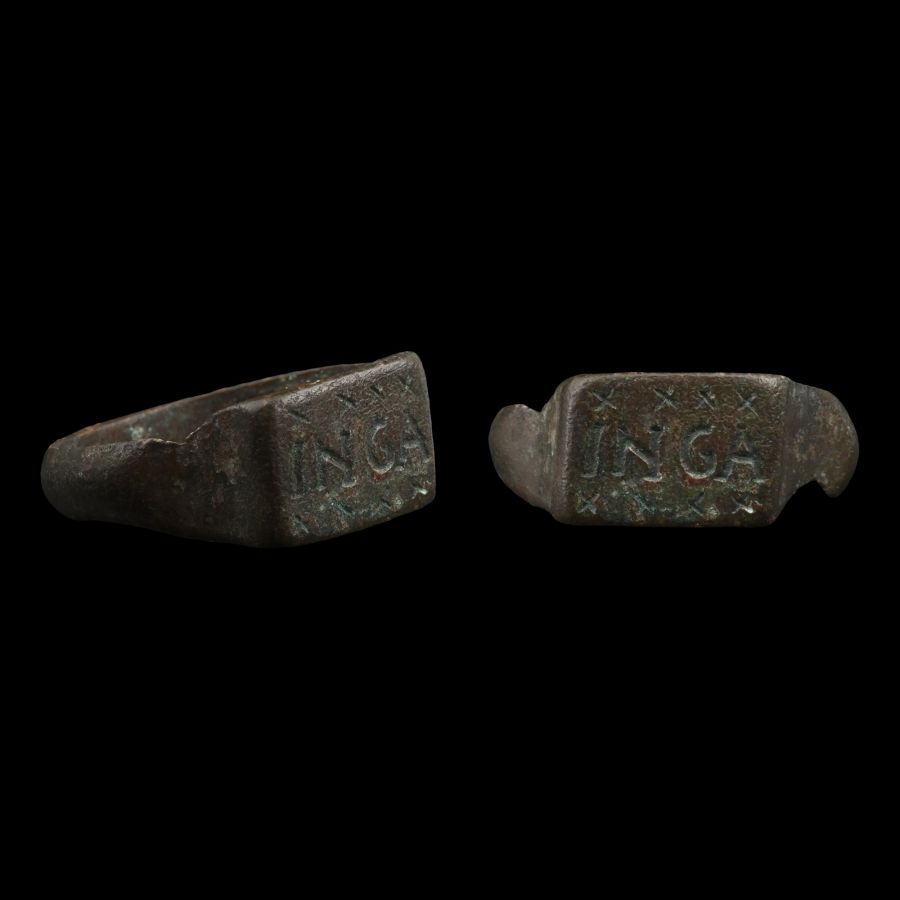
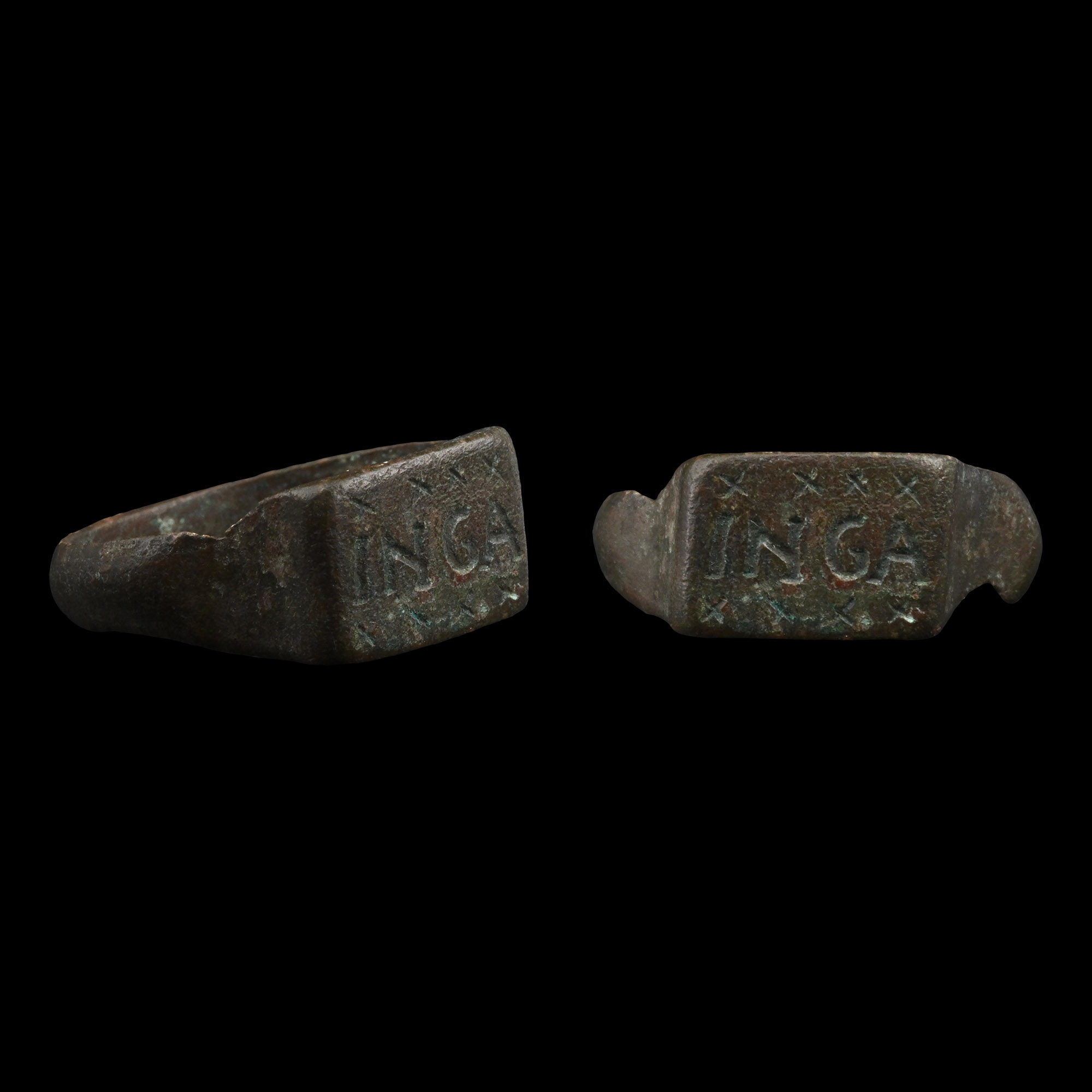
Medieval Bronze Ring with INGA
14TH-16TH CENTURY A.D.
3/4 in. (3.59 grams, 20.84 mm overall, 18.44 mm internal diameter (approximate size British N, USA 6 1/2, Europe 13.72, Japan 13)).
With stepped shoulders, rectangular bezel with incised 'INGA' legend between rows of saltires. [No Reserve]
ProvenanceEx German art market, 2000s.
Acquired from an EU collector living in London.
From the collection of a Surrey, UK, gentleman.
TimeLine Auctions follows a vetting process to ensure the authenticity and legality of all items, reinforcing our commitment to integrity and responsible trading. Each antiquity, antique, and coin lot undergoes thorough examination by a vetting committee of at least ten external specialists, professional trade association members, scientists, and archaeologists: Our Vetting Process
AUCTIONS:
TimeLine is a leading auction house specialising in antiquities, ancient art, collectables, natural history, coins, medals, and books. Our auctions offer museums, collectors, historians, and enthusiasts the opportunity to acquire unique and historically significant pieces.
-
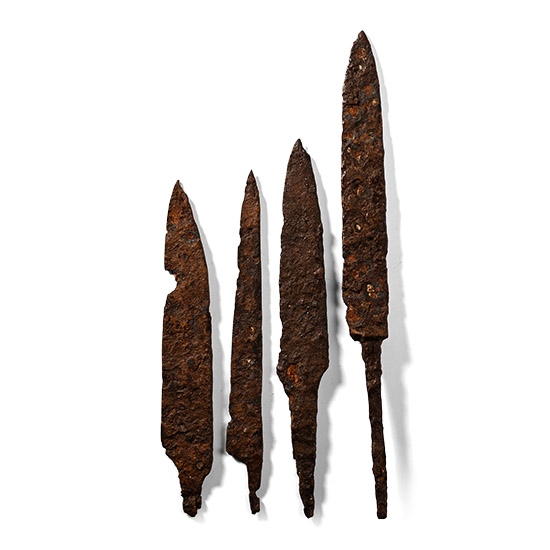
Medieval Iron Knife Blade Collection
Circa 12th-15th century A.D.Sold for (Inc. bp): £20
Each a single-edge leaf-shaped blade with whittle tang, one with integral bolster. 84 grams total, 12.6-18.1 cm
Acquired on the UK art market before 2000. Property of an Essex, UK, gentleman. -

Medieval Bronze Ring with Cross
15th-16th century A.D.Sold for (Inc. bp): £65
Comprising a thick hoop with stud to the underside, stepped shoulders, tiered bezel with reserved cross on a hatched field. 10.54 grams, 27.45 mm overall, 18.89 mm internal diameter (approximate size British R 1/2, USA 8 3/4, Europe 19.38, Japan 18)
Ex German art market, 2000s. Acquired from an EU collector living in London. From the collection of a Surrey, UK, gentleman. -
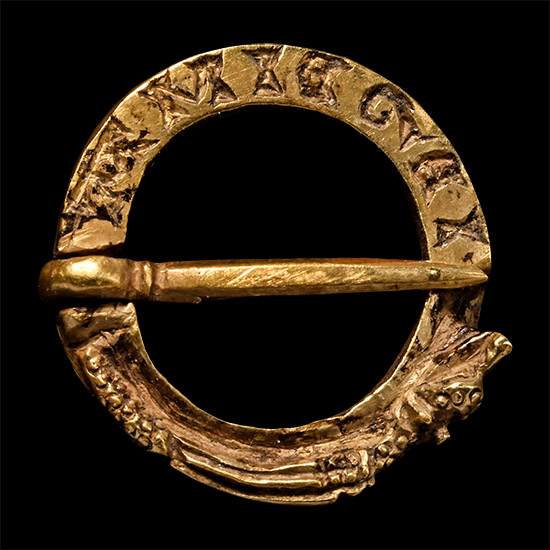
Medieval Gold Dragon Ring Brooch with Inscription
Circa 14th century A.D.Sold for (Inc. bp): £1,040
Annular type with serpent or dragon modelled in the lower segment and legend in Lombardic capitals 'AMIE GEI' with the second word abbreviated for 'GEINT(E)'. 1.13 grams, 11 mm
From a UK private collection since the 1970s.
'Amie geint(e)' means ‘beautiful lover (fem.)’, or ‘noble lover’ (gei as a spelling for gai, which, if permissible, would yield an unabbreviated inscription meaning ‘happy/cheerful beloved’, has not been noted – there are no spellings with -e- recorded).
