
Loading, please wait...
LOT 1860
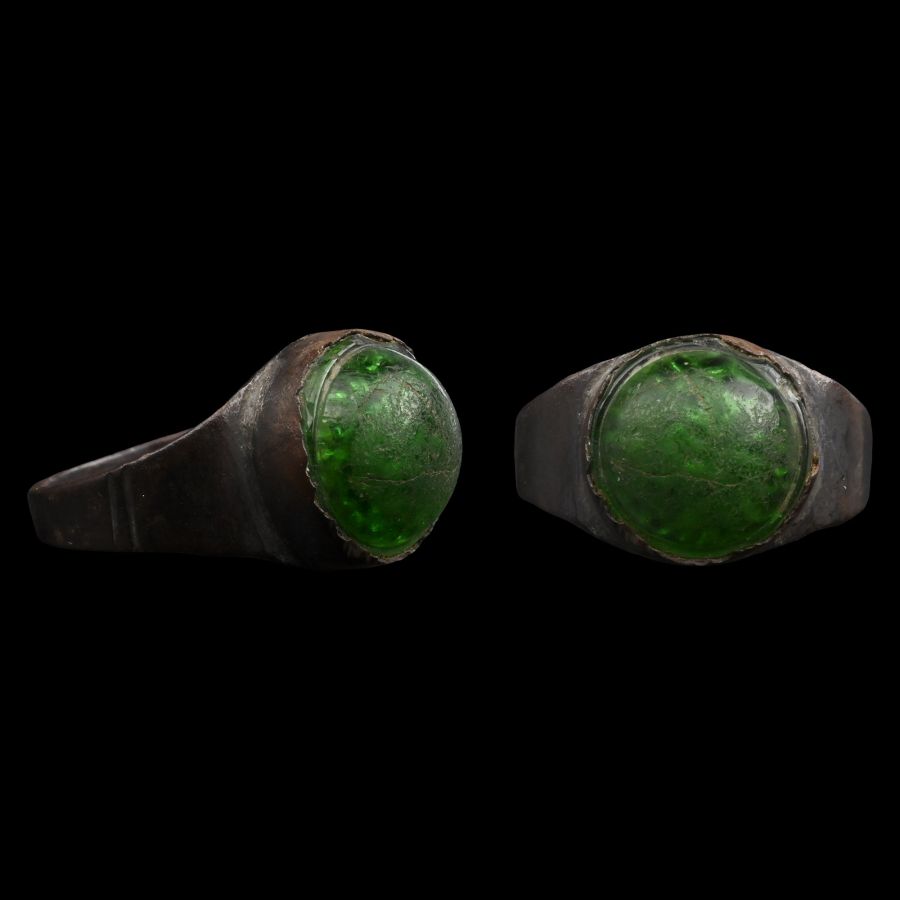
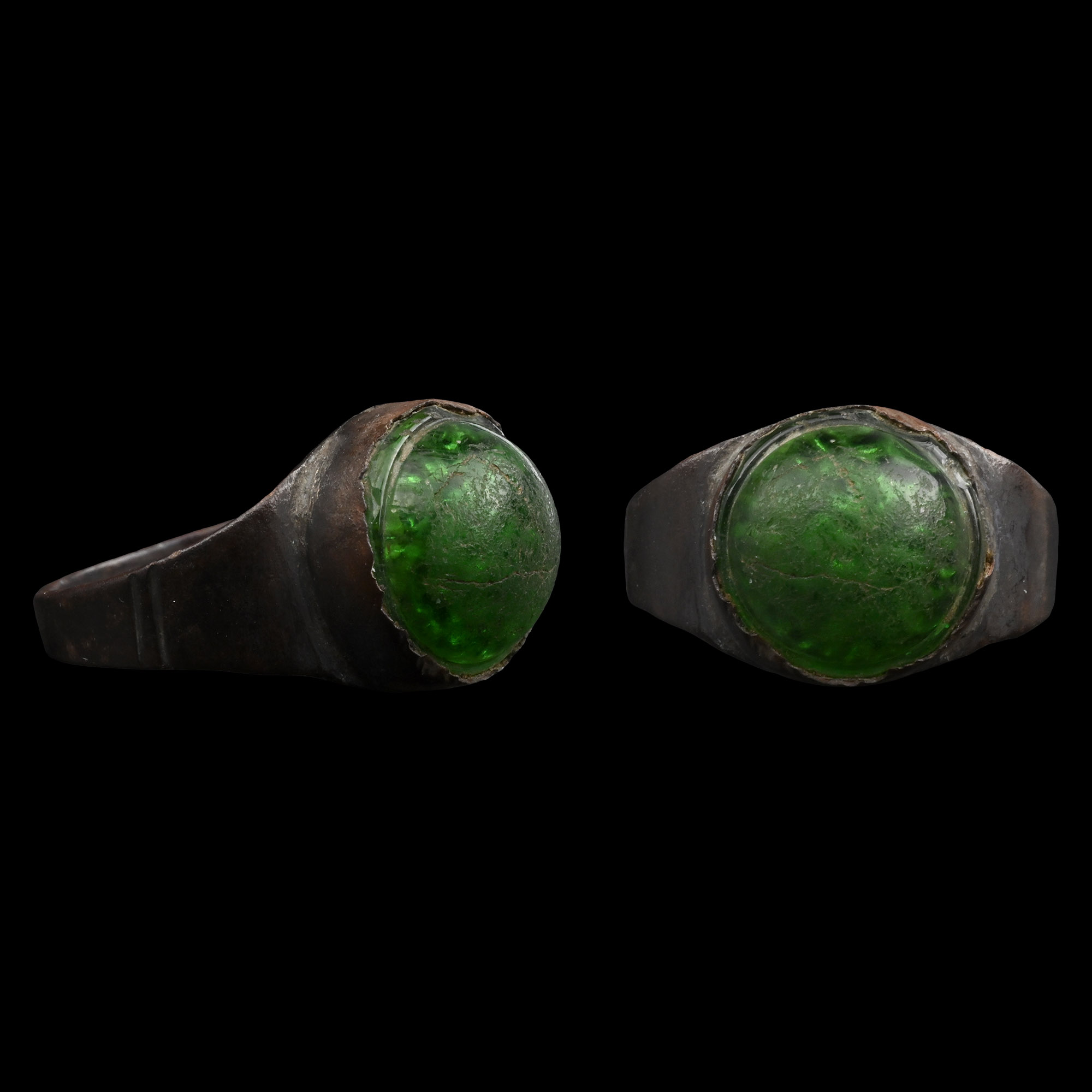
Medieval Bronze Ring with Green Cabochon
15TH-16TH CENTURY A.D.
1 in. (4.25 grams, 26.90 mm overall, 19.04 mm internal diameter (approximate size British P 1/2, USA 7 3/4, Europe 16.86, Japan 16)).
With transverse bars to the shoulders, cell to the bezel with inset green glass cabochon. [No Reserve]
ProvenanceEx German art market, 2000s.
Acquired from an EU collector living in London.
From the collection of a Surrey, UK, gentleman.
TimeLine Auctions follows a vetting process to ensure the authenticity and legality of all items, reinforcing our commitment to integrity and responsible trading. Each antiquity, antique, and coin lot undergoes thorough examination by a vetting committee of at least ten external specialists, professional trade association members, scientists, and archaeologists: Our Vetting Process
AUCTIONS:
TimeLine is a leading auction house specialising in antiquities, ancient art, collectables, natural history, coins, medals, and books. Our auctions offer museums, collectors, historians, and enthusiasts the opportunity to acquire unique and historically significant pieces.
-
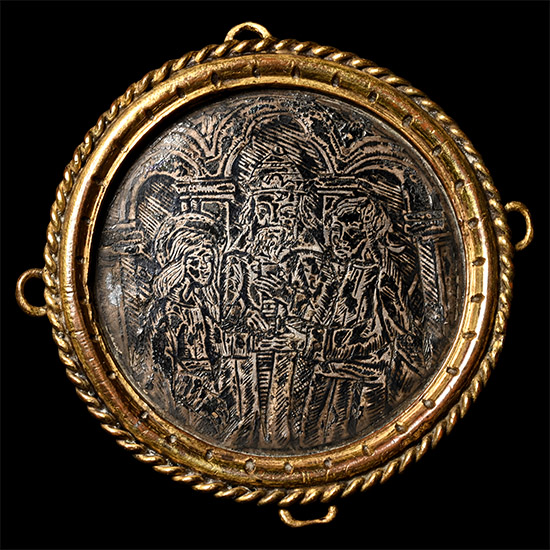
Medieval Gilt and Niello Hat Badge with Marriage of the Virgin
Italy, circa 1500 A.D.Sold for (Inc. bp): £1,430
Niello plaque depicting the marriage ceremony between Mary and Joseph, set in a gilt brass mount with a rope twist border, four loops for attachment. 10.8 grams, 46 mm
Private collection, Europe. Acquired on the Belgian art market.
Niello is a black mixture, usually of sulphur, copper, silver and lead. It is used as an inlay on engraved or etched metal, especially silver. It is added as a powder or paste, then fired until it melts or at least softens and flows or is pushed into the engraved lines in the metal. Men began wearing hat ornaments on their caps from the late fifteenth century, which could be either purely decorative or symbolic. Symbolic examples are traditionally known as enseignes, as they conveyed the wearer’s personal intent or a visible message. These jewels trace their origins to the medieval pilgrim badge, usually mass-produced in base metal. It is believed that this fashion shift to a stylish male accessory began when French king Charles VIII entered Naples in February 1495, wearing a gold circular jewel on his cap, while his men had similar, though not gold, jewels on their caps or sleeves. Italians quickly adopted this trend, which then spread to most European courts. However, this fashion declined in the late sixteenth to early seventeenth century, giving way to the popularity of aigrettes. -
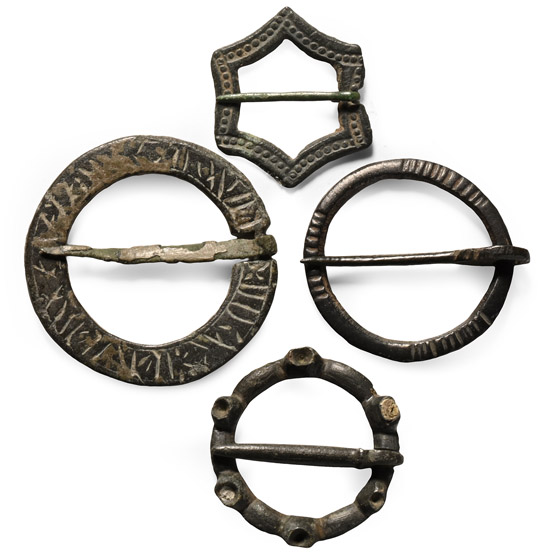
Medieval Bronze Ring Brooch Collection
14th-15th century A.D.Sold for (Inc. bp): £52
Including circular type with six cells to the hoop, hexagram and other types, one with the inscription 'IhESVS Nazarenvs' [Jesus of Nazareth]. 17.39 grams total, 24-33 mm
Found Norfolk, UK. -
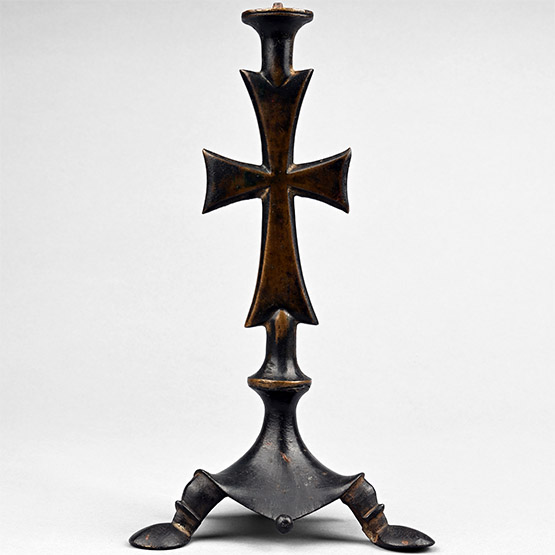
Medieval Bronze Altar Cross on Tripod Base
10th-11th century A.D. or earlierEstimate: £3,000 - 4,000 (‡+bp*)
Opening Bid: £1,500
Comprising an expanding-arm cross supporting a short neck with disc finial above; below, a short shank with trumpet-shaped baluster and triangular base, scooped in profile with segmented radiating legs and domed feet; a knop placed between each pair of legs. 669 grams, 23 cm
with Juliette Noujaim, Arqueologie, Islamic Art, Le Louvre des Antiquaires, Paris. Acquired by the present owner from the above in 2005. This lot has been checked against the Interpol Database of stolen works of art and is accompanied by a search certificate number no.12290-222317.
