
Loading, please wait...
LOT 1947
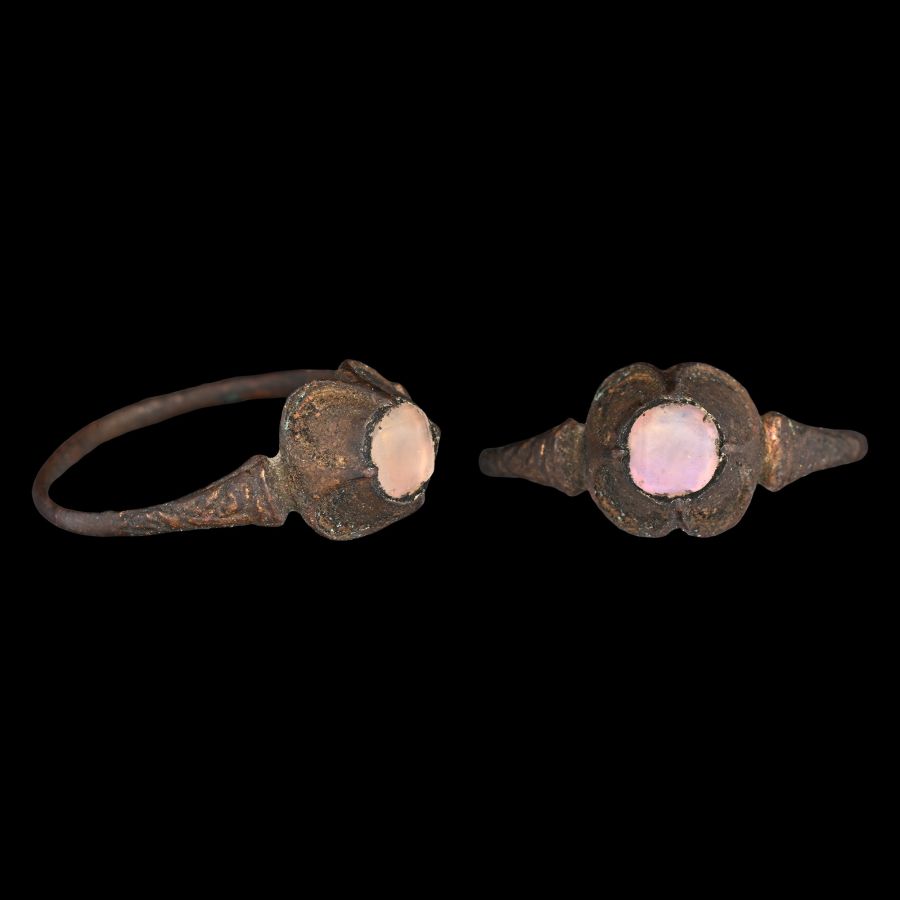
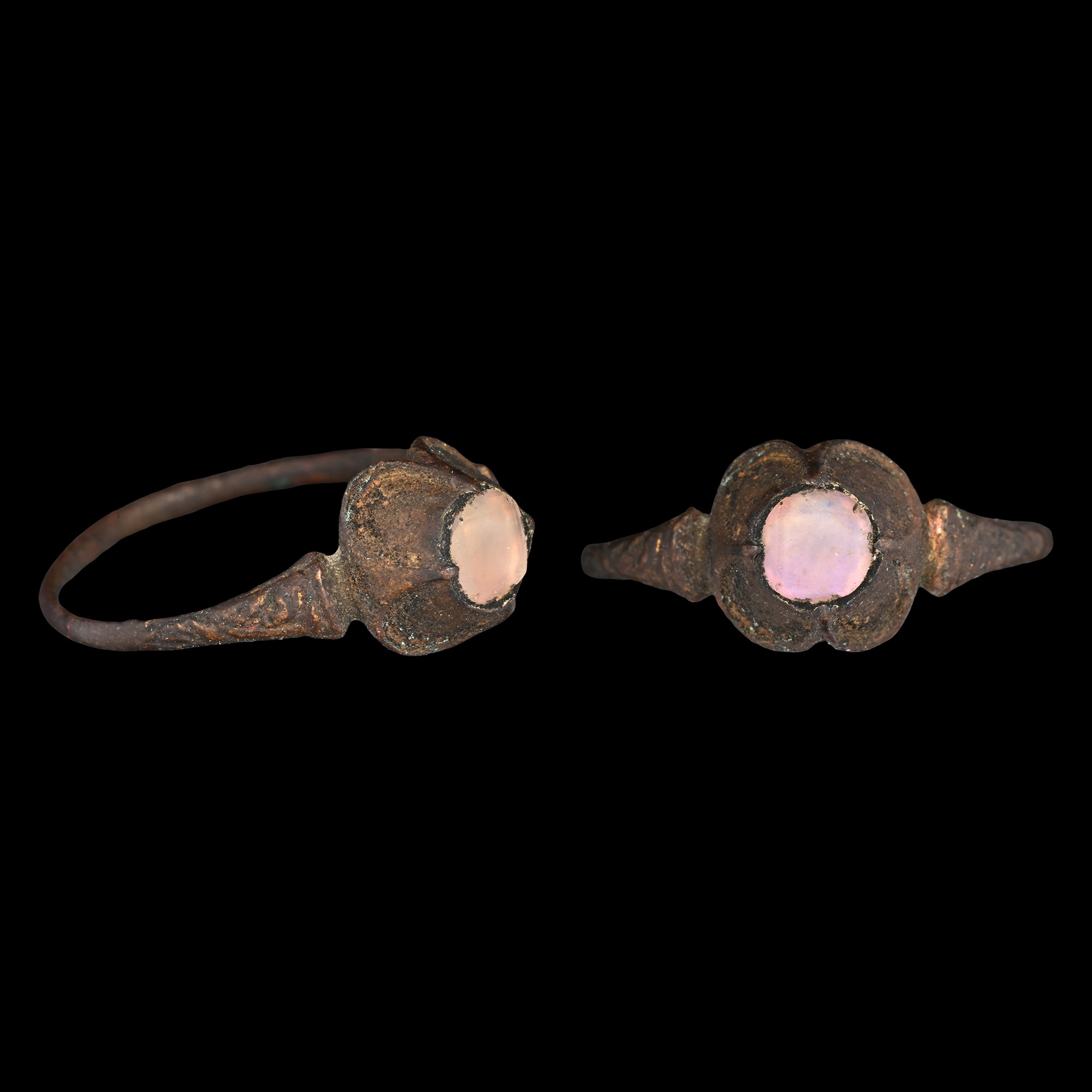
Medieval Bronze Ring with Gem
CIRCA 14TH CENTURY A.D.
1 in. (1.64 grams, 23.82 mm overall, 17.73 mm internal diameter (approximate size British N 1/2, USA 6 3/4, Europe 14.35, Japan 13)).
Featuring a narrow hoop and expanding shoulders, a conical bezel with four petals, set with a pale purple glass gem. [No Reserve]
ProvenanceFrom the private collection of a European gentleman (1942-2024), formed since the 1970s.
CONDITIONTimeLine Auctions follows a vetting process to ensure the authenticity and legality of all items, reinforcing our commitment to integrity and responsible trading. Each antiquity, antique, and coin lot undergoes thorough examination by a vetting committee of at least ten external specialists, professional trade association members, scientists, and archaeologists: Our Vetting Process
AUCTIONS:
TimeLine is a leading auction house specialising in antiquities, ancient art, collectables, natural history, coins, medals, and books. Our auctions offer museums, collectors, historians, and enthusiasts the opportunity to acquire unique and historically significant pieces.
-
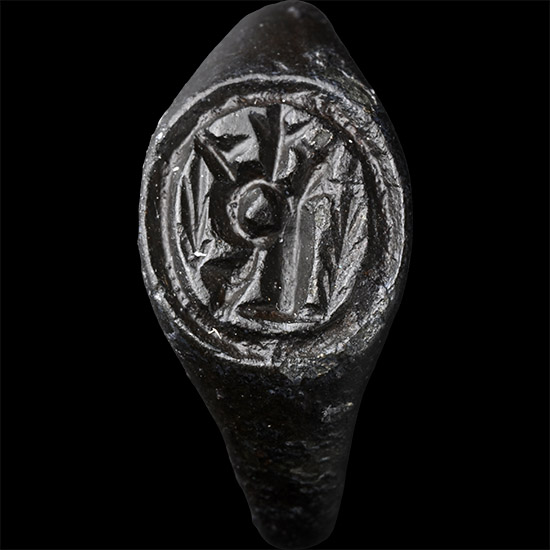
Medieval Bronze Ring with Crowned R
England, 15th-16th century A.D.Sold for (Inc. bp): £98
With D-section hoop and ellipsoid plaque; incuse motif of capital 'R' and crown above; supplied with an impression. 8.10 grams, 26.03 mm overall, 20.48 mm internal diameter (approximate size British V, USA 10 1/2, Europe 23.77, Japan 22)
Found Melchbourne, Bedfordshire, UK. Recorded with UKDFD no.34344.
The 'crowned R' motif appears on pilgrim badges in the 14th century, where it is often assumed to refer to King Edward the Confessor, or possibly Regina coeli 'Mary, Queen of Heaven'. -
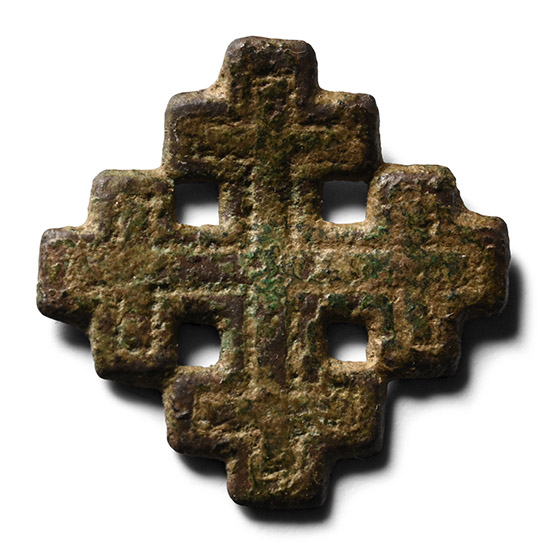
Medieval Bronze Knight's Holy Sepulchre Badge
Circa 13th-14th century A.D.Sold for (Inc. bp): £85
Formed as a cross-crosslet, the symbol of the Knights of the Holy Sepulchre, with a punched-point border. 0.75 grams, 18 mm
Found Suffolk, UK.
The 'Equestrian Order of the Holy Sepulchre of Jerusalem' was an order of knighthood under the protection of the Pope, formed around 1099 AD by Duke Godfrey of Bouillon, the leader of the First Crusade. It was established for the protection of pilgrims travelling to the Holy Land and was recognised by a Papal Bull in about 1113 AD. -
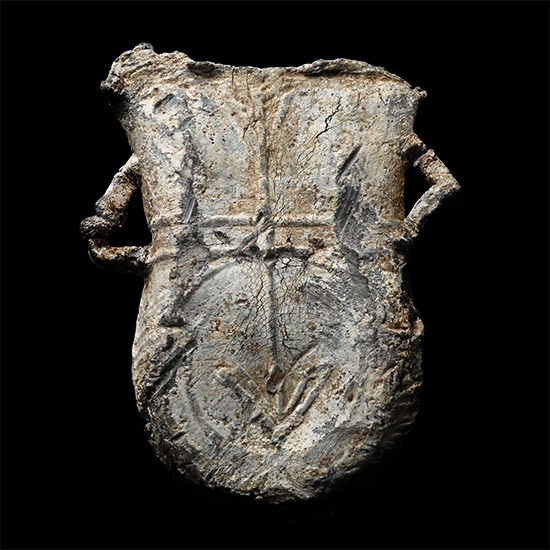
Medieval Lead Walsingham Pilgrim's Holy Water Ampulla
Circa 15th century A.D.Sold for (Inc. bp): £124
With lateral loops and low-profile cross with W to obverse, reverse with a hatched crescent. 31.1 grams, 46 mm
Found Suffolk, UK. Property of a Suffolk, UK, gentleman.
