
Loading, please wait...
LOT 1299
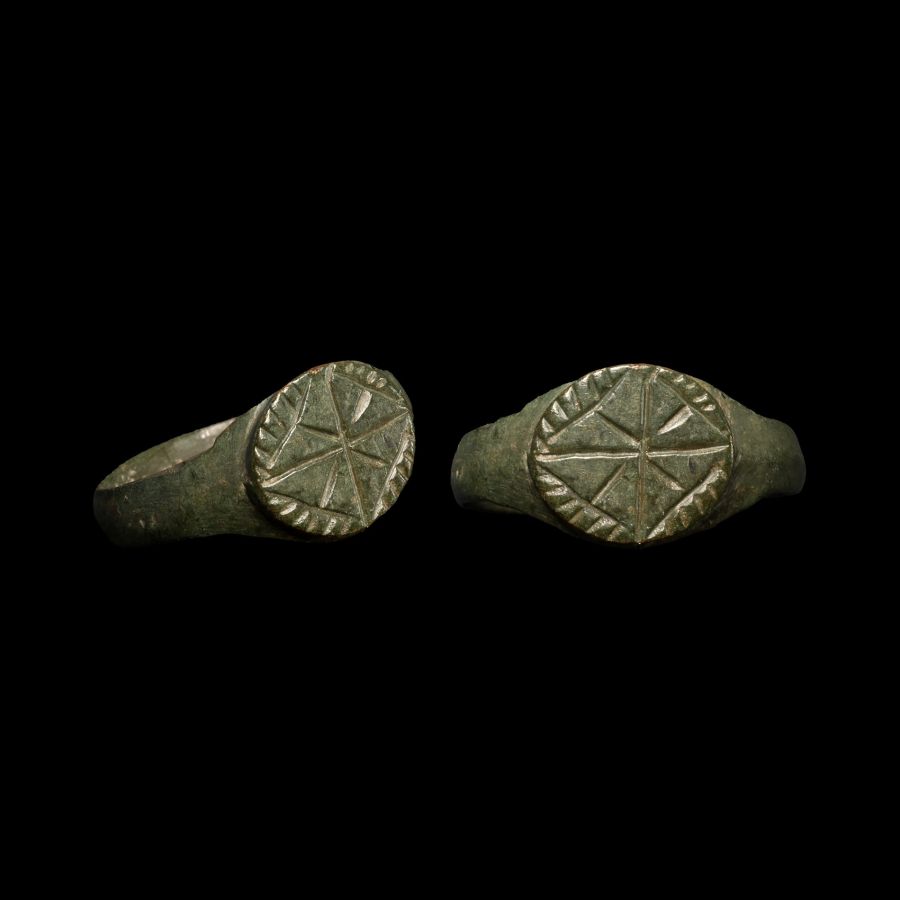
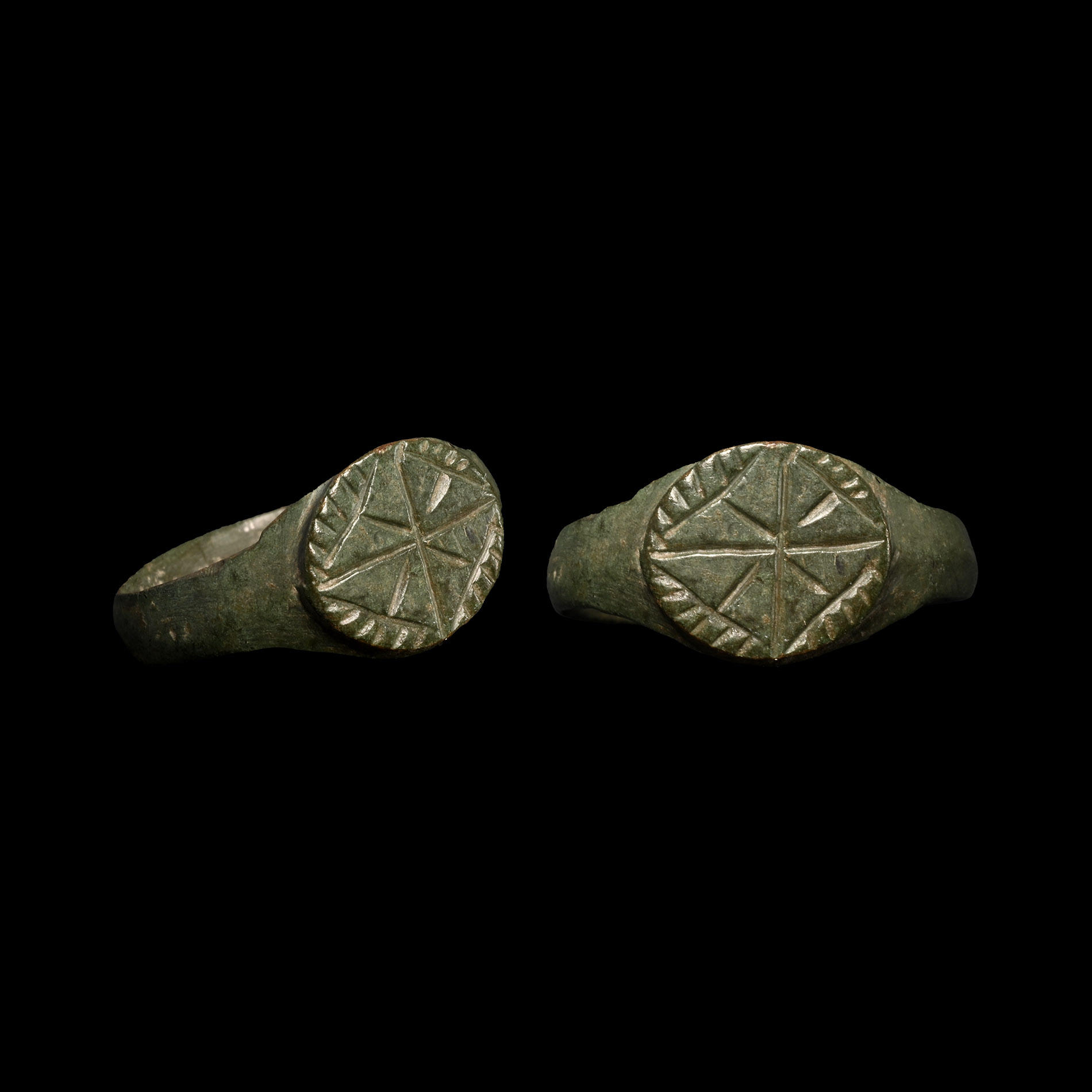
Medieval Bronze Ring with Crosses within Lozenge
14TH-15TH CENTURY A.D.
3/4 in. (3.91 grams, 21.84 mm overall, 18.90 mm internal diameter (approximate size British Q 1/2, USA 8 1/4, Europe 18.12, Japan 17)).
Carinated shoulders, disc bezel with incuse design of a lozenge on a hatched field with cross and saltire within. [No Reserve]
ProvenancePrivate collection formed since the 1940s.
UK art market.
Property of an Essex gentleman.
TimeLine Auctions follows a vetting process to ensure the authenticity and legality of all items, reinforcing our commitment to integrity and responsible trading. Each antiquity, antique, and coin lot undergoes thorough examination by a vetting committee of at least ten external specialists, professional trade association members, scientists, and archaeologists: Our Vetting Process
AUCTIONS:
TimeLine is a leading auction house specialising in antiquities, ancient art, collectables, natural history, coins, medals, and books. Our auctions offer museums, collectors, historians, and enthusiasts the opportunity to acquire unique and historically significant pieces.
-
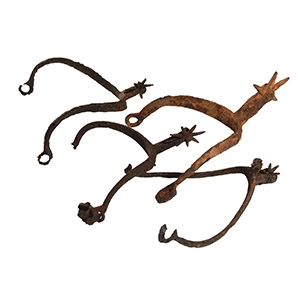
Medieval Iron Rowel Spur Collection
Circa 13th-14th century A.D.Sold for (Inc. bp): £143
Comprising examples of various types, including some retaining the rowel. 217 grams total, 11.5-14.8 cm
Acquired 1990s-early 2000s. East Anglian private collection.
The deep curve of the shoulders, the lack of protrusion above the base of the rowel holder, the short rowel holder and the small diameter rowel are characteristics that point to dating some of this specimens in the 13th century. Kirpichnikov puts these spurs in type V (first half of the 13th-14th century) after a spur depicted on an English tombstone dating to the beginning of the 14th century. -
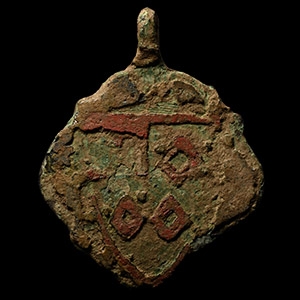
Medieval Knight's Enamelled Bronze 'Borchoven Family' Heraldic Horse Harness Pendant
14th-15th century A.D.Sold for (Inc. bp): £78
On a quatrefoil-shaped shield with pierced loop at the apex, remains of red enamel heater-shaped shield, the upper left quarter with the remains of red enamel, along with three red mascles within the remaining three quarters; possibly descendants of Van den Borchoven, Brab. V.Ad. 6.49 grams, 37.85 mm
Found Norfolk, UK, circa 1990s. -
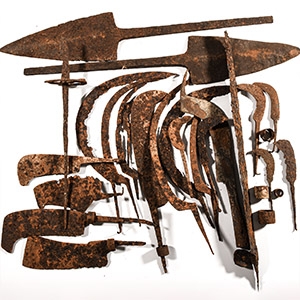
Medieval Iron Artefact Group
Circa 15th-16th century A.D.Sold for (Inc. bp): £182
Group including a sickles, bill-hooks, knives and other tools. 8 kg total, 3-66.5 cm
Acquired 1990s-early 2000s. From an East Anglian private collection.
