
Loading, please wait...
LOT 1940
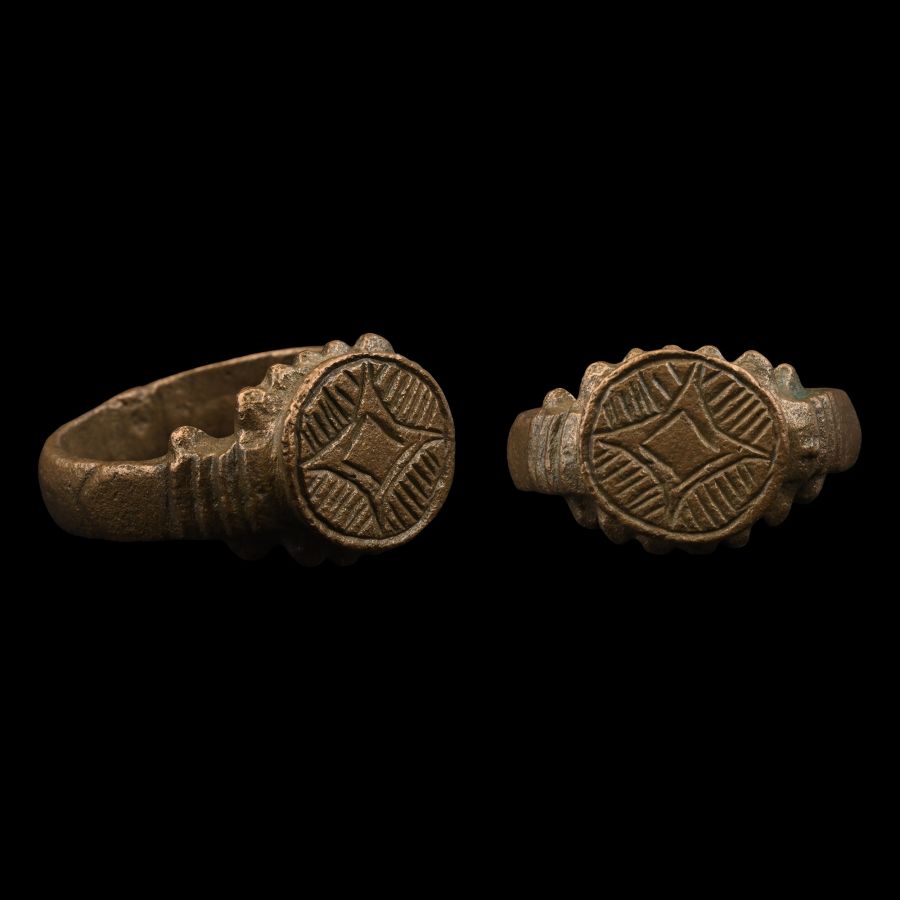
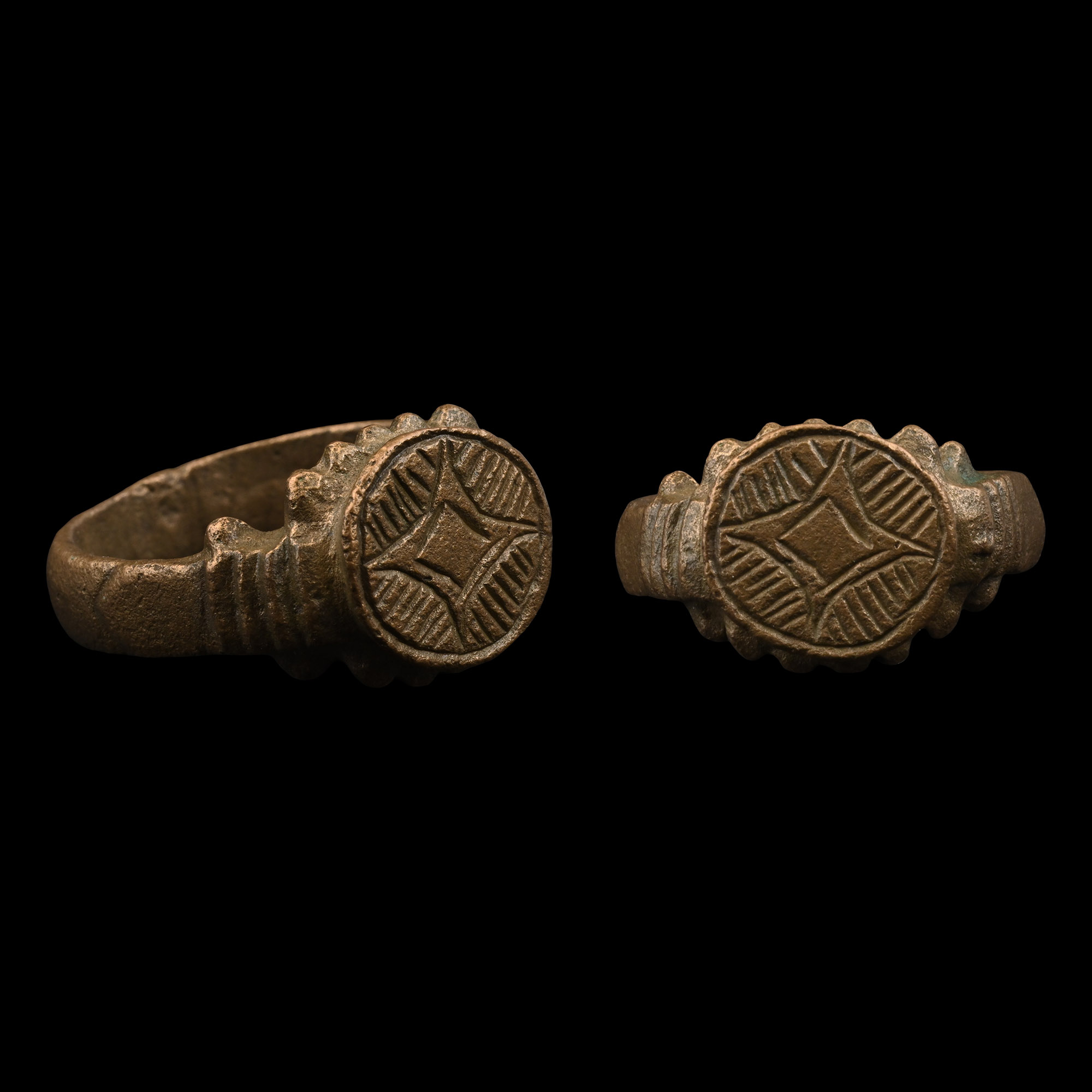
Medieval Bronze Ring with Cross
15TH-16TH CENTURY A.D.
1 in. (10.54 grams, 27.45 mm overall, 18.89 mm internal diameter (approximate size British R 1/2, USA 8 3/4, Europe 19.38, Japan 18)).
Comprising a thick hoop with stud to the underside, stepped shoulders, tiered bezel with reserved cross on a hatched field. [No Reserve]
ProvenanceEx German art market, 2000s.
Acquired from an EU collector living in London.
From the collection of a Surrey, UK, gentleman.
TimeLine Auctions follows a vetting process to ensure the authenticity and legality of all items, reinforcing our commitment to integrity and responsible trading. Each antiquity, antique, and coin lot undergoes thorough examination by a vetting committee of at least ten external specialists, professional trade association members, scientists, and archaeologists: Our Vetting Process
AUCTIONS:
TimeLine is a leading auction house specialising in antiquities, ancient art, collectables, natural history, coins, medals, and books. Our auctions offer museums, collectors, historians, and enthusiasts the opportunity to acquire unique and historically significant pieces.
-
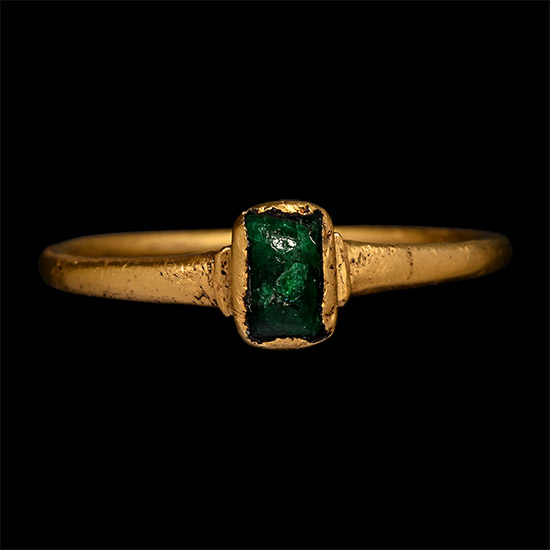
Medieval Gold Ring with Green Cabochon
13th-14th century A.D.Sold for (Inc. bp): £1,300
Hoop of slender profile with cup bezel, inset green glass cabochon. 2.61 grams, 24.57 mm overall, 18.62 mm internal diameter (approximate size British Q 1/2, USA 8 1/4, Europe 18.12, Japan17)
Formerly the property of a lady, acquired Brussels, Belgium. From a Bristol, UK, collection. Ex Buckinghamshire, UK, collection. Accompanied by an illustrated certificate of authenticity signed by J. Murray. -
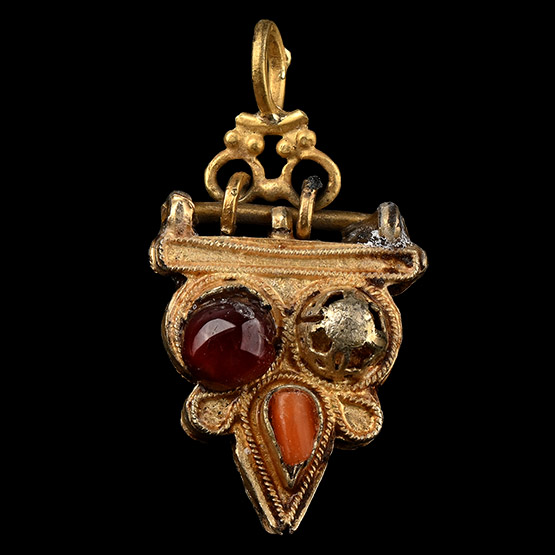
Medieval Gold Pendant with Gemstones
14th-16th century A.D.Sold for (Inc. bp): £572
Triangular plaque with two plano-convex cabochon gemstones and a third tubular carnelian bead in a teardrop cell; articulated suspension ring with granulated detailing. 3.7 grams, 32 mm
From the collection of a late Japanese gentleman, 1970-2000s. -
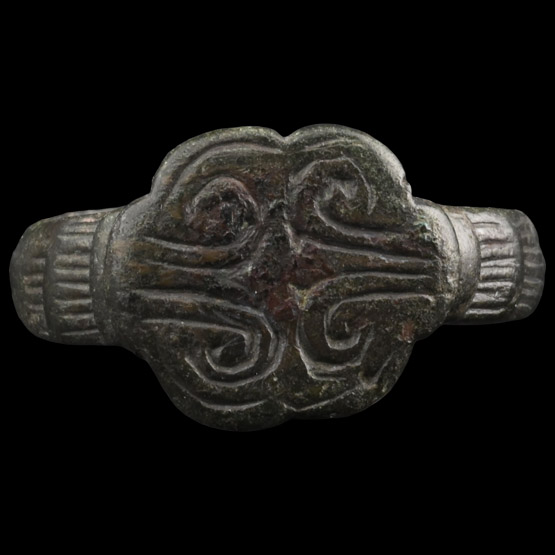
Medieval Bronze Ring with Scroll Cross
14th-16th century A.D.Sold for (Inc. bp): £59
Rosette bezel with incised addorsed scrolls. 8.18 grams, 25.44 mm overall, 18.54 mm internal diameter (approximate size British Q, USA 8, Europe 17.49, Japan 16)
Ex German art market, 2000s. Acquired from an EU collector living in London. From the collection of a Surrey, UK, gentleman.
