
Loading, please wait...
LOT 1997
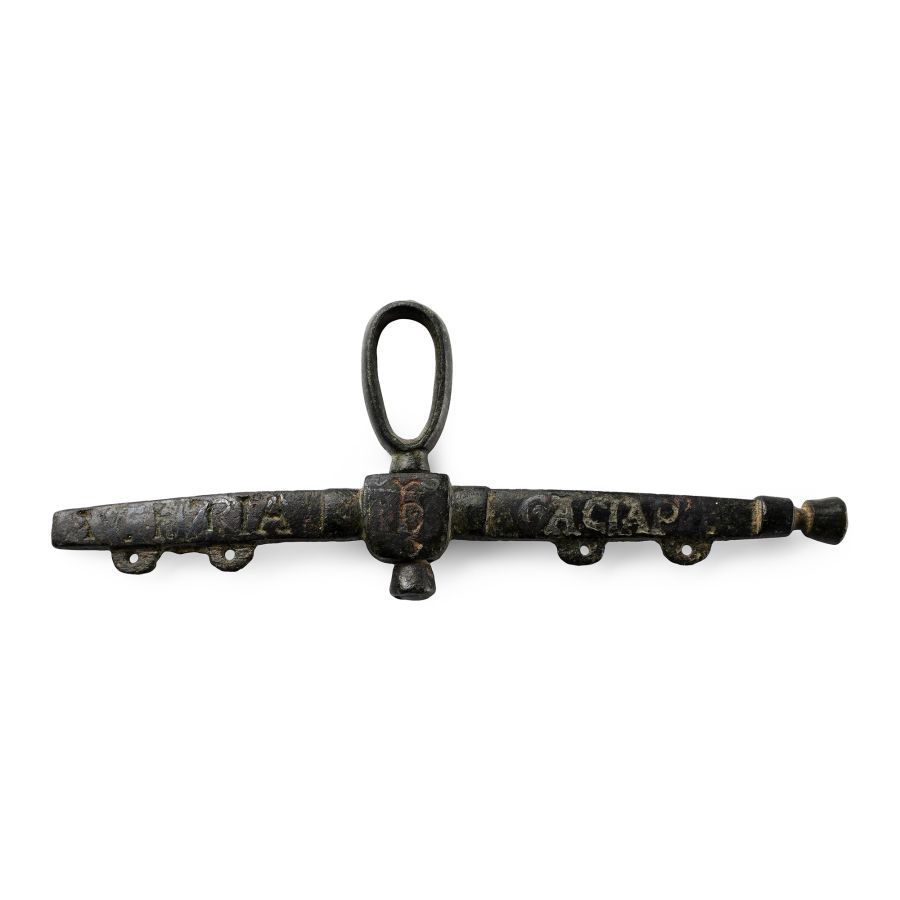
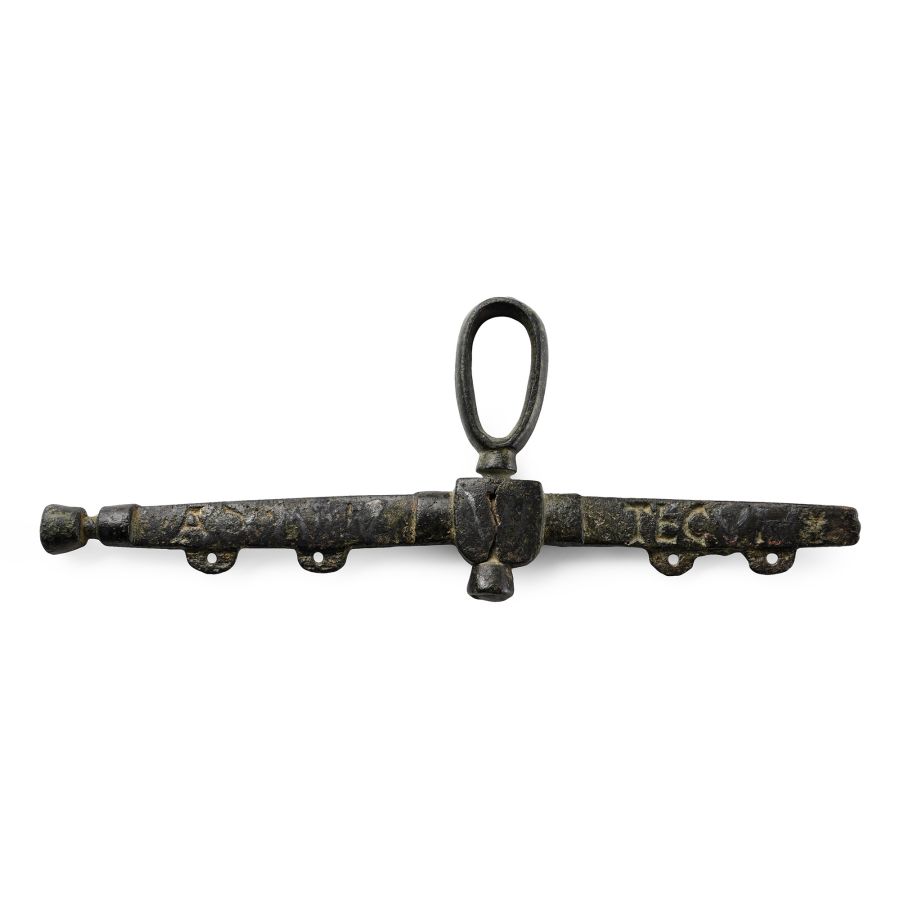
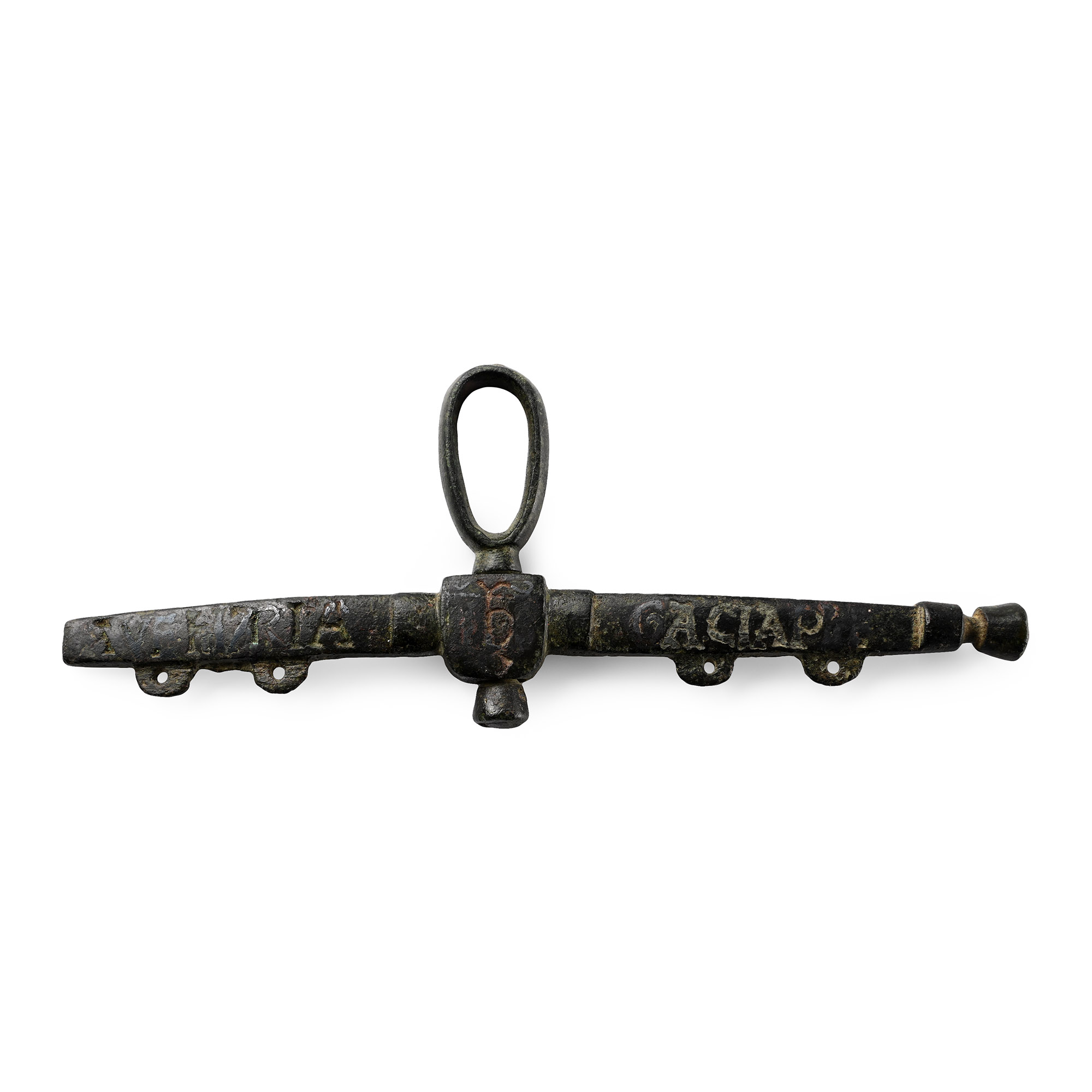
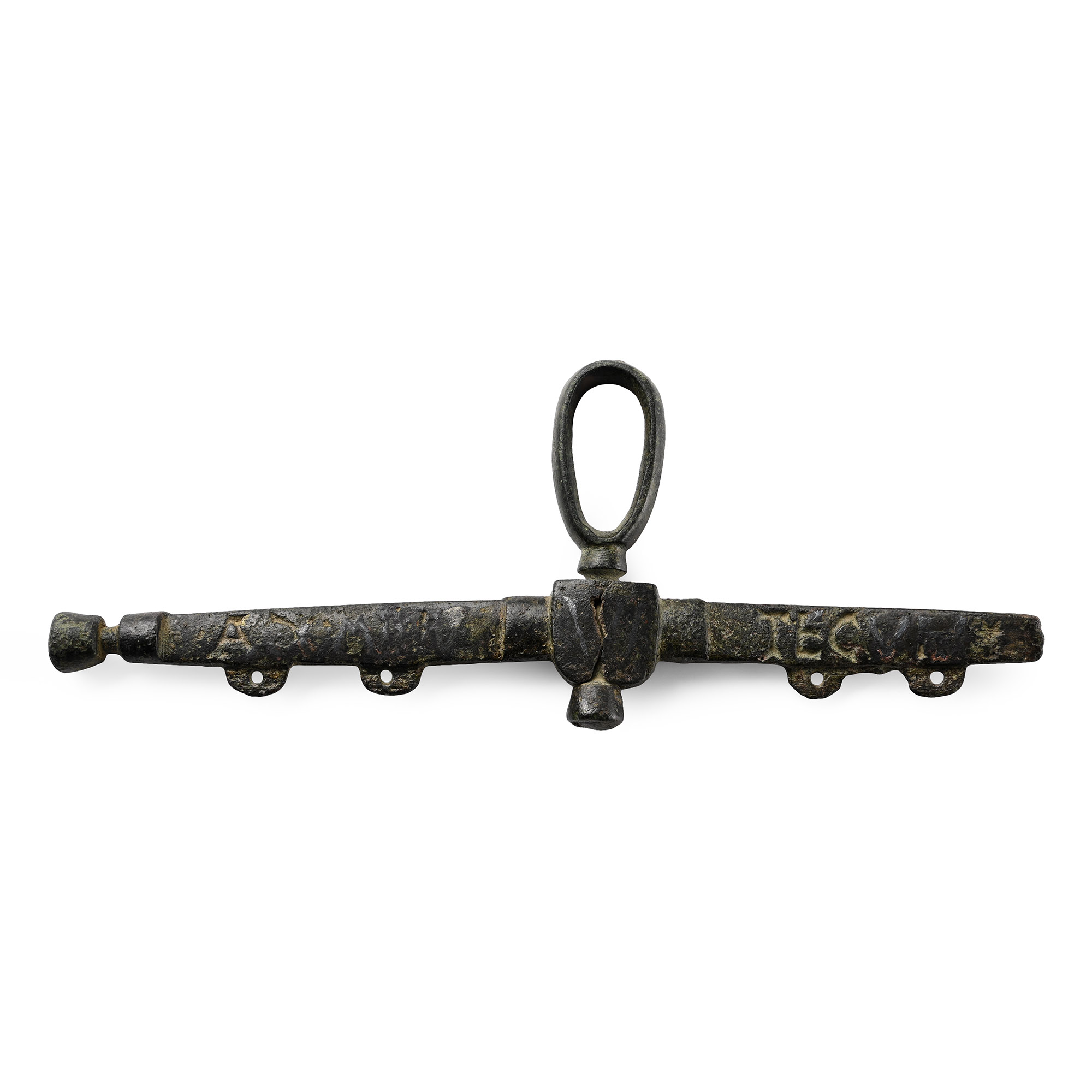
Medieval Bronze Purse Bar with Niello Inlay
15TH-16TH CENTURY A.D.
6 1/8 in. (70.66 grams, 15.5 cm).
With niello-filled legend to the bar: 'AVE MARIA GACIA PLE' and to reverse 'A DOMINV TE CVM *'; central heater-shaped plaque with niello-filled 'W' to one face and 'IHS' monogram to reverse. [No Reserve]
ProvenanceEx Graham Slater (1924-2024) collection, Cambridge, UK; his collection assembled since the 1980s.
From a Cambridgeshire, UK, private collection.
This lot is accompanied by an illustrated lot declaration signed by the Head of the Antiquities Department, Dr Raffaele D'Amato.
See The Portable Antiquities Scheme, record id WAW-6DF783, for a similar purse bar dated c. 1450-1550.
FootnotesMetal purse frames of this type were a luxury personal accessory of late Middle Ages and early Renaissance period (about 1450-1500). They were decorated with niello. In this technique the metalworker engraved a pattern or design onto highly polished metal and filled the incised lines with a hard black alloy. Religious inscriptions were incised to invoke divine protection.
CONDITIONTimeLine Auctions follows a vetting process to ensure the authenticity and legality of all items, reinforcing our commitment to integrity and responsible trading. Each antiquity, antique, and coin lot undergoes thorough examination by a vetting committee of at least ten external specialists, professional trade association members, scientists, and archaeologists: Our Vetting Process
AUCTIONS:
TimeLine is a leading auction house specialising in antiquities, ancient art, collectables, natural history, coins, medals, and books. Our auctions offer museums, collectors, historians, and enthusiasts the opportunity to acquire unique and historically significant pieces.
-
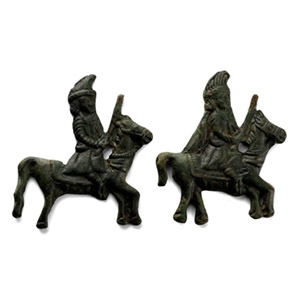
Medieval Bronze Pilgrim's Badge Pair
14th-15th century A.D.Sold for (Inc. bp): £468
Each appliqué formed as a profile horse and rider; the horse advancing with head erect and detailed bridle and harness; rider with feathered cap, knee-length tunic, holding a baton or sword in one hand. 55 grams total, 60 mm each
From the private collection of a London gentleman, from his grandfather's collection formed before the early 1970s. This lot is accompanied by an illustrated lot declaration signed by the Head of the Antiquities Department, Dr Raffaele D'Amato. -
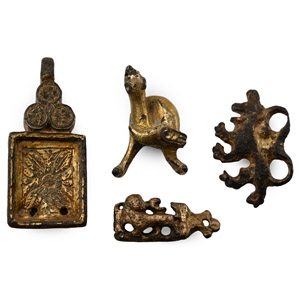
Medieval Gilt Bronze Artefact Group
12th-15th century A.D.Sold for (Inc. bp): £130
Including: appliqué of a bird, advancing unicorn pendant and other items. 23.2 grams total, 25-41 mm
Acquired on the UK art market. Property of an East Anglia private collector. This lot is accompanied by an illustrated lot declaration signed by the Head of the Antiquities Department, Dr Raffaele D'Amato. -
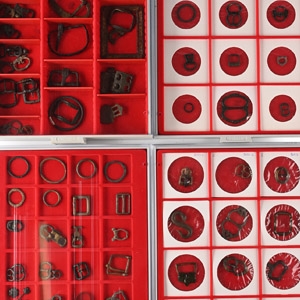
Medieval and Later Bronze Buckle Collection Held in Four Lindner Trays
Circa 14th-19th century A.D.Sold for (Inc. bp): £65
Including Byzantine square-looped type, S-shaped snake type, double-loop and other types, various studs and belt fittings 2.93 kg total, 23.7 x 30.5 cm each
From the private collection of Kenneth Machin (1936-2020), Buckinghamshire, UK; his collection of antiquities and natural history was formed since 1948; thence by descent. This lot is accompanied by an illustrated lot declaration signed by the Head of the Antiquities Department, Dr Raffaele D'Amato.
