
Loading, please wait...
LOT 1932
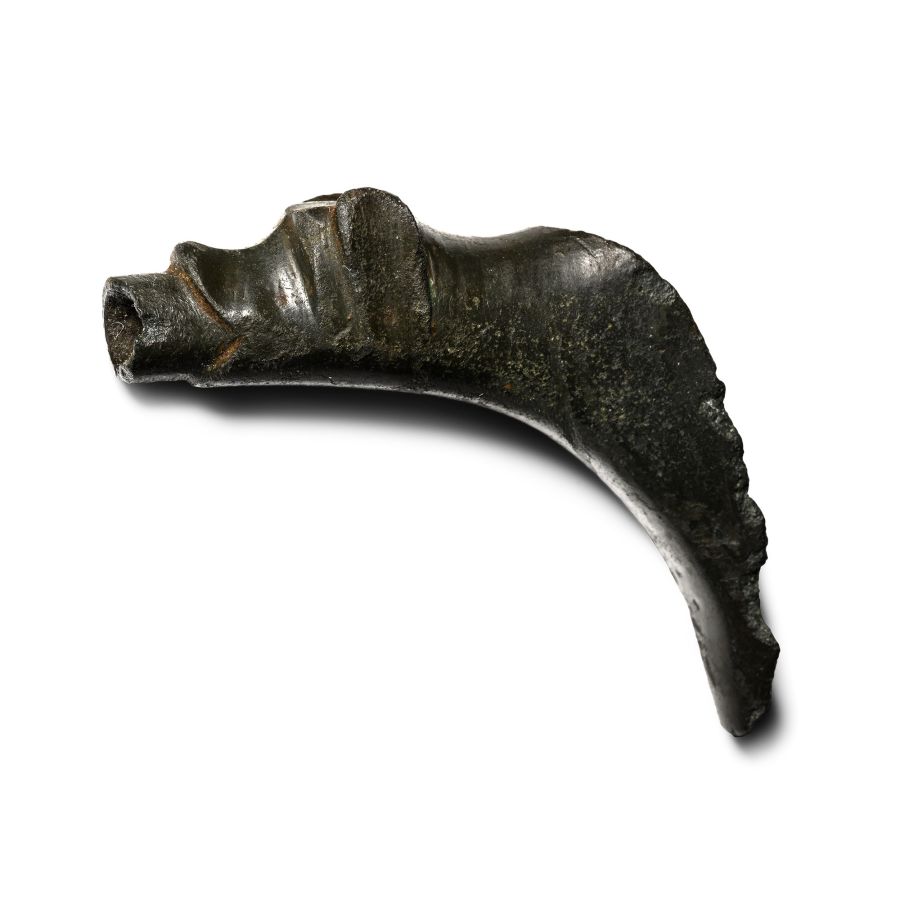
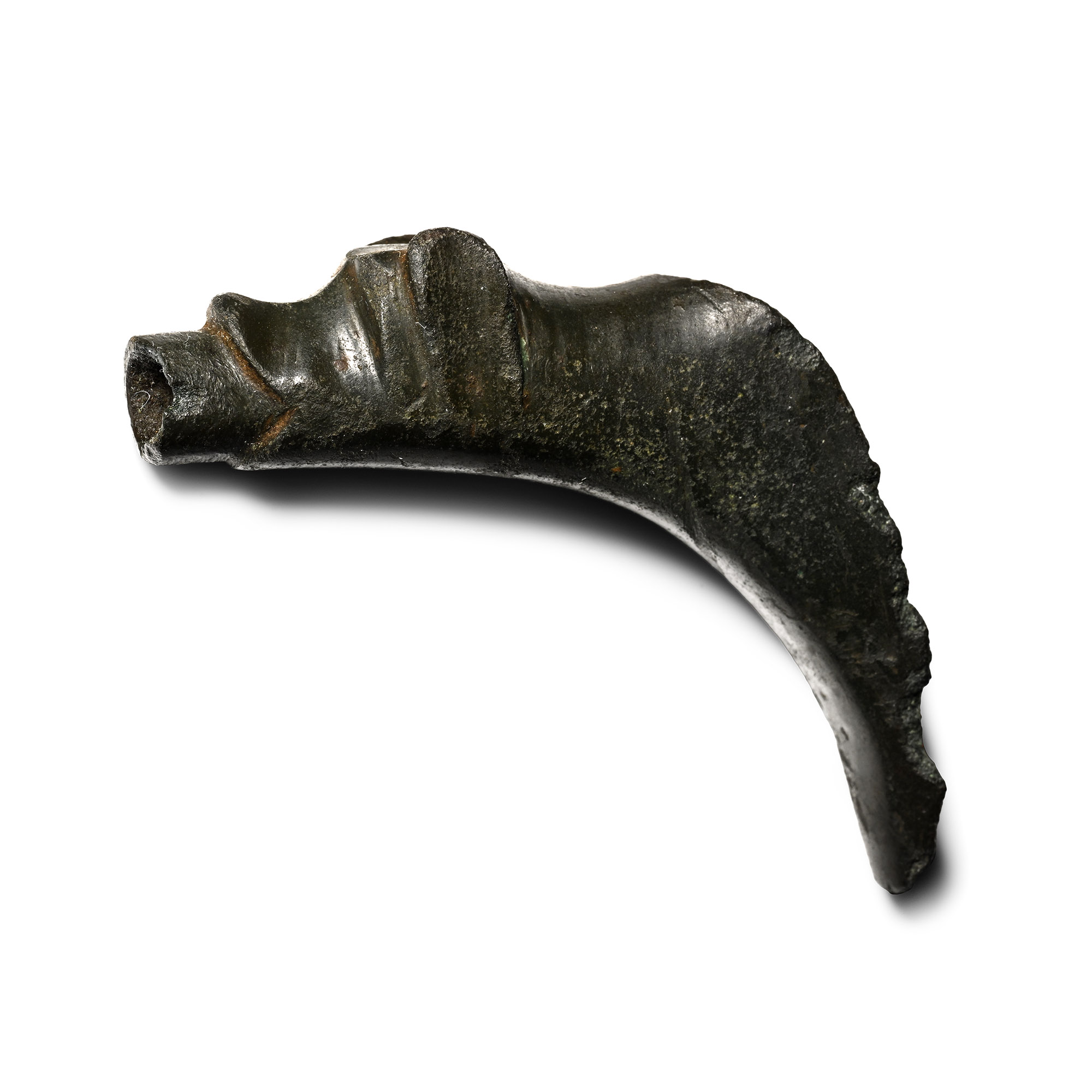
Medieval Bronze Priest's Laver in the Shape of a Dog's Head
CIRCA 14TH-15TH CENTURY A.D.
3 in. (48.7 grams, 75 mm).
With stylised zoomorphic detailing to the spout, mouth developing to a round-section spout, arched neck with a section cut away for attachment. [No Reserve]
ProvenanceFound North Yorkshire, UK.
PublishedExhibited at the Harwich Museum, Harwich, Essex, UK, 8th June 2026-14th September 2026; accompanied by a copy of a photograph of the artefacts on display.
LiteratureSee Lewis, J.M., Bronze Aquamaniles and Ewers, Finds Research Group 700-1700 Datasheet 7, 1991, for a similar example excavated from Cardiff Castle moats.
FootnotesA priest's laver was a large ceremonial basin used for ritual ablutions.
CONDITIONTimeLine Auctions follows a vetting process to ensure the authenticity and legality of all items, reinforcing our commitment to integrity and responsible trading. Each antiquity, antique, and coin lot undergoes thorough examination by a vetting committee of at least ten external specialists, professional trade association members, scientists, and archaeologists: Our Vetting Process
AUCTIONS:
TimeLine is a leading auction house specialising in antiquities, ancient art, collectables, natural history, coins, medals, and books. Our auctions offer museums, collectors, historians, and enthusiasts the opportunity to acquire unique and historically significant pieces.
LOT 1932
Medieval Bronze Priest's Laver in the Shape of a Dog's Head
Sold for (Inc. bp): £26
-
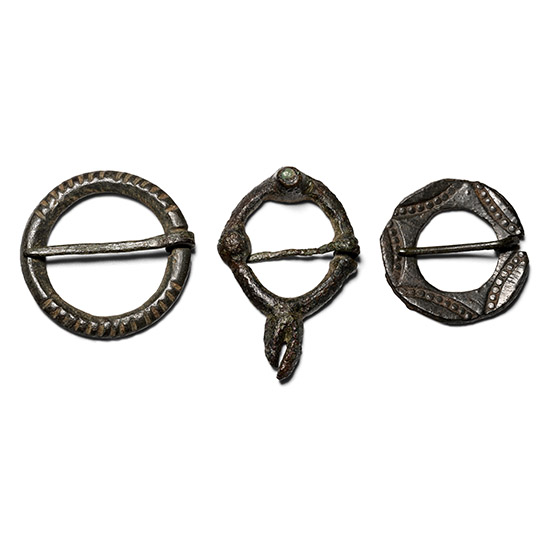
Medieval Bronze Ring Brooch Group
Circa 13th-15th century A.D.Sold for (Inc. bp): £85
Comprising three annular brooches: one with a raised cell set with a green glass cabochon; one with notched decoration; one with punched pellet decoration. 5.74 grams total, 18-26 mm
From the private collection of Graham Slater (1927-2024), Cambridge, UK; formed 1980s-1990s. -
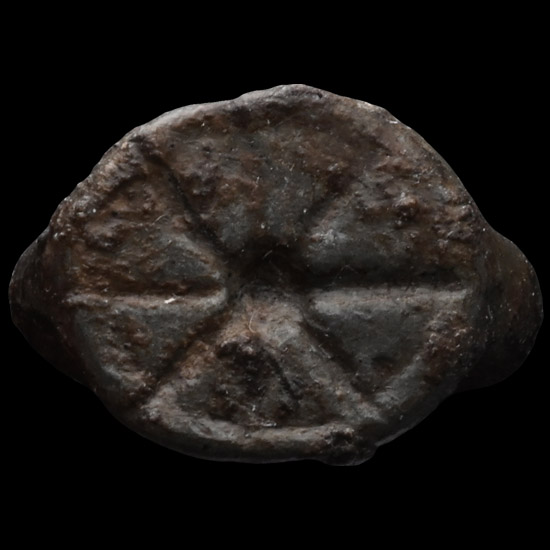
Medieval Bronze Seal Ring with Expanding Cross
England, circa 13th-14th century A.D.Sold for (Inc. bp): £52
Thick D-section hoop with integral disc bezel, incuse eight-armed cross dividing the field, central pellet. 7.95 grams, 19.81 mm overall, 11.69 mm internal diameter
Found Swineshead, Lincolnshire, UK. Recorded with UKDFD no.53303. -
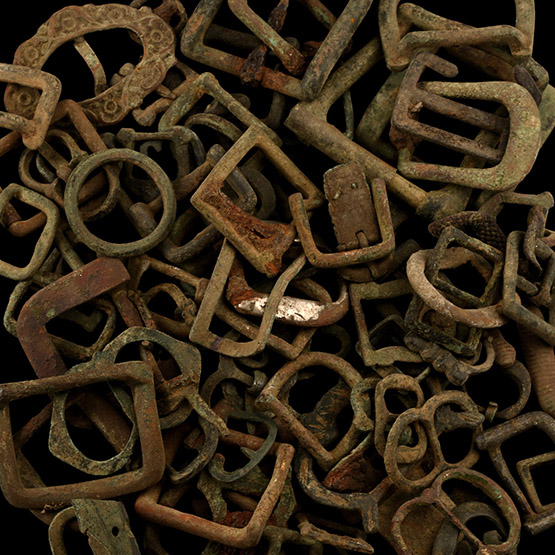
Medieval and Later Buckle Collection
Circa 15th-20th century A.D.Sold for (Inc. bp): £13
Including D-shaped, twin-loop, square and other types. 688 grams total, 17-84 mm
Found Suffolk, UK. (UK buyers only, not for export)
