
Loading, please wait...

LOT 1937
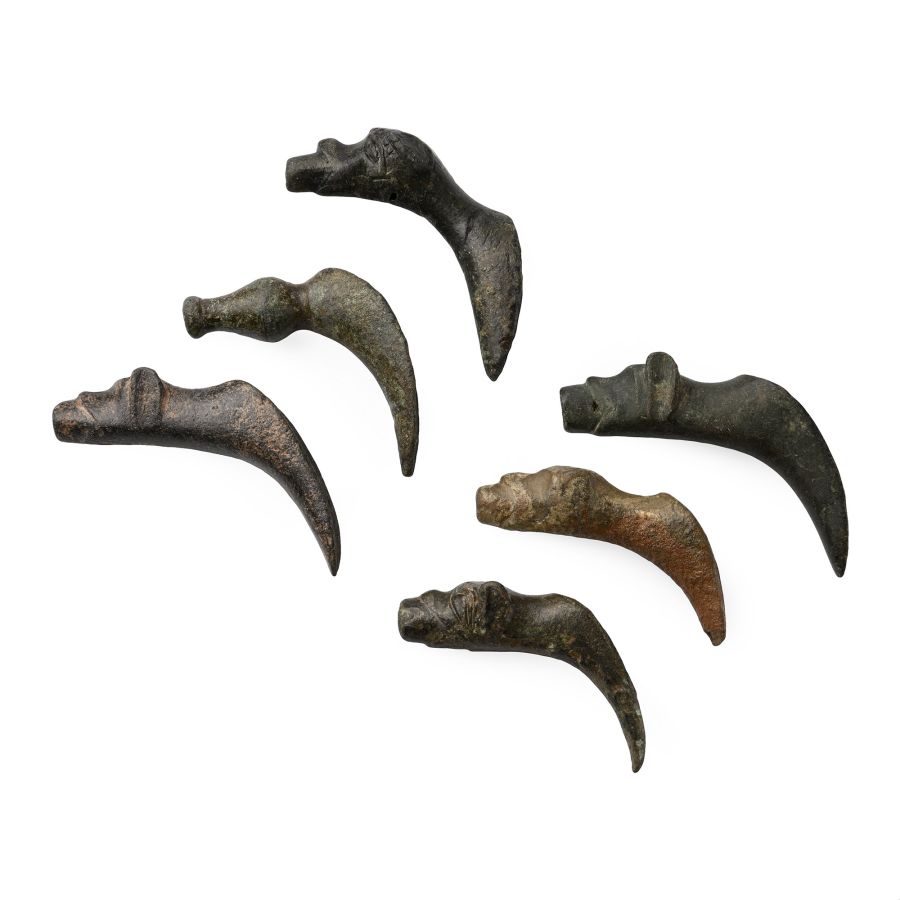
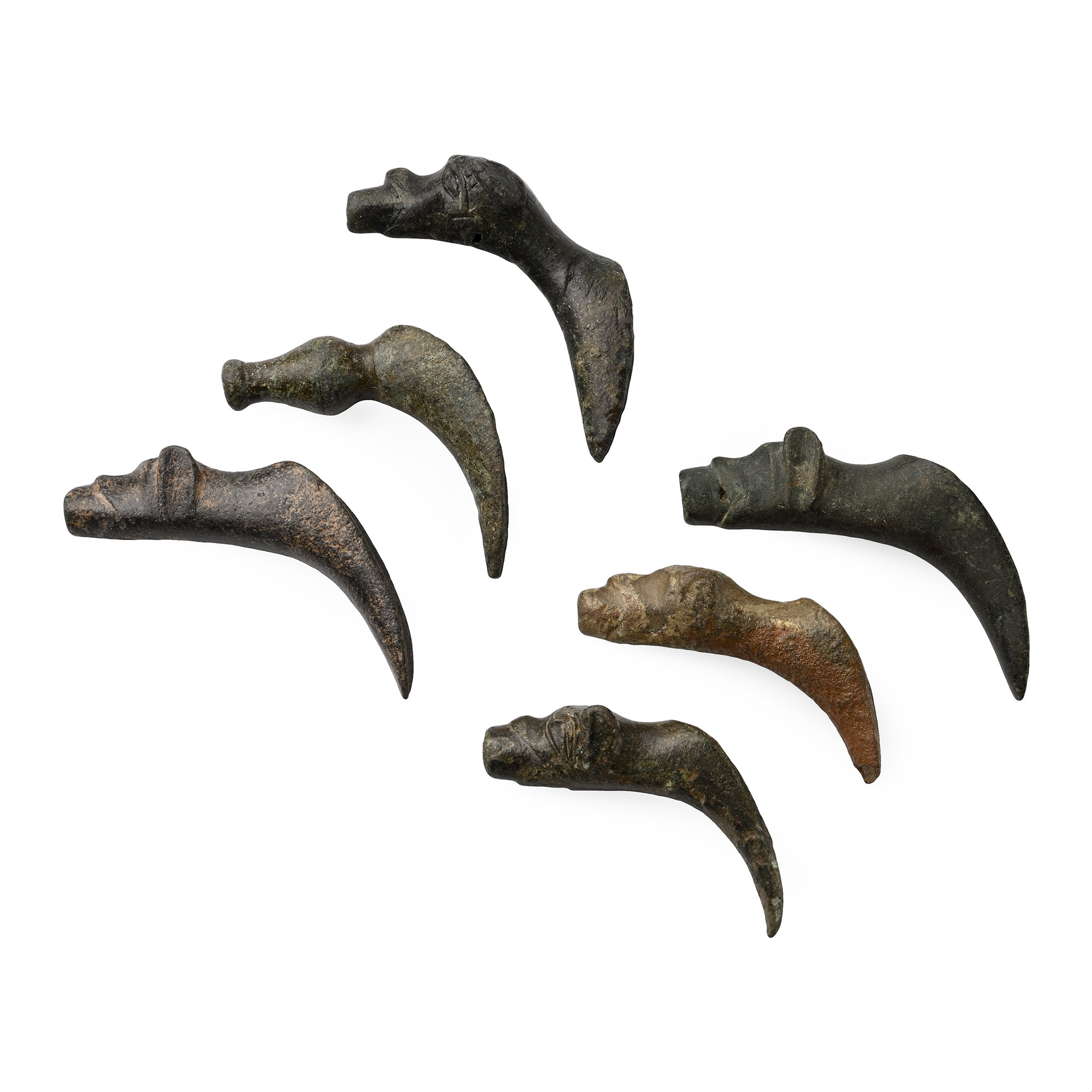
Medieval Bronze Priest's Laver Holy Water Pouring Vessel Spout Collection
14TH-15TH CENTURY A.D.
2 3/4 - 3 1/4 in. (370 grams total, 70-81 mm).
One with globular and five with stylised zoomorphic detailing, mouth closed around a round-section spout, curved round-section neck with section cut away for attachment. [6, No Reserve]
ProvenanceFound East Anglia, UK.
This lot is accompanied by an illustrated lot declaration signed by the Head of the Antiquities Department, Dr Raffaele D'Amato.
See Lewis, J.M., Bronze Aquamaniles and Ewers, Finds Research Group 700-1700 Datasheet 7, 1991, for a similar example excavated from Cardiff Castle moats.
FootnotesA priest's laver was a large ceremonial basin used for ritual ablutions.
CONDITIONTimeLine Auctions follows a vetting process to ensure the authenticity and legality of all items, reinforcing our commitment to integrity and responsible trading. Each antiquity, antique, and coin lot undergoes thorough examination by a vetting committee of at least ten external specialists, professional trade association members, scientists, and archaeologists: Our Vetting Process
AUCTIONS:
TimeLine is a leading auction house specialising in antiquities, ancient art, collectables, natural history, coins, medals, and books. Our auctions offer museums, collectors, historians, and enthusiasts the opportunity to acquire unique and historically significant pieces.
LOT 1937
Medieval Bronze Priest's Laver Holy Water Pouring Vessel Spout Collection
Sold for (Inc. bp): £59
-
Medieval and Other Bronze and Lead Artefact Group
9th-20th century A.D.Sold for (Inc. bp): £52
Including decorative studs, a whistle, thimbles, buttons and other items, mainly from Bildeston Church Farm, Suffolk. 714 grams total, 15-62 mm
Found Suffolk, UK. This lot is accompanied by an illustrated lot declaration signed by the Head of the Antiquities Department, Dr Raffaele D'Amato.
N.B. This lot is for UK buyers only. -
Medieval Stained Glass Panel with Quatrefoil
France, circa 1320 A.D.Sold for (Inc. bp): £468
Discoid panel in lead frame, yellow glass painted with quatrefoil leaves motif. 114 grams, 12.2 cm
Some restoration.
From the collection of the Phillips family, owners of John Hardman & Co, Birmingham (metalsmiths and stained glass fabricators), founded 1838. This lot is accompanied by an illustrated lot declaration signed by the Head of the Antiquities Department, Dr Raffaele D'Amato. -
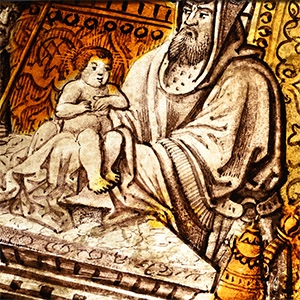
Medieval Stained Glass Panel Showing the Presentation in the Temple
Southern Low Countries, circa 1520 A.D.Sold for (Inc. bp): £338
Scene with bearded figure in cowled robe holding a baby in a cloth above a table; second figure looking on holding a dove, hands of a third figure in foreground; cowled figure with tasselled mantle, wearing a belt with mounting ring, flask and sword; patterned wall-hanging to rear; lead frame with loop. 92 grams, 12 cm
From the collection of the Phillips family, owners of John Hardman & Co, Birmingham (metalsmiths and stained glass fabricators), founded 1838. This lot is accompanied by an illustrated lot declaration signed by the Head of the Antiquities Department, Dr Raffaele D'Amato.
