
Loading, please wait...
LOT 1669
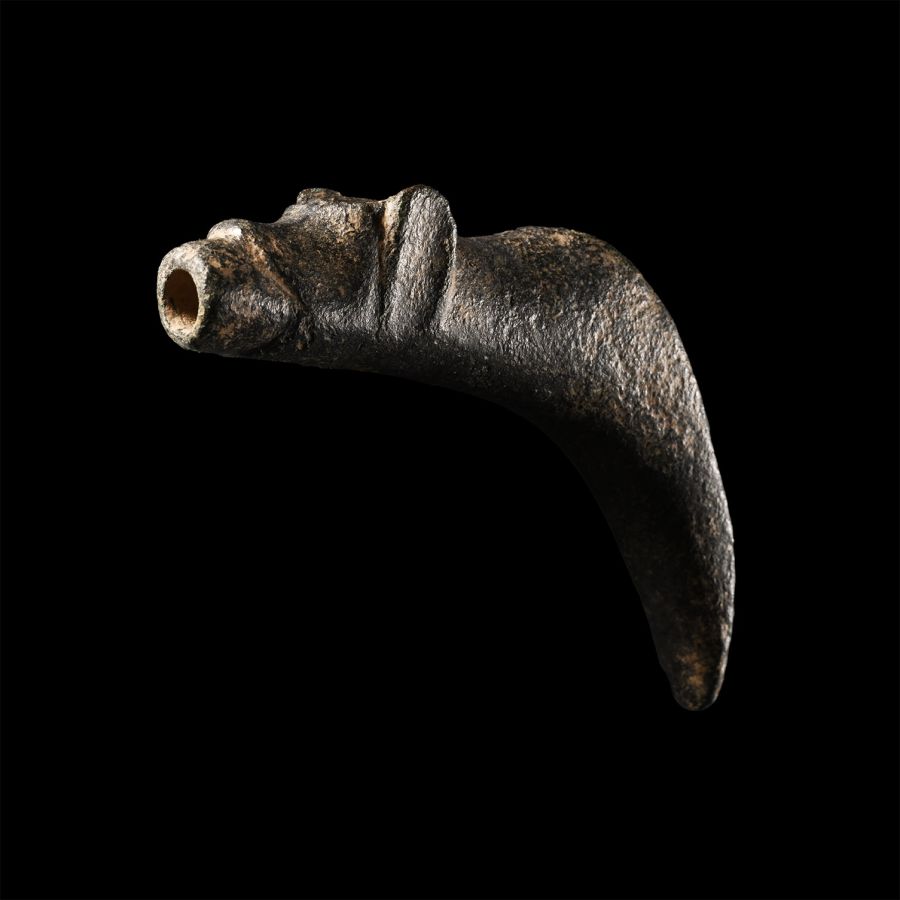
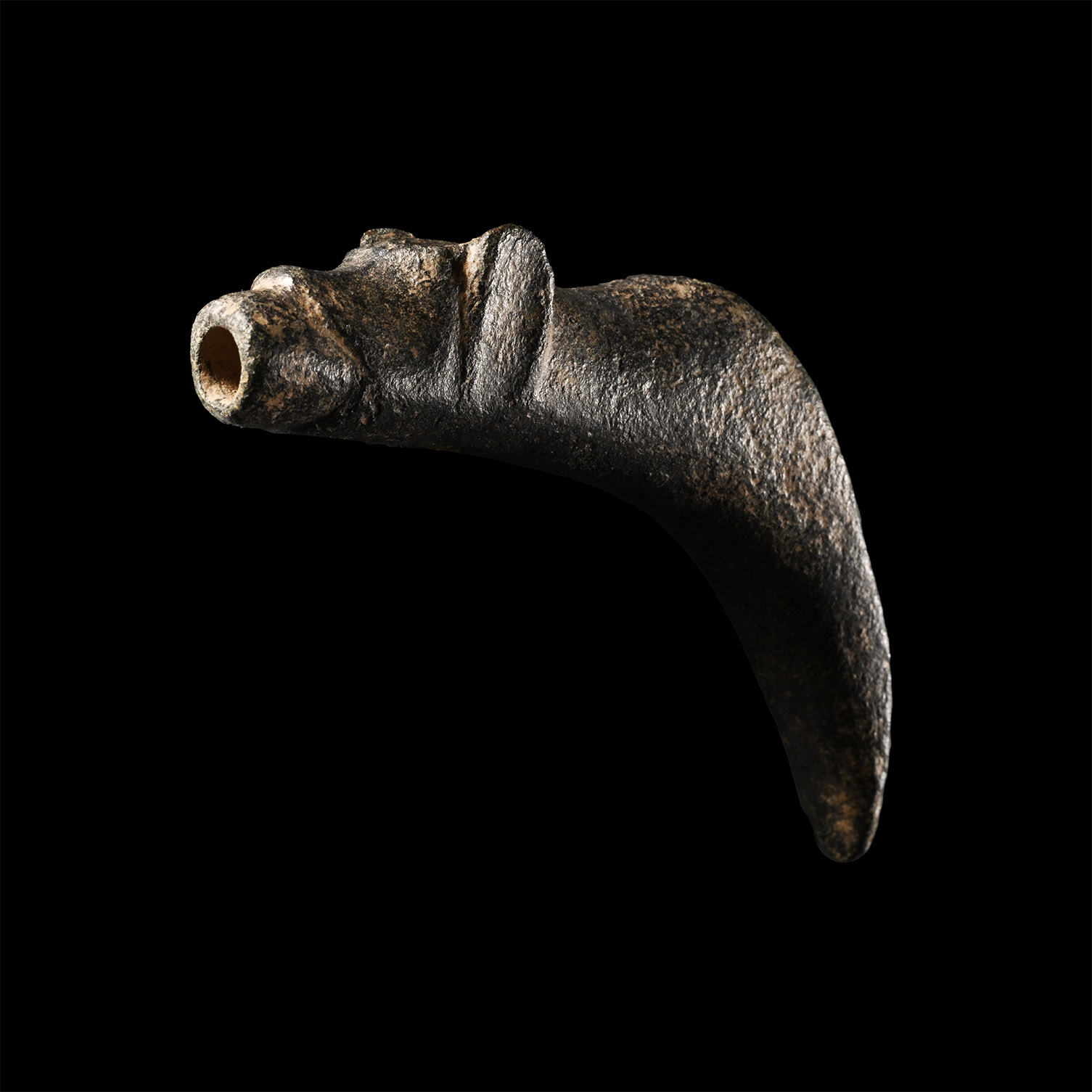
Medieval Bronze Priest Laver Pouring Spout with Dog's Head
14TH-15TH CENTURY A.D.
2 3/4 in. (66 grams, 71 mm).
With stylised detailing, mouth closed around a round-section spout, curved round-section neck with section cut away for attachment. [No Reserve]
ProvenanceFound Somerset, UK.
LiteratureSee Lewis, J.M., Bronze Aquamaniles and Ewers, Finds Research Group 700-1700 Datasheet 7, 1991, for a similar example excavated from Cardiff Castle moats.
FootnotesA priest's laver was a large ceremonial basin used for ritual ablutions.
CONDITIONTimeLine Auctions follows a vetting process to ensure the authenticity and legality of all items, reinforcing our commitment to integrity and responsible trading. Each antiquity, antique, and coin lot undergoes thorough examination by a vetting committee of at least ten external specialists, professional trade association members, scientists, and archaeologists: Our Vetting Process
AUCTIONS:
TimeLine is a leading auction house specialising in antiquities, ancient art, collectables, natural history, coins, medals, and books. Our auctions offer museums, collectors, historians, and enthusiasts the opportunity to acquire unique and historically significant pieces.
LOT 1669
Medieval Bronze Priest Laver Pouring Spout with Dog's Head
Sold for (Inc. bp): £52
-

Medieval and Later Iron Tool Group
Circa 14th-18th century A.D.Sold for (Inc. bp): £52
Most relating to farming or woodworking. 1.17 kg total, 14.5-27 cm
Acquired on the UK art market. Property of a Ruislip, UK, gentleman, by inheritance. -
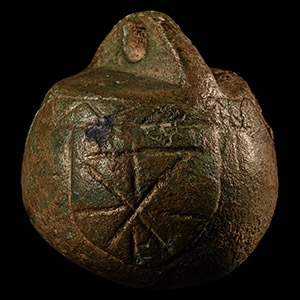
Medieval Bronze Steelyard Weight with Heraldic Shields
Circa 1260-1300 A.D.Sold for (Inc. bp): £442
Heavy with a lead core, spherical in form with pierced flange for suspension above and hatched band to the shoulder; an unusal unofficial copy with three heater shields with raised heraldic arms spaced equally around the body, etched geometric band of chevrons above. 615 grams, 56 mm
Ex Simmons Gallery, London E11, UK, in the 1990s. From a North London collection.
These heraldic steelyard weights were originally made under the official sanction of Richard (brother of King Henry III) or Edmund, Duke of Cornwall on behalf of the King; Edmund died in 1300 A.D. and such weights were banned in 1350. This example would most likely have been made unofficially towards the end of the period 1260-1300 A.D. The Hanseatic League was created in Germany to protect the interests and privileges of merchants in the medieval period, starting in Europe and with influence spreading to England from the 13th century. -
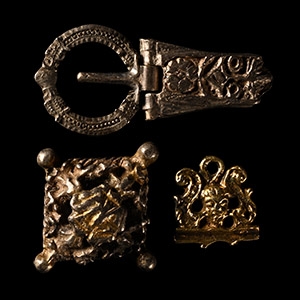
Medieval Silver-Gilt Fitting Group
14th-15th century A.D.Sold for (Inc. bp): £52
Comprising: a lozengiform fitting with raised foliage and central rose, possibly a junction; remains of a buckle with a rose and slender scrolling ornament to the plate; remains of a ring brooch ornamented with pellets and possible animal heads; openwork plate formed as a head or skull between scrolling foliage, bar below and loop above. 11.6 grams total, 13-20 mm
Acquired on the UK market, 1990s. Property of a retired academic.
