
Loading, please wait...
LOT 0401
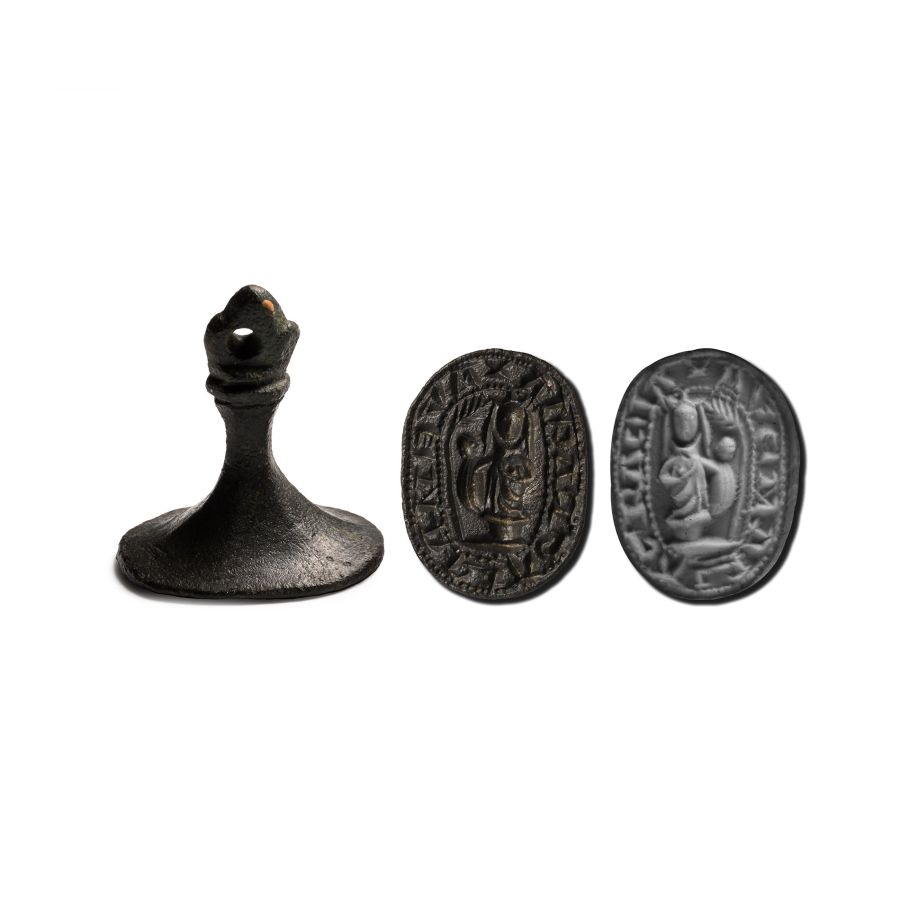
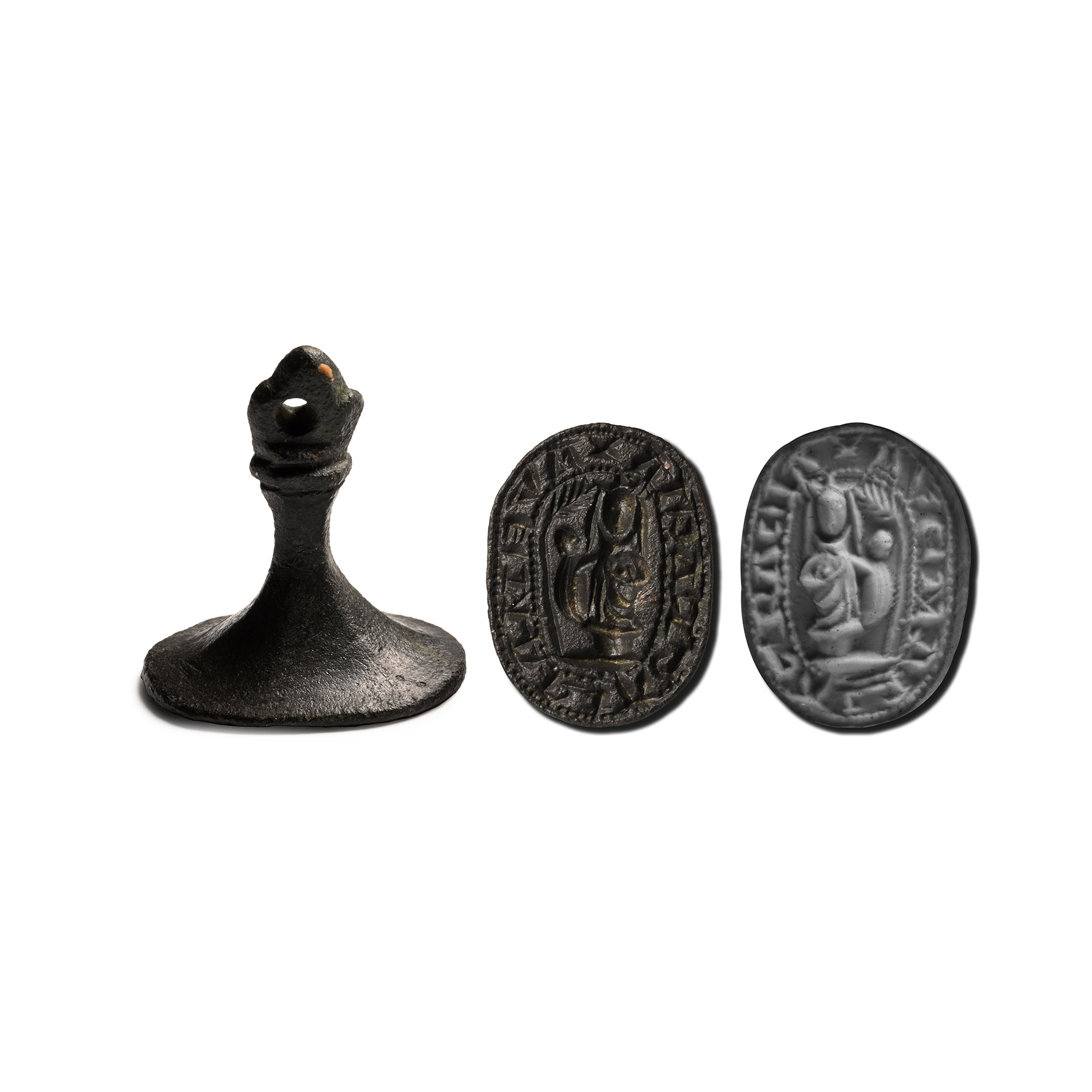
Medieval Bronze Oval-Shaped Seal Matrix with Mary and Child
CIRCA 14TH-15TH CENTURY A.D.
1 1/8 in. (12.3 grams, 28 mm).
With tapering shank, collar and trefoil loop above; central motif of Mary and Child beneath a frond; pelletted border and legend 'AVE MARIA GRACIA' (Hail Mary [full of] Grace).
ProvenanceFound Southern England.
Acquired on the UK art market in the 1980s.
From an East Anglian private collection.
TimeLine Auctions follows a vetting process to ensure the authenticity and legality of all items, reinforcing our commitment to integrity and responsible trading. Each antiquity, antique, and coin lot undergoes thorough examination by a vetting committee of at least ten external specialists, professional trade association members, scientists, and archaeologists: Our Vetting Process
AUCTIONS:
TimeLine is a leading auction house specialising in antiquities, ancient art, collectables, natural history, coins, medals, and books. Our auctions offer museums, collectors, historians, and enthusiasts the opportunity to acquire unique and historically significant pieces.
LOT 0401
Medieval Bronze Oval-Shaped Seal Matrix with Mary and Child
Sold for (Inc. bp): £293
-

Medieval and Later Bronze Ring Group
Circa 14th-18th century A.D.Sold for (Inc. bp): £65
Including types with scaphoid, discoid and trumpet-shaped bezel, one with a claw setting for a stone. 29.7 grams total, 17-22 mm
Ex North London, UK, gentleman, 1990s-2000s. -

Medieval Ceramic Thumb Based Jug
16th century A.D.Sold for (Inc. bp): £104
Salt-glazed jug with fusiform body, broad mouth, loop handle to the shoulder, domed base with impressed-thumb patterning. 539 grams, 19 cm high
Ex M.Cummings, UK, 1990s. -

Medieval Bronze Vesica-Shaped Seal Matrix for Matilda of Eastmoor
Circa 14th-15th century A.D.Sold for (Inc. bp): £260
With central 'dove with olive branch' motif, pelletted border and legend '+ S' MATILD' DE HESTMORE' (seal of Matilda of Eastmoor); strap and loop to the reverse. 6.4 grams, 28 mm
Found Southern England. Acquired on the UK art market in the 1980s. From an East Anglian private collection.
'Hestmore' is Eastmoor spelt with 'intrusive 'h''. The reference is to a place in Somerset belonging to Glastonbury Abbey.
