
Loading, please wait...
LOT 0359
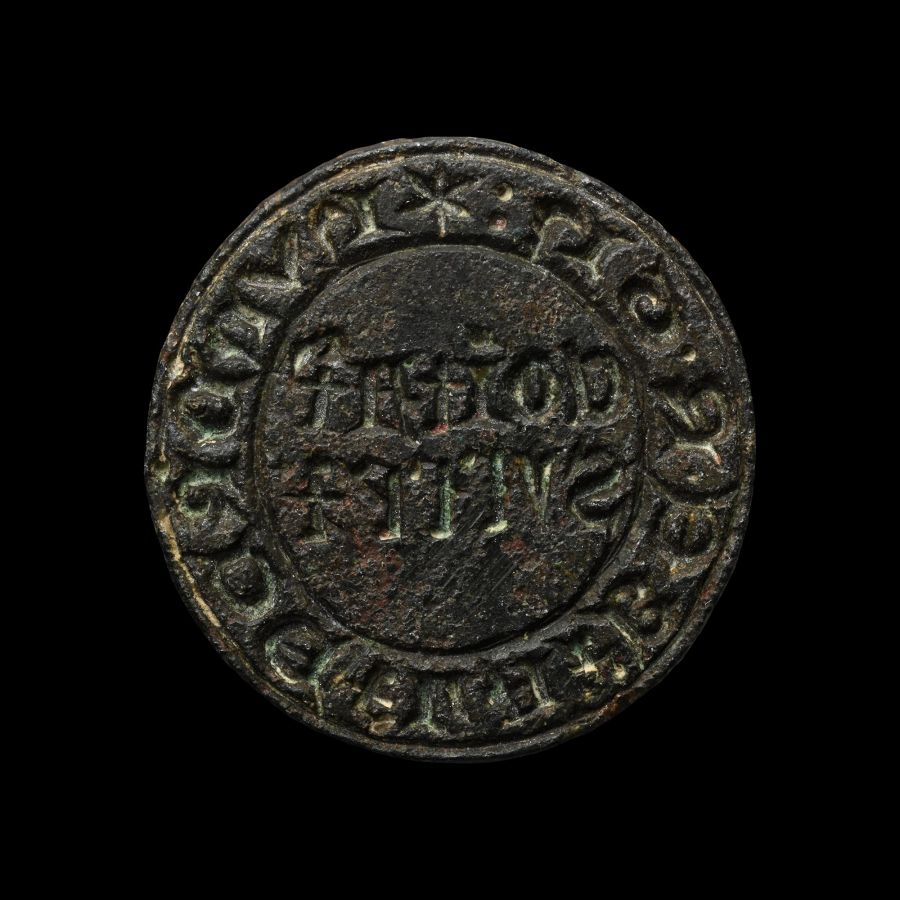
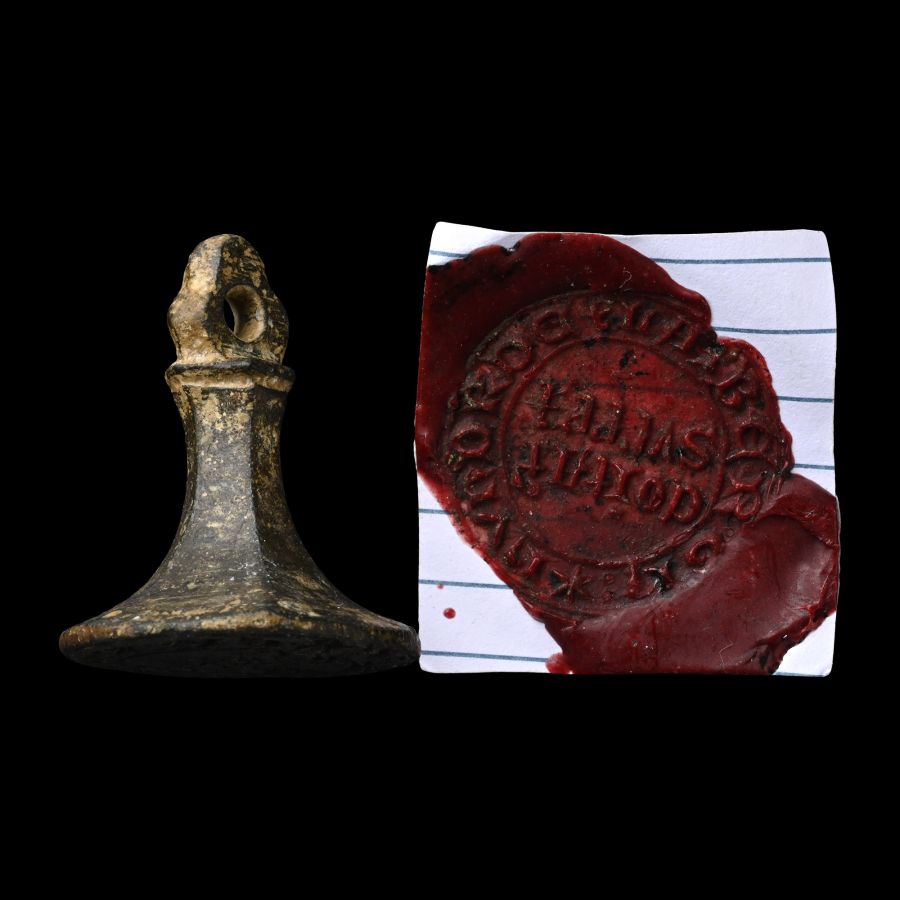
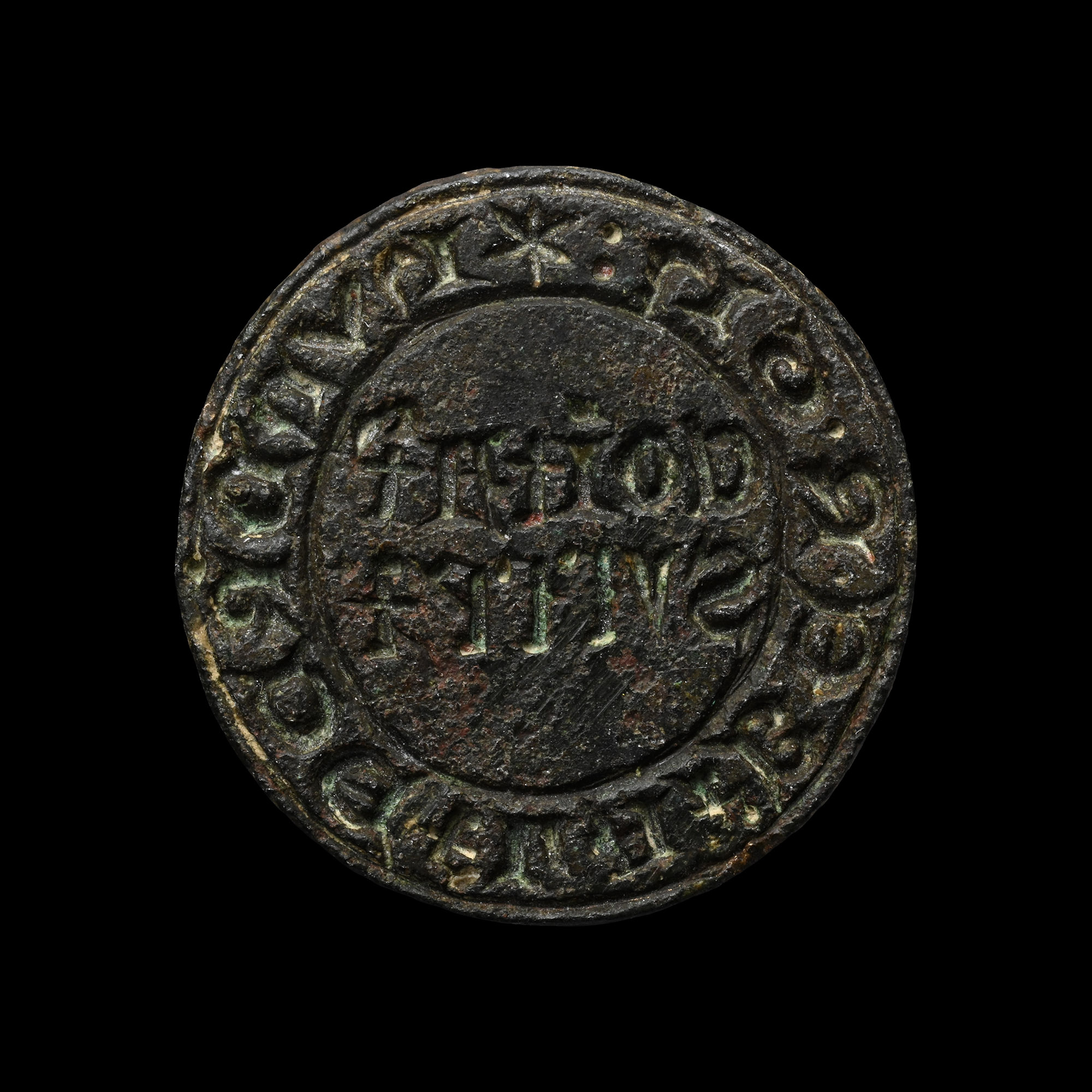
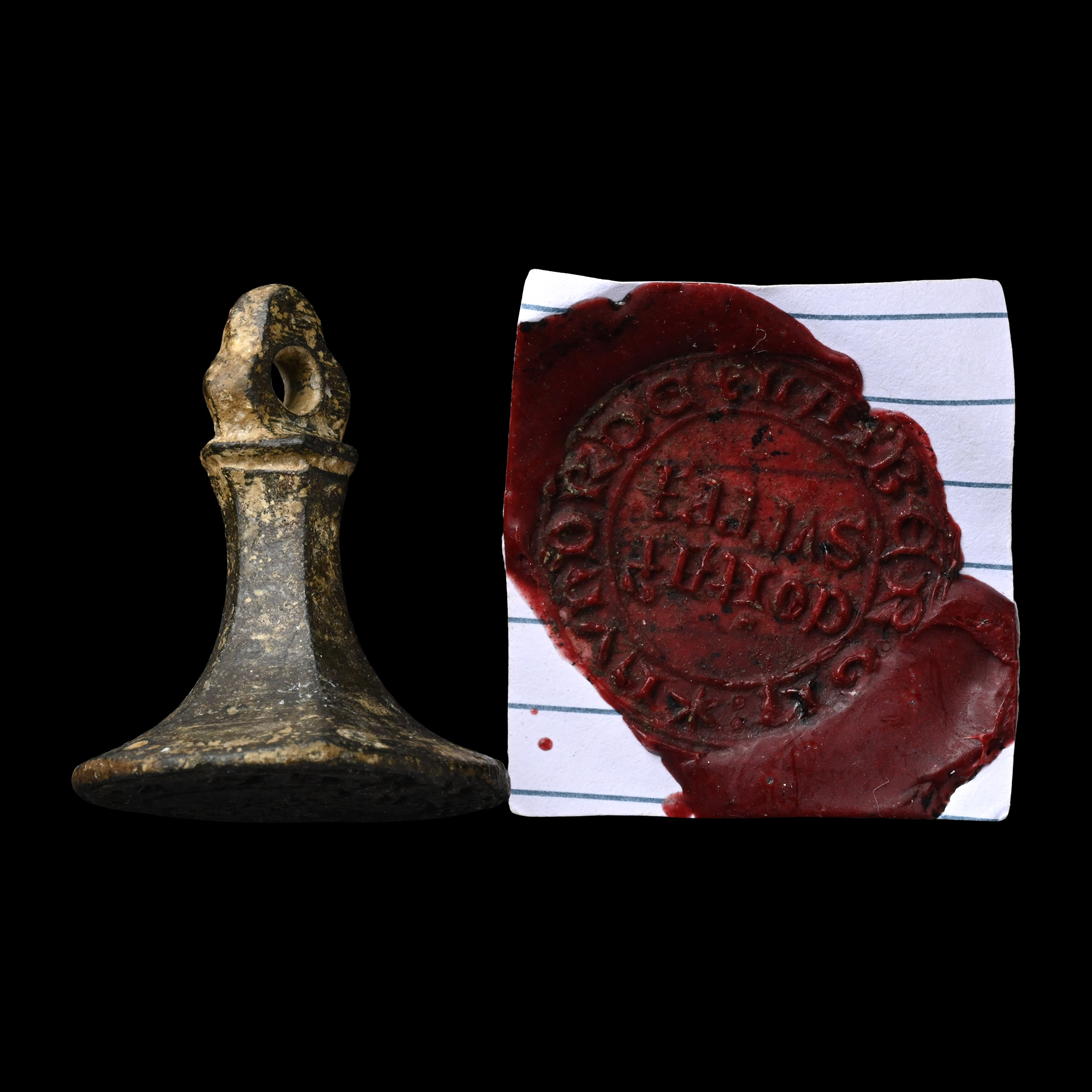
Medieval Bronze Official Flexborough Hundred Constable's Seal Matrix
ENGLAND, EAST SUSSEX, CIRCA 1350-1400 A.D.
1 3/8 in. (35.6 grams, 36 mm high).
Comprising a pierced trefoil terminal with a drilled circular pit above; flat-topped hexagonal pedestal with collar, the body of the matrix flaring to the circular die with orientation notch; the retrograde legend '* hVnDR DE FLAXBERGh' around the circumference of the die, and tondo with inscription in two registers 'COitat SVSSEX'; file marks on the trefoiled loop.
ProvenanceFound near Lewes, East Sussex, UK, in August 2024.
Accompanied by a copy of the British Museum's Portable Antiquities Scheme (PAS) report no.SUSS-99E46F.
See Harvey, P.D.A. & McGuiness, A., A Guide to British Medieval seals, London, 1998; Ashley, S. & Rogerson, A., A Norfolk Hundred Seal Matrix.
FootnotesThis is an official seal matrix used for labourers' passes from the hundred of Flexborough in the Rape of Pevensey, Sussex, which incorporated the ancient parishes of East Batchington, South Heighton and Seaford. Another official seal for the hundred of Foxearle in the Rape of Hastings is recorded on the PAS Database (SUSS-D8F8D5), which notes that the seals were probably used by the Constables, amongst whose duties were keeping the peace and, from the 14th century, providing passes for workmen seeking work beyond their own hundred.
In 1285, King Edward I of England passed the Statute of Winchester, which 'constituted two constables in every hundred to prevent defaults in towns and highways'. Constables were unpaid and usually elected locally. Harvey and MacGuiness (1996:41) note: 'The Statute of Cambridge in 1388 ordered that labourers moving from the area where they lived should be given a pass sealed by someone appointed by the local justices of the peace, and describing the seal's design - it should name the county around the edge and the hundred, wapentake or town across the centre. (ibid: fig:35). Three years later sheriffs were ordered to have these seals made at once'. They quote 6 examples of surviving matrices (p.42), and others exist including three from Norfolk and two from Suffolk (Ashley and Richardson 1998).
This example and the other Sussex example, SUSS-D8F8D5, name the county and hundred as required but reverse the arrangement laid out in the statute and seen on other seals, which have the county in the middle and the hundred around the edge. Research by Christopher Whittick in the archives of Battle Abbey has also identified a document bearing a seal for Battle Hundred which is similar in design to this example, with the county name in the middle and the hundred name around the edge. Unusually, the seal was used on a private charter dated 1361, which suggests Sussex hundreds were using standardised seals a generation before the statute of 1388. It also raises interesting questions about whether the existence of seals such as this influenced the 1388 statute.
TimeLine Auctions follows a vetting process to ensure the authenticity and legality of all items, reinforcing our commitment to integrity and responsible trading. Each antiquity, antique, and coin lot undergoes thorough examination by a vetting committee of at least ten external specialists, professional trade association members, scientists, and archaeologists: Our Vetting Process
AUCTIONS:
TimeLine is a leading auction house specialising in antiquities, ancient art, collectables, natural history, coins, medals, and books. Our auctions offer museums, collectors, historians, and enthusiasts the opportunity to acquire unique and historically significant pieces.
LOT 0359
Medieval Bronze Official Flexborough Hundred Constable's Seal Matrix
Estimate £600 - 800€700 - 930 (for guidance only)$810 - 1,080 (for guidance only)
-
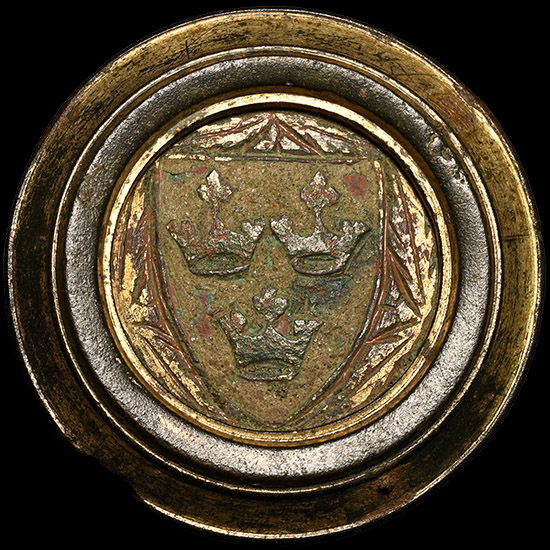
Large Medieval Knight's Gilt Bronze Heraldic Horse Harness Roundel with Three Crowns for the Bishop of Ely
Circa 13th-15th century A.D.Estimate: £800 - 1,000 (+bp*)
Opening Bid: £400
Discoid panel with reserved heater shield on foliage field; three crowns each with a median cross pommee upstand; mounted in a tiered gilt-bronze circular frame (possibly later). 29.68 grams, 50 mm
Found Romney Marsh area, Kent, 1990-2015. Property of a Kent gentleman, a specialist medieval collector.
Two enamelled heraldic pendants of this shape are illustrated in Ashley (2002, fig. 21, nos. 197 and 198), both bearing the same decoration, the three crowns, which are the arms of the Bishop of Ely. Ashley describes them as a comparatively rare type (2002, 23). The blazon of the arms is given as 'Gules three crowns Or' (2002, 45). Horse-harness pendants date from the 12th to the 14th centuries, but were more common in the late 13th and early 14th centuries (Griffiths 1986). Similar records on the PAS database include NMS-6FF080, NMS-A4F8A2, LEIC-344ED2, WAW-600DE5, CAM-67BD16 (with suspension mount), WILT-9C5CEE. -
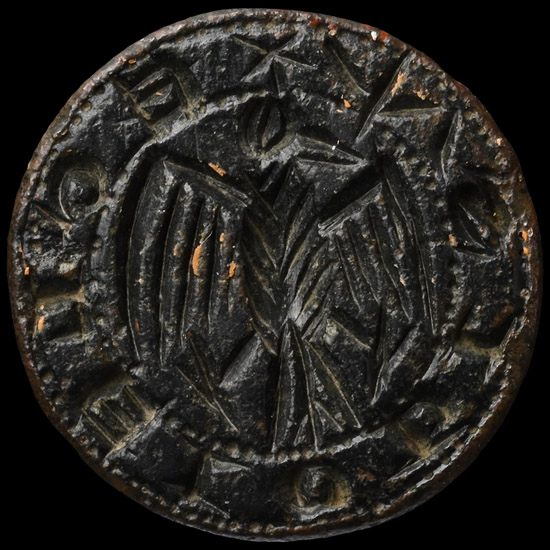
Medieval Bronze Round Seal Matrix with Spread Eagle
Circa 14th-15th century A.D.Estimate: £150 - 200 (+bp*)
Opening Bid: £75
With a central spread eagle motif and legend on the border '*EGLE IOHIS' for 'eagle of (St.) John'; supplied with an impression. 14.4 grams, 29.06 mm
Acquired on the UK art market in the 1980s. From an East Anglian private collection. -
Large Medieval Bronze Seal Matrix with Lion
Circa 13th-14th century A.D.Estimate: £80 - 100 (+bp*)
Opening Bid: £5
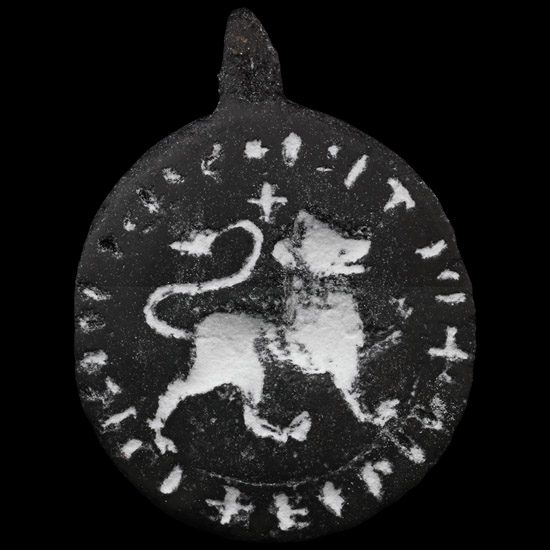
Discoid type with lion passant and legend to the border 'S' [..]MI +FILII+ PITI [...]', supplied with an impression. 10.8 grams, 36 mm
Found Romney Marsh area, Kent, 1990-2015. Property of a Kent gentleman, a specialist medieval collector.
